
 Free tool · triage, never diagnosis
Is this normal?
Reptiles are quiet, hard-to-read animals — so it's easy to panic over something that's completely fine (and just as easy to miss something that isn't). Pick your animal and what you're seeing.
Depends — check below It won't eat
Usually fine when: Very common and rarely an emergency. Snakes — ball pythons especially — fast for weeks or months, particularly in winter or after a move. Lizards and geckos eat less while settling in, shedding, cooling for the season, or simply when not hungry.
Look closer if: Visible weight loss (a showing spine or hip bones, a thinning gecko tail), lethargy, or a fast that comes alongside any red-flag sign.
What to do: Check temperatures first — too cold means they can't digest, so they won't eat. Weigh weekly. A healthy-weight animal refusing food is usually fine; a thinning, weak one needs a reptile vet.
Usually normal It hides all day or burrows
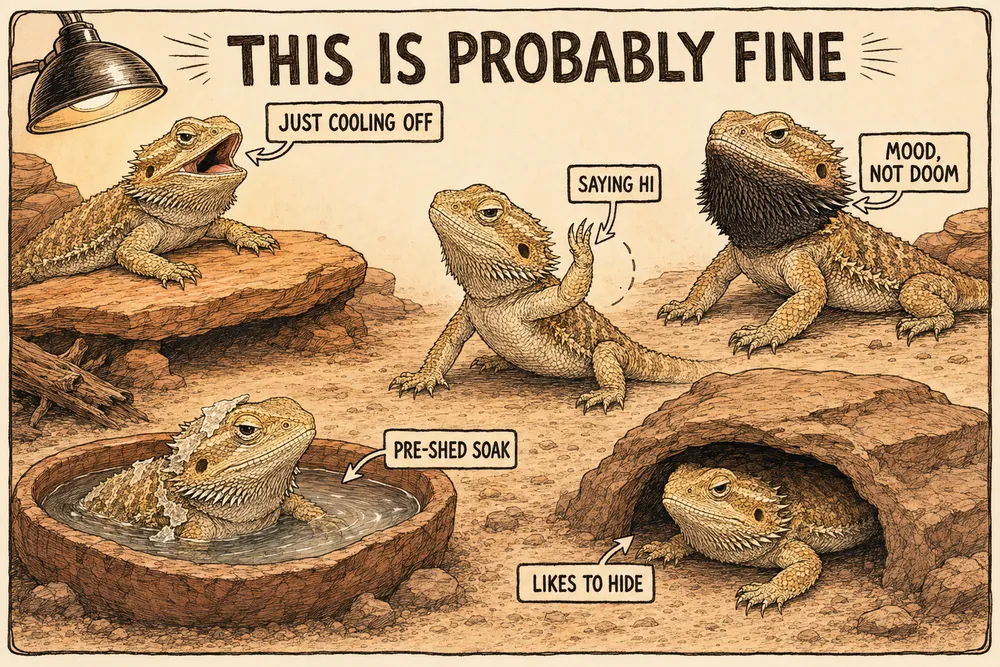
Usually fine when: Normal. Most reptiles feel safest tucked away, and many are only active at dawn, dusk, or night. New arrivals often hide for days or weeks while they settle.
Look closer if: Hiding plus not eating and weight loss over weeks — or a normally bold animal suddenly always buried.
What to do: Give it time and cover, make sure temperatures and UVB are right, and don't keep digging it out. Persistent hiding with weight loss → reptile vet.
Depends — check below It keeps climbing or scratching at the glass
Usually fine when: Common in new or under-stimulated animals, and sometimes just exploring a new home.
Look closer if: Persistent, frantic "glass surfing" — especially with a rubbed-raw nose — usually means stress: an enclosure too small or bare, temps off, a reflection it's reacting to, or too much foot traffic.
What to do: Add hides and clutter, check the warm-to-cool gradient, and cover reflective sides. A raw nose (rostral abrasion) that won't heal needs a vet.
Depends — check below It sits in the water bowl a lot
Usually fine when: A soak is normal — especially before a shed, or to cool off and hydrate.
Look closer if: Near-constant soaking can mean the enclosure is too hot or too dry, or that it has mites (check for tiny moving specks in the water).
What to do: Check temperatures and humidity, and look closely for mites. Constant soaking plus other signs → vet.
Usually normal Its colour looks darker or paler
Usually fine when: Many reptiles darken to soak up heat, or shift colour with mood, temperature, and time of day. A bearded dragon's "black beard" is usually just communication or warming up.
Look closer if: A persistently dark, dull animal that is also lethargic and off its food.
What to do: Usually nothing to do. If it pairs with lethargy or not eating, review husbandry and consider a vet.
Depends — check below Shedding, or bits of stuck shed
Usually fine when: Shedding is healthy. Snakes ideally shed in one complete piece; lizards and geckos shed in patches (and often eat the skin).
Look closer if: Retained shed on the toes, tail tip, or over the eyes — in snakes, retained eye caps — can cut off circulation and cost toes or a tail tip.
What to do: Raise humidity or add a humid hide and a rough rubbing surface. Ease stuck shed off after a warm soak — never pull hard. Stuck shed that won't clear → vet.
Depends — check below It yawns or holds its mouth open
Usually fine when: An occasional "yawn" or jaw-stretch — common after a meal, or to realign the jaw — is normal.
Look closer if: Repeated open-mouth *breathing*, especially with mucus, bubbles, or clicking/whistling sounds, is a respiratory red flag.
What to do: One-off yawns: relax. Open-mouth breathing with mucus or sound: see a reptile vet promptly.
Depends — check below It hasn't pooped in a while
Usually fine when: Poop frequency tracks feeding — a snake fed every week or two poops far less often than a daily-fed baby lizard.
Look closer if: A firm, swollen belly with straining and no output — especially after eating, or with loose substrate — can mean impaction.
What to do: A warm soak often gets things moving. A hard, swollen, straining animal that stays blocked needs a reptile vet.
Usually normal Head-bobbing or arm-waving
Usually fine when: Classic bearded dragon body language: head-bobbing (often dominance) and slow arm-waving (often submission or "I see you") are normal communication.
Look closer if: Frantic constant bobbing with stress signs, or true "stargazing" (see the wobble/tremor entry), is different.
What to do: Normal — nothing to do. Enjoy the personality.
Depends — check below It's slowing right down in autumn or winter
Usually fine when: Many temperate reptiles naturally slow down or brumate (a reptile hibernation) as days shorten and cool — sleeping more and eating little. Temperate tortoises like the Russian famously hibernate, and Argentine tegus brumate for months.
Look closer if: Brumation should come from a healthy animal and should NOT include real weight loss, sunken eyes, or illness. Tropical species (crested geckos) don't truly brumate.
What to do: Confirm the animal is healthy and a good weight first — never brumate a sick or underweight reptile. Looking unwell or losing weight → vet, not brumation.
Usually normal My gecko dropped its tail
Usually fine when: Leopard and crested geckos drop their tail when grabbed or badly startled — a natural escape trick. A crested gecko's tail won't grow back (most adults are tailless); a leopard gecko's regrows shorter and lumpy.
Look closer if: The wound should stay clean and heal — watch for redness, swelling, or discharge (infection).
What to do: Keep the enclosure clean (paper towel for a while) and handle gently. Signs of infection → vet.
Red flag — see a vet Wobbling, tremors, or "stargazing"
Look closer if: Shakiness, weak or bent limbs, a soft/rubbery jaw, twitching, or "stargazing" (staring upward, corkscrewing, unable to right itself).
What to do: 🔴 See a reptile vet promptly. In lizards and geckos this often points to metabolic bone disease (a calcium/UVB problem); in snakes it can be neurological. Don't wait it out.
Depends — check below It looks too fat or too thin
Usually fine when: Body condition is one of the best health signals — and one of the easiest to misjudge by eye.
Look closer if: No visible waist with fat pads (overweight), or a showing spine and hip bones and a thin tail (underweight).
What to do: Use the Body-condition checker to assess honestly, then adjust feeding. Rapid, unexplained weight loss → vet.
Usually normal It hisses, puffs up, or tries to bite
Usually fine when: A defensive display — hissing, puffing, beard-flaring, or a warning strike — is fear, not "meanness". New animals are often defensive and settle with gentle, consistent, low-pressure handling.
Look closer if: A sudden personality change in a normally calm animal can occasionally signal pain or illness.
What to do: Go slow, keep sessions short and calm, and never punish it. A sudden change with other signs → check husbandry / vet.
Depends — check below Sunken eyes, or wrinkled, dry skin
Usually fine when: Not really a "normal" — but often quickly fixable if you catch it early.
Look closer if: Sunken eyes, wrinkled or tented skin, and lethargy point to dehydration — usually low humidity or no clean water.
What to do: Correct humidity, offer clean water and a warm soak. If the eyes stay sunken or the animal is weak, see a reptile vet.
Depends — check below Tiny moving dots on it or in the water
Usually fine when: Not normal — but treatable, and worth catching early.
Look closer if: Tiny black, red, or white moving specks (often around the eyes, chin, or drowned in the water bowl) are mites, and they spread.
What to do: Quarantine, switch to paper towel, and see a reptile vet for safe treatment — skip the random internet home remedies.
🔴 See a reptile vet now if…
Whatever else is going on, these don't wait:
- Open-mouth breathing, mucus/bubbles around the mouth or nose, or clicking/whistling (respiratory).
- Wobbling, tremors, twitching, or "stargazing" and being unable to right itself.
- A soft or rubbery jaw, or weak/bent limbs (metabolic bone disease).
- A firm, swollen belly with straining and no droppings (possible impaction).
- Sunken eyes with weakness (severe dehydration).
- Any tissue protruding from the vent (prolapse) — keep it moist and go now.
- Open wounds, sores, burns, or discharge.
- Sudden collapse, limpness, or rapid weight loss with refusing food.
Quick answers
How do I know if my reptile’s behaviour is normal?
Pick your species and what you’re seeing above, and the tool tells you what’s usually normal, what to look closer for, and when it’s a red flag. Reptiles are quiet, hard-to-read animals, so many alarming things — gaping, arm-waving, a darkened beard, soaking, hiding — are completely fine, while a few are genuine warnings. This is triage to help you tell the difference; it never diagnoses.
When should I take my reptile to a vet?
Some signs don’t wait: laboured or open-mouth breathing, sudden weight loss or a sunken look, not eating for an extended period, a prolapse, serious injury or a burn, or a normal-looking behaviour paired with lethargy and refusing food. If you see any of the red flags listed on this page, book an exotics/reptile vet — when in doubt, a vet visit is never the wrong call.
Can this tool diagnose what’s wrong with my reptile?
No — and neither can anyone else online, however confident they sound. We can’t see or examine your animal from afar. What this tool does is help you separate everyday normal from a genuine red flag and point you to a vet when it’s time. Only a reptile vet can actually diagnose and treat.
What should my reptile’s droppings look like?
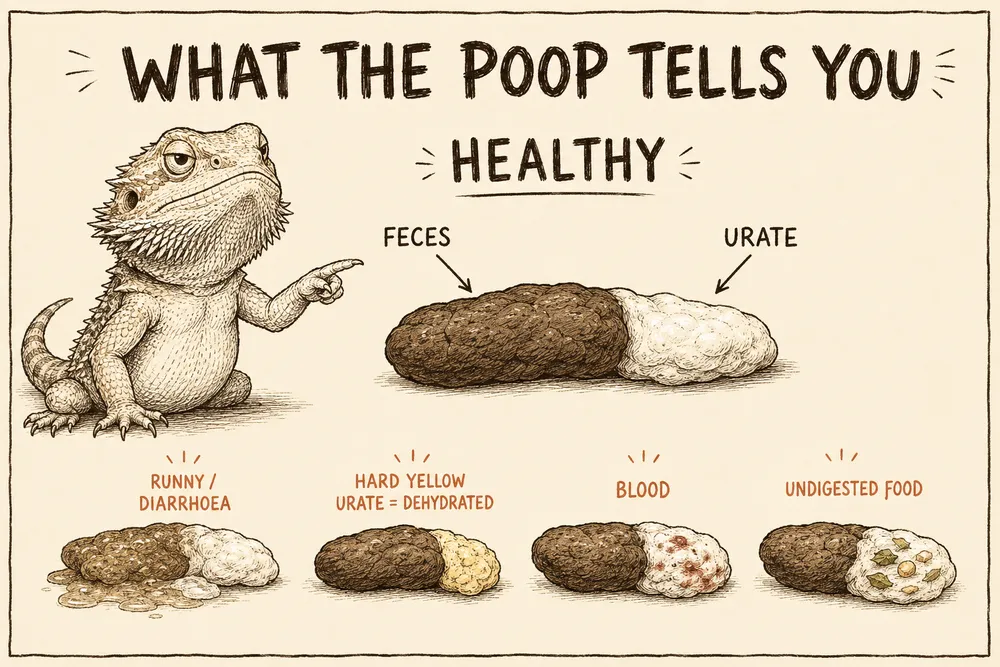
Healthy droppings are a firm brown stool plus a soft white urate (the pale part that gets rid of nitrogen). Worth a closer look are runny stool/diarrhoea, a hard yellow urate (a sign of dehydration), any blood, or visible undigested food. A persistent change, especially with weight loss or not eating, is worth a vet check.
Kind, general guidance from The Baskden Team — not a diagnosis. When in doubt, an exotics/reptile vet is never the wrong call.