

What Do Bearded Dragons Eat? Greens, Insects & Schedule
Feeding a bearded dragon looks simple until you’re standing in the pet shop wondering how many crickets, which greens, and whether that fruit is okay. This is the whole picture in one place: what beardies eat, how the diet changes as they grow, a real schedule, the best (and worst) foods, and how to supplement — fact-checked, so you can stop second-guessing the salad.
🥗 The 30-second version: Bearded dragons are omnivores — insects + leafy greens + a little fruit. The ratio flips with age: babies eat mostly insects (2–3× a day) plus greens; adults eat mostly greens daily with insects only ~2–3× a week. Gut-load and calcium-dust feeders, keep any feeder no bigger than the space between the eyes, build the salad on calcium-rich greens (collard, mustard, dandelion), and never feed fireflies, avocado, or wild-caught insects. It all rides on correct heat + UVB so the food gets used.
📊 You’re asking the #1 question in the hobby. In our analysis of 388 real reptile-keeping questions, feeding was the single most-asked topic — about 32%, more than any other subject.
Bearded dragon diet at a glance:
| Baby / juvenile (0–~12 mo) | Adult (~12 mo+) | |
|---|---|---|
| Main food | Mostly insects | Mostly greens |
| Insects | 2–3× a day, as many as eaten in ~10–15 min | Smaller portion ~2–3× a week |
| Greens | Offered daily (often ignored — keep offering) | Daily, the bulk of the diet |
| Supplements | Calcium most feeds + multivitamin weekly | Calcium a few feeds + multivitamin weekly |
🔧 Feeding the right amount? See whether your dragon is under- or over-weight with the free body-condition checker — the honest test of whether your feeding routine is working.
What do bearded dragons eat?
Bearded dragons are omnivores — they need both animal protein (live insects) and plant matter (leafy greens and vegetables), with fruit as an occasional sweet treat. A healthy diet is a rotating mix, not the same thing every day, and every bit of it depends on a hot basking spot and strong UVB so the dragon can digest it and use the calcium (see the care reference for the targets).
The baby-to-adult flip: how the diet changes with age
This is the part new keepers most often get wrong, so it’s worth stating plainly. The ratio of insects to greens inverts as a dragon grows. Maria Zayas, DVM, in PetMD’s bearded dragon care sheet, sums it up:
“Young bearded dragons require a protein-rich diet consisting primarily of gut-loaded insects, while adults should eat proportionally more plant matter.”
In practice: a baby is an insect-eating machine that needs frequent protein to grow (offer greens too — they’ll mostly ignore them at first, and that’s fine). An adult should be eating mostly salad, with insects as the smaller part of the week. Feeding an adult like a baby — too many insects — is a direct route to obesity and fatty liver.
Feeding schedule and portion size
- Babies & juveniles: insects 2–3 times a day, as many as they’ll eat in about 10–15 minutes, plus fresh greens available daily.
- Adults: fresh greens every day, with a portion of insects only about 2–3 times a week.
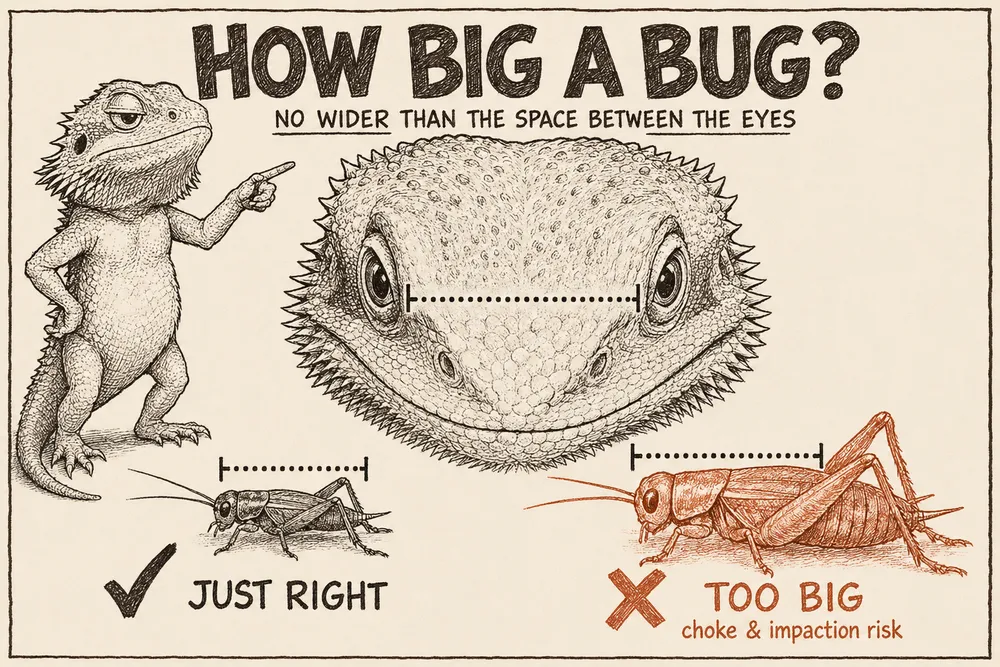
- Portion/size rule: never feed a bug bigger than the space between the eyes. As Zayas puts it: “Feeder insects should never be larger than the space between your bearded dragon’s eyes.” Too-large prey is an impaction risk.
Greens and vegetables: the staples (and what to skip)
Build the salad on calcium-friendly leafy greens: collard greens, mustard greens, dandelion greens, turnip greens, escarole. Add vegetables like squash, bell pepper and green beans. Fruit (berries, melon) is a treat, not a staple, because of the sugar. Go easy on spinach, chard and beet greens (they bind calcium), and skip iceberg lettuce — it’s just water. Lauren Jones, VMD, keeps it simple: feed fresh, because “dehydrated insects are devoid of nutritional value” — the same logic applies to limp, nutrient-poor greens.
Insects, gut-loading and supplements
Good staple feeders are dubia roaches, crickets, and black soldier fly larvae, with hornworms or the odd superworm as treats. Two habits make insects actually nutritious:
- Gut-load them — feed the feeders a nutritious diet before they go in the dragon, so they pass those nutrients on.
- Dust them — coat feeders in calcium at most feedings, and add a reptile multivitamin about once a week. Don’t overdo it: a light dusting, like salting food, not a blizzard.
What NOT to feed — the dangerous list
- Fireflies / lightning bugs — toxic, potentially fatal. Never.
- Any insect caught outdoors — pesticides and parasites. Use captive-bred feeders only.
- Avocado and rhubarb — toxic.
- Prey that’s too big — bigger than the space between the eyes risks impaction.
- Iceberg lettuce / a spinach-heavy salad — no nutrition / calcium-binding.
If a dragon suddenly won’t eat, that’s usually not a diet problem first — check temperatures and see why won’t my reptile eat? before worrying about the menu.
Signs your feeding is on track
You don’t need to weigh every cricket — a well-fed bearded dragon shows it. Look for a rounded, well-muscled body (not bony, not a bulging belly), firm, formed droppings on a regular schedule, steady growth in a youngster, and a bright, active dragon with a healthy appetite. The warning signs point the other way: a fat pad or a distended belly usually means too many insects or too little activity, while a thin, bony dragon or a fading appetite means it’s time to check your temperatures first and, if it persists, see a vet. The body-condition guide shows exactly what a healthy weight looks like.
🐉 Get the age-ratio right, dust and gut-load, keep feeders eye-width-sized, and skip the short dangerous list — and feeding a bearded dragon becomes the easy, enjoyable part of the day it should be.
Go deeper: the complete bearded dragon guide · bearded dragon care reference · why won’t my reptile eat? · is my reptile overweight or underweight? · bearded dragon questions answered.
Sources & further reading
Diet facts are quoted from veterinarian-authored sources:
- Zayas M, DVM (reviewed by Witherell M, DVM). Bearded Dragon Care Sheet. PetMD, updated Jun 2024 — for the omnivore ratio, the age flip, and feeder sizing.
- Jones L, VMD. How Long Do Bearded Dragons Live?. PetMD — for feeding fresh, nutrient-dense food.
Written and fact-checked by The Baskden Team against veterinarian-authored sources — general guidance, not a diagnosis. For a dragon that won’t eat or is losing weight, see an exotics vet.
Common questions
What do bearded dragons eat?
Bearded dragons are omnivores: they eat a mix of live insects, leafy greens and vegetables, with a little fruit as an occasional treat. The balance shifts with age — babies eat mostly insects, adults eat mostly greens. Insects should be gut-loaded (fed a nutritious diet first) and dusted with calcium, and every meal is built on correct temperatures and UVB so the food can actually be digested and used.
How often should I feed a bearded dragon?
It depends on age. Babies and juveniles need feeding often — offer insects two to three times a day (as many as they'll eat in about 10–15 minutes) plus fresh greens daily. Adults flip the other way: fresh greens every day, with a smaller portion of insects only about two to three times a week. Always have fresh greens available; scale insects down as the dragon matures to avoid obesity.
What vegetables and greens can bearded dragons eat?
Build the salad on calcium-rich leafy staples like collard greens, mustard greens, dandelion greens, turnip greens and escarole, plus vegetables such as squash, bell pepper and green beans. Offer fruit (berries, melon) only as an occasional treat because of the sugar. Avoid iceberg lettuce (no real nutrition) and go easy on spinach, beet greens and chard, which bind calcium.
What insects are best for bearded dragons?
Good staple feeders include dubia roaches, crickets, and black soldier fly larvae, with treats like hornworms and the occasional superworm. Gut-load feeders before offering them, and dust them with calcium. The golden rule for size: a feeder should never be bigger than the space between your dragon's eyes. Never feed insects caught outdoors or fireflies — they can be toxic.
What foods are dangerous for bearded dragons?
Never feed fireflies/lightning bugs (toxic and potentially fatal), avocado, rhubarb, or any insect caught outdoors (pesticides and parasites). Avoid feeding prey that's too large (bigger than the space between the eyes is an impaction risk), and don't rely on iceberg lettuce or too much spinach. When unsure about a new food, leave it out until you've checked it against a reliable source.