
Species · Aquatic turtle
African Sideneck Turtle
Pelusios castaneus
The "smiling" sideneck that tucks its head sideways — a hardy, active aquatic turtle for a large heated tank.
Difficulty: Beginner–Intermediate Printable care sheet →
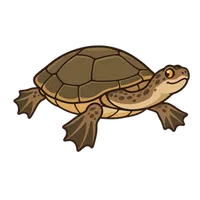
The African sideneck turtle earns its name honestly — it can't pull its head straight back into its shell, so it folds that long neck sideways under the lip of the carapace, and the effect is a permanently curious, almost smiling little face. They're one of the more personable freshwater turtles you can keep, often paddling over to beg the moment you walk by. Under all that charm, though, is a genuinely long-lived, water-hungry animal: this is a 50-year, 100-gallon commitment, not a starter pet you rehome in a year. Set it up like an adult from day one and it's one of the most rewarding turtles out there.
Worried, or still setting up? Free tools
Or browse common African Sideneck Turtle questions →
Care at a glance
| Adult size | About 9–11 inches (25–28 cm) carapace length; females larger than males (males to ~9.8"/25 cm, females to ~11"/28 cm). |
|---|---|
| Lifespan | Commonly several decades, and up to 50 years with good care — plan for this turtle to outlive the tank, the house move, and possibly your kids' childhood. |
| Tank | Minimum 90–110 gallons of water for one adult. A single juvenile can start smaller, but budget for the full-size tank — a 4-foot-plus footprint that holds 90+ gallons — because they grow into it fast and never stop needing the swim room. One turtle per enclosure is safest. |
| Water temperature | 75–80°F (24–27°C) for adults; keep it no cooler than 70°F and under 85°F. Hatchlings and juveniles do best a touch warmer, around 80–85°F. |
| Water depth | Deep enough to swim freely — a good rule is no deeper than about 1.5× the turtle's shell length, so an adult wants roughly a foot or more of water. They're strong swimmers, so more depth (with easy access to the surface and the dock) is better than a shallow puddle. |
| Filtration | A powerful external/canister filter rated for at least 2–3× the tank's actual water volume — turtles are messy, high-waste animals and undersized filtration is the #1 reason tanks go foul. Pair it with a partial water change of about 30% every 1–2 weeks. |
| Basking dock | A dry, stable dock (haul-out platform or floating basking area at least as big as the turtle) kept warm by an overhead basking bulb, with the basking surface at around 95°F (35°C). It must be genuinely dry so the shell can fully dry out between swims. |
| Night | Lights and basking heat off at night is fine as long as the room (and therefore the water) doesn't drop below the low 70s°F. Keep water no cooler than about 70°F (21°C) at any time. |
| UVB & lighting | A linear UVB tube over the basking dock — Zoo Med ReptiSun T5 HO 5.0 or Arcadia Forest 6% — in a reflector, mounted roughly 13–14 inches above the basking platform. Run ~12 hours a day and replace the bulb every 12 months (UVB output fades long before the light looks dim). |
| Tank bottom | Bare-bottom is easiest to keep clean and safest (no impaction risk). If you want a planted, natural look, use large river rocks too big to swallow or a fine sand bed; avoid gravel small enough to be eaten. |
| Diet | Omnivore, and in the wild an opportunistic one — aquatic insects, crustaceans, snails, small fish, plus some plant matter. In captivity, feed a quality aquatic-turtle pellet as the base plus protein (earthworms, insects, occasional whole small fish) and leafy greens/aquatic plants. Young turtles (under ~1 year) run about 50% protein / 50% plants; adults shift to roughly 25% protein / 75% plants, with the protein offered only 1–2 times a week. |
| Supplements | Dust food with a calcium (D3-free) supplement regularly, plus a reptile multivitamin occasionally. A cuttlebone floated in the tank gives a handy free-choice calcium source and helps keep the beak worn. Proper UVB does most of the D3 heavy lifting, so don't rely on supplements to replace the bulb. |
What it's like to live with a African Sideneck Turtle
These are interactive, food-motivated turtles — many learn to recognize their keeper and swim over expecting a meal, which makes them fun to watch. That said, "personable" doesn't mean "cuddly": they can nip, they don't enjoy being handled, and like all turtles they can carry Salmonella, so hands get washed after every session. The real day-to-day of ownership is water management. A 100-gallon tank of turtle water needs a serious filter, regular partial changes, and the occasional big cleanout — this is the chore that makes or breaks the hobby. Do it on a schedule and the tank is clear and low-drama; skip it and you'll have cloudy, smelly water and a stressed turtle. Keep them singly unless you have the space and experience for a much bigger setup.
Your first month together
The settling-in period, in order — so you know what's normal and when not to worry.
- Before the turtle comes home, have the full tank cycled and running: heater holding 75–80°F, canister filter going, dry dock in place, basking spot at ~95°F, and UVB on a 12-hour timer.
- Expect a shy, watchful first week — a new turtle may hide, refuse food, or stay off the dock. Keep the room calm, resist handling, and let it settle.
- Offer small amounts of food and see what it takes; hatchlings eat daily, so don't panic over a day or two of disinterest during the move.
- Watch that it's both basking (drying fully under the light) and diving/swimming normally within the first week or two — using both zones is the sign it's comfortable.
- Test water and do your first ~30% change on schedule; get into the 1–2 week rhythm now so it becomes automatic.
- By the end of the first month you should see a confident feeder that baskets daily, swims strongly, and comes to the front glass at feeding time.
Through the year, and as they grow
In the wild these turtles ride out the dry season by burrowing into mud or sand and aestivating (a dormant, hot-and-dry equivalent of hibernation) until the rains return. In a normal pet home you do NOT need to trigger this — keep the water warm and stable year-round. Aestivation is only relevant to advanced keepers attempting breeding, and it involves deliberately raising water temperature and slowly lowering the level to simulate drought; it should not be attempted casually. Diet also shifts with age: hatchlings and juveniles are more protein-heavy and eat daily, while adults become more plant-leaning and eat protein only a couple times a week.
The pet store gets these wrong
Common myths, kindly corrected — no shame for having believed them.
- "A turtle only grows to the size of its tank." False and harmful. A small tank doesn't produce a healthy small turtle — it produces a stressed, often deformed one with poor water quality and stunted or shell-warped growth. These reach 9–11 inches and need 90–110 gallons regardless of the tank you buy.
- "A 10- or 20-gallon starter kit is fine for a baby sideneck." It's fine only very briefly. They grow quickly and quickly foul a small volume; plan and budget for the adult 90+ gallon tank from the start.
- "Aquatic turtles don't really need UVB — a basking bulb is enough." Not true. Without proper UVB (or an aggressive D3/vet regimen) they develop metabolic bone disease and soft, deformed shells. A real UVB tube, replaced yearly, is non-negotiable.
- "They can just live in cool room-temperature water." No. Chronically cold water suppresses appetite and immunity and invites respiratory infection. Keep water at 75–80°F with a heater and a warm, dry basking spot.
Before you buy
- This is a 30–50 year commitment — expect it to outlast several life changes.
- You need space and budget for a 90–110 gallon tank, a strong canister filter, a heater, and a UVB + basking light setup before the turtle arrives.
- They're personable but not cuddly — they can nip and don't like handling.
- Turtles can carry Salmonella; wash hands after every contact and don't keep them where very young or immunocompromised people handle them.
- One turtle per tank is the safe default; multiples need much larger, carefully managed setups.
- Ongoing chores (water changes, filter maintenance, yearly UVB bulbs) are the real cost, not the turtle itself.
💷 The african sideneck turtle itself is usually the cheapest part — see the real cost of keeping one (upfront + ongoing, no sales pitch).
See a reptile vet if…
We can't diagnose from afar — but these are the signs to stop watching and get a professional:
- Swollen, puffy, or sunken eyes, or eyes crusted shut — see an exotics vet.
- Soft, pyramided, or misshapen shell, or a flaky/discolored patch that spreads — possible metabolic bone disease or shell infection (shell rot); get it checked.
- Open-mouth breathing, wheezing, bubbles from the nose/mouth, or floating lopsided/unable to dive evenly — possible respiratory infection, an emergency for a semi-aquatic turtle.
- Refusing food for an extended stretch, unusual lethargy, or not basking at all despite correct temps.
- Straining or unable to pass eggs (gravid female), or any visible injury/bite wound.
- Any of these warrant an appointment with a reptile/exotics vet — this record is for triage, not diagnosis.
Heading in? Print the free African Sideneck Turtle vet-prep sheet — what to bring, what to tell the vet, and the questions to ask.
Never
- Never keep them in unheated, cool room-temperature water long-term.
- Never skip UVB or run a UVB bulb past its ~12-month replacement date.
- Never house them in an undersized tank in the belief it will keep the turtle small.
- Never use a filter rated for less than the tank's water volume — undersized filtration means chronically foul water.
- Never leave gravel or décor small enough to be swallowed on the tank bottom.
- Never let the basking dock stay wet — they must be able to dry off completely.
- Never house multiple sidenecks in a cramped tank; crowding causes stress, bullying, and injuries.
Common african sideneck turtle questions
How hard are African Sideneck Turtles to keep — are they good for beginners?
Beginner–Intermediate. Genuinely hardy and forgiving, which is why they're sold as beginner turtles — but "hardy" isn't "low-effort." A single adult still needs a big filtered heated tank, real UVB, and years of consistent water changes. Get the setup right up front and the day-to-day is easy; underestimate the tank and filtration and you'll be fighting dirty water for a decade.
What do African Sideneck Turtles eat?
Omnivore, and in the wild an opportunistic one — aquatic insects, crustaceans, snails, small fish, plus some plant matter. In captivity, feed a quality aquatic-turtle pellet as the base plus protein (earthworms, insects, occasional whole small fish) and leafy greens/aquatic plants. Young turtles (under ~1 year) run about 50% protein / 50% plants; adults shift to roughly 25% protein / 75% plants, with the protein offered only 1–2 times a week.
How big a tank do African Sideneck Turtles need?
Minimum 90–110 gallons of water for one adult. A single juvenile can start smaller, but budget for the full-size tank — a 4-foot-plus footprint that holds 90+ gallons — because they grow into it fast and never stop needing the swim room. One turtle per enclosure is safest.
What water temperature do African Sideneck Turtles need?
75–80°F (24–27°C) for adults; keep it no cooler than 70°F and under 85°F. Hatchlings and juveniles do best a touch warmer, around 80–85°F.
What water depth do African Sideneck Turtles need?
Deep enough to swim freely — a good rule is no deeper than about 1.5× the turtle's shell length, so an adult wants roughly a foot or more of water. They're strong swimmers, so more depth (with easy access to the surface and the dock) is better than a shallow puddle.
What filtration do African Sideneck Turtles need?
A powerful external/canister filter rated for at least 2–3× the tank's actual water volume — turtles are messy, high-waste animals and undersized filtration is the #1 reason tanks go foul. Pair it with a partial water change of about 30% every 1–2 weeks.
What basking dock do African Sideneck Turtles need?
A dry, stable dock (haul-out platform or floating basking area at least as big as the turtle) kept warm by an overhead basking bulb, with the basking surface at around 95°F (35°C). It must be genuinely dry so the shell can fully dry out between swims.
What night-time temperature do African Sideneck Turtles need?
Lights and basking heat off at night is fine as long as the room (and therefore the water) doesn't drop below the low 70s°F. Keep water no cooler than about 70°F (21°C) at any time.
What UVB and lighting do African Sideneck Turtles need?
A linear UVB tube over the basking dock — Zoo Med ReptiSun T5 HO 5.0 or Arcadia Forest 6% — in a reflector, mounted roughly 13–14 inches above the basking platform. Run ~12 hours a day and replace the bulb every 12 months (UVB output fades long before the light looks dim).
What substrate do African Sideneck Turtles need?
Bare-bottom is easiest to keep clean and safest (no impaction risk). If you want a planted, natural look, use large river rocks too big to swallow or a fine sand bed; avoid gravel small enough to be eaten.
What supplements do African Sideneck Turtles need?
Dust food with a calcium (D3-free) supplement regularly, plus a reptile multivitamin occasionally. A cuttlebone floated in the tank gives a handy free-choice calcium source and helps keep the beak worn. Proper UVB does most of the D3 heavy lifting, so don't rely on supplements to replace the bulb.
How big do African Sideneck Turtles get?
About 9–11 inches (25–28 cm) carapace length; females larger than males (males to ~9.8"/25 cm, females to ~11"/28 cm).
How long do African Sideneck Turtles live?
Commonly several decades, and up to 50 years with good care — plan for this turtle to outlive the tank, the house move, and possibly your kids' childhood.
What are the signs African Sideneck Turtles are sick or need a vet?
See a reptile or exotics vet if you notice: Swollen, puffy, or sunken eyes, or eyes crusted shut — see an exotics vet.; Soft, pyramided, or misshapen shell, or a flaky/discolored patch that spreads — possible metabolic bone disease or shell infection (shell rot); get it checked.; Open-mouth breathing, wheezing, bubbles from the nose/mouth, or floating lopsided/unable to dive evenly — possible respiratory infection, an emergency for a semi-aquatic turtle.; Refusing food for an extended stretch, unusual lethargy, or not basking at all despite correct temps.; Straining or unable to pass eggs (gravid female), or any visible injury/bite wound.; Any of these warrant an appointment with a reptile/exotics vet — this record is for triage, not diagnosis..
Your first two weeks · Taming & handling · Behaviours explained · Won't eat? · Stuck shed · When to see a vet

Get the free African Sideneck Turtle Starter Kit
A one-page setup criteria checklist and a first-30-days plan for your first african sideneck turtle — what to get, what makes each thing matter, and the honest bits the pet shop skips. Join the den and we’ll send it over.
Free reptile care cheat-sheet the moment you join. No spam — unsubscribe anytime. See how we handle your data in our privacy notice.Sources & further reading
This guide was written and fact-checked against these authorities. It's kind, general guidance — not a diagnosis or a substitute for an exotics vet:
- PetMD — African Sideneck Turtle (vet-reviewed by Dr. Adam Denish, VMD) — Vet-reviewed: basking 95–100°F, water 70–75°F, basking temps, UVB requirement, lifespan (50+ years), adult size 7–12 in, diet, aestivation in dry season.
- Reptile Supply — How to Care for Your African Sideneck Turtle — 90–110 gal minimum tank, water no cooler than 70°F/under 85°F, water depth ≤1.5× turtle length, basking ~95°F, UVB (ReptiSun T5 HO 5.0 / Arcadia Forest 6%) 13–14 in and 12-mo replacement, filtration 2–3× volume, diet ratios, lifespan up to 50 yrs, adult 9–11 in.
- DubiaRoaches.com — African Sideneck Turtle Care Sheet — Corroborates 90–110 gal, water 70–85°F, depth ≤1.5× length, basking ~95°F, UVB bulb/replacement/distance, 12-hr photoperiod, canister filter, 30% water changes every 1–2 weeks, diet ratios by age.
- theTurtleRoom — Pelusios castaneus Species Profile — Family Pelomedusidae, native range (Senegal to Central Africa), adult carapace ♂25cm/♀28cm, captive water 24–27°C (75–80°F), wild omnivorous diet, dry-season aestivation in mud/sand.
- IUCN Tortoise & Freshwater Turtle Specialist Group — Pelusios castaneus (095) — Authoritative taxonomy and biology: carapace length to ~250–285 mm, savannah/aquatic habitat, West/Central African range.
- Wikipedia — Pelomedusidae (family) — Family/suborder confirmation: Pelomedusidae, suborder Pleurodira (side-necked turtles), freshwater, sub-Saharan Africa.
Written and fact-checked by The Baskden Team against veterinarian-authored sources — if your reptile shows a red-flag sign above, see an exotics vet promptly.