
Is My Reptile Scared of Me? How to Tame and Handle It Safely
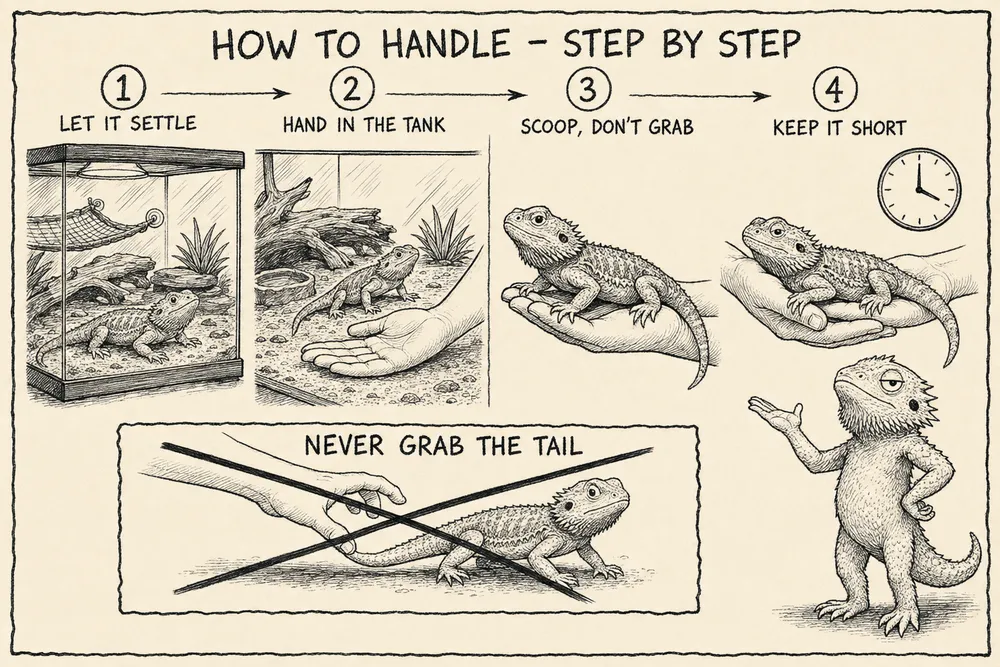
Few things worry a new keeper more than a reptile that hisses, puffs up, hides, or nips when you reach in — it’s easy to read it as “my animal hates me” or “I’m doing something wrong.” Almost always, neither is true. A nervous reptile is just a reptile that doesn’t trust you yet, and trust is something you build slowly, on its terms. This is the calm, honest guide to taming and handling — how to do it without stressing the animal, when to leave it alone, and the one safety line that genuinely matters.
🤲 The 30-second answer: a new or nervous reptile that hides, hisses, or puffs up is scared, not mean — and that fades with patience. Let a new animal settle for a week or two before regular handling. Then go slow: short, calm, low sessions, scooping from the side and supporting the whole body — never chase, grab, or grip the tail. Hand-feeding builds trust. Don’t handle a settling-in, recently-fed, or shedding animal. A bite from a common pet reptile is harmless (wash it, give space) — but a bite from a wild or unidentified snake is a different, potentially serious matter: get an expert ID and medical advice, don’t catch or kill it. And wash your hands after handling any reptile.
First, the honest expectation
Let’s set this straight up front, because it saves a lot of heartache: most reptiles tolerate handling rather than crave it. They don’t greet you at the door or seek cuddles the way a dog does. A calm, tame reptile accepts gentle handling without stress — and some, especially bearded dragons, genuinely seem to enjoy the warmth and company — but for most species the realistic goal is calm trust, not affection.
That is not a failure of your relationship, and it doesn’t mean your animal doesn’t matter. The bond you feel is real and worth having; it just looks different from a mammal’s. Aiming for a relaxed, unstressed animal that trusts your hands is exactly the right target — and a genuinely rewarding one.
Let a new reptile settle first
The single most common taming mistake is handling too soon. A newly-homed reptile is stressed and wary — new smells, new space, no idea if you’re a threat. Handling it on day one teaches it that the scary giant comes back.
Instead, give a new arrival at least a week or two of quiet: let it eat a meal or two, explore, and learn the enclosure is safe. Do the essential husbandry, talk near it, let it get used to your presence — but save real handling until it has settled. You’re not neglecting it by waiting; you’re doing the first and most important step of taming.
How to handle without scaring it
Once it’s settled, build trust with calm, predictable sessions. As the evidence-based care resource ReptiFiles advises for a new snake:
“Once your corn snake is ready for handling, take it slow at first — just like any relationship.”
The same principle carries across species:
- 🖐️ Scoop from the side or below — never swoop from above. A hand descending from overhead looks exactly like a bird of prey. Approach low and slow so the animal sees you coming.
- 🤲 Support the whole body. Let a lizard rest on your flat hand/forearm; let a snake move through loose, supporting hands. A well-supported reptile feels secure; a dangling one panics.
- ⏱️ Keep early sessions short and calm — a few minutes — and build up. End on a good note, before the animal gets stressed.
- 🍗 Hand-feed to build trust. Offering a favourite food by hand or tongs teaches the animal that you bring good things.
- 🚫 Never chase, grab, squeeze, or grip the tail. Cornering and grabbing undoes trust — and for leopard and crested geckos, grabbing or dangling by the tail can make them drop it (a natural escape response). Handle jumpy geckos low over a soft surface in case they leap.
Move at the animal’s pace. Some reptiles tame in days; others take months. Patience always wins.
When not to handle
Handling should be positive and optional — not forced on a vulnerable animal. Give it a rest:
- While it’s still settling in — the first week or two in a new home.
- For ~48 hours after a meal — handling a full snake risks it regurgitating, which is hard on it.
- While it’s shedding — a snake “in blue” (cloudy eyes, dull skin) has poor vision and is understandably grumpier; wait until it has shed.
- When it’s clearly stressed — if it’s frantic, gaping, or desperate to flee, put it back and try again another day.
Reading fear vs calm
Learning your reptile’s body language turns “is it angry?” into “it’s telling me it’s nervous.” Common fear/defensive signals — none of them aggression, all of them fading with trust:
- Hissing, puffing up, or a gaping mouth.
- A raised or flattened body, or a bearded dragon’s dark, puffed “beard”.
- Tail-waving or twitching, or a snake pulling into a tight ball or S-shape.
- Trying to flee, or a musky smell (some snakes “musk” when frightened).
- A warning strike or nip.
The response to all of these is the same: don’t take it personally, don’t force it, back off, and go slower next time. A relaxed reptile, by contrast, moves calmly, tongue-flicks to explore, sits without tension, and takes food readily. If a normally-calm animal suddenly turns fearful or off, run it through the free Is this normal? tool — a behaviour change can occasionally point to a husbandry or health issue.
“My reptile bit me” — the one safety line that matters
For the common beginner pets — bearded dragon, leopard gecko, crested gecko, ball python, corn snake — a bite is essentially harmless. It’s a startled, defensive reaction, usually from a young or nervous animal, and it fades as trust builds. Wash it with soap and water, give the animal space, and look at what spooked it (a hand from above, a hungry snake mistaking fingers for food, handling during shed).
There is one important exception, and it’s the reason we never blur this line: a bite from a wild or unidentified snake is a completely different, potentially serious matter. Do not try to catch, handle, or kill the snake to “check” it — that’s how most snakebites happen. Give it space, get it identified by an expert or local authority, and seek medical advice about the bite. Our found-a-reptile guide walks through exactly what to do. When a snake is unidentified, we will never tell you it’s “probably fine” — safety first, every time.
And whatever you keep: wash your hands after handling any reptile or its enclosure. Reptiles can carry Salmonella without looking ill, so hand-washing (and keeping them out of kitchens and away from very young children’s faces) is basic, sensible hygiene.
Handling notes by species
Every animal is an individual, but the species tendencies are worth knowing:
| Species | Handling temperament | Watch out for |
|---|---|---|
| 🦎 Bearded dragon | The most genuinely interactive — often tolerant, curious, and happy to perch on you | A dark, puffed beard or gaping = stress; give it a break |
| 🦎 Leopard gecko | Hardy and tames well; sits calmly once trusting | Never grab or dangle by the tail — it can drop it |
| 🦎 Crested gecko | Docile but jumpy — a classic “hopper” | Handle low over a soft surface; tail-drop is permanent in cresties |
| 🐍 Ball python | Shy and slow — one of the calmest snakes once settled | Balls up when scared; heavy hider (normal); skip the 48h post-meal window |
| 🐍 Corn snake | Calm and handleable; a great first snake | Nippy as a nervous baby (harmless, fades); a proven escape artist — secure the lid |
The honest part
We can’t tame your reptile for you, and we can’t promise a given animal will ever become a cuddler — some stay shy, and that’s okay. What every keeper can do is exactly what this page describes: let it settle, go slow, handle gently and low, read its fear signals, leave it be when it’s vulnerable, and keep the one safety line firm around unidentified snakes and hand-washing. Do that, and most reptiles become calm, trusting, genuinely enjoyable animals to share a home with.
Find the detail for your reptile
Temperament and handling quirks differ by species — go deep on yours:
| Your reptile | Care guide |
|---|---|
| 🦎 Bearded dragon | Bearded dragon care |
| 🦎 Leopard gecko | Leopard gecko care |
| 🦎 Crested gecko | Crested gecko care |
| 🐍 Ball python | Ball python care |
| 🐍 Corn snake | Corn snake care |
💚 A hissing, hiding reptile isn’t rejecting you — it’s asking for patience. Give it time to settle, handle it gently and on its terms, learn to read when it’s had enough, and let trust build at its own pace. The calm, curious animal on the other side of that patience is well worth the wait.
Go deeper: the free Is this normal? tool · found a wild reptile? · Is my reptile sick? · more real questions in the Baskden Q&A.
Sources & further reading
This guide was written and fact-checked against these authorities. It’s kind, general keeping guidance — not medical advice:
- ReptiFiles — Corn Snake Handling & Body Language — evidence-based handling, socialisation, and species-temperament guidance; the quoted handling line is reproduced verbatim.
- U.S. Centers for Disease Control & Prevention (CDC) — Reptiles & Salmonella — the hand-washing and hygiene guidance for reptile keepers.
- Association of Reptilian & Amphibian Veterinarians (ARAV) — reptile veterinary care and a find-an-exotics-vet directory.
Written by The Baskden Team. A bite from a common pet reptile is harmless — but if you’re bitten by a wild or unidentified snake, treat it as potentially serious and seek medical advice; never handle or kill a snake to identify it.
Common questions
How do I tame my reptile?
Slowly, and on the animal's terms. Let a new reptile settle in for at least a week or two before you handle it regularly — it needs to decide the enclosure is safe first. Then keep early sessions short, low, calm, and supported: scoop from the side rather than swooping from above (which looks like a predator), support the whole body, and never chase, grab, or grip the tail. Hand-feeding is one of the best trust-builders. Tameness is earned over weeks, and how much of it you get varies by species.
Why does my reptile hiss, puff up, or try to bite me?
Because it's frightened, not because it's mean. Hissing, puffing, gaping, a raised body, tail-waving, or a warning strike are all defensive fear responses — extremely common in new or young animals that don't yet trust you. They are not aggression or a personality flaw, and they fade with gentle, consistent, low-pressure handling. The worst thing you can do is force it; the best is to go slow, keep sessions calm and positive, and let the animal learn you're not a threat.
Is a reptile bite dangerous?
From the common beginner pets — bearded dragons, leopard geckos, crested geckos, ball pythons, corn snakes — a bite is essentially harmless. It's a startled, defensive reaction, not aggression: wash it with soap and water and give the animal space. A bite from a wild or unidentified snake is a completely different and potentially serious matter — don't try to catch, handle, or kill the snake, get it identified by an expert, and seek medical advice. Always wash your hands after handling any reptile, as they can carry Salmonella.
When should I not handle my reptile?
Give handling a rest in four situations: while a new animal is still settling in (the first week or two); for about 48 hours after it has eaten (handling a full snake risks regurgitation); while it's shedding — a snake 'in blue' with cloudy eyes has poor vision and is grumpier; and any time it's showing clear stress signals. Handling should be a positive, optional part of its life, not something forced on a scared or vulnerable animal.
Do reptiles actually like being handled?
Honestly, most tolerate handling rather than crave it — they don't bond the way a dog or cat does. A calm, well-socialised reptile accepts gentle handling without stress, and some (bearded dragons especially) are genuinely interactive and seem to enjoy the warmth and company. But for most species the realistic goal is calm tolerance and trust, not affection. That's not a failure of your relationship — it's just who reptiles are, and a tame, unstressed animal is a wonderful thing in its own right.