
Why Is My Reptile's Shed Stuck? The Humidity & Shedding Guide
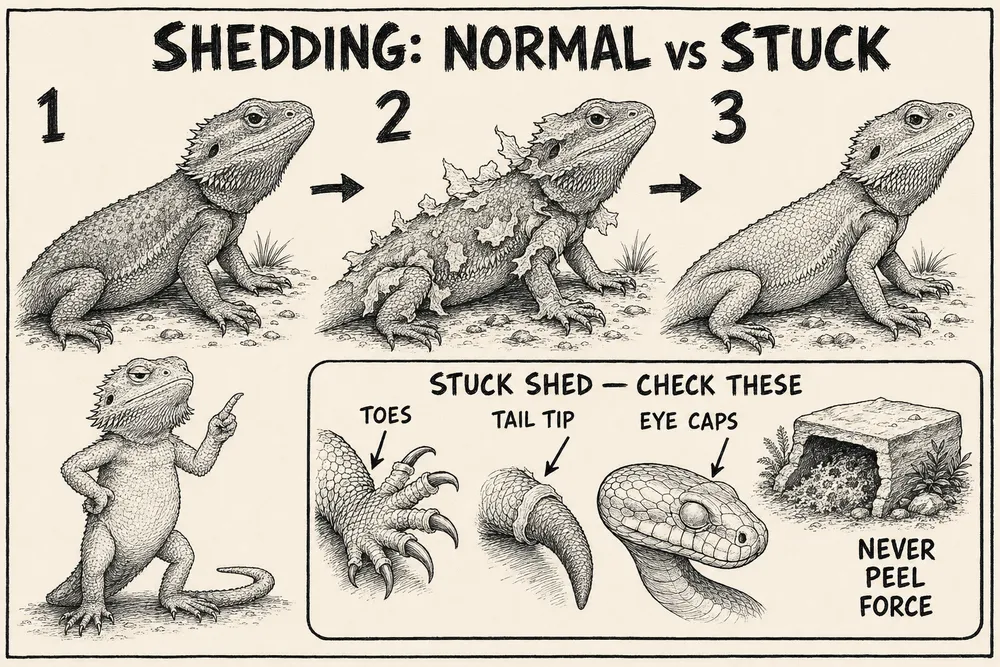
Shedding is one of the most common things new keepers worry about — and one of the most misunderstood. A patchy-looking lizard, a snake with suddenly cloudy eyes, or a scrap of skin stuck on a toe can all look alarming, when most of it is completely normal biology. The one thing that reliably does go wrong is stuck shed, and the cause is almost always the same: humidity. Get the moisture right and shedding mostly takes care of itself. Here’s what normal looks like, why it sticks, and how to help safely.
💧 The 30-second answer: healthy reptiles shed regularly — snakes in one piece, lizards and geckos in patches, and many geckos eat their shed. A snake’s eyes going cloudy blue (“in blue”) is normal pre-shed — don’t feed or handle then. When shed gets stuck, the cause is nearly always humidity too low. Raise humidity, add a humid hide, offer a warm shallow soak, and let the animal work it off — never pull dry skin. Watch the two danger spots: stuck shed on toes/tail (can cut off circulation) and retained eye caps on snakes. Match the humidity to your species — copying another animal’s numbers causes problems.
What normal shedding looks like
Every reptile sheds its skin as it grows — that part is healthy. What form it takes depends on the animal:
- 🐍 Snakes shed in one whole piece, inside-out like a sock, when all goes well. Beforehand they go “in blue”: the eyes turn milky blue-grey and the skin dulls as a fluid layer forms underneath. The eyes clear again a day or two before the shed itself.
- 🦎 Lizards and geckos shed in patches over a few days, often looking blotchy or greyish-white first. Leopard and crested geckos usually eat their shed — that’s normal and nothing to stop.
- ⏳ Frequency changes with age — fast-growing juveniles shed far more often than adults.
None of this needs your intervention when humidity is right. The goal is simply to support a clean, complete shed — and to know the difference between “normal and messy-looking” and “stuck and needs help.”
Why humidity is (almost always) the cause
When a shed goes wrong, the culprit is nearly always that the air was too dry while it happened. Without enough moisture, the old skin doesn’t loosen and separate — it dries onto the animal and sticks. That’s why the fix is moisture, and why the danger spots are the thin extremities: toes, tail tips, and a snake’s eye caps.
Reptile-medicine specialist Stephen J. Divers, BVetMed, DACZM, DECZM puts the full picture this way in the Merck Veterinary Manual: “Dysecdysis, or incomplete or inadequate skin shedding, may be caused by low humidity, ectoparasitism, nutritional deficiencies, infectious diseases, lack of suitable abrasive surfaces, or even decreased thyroid function.“¹ Low humidity heads that list and is the everyday cause for most keepers — but the others are exactly why a shed that keeps sticking despite correct humidity is worth a vet’s look.
But humidity is a two-way street, and this is the part that surprises people: too high is also harmful. Constantly wet, stale, unventilated air breeds mould and drives respiratory infection. The aim for most species is a cycle — humid enough to shed and stay hydrated, then allowed to dry back between mistings, with real airflow — not a permanent swamp.
The numbers, species by species
Humidity is where “copy what someone else does” goes badly wrong, because the right range differs enormously. Every figure below is fact-checked in that species’ care guide:
| Species | Target humidity | Shed style & notes |
|---|---|---|
| 🦎 Bearded dragon | 30–60% | Patchy shed; the “keep it bone-dry” rule is a myth — too dry causes problems |
| 🦎 Leopard gecko | 30–40% ambient + humid hide 70–80% | Patchy; the humid hide is what lets it shed toes and eyelids cleanly |
| 🐍 Corn snake | 65–75% | One-piece shed; more humidity than old caresheets claimed |
| 🐍 Ball python | 60–80% (higher at night) | The spec most keepers get wrong — low humidity = stuck shed & retained eye caps |
| 🦎 Crested gecko | 60–80%, drying to 40–50% | Mist evening; constant sogginess breeds mould & respiratory illness |
The pattern to take away: most species need more humidity than the old “bone dry” folklore suggested — but not constant wet. A humid hide (a covered box with damp moss or paper) is the single most useful tool for the desert-ish species, giving a moist microclimate for shedding without soaking the whole enclosure.
How to raise humidity properly
If your readings are low, fix it at the source rather than drowning the enclosure:
- Deeper, moisture-holding substrate. For humidity-loving snakes, a thick (≥4 inch) layer of coconut husk/fibre or a topsoil-coco mix holds moisture far better than a thin dry lining.
- A humid hide. A covered hide with damp sphagnum moss gives a high-humidity pocket exactly where the animal needs it to shed — essential for leopard geckos, valuable for ball pythons.
- Misting (for tropical species like crested geckos) in the evening, allowed to dry back — the gecko also drinks the droplets.
- Measure with a hygrometer, ideally at the cool end, and adjust to hit your species’ range. Keep good ventilation so it’s humid, not stale.
Run your whole environment through the setup checker to see whether humidity — and the rest — is where it should be.
Stuck shed: how to help safely
If skin has stuck, don’t panic and don’t peel it dry. Soften first, then let the animal do the work:
- 🛁 A warm, shallow soak (lukewarm, shallow enough that the animal is never out of its depth, supervised) softens retained skin — or use a damp humid hide.
- 🤏 Ease it gently once it’s soft, in the direction of growth, or let the animal rub it off. Never pull hard on dry skin — you can damage the new skin underneath.
- 👣 Check the toes and tail tip. Retained shed here forms a tightening band that can cut off circulation and cost the animal a toe or tail tip — this is the one that turns urgent.
- 👁️ Check a snake’s eyes. Snakes can retain the clear caps over the eyes (“retained eye caps”); if they don’t come away with a good soak, that’s a vet job — never dig at a snake’s eye.
- 🩺 When to see a vet: stuck shed that won’t clear after gentle help, a constricting band on a toe or tail, retained eye caps, or repeated bad sheds despite correct humidity (which can point to dehydration or an underlying illness).
The honest part
We can’t judge your enclosure’s humidity from afar — that’s what a hygrometer is for — and we can’t tell you whether a particular stuck patch has already damaged a toe. What this guide gives you is the framework: know what a normal shed looks like, keep humidity in your species’ range (humid, not stale), help a stuck shed by softening not pulling, and treat toes and eye caps as the spots that turn into emergencies. When gentle help isn’t enough, a reptile vet is the right call.
Find the detail for your reptile
Humidity ranges and shed quirks differ by species — go deep on yours:
| Your reptile | Care guide |
|---|---|
| 🦎 Bearded dragon | Bearded dragon care |
| 🦎 Leopard gecko | Leopard gecko care |
| 🦎 Crested gecko | Crested gecko care |
| 🐍 Ball python | Ball python care |
| 🐍 Corn snake | Corn snake care |
💚 Shedding looks dramatic but is mostly just your reptile growing. Keep humidity in the right band for its species, add a humid hide, soften rather than pull, and keep an eye on toes and eye caps — and the vast majority of sheds will come off clean with no help from you at all.
Go deeper: the setup checker · heat & UVB guide · Is my reptile sick? · more real questions in the Baskden Q&A.
Sources & further reading
This guide was written and fact-checked against these authorities. It’s kind, general husbandry guidance — not a diagnosis or a substitute for a reptile vet:
- ReptiFiles — evidence-based, species-by-species humidity ranges and shedding/husbandry guidance.
- Association of Reptilian & Amphibian Veterinarians (ARAV) — reptile veterinary care and a find-an-exotics-vet directory.
- ¹ Merck Veterinary Manual, “Environmental Diseases and Traumatic Injuries of Reptiles” — by Stephen J. Divers, BVetMed, DACZM, DECZM, FRCVS. The quoted line on the causes of dysecdysis; also retained eye caps and annular (toe/tail) bands.
Written and fact-checked by The Baskden Team against veterinarian-authored sources — if a stuck shed is constricting a toe or tail, an eye cap won’t clear, or bad sheds keep recurring, see a reptile/exotics vet promptly.
Common questions
Why is my reptile's shed stuck?
Almost always because humidity was too low while it was shedding. A reptile needs the right moisture in the air (and often a dedicated humid hide) to loosen the old skin and slough it cleanly. When it's too dry, skin sticks — especially on the toes, tail tip, and, in snakes, over the eyes. Raise the humidity, add or dampen a humid hide, offer a warm shallow soak, and let the animal work the skin off gently. Never pull hard.
What humidity does my reptile need?
It varies a lot by species: bearded dragons want a fairly low 30–60%, leopard geckos 30–40% ambient plus a humid hide at 70–80%, corn snakes around 65–75%, and ball pythons and crested geckos a higher 60–80%. Crested geckos should be allowed to dry back to about 40–50% between mistings. Measure with a hygrometer rather than guessing, and match your species — copying another animal's numbers is a common cause of shed and respiratory problems.
Why are my snake's eyes cloudy or blue?
That's a completely normal part of shedding. A few days before a snake sheds, a fluid layer forms under the old skin, turning the eyes milky blue-grey and dulling the whole body — keepers call it being 'in blue'. The eyes clear again shortly before the shed. Don't feed or handle during this phase: the snake's vision is poor and it's more defensive. Just make sure humidity is up so the shed comes off in one clean piece.
How do I help my reptile shed or treat a stuck shed?
Raise the humidity and give a warm, shallow soak or a damp humid hide to soften the retained skin, then let the animal work it off — or ease it very gently once it's soft. Never force or peel dry skin. Watch the danger spots: stuck shed left on the toes or tail tip can constrict and cut off circulation, and snakes can retain the clear caps over their eyes. Stuck shed that won't clear after gentle help needs a reptile vet.
Can reptile humidity be too high?
Yes — and it's a real risk, not just a number to maximise. Constantly wet, stale, poorly-ventilated air breeds mould and drives respiratory infections. The goal for most species is a cycle, not a swamp: humid enough to shed and stay hydrated, then allowed to dry back between mistings, with good airflow. Too dry causes stuck sheds; too wet-and-stale causes respiratory illness. The sweet spot is species-specific.