
Species · Omnivorous skink
Blue Tongue Skink
Tiliqua spp.
The docile, dog-like omnivore lizard — hardy and full of personality once you learn its varied diet.
Difficulty: Beginner Printable care sheet →
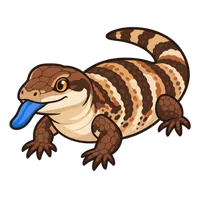
Blue tongue skinks are the golden retrievers of the lizard world — long, glossy, short-legged, and genuinely dog-like: many learn to recognise their keeper and enjoy gentle handling. They flash a startling blue tongue when threatened, but they're docile and hardy. The two things new keepers underestimate are the varied OMNIVORE diet they need, and that the right humidity depends entirely on which subspecies (Indonesian vs Australian) you have.
Worried, or still setting up? Free tools
Or browse common Blue Tongue Skink questions →
Care at a glance
| Adult size | 18–24 in (thick-bodied) |
|---|---|
| Lifespan | 15–20+ years (some live 20–30) |
| Enclosure | Big — they’re thick-bodied, active ground-dwellers. Provide at least 12 sq ft of floor space (a 4×3 ft footprint or larger) and 18–24 in of height (24 in if lights are mounted inside). The old “4×2×2 ft” standard is now considered too small; bigger is better. |
| Basking / warm zone | A proper hot basking surface of 100–105°F (38–41°C) from overhead heat on a thermostat — they are diurnal baskers like a bearded dragon. The Northern, Eastern and Tanimbar types (Tiliqua scincoides) like it hotter: 105–115°F (41–46°C). |
| Cool side | Cool end / ambient ~75–85°F (24–29°C) for Indonesian types; Australian types run a touch cooler. |
| Night | Night ~65–75°F (18–24°C) — a natural drop is fine. |
| UVB & lighting | Strong UVB is needed (a diurnal basker): a linear T5 HO bulb giving a UVI of 3.0–4.0 at the basking area, spanning much of the enclosure (Arcadia Forest 6% for Indonesian types, Desert 12% for Australian). Replace every 12 months. |
| Humidity | SUBSPECIES-DEPENDENT, and the spec people get most wrong. Indonesian types (Merauke, “Classic”, Halmahera, Kei, Tanimbar) want 60–80%; Northern 40–60%; Australian (Centralian, Western, Blotched) 20–50%. Identify your subspecies and match it. |
| Substrate | A deep, burrowable substrate (they dig): a soil/coco mix that holds humidity for Indonesian types, drier for Australian types. |
| Diet | OMNIVORE — the defining feature, and the key to success. Feed as much variety as possible: protein (insects, snails, eggs, lean cooked meats), vegetables/greens, and a little fruit. A rough serving is ~1–2 tablespoons (about head-sized); juveniles eat more protein and more often, adults shift toward vegetables. Variety is everything. |
| Supplements | Dust protein and salad with calcium, plus a multivitamin on a rotation. |
🦎 Did you know? — Blue Tongue Skink fun facts
Little true delights about the blue tongue skink — each one checked against a named source, no pet-shop myths.
- When threatened, the blue-tongue gapes to flash its startlingly bright blue tongue, puffs up its body and hisses to look bigger and unappetising. Animal Diversity Web
- Blue-tongue skinks give birth to live young rather than laying eggs, carrying the babies inside the mother and delivering around 10–15 at a time. Animal Diversity Web
- Some scientists think the blue-tongue mimics the venomous death adder, sharing its range, blotchy colouring and stubby shape to fool predators. Animal Diversity Web
What it's like to live with a Blue Tongue Skink
Blue tongue skinks are one of the most dog-like reptiles you can keep. A settled bluey learns to recognise its keeper, will trundle over for food, take it gently from the hand, and genuinely tolerate — sometimes seem to enjoy — being handled. They are big, slow, curious ground lizards that love to burrow and bask, and that famous blue tongue is a startle display you'll occasionally get to see. Their appetite is large and their diet wonderfully varied, which makes feeding one of the daily pleasures of keeping them.
Your first month together
The settling-in period, in order — so you know what's normal and when not to worry.
- Allow a week or so for it to settle; a new skink will burrow and hide as it gets comfortable, and that settling matters.
- Offer a broad, varied omnivore diet from the start — variety is the whole game with blue tongues.
- Provide deep substrate to burrow into and a proper basking spot, so it can thermoregulate and feel secure.
- Watch for the first shed and steady droppings as your "settling in well" signs.
- Start gentle handling once it is eating calmly and coming out on its own — blueys tame quickly with consistency.
Through the year, and as they grow
Many blue tongue skinks slow down or brumate in the cooler months, eating far less for a stretch — normal in a healthy adult. Youngsters grow fast and take proportionally more protein, shifting toward more vegetables as they mature. Keep the diet varied across the whole year and judge condition by a well-fleshed, steady body.
The pet store gets these wrong
Common myths, kindly corrected — no shame for having believed them.
- “Just feed it cat or dog food” — processed pet food isn’t a proper staple; feed a varied fresh omnivore diet.
- “All blue tongues want the same humidity” — no; it’s subspecies-specific (Indonesian high, Australian low).
- “A 4×2×2 ft is plenty” — now considered too small; aim for ≥12 sq ft of floor.
- “They’re insectivores / they’re herbivores” — neither; they need both animal and plant matter.
Before you buy
- Space for a large (≥12 sq ft floor) enclosure — this is a big, active lizard.
- Strong UVB (T5 HO) + a hot basking lamp on controllers.
- Willingness to prep a varied omnivore diet (protein + veg + fruit), not just one food.
- Knowing your subspecies so you can set the right humidity.
- A 15–20+ year commitment.
💷 The blue tongue skink itself is usually the cheapest part — see the real cost of keeping one (upfront + ongoing, no sales pitch).
See a reptile vet if…
We can't diagnose from afar — but these are the signs to stop watching and get a professional:
- Weak, shaky, or bent limbs, tremors, or a soft/rubbery jaw (signs pointing to metabolic bone disease).
- Laboured or open-mouth breathing, mucus, or clicking (possible respiratory infection).
- A swollen, firm belly with no droppings, or straining (possible impaction).
- Obvious obesity — fat rolls, a dragging belly (very common; ease back on fatty protein).
- A kinked or deformed spine (often a husbandry/nutrition problem — get it checked).
- Any tissue protruding from the vent (prolapse) — keep it moist and go now.
Heading in? Print the free Blue Tongue Skink vet-prep sheet — what to bring, what to tell the vet, and the questions to ask.
Never
- Never feed an insect-only or rodent-only diet — they’re omnivores and need plants too.
- Never guess the humidity — match it to your subspecies.
- Never skip strong UVB and a proper hot basking zone.
- Never house two skinks together — they’re solitary and will fight.
- Never let it overheat above the basking range.
Common blue tongue skink questions
How hard are Blue Tongue Skinks to keep — are they good for beginners?
Beginner. Hardy, dog-tame, and beginner-friendly once you understand two things: they’re OMNIVORES (a varied diet, not just insects), and humidity depends on which subspecies you have.
What do Blue Tongue Skinks eat?
OMNIVORE — the defining feature, and the key to success. Feed as much variety as possible: protein (insects, snails, eggs, lean cooked meats), vegetables/greens, and a little fruit. A rough serving is ~1–2 tablespoons (about head-sized); juveniles eat more protein and more often, adults shift toward vegetables. Variety is everything.
How big an enclosure do Blue Tongue Skinks need?
Big — they’re thick-bodied, active ground-dwellers. Provide at least 12 sq ft of floor space (a 4×3 ft footprint or larger) and 18–24 in of height (24 in if lights are mounted inside). The old “4×2×2 ft” standard is now considered too small; bigger is better.
What basking temperature do Blue Tongue Skinks need?
A proper hot basking surface of 100–105°F (38–41°C) from overhead heat on a thermostat — they are diurnal baskers like a bearded dragon. The Northern, Eastern and Tanimbar types (Tiliqua scincoides) like it hotter: 105–115°F (41–46°C).
What should the cool side be for Blue Tongue Skinks?
Cool end / ambient ~75–85°F (24–29°C) for Indonesian types; Australian types run a touch cooler.
What night-time temperature do Blue Tongue Skinks need?
Night ~65–75°F (18–24°C) — a natural drop is fine.
What UVB and lighting do Blue Tongue Skinks need?
Strong UVB is needed (a diurnal basker): a linear T5 HO bulb giving a UVI of 3.0–4.0 at the basking area, spanning much of the enclosure (Arcadia Forest 6% for Indonesian types, Desert 12% for Australian). Replace every 12 months.
What humidity do Blue Tongue Skinks need?
SUBSPECIES-DEPENDENT, and the spec people get most wrong. Indonesian types (Merauke, “Classic”, Halmahera, Kei, Tanimbar) want 60–80%; Northern 40–60%; Australian (Centralian, Western, Blotched) 20–50%. Identify your subspecies and match it.
What substrate do Blue Tongue Skinks need?
A deep, burrowable substrate (they dig): a soil/coco mix that holds humidity for Indonesian types, drier for Australian types.
What supplements do Blue Tongue Skinks need?
Dust protein and salad with calcium, plus a multivitamin on a rotation.
How big do Blue Tongue Skinks get?
18–24 in (thick-bodied)
How long do Blue Tongue Skinks live?
15–20+ years (some live 20–30)
What are the signs Blue Tongue Skinks are sick or need a vet?
See a reptile or exotics vet if you notice: Weak, shaky, or bent limbs, tremors, or a soft/rubbery jaw (signs pointing to metabolic bone disease).; Laboured or open-mouth breathing, mucus, or clicking (possible respiratory infection).; A swollen, firm belly with no droppings, or straining (possible impaction).; Obvious obesity — fat rolls, a dragging belly (very common; ease back on fatty protein).; A kinked or deformed spine (often a husbandry/nutrition problem — get it checked).; Any tissue protruding from the vent (prolapse) — keep it moist and go now..
Your first two weeks · Taming & handling · Behaviours explained · Won't eat? · Stuck shed · When to see a vet

Get the free Blue Tongue Skink Starter Kit
A one-page setup criteria checklist and a first-30-days plan for your first blue tongue skink — what to get, what makes each thing matter, and the honest bits the pet shop skips. Join the den and we’ll send it over.
Free reptile care cheat-sheet the moment you join. No spam — unsubscribe anytime. See how we handle your data in our privacy notice.Sources & further reading
This guide was written and fact-checked against these authorities. It's kind, general guidance — not a diagnosis or a substitute for an exotics vet:
- ReptiFiles — Blue Tongue Skink Care — Enclosure ≥12 sq ft floor / 18–24in tall, basking 100–105°F (T. scincoides 105–115°F), ambient 75–85°F (Australian 70–85°F), UVI 3.0–4.0, subspecies-specific humidity (Indonesian 60–80% / Northern & Eastern 40–60% / Blotched 40–50% / Centralian & Western 20–40%), omnivore diet + ratios. Rechecked 16 Oct 2026 against the care guide's enclosure-size and temperature-humidity-light chapters.
- Association of Reptilian & Amphibian Veterinarians (ARAV) — Find-an-exotics-vet; MBD, respiratory infection, obesity.
- Merck Veterinary Manual — reptiles — Metabolic bone disease, respiratory infection, obesity, impaction.
Written and fact-checked by The Baskden Team against veterinarian-authored sources — if your reptile shows a red-flag sign above, see an exotics vet promptly.