
Species · Beginner snake
Bull Snake
Pituophis catenifer sayi
A big, bold North American colubrid — dramatic hissers that are mostly bluff, and impressive once settled.
Difficulty: Beginner–Intermediate Printable care sheet →
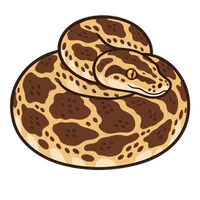
If you want a big, characterful North American snake that doesn't ask for tropical humidity or fussy misting, the bull snake is hard to beat. They're tough, curious, enthusiastic feeders and can live 15-20+ years, so this is a real long-haul commitment in a large enclosure. The one honest heads-up: many bull snakes are champion bluffers. That loud hiss and tail-buzz is theatre, not danger, and with regular gentle handling most turn into steady, confident pets.
Worried, or still setting up? Free tools
Or browse common Bull Snake questions →
Care at a glance
| Adult size | Typically 4-6 ft, with some individuals reaching 8 ft. One of the largest colubrid (non-python) snakes in North America. |
|---|---|
| Lifespan | 15-20+ years in captivity; well-kept animals can reach 25 years or more. |
| Enclosure | Adult minimum around 4 x 2 x 2 ft (48\" L x 24\" D x 24\" H) of floor space; bigger is better, and large 6-8 ft animals need substantially more room. A front-opening wooden or PVC vivarium holds heat and low humidity better than a screen-top glass tank. |
| Basking / warm zone | Warm-side hotspot around 88-90°F (31-32°C); a basking surface up to ~90-92°F (32-33°C) is fine. Always verify with a probe thermometer at snake level, not a stick-on dial. |
| Cool side | Cool end around 70-78°F (21-26°C), giving the snake a proper thermal gradient to choose from across the enclosure. |
| Night | A modest night drop is natural and healthy; letting the cool end fall to the low 70s°F (around 68-72°F / 20-22°C) is fine. No overnight bright light is needed. |
| UVB & lighting | Optional but recommended. Bull snakes can thrive on whole prey without UVB, but modern best practice provides low-level UVB for overall health: a T5 HO 5-6% tube (e.g., Arcadia Forest 6% or Zoo Med ReptiSun 5.0) spanning about half the enclosure on the warm side, mounted so the basking zone sits in a low UVI band. Replace UVB tubes about every 12 months. |
| Humidity | Low and dry: roughly 30-50% ambient humidity. Chronically damp, high humidity paired with cool temps invites scale rot and respiratory infection. Always offer a humid hide (damp sphagnum moss) and raise humidity briefly around shed to help a clean, one-piece slough. |
| Substrate | A deep, dry, burrow-friendly layer of aspen shavings, cypress mulch, or a naturalistic soil-based (bioactive) mix. Provide several inches for burrowing. Avoid cedar and pine shavings, which release oils harmful to reptiles. |
| Diet | Strictly carnivorous: appropriately sized frozen-thawed rodents (mice graduating to rats), each roughly as wide as the snake's thickest point. Hatchlings/juveniles about every 5-7 days; adults about every 7-14 days. Provide a large, sturdy water bowl at all times. |
| Supplements | None required when feeding nutritionally complete whole prey (frozen-thawed rodents supply the vitamins and calcium a bull snake needs). Skip dusting and vitamin drops; correct prey size and feeding frequency matter far more. |
What it's like to live with a Bull Snake
House one bull snake per enclosure. They are solitary and, like many colubrids, can be cannibalistic, so cohabiting risks stress, food-competition bites, and one snake eating the other. Keep separate; only pair briefly and supervised for intentional breeding.
Your first month together
The settling-in period, in order — so you know what's normal and when not to worry.
- Set up and stabilize the enclosure BEFORE the snake arrives: confirm a real thermal gradient (warm ~88-90°F, cool ~70-78°F) with a probe thermometer and a thermostat on every heat source.
- Provide at least two snug hides, one on the warm end and one on the cool end, plus a humid moss hide.
- Give the new snake about 5-7 days to settle with minimal disturbance before the first feeding attempt.
- Offer an appropriately sized frozen-thawed rodent; if refused, wait a few days and retry rather than force it.
- Expect bluffing (hissing, tail-buzzing, striking posture) at first; move calmly and start short, gentle handling sessions only after it's eaten reliably.
- Do a quick daily check of temps, fresh water, and the snake's condition; spot-clean waste promptly.
Through the year, and as they grow
Bull snakes naturally slow down and may eat less in the cooler, shorter days of winter; a mild seasonal cooldown is normal and not a cause for alarm as long as the snake stays hydrated and holds weight. A deliberate brumation period is only needed for breeding and should be done carefully with a fasted, vet-healthy snake. Keep humidity a touch higher during shed cycles year-round.
The pet store gets these wrong
Common myths, kindly corrected — no shame for having believed them.
- "A hissing, rattling bull snake is aggressive and dangerous." Mostly bluff. Bull snakes flatten, hiss loudly, vibrate their tails and mimic a rattlesnake to scare threats off; they're non-venomous and most calm down with routine handling.
- "It's basically the same as a rattlesnake." No. The rattlesnake act is harmless mimicry. Bull snakes are non-venomous constrictors and are actually beneficial rodent-eaters in the wild.
- "A big snake needs a huge water feature and high humidity." Bull snakes are dry-climate animals. They need a drinking bowl and a humid hide, not a wet, tropical setup, which can cause scale rot and respiratory illness.
- "You can keep two together to keep them company." Snakes aren't social; bull snakes do best alone and can injure or even eat a cagemate.
- "A 20-gallon tank is fine for life." That's an outdated pet-store minimum. This is a large, active snake that needs roughly 4 x 2 x 2 ft or more as an adult.
Before you buy
- This is a big, long-lived commitment: potentially 6 ft of snake for 15-20+ years.
- You'll need a large, secure, escape-proof enclosure (about 4 x 2 x 2 ft minimum) plus thermostats and thermometers, not a small starter tank.
- You must be comfortable feeding whole frozen-thawed rodents.
- Early bluffing (loud hissing, tail-buzzing, striking) is normal; you should be OK working calmly through it.
- Line up an exotics/reptile vet before you need one, and budget for care.
- Choose a captive-bred animal from a reputable breeder over a wild-caught snake.
💷 The bull snake itself is usually the cheapest part — see the real cost of keeping one (upfront + ongoing, no sales pitch).
See a reptile vet if…
We can't diagnose from afar — but these are the signs to stop watching and get a professional:
- Open-mouth breathing, wheezing, gurgling, or bubbly mucus around the nose/mouth (possible respiratory infection) - see an exotics vet.
- Discolored, blistered, or raw scales on the belly, or a red/sour-smelling mouth (scale rot or mouth rot) - needs veterinary care.
- Refusing food for an unusually long stretch alongside weight loss or lethargy (beyond a normal seasonal or pre-shed slowdown).
- Repeated incomplete sheds, or retained eye caps or tail-tip skin, which can constrict and cause injury.
- Tiny moving dots (mites) on the snake or in the water bowl, especially with excessive soaking.
- Regurgitation of meals, straining, visible swelling, or a wound/burn from a heat source - get it checked promptly.
Heading in? Print the free Bull Snake vet-prep sheet — what to bring, what to tell the vet, and the questions to ask.
Never
- Never use cedar or pine shavings; their oils are toxic to snakes.
- Never provide unregulated heat: every heat lamp, mat, or bulb must run through a thermostat to prevent burns.
- Never keep them damp and cool for long periods - it invites scale rot and respiratory infection.
- Never house two bull snakes together long-term.
- Never feed live rodents when frozen-thawed will do; a live rat can bite and seriously injure your snake.
- Never handle for at least 24-48 hours after a meal, to avoid causing regurgitation.
Common bull snake questions
How hard are Bull Snakes to keep — are they good for beginners?
Beginner–Intermediate. Hardy, forgiving, and a strong eater, which makes a bull snake a genuinely good first big snake. The "intermediate" nudge is about size and attitude, not fragility: adults are large, powerful, active snakes, and many are dramatic bluffers (loud hiss, tail-rattle, S-strike) before they settle. Give it space, respect the bluff, and it becomes calm and manageable.
What do Bull Snakes eat?
Strictly carnivorous: appropriately sized frozen-thawed rodents (mice graduating to rats), each roughly as wide as the snake's thickest point. Hatchlings/juveniles about every 5-7 days; adults about every 7-14 days. Provide a large, sturdy water bowl at all times.
How big an enclosure do Bull Snakes need?
Adult minimum around 4 x 2 x 2 ft (48\" L x 24\" D x 24\" H) of floor space; bigger is better, and large 6-8 ft animals need substantially more room. A front-opening wooden or PVC vivarium holds heat and low humidity better than a screen-top glass tank.
What basking temperature do Bull Snakes need?
Warm-side hotspot around 88-90°F (31-32°C); a basking surface up to ~90-92°F (32-33°C) is fine. Always verify with a probe thermometer at snake level, not a stick-on dial.
What should the cool side be for Bull Snakes?
Cool end around 70-78°F (21-26°C), giving the snake a proper thermal gradient to choose from across the enclosure.
What night-time temperature do Bull Snakes need?
A modest night drop is natural and healthy; letting the cool end fall to the low 70s°F (around 68-72°F / 20-22°C) is fine. No overnight bright light is needed.
What UVB and lighting do Bull Snakes need?
Optional but recommended. Bull snakes can thrive on whole prey without UVB, but modern best practice provides low-level UVB for overall health: a T5 HO 5-6% tube (e.g., Arcadia Forest 6% or Zoo Med ReptiSun 5.0) spanning about half the enclosure on the warm side, mounted so the basking zone sits in a low UVI band. Replace UVB tubes about every 12 months.
What humidity do Bull Snakes need?
Low and dry: roughly 30-50% ambient humidity. Chronically damp, high humidity paired with cool temps invites scale rot and respiratory infection. Always offer a humid hide (damp sphagnum moss) and raise humidity briefly around shed to help a clean, one-piece slough.
What substrate do Bull Snakes need?
A deep, dry, burrow-friendly layer of aspen shavings, cypress mulch, or a naturalistic soil-based (bioactive) mix. Provide several inches for burrowing. Avoid cedar and pine shavings, which release oils harmful to reptiles.
What supplements do Bull Snakes need?
None required when feeding nutritionally complete whole prey (frozen-thawed rodents supply the vitamins and calcium a bull snake needs). Skip dusting and vitamin drops; correct prey size and feeding frequency matter far more.
How big do Bull Snakes get?
Typically 4-6 ft, with some individuals reaching 8 ft. One of the largest colubrid (non-python) snakes in North America.
How long do Bull Snakes live?
15-20+ years in captivity; well-kept animals can reach 25 years or more.
What are the signs Bull Snakes are sick or need a vet?
See a reptile or exotics vet if you notice: Open-mouth breathing, wheezing, gurgling, or bubbly mucus around the nose/mouth (possible respiratory infection) - see an exotics vet.; Discolored, blistered, or raw scales on the belly, or a red/sour-smelling mouth (scale rot or mouth rot) - needs veterinary care.; Refusing food for an unusually long stretch alongside weight loss or lethargy (beyond a normal seasonal or pre-shed slowdown).; Repeated incomplete sheds, or retained eye caps or tail-tip skin, which can constrict and cause injury.; Tiny moving dots (mites) on the snake or in the water bowl, especially with excessive soaking.; Regurgitation of meals, straining, visible swelling, or a wound/burn from a heat source - get it checked promptly..
Your first two weeks · Taming & handling · Behaviours explained · Won't eat? · Stuck shed · When to see a vet

Get the free Bull Snake Starter Kit
A one-page setup criteria checklist and a first-30-days plan for your first bull snake — what to get, what makes each thing matter, and the honest bits the pet shop skips. Join the den and we’ll send it over.
Free reptile care cheat-sheet the moment you join. No spam — unsubscribe anytime. See how we handle your data in our privacy notice.Sources & further reading
This guide was written and fact-checked against these authorities. It's kind, general guidance — not a diagnosis or a substitute for an exotics vet:
- Big Apple Herp - Bull Snake & Gopher Snake Care Guide — Adult size 4-8 ft; lifespan 15-25+ yrs; enclosure at least ~4 ft; warm upper 80s°F, basking ~88-92°F; cool 70-78°F; humidity ~30-50%; F/T rodents; feeding babies every 5-7 days, adults every 7-14 days; UVB not required with whole prey.
- The Bio Dude - Gopher Snake (Pituophis) Care Sheet — Enclosure 4x2x2 ft / 75 gal minimum; basking ~85°F; cool 70-72°F; humid hide always; substrate/bioactive soil mix; feeding hatchlings every 5-10 days, adults every 2 weeks.
- The Reptile Centre - Gopher Snake Care Sheet — Enclosure min 3x2x2 ft; basking ~90°F over one-third; cool ~75°F; night ~75°F; 5% T8 or 2-5% T5 UVB tube; low humidity; adult ~6 ft; lifespan ~15 yrs.
- Reptiles Magazine - Bullsnake Care Information — Warm-side hotspot high 70s°F, cool end low 70s°F; 12/12 photoperiod; aspen bedding; detailed prey-size feeding progression; humidity raised during shedding.
- VCA Animal Hospitals - Common Diseases of Pet Snakes — Vet reference for health flags: respiratory disease (open-mouth breathing, nasal discharge, wheezing), infectious stomatitis/mouth rot, dermatitis/scale rot, parasites/mites, septicemia signs.
Written and fact-checked by The Baskden Team against veterinarian-authored sources — if your reptile shows a red-flag sign above, see an exotics vet promptly.