
Species · Beginner snake
California Kingsnake
Lampropeltis californiae
The hardy, glossy black-and-white beginner snake famous for one thing: it eats other snakes.
Difficulty: Beginner Printable care sheet →
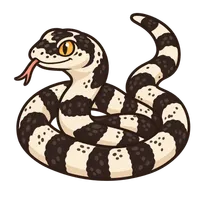
California kingsnakes are the glossy, boldly banded black-and-white snakes that top many "best beginner snake" lists — hardy, active, and long-lived. Their claim to fame is right there in the name: kingsnakes eat other snakes (they are even partly immune to rattlesnake venom in the wild). For a keeper that means two simple rules — always feed with tongs, and always house one per enclosure — and otherwise a wonderfully low-drama, forgiving pet.
Worried, or still setting up? Free tools
Or browse common California Kingsnake questions →
Care at a glance
| Adult size | 30–48 in (2.5–4 ft) |
|---|---|
| Lifespan | 20+ years |
| Enclosure | Adult minimum 4×2×2 ft (48×24×24 in, a 120-gallon footprint); larger is better for these active snakes. A tight, locking lid is essential — kingsnakes are strong, determined escape artists. House ONE per enclosure: they eat other snakes and will cannibalise a cagemate. |
| Basking / warm zone | Warm/basking surface 85–90°F (29–32°C) from an overhead heat source on a thermostat. |
| Cool side | Cool side 70–80°F (21–27°C), giving a full warm-to-cool gradient with hides on both ends. |
| Night | Night at room temperature (~70–75°F/21–24°C is fine); no coloured night bulbs. |
| UVB & lighting | UVB is recommended (not strictly required — they are diurnal and benefit from it): a T5 HO bulb (e.g. Arcadia Forest 6% or Zoo Med ReptiSun 5.0) spanning about ½ the enclosure, giving UVI ~2.0–3.0 at the basking spot (Ferguson Zone 2). Replace every 12 months. |
| Humidity | Semi-arid: ambient around 40–60%. Even so, provide a humid hide (moist sphagnum or substrate) on the cool side at all times so they stay hydrated and shed cleanly. |
| Substrate | A naturalistic, burrowable soil/coco mix (or aspen) around 4″ deep suits them and holds a little humidity. Never cedar or pine (toxic oils). |
| Diet | Obligate carnivore — appropriately-sized frozen/thawed rodents (about 10–15% of the snake’s body weight), thawed to 75–100°F and offered with tongs INSIDE the enclosure (feeding inside does not make snakes aggressive — that is a myth). Frequency by age: hatchlings every 5–7 days, juveniles every 7–10, adults every 10–14. Famous for eating other snakes, so keep hands smelling clean. |
| Supplements | None needed — a whole-prey rodent diet is nutritionally complete. |
🦎 Did you know? — California Kingsnake fun facts
Little true delights about the california kingsnake — each one checked against a named source, no pet-shop myths.
- King snakes are famous for eating other snakes — including venomous rattlesnakes and copperheads, to whose venom they are immune. Encyclopaedia Britannica
- Despite hunting dangerous prey, the kingsnake is a non-venomous constrictor that squeezes its meals rather than biting them with fangs. Encyclopaedia Britannica
- California kingsnakes range from the Pacific coast up to about 915 metres in elevation — the widest elevation spread of any common kingsnake. Animal Diversity Web
What it's like to live with a California Kingsnake
California kingsnakes are bold, active, endlessly curious snakes with an appetite to match. Where a ball python hides, a king explores — it will be out cruising the enclosure, investigating everything, and it is one of the most reliable feeders you can keep. That strong feeding drive is the thing to manage: they are docile and handleable, but a king in "food mode" reacts to scent, so calm, clean-smelling hands make handling smooth. They must be housed alone, because kingsnakes will eat other snakes.
Your first month together
The settling-in period, in order — so you know what's normal and when not to worry.
- Give it a week or two to settle; expect an active, exploring snake rather than a hider.
- Offer the first meal after settling — kings are usually enthusiastic feeders, so a good feeding response is a great early sign.
- Always wash your hands before handling so you don't smell like food to that keen feeding drive.
- Keep it singly housed and the lid secure — active snakes test every gap.
- Begin calm handling after one or two meals, letting it move hand-over-hand rather than restraining it.
Through the year, and as they grow
Like most colubrids, kingsnakes may eat less during the cooler winter months as part of a natural slowdown. Feeding frequency scales with age — hatchlings more often, adults every week or two. Keep offering on schedule and let a healthy, weight-holding snake set the pace.
The pet store gets these wrong
Common myths, kindly corrected — no shame for having believed them.
- “Keep a kingsnake bone-dry” — no; it is semi-arid but still needs a humid hide to shed properly.
- “You can house two kingsnakes together” — never; they eat other snakes and will cannibalise a cagemate.
- “Feeding inside the enclosure makes a snake aggressive” — a myth; feed inside, just use tongs, not fingers.
- “Snakes don’t need UVB” — it’s now recommended as a benefit for diurnal kingsnakes.
Before you buy
- A 4×2×2 ft enclosure with a genuinely secure, locking lid.
- Comfort feeding frozen/thawed rodents with tongs (never live, never by hand).
- The rule that it lives alone — one snake per enclosure, always.
- A 20+ year commitment, and an exotics/reptile vet within reach.
💷 The california kingsnake itself is usually the cheapest part — see the real cost of keeping one (upfront + ongoing, no sales pitch).
See a reptile vet if…
We can't diagnose from afar — but these are the signs to stop watching and get a professional:
- Open-mouth breathing, wheezing, clicking, or mucus/bubbles (possible respiratory infection).
- Regurgitating meals, or refusing food with real weight loss.
- Repeated stuck sheds or retained eye caps.
- Mites (tiny moving specks) or cheesy matter in the mouth (possible mouth rot).
- Any tissue protruding from the vent (prolapse).
Heading in? Print the free California Kingsnake vet-prep sheet — what to bring, what to tell the vet, and the questions to ask.
Never
- Never house two kingsnakes together — one will eat the other.
- Never feed live rodents — use frozen/thawed, offered with tongs.
- Never use pine or cedar substrate.
- Never trust a loose or lightweight lid — they will escape.
- Never handle for ~48 hours after a meal (risk of regurgitation).
Common california kingsnake questions
How hard are California Kingsnakes to keep — are they good for beginners?
Beginner. A superb first snake — hardy, a reliable feeder, and forgiving of small mistakes. The two things to respect are its powerful feeding response (it is a snake-eater, so use tongs and never cohabit two) and its talent for escaping.
What do California Kingsnakes eat?
Obligate carnivore — appropriately-sized frozen/thawed rodents (about 10–15% of the snake’s body weight), thawed to 75–100°F and offered with tongs INSIDE the enclosure (feeding inside does not make snakes aggressive — that is a myth). Frequency by age: hatchlings every 5–7 days, juveniles every 7–10, adults every 10–14. Famous for eating other snakes, so keep hands smelling clean.
How big an enclosure do California Kingsnakes need?
Adult minimum 4×2×2 ft (48×24×24 in, a 120-gallon footprint); larger is better for these active snakes. A tight, locking lid is essential — kingsnakes are strong, determined escape artists. House ONE per enclosure: they eat other snakes and will cannibalise a cagemate.
What basking temperature do California Kingsnakes need?
Warm/basking surface 85–90°F (29–32°C) from an overhead heat source on a thermostat.
What should the cool side be for California Kingsnakes?
Cool side 70–80°F (21–27°C), giving a full warm-to-cool gradient with hides on both ends.
What night-time temperature do California Kingsnakes need?
Night at room temperature (~70–75°F/21–24°C is fine); no coloured night bulbs.
What UVB and lighting do California Kingsnakes need?
UVB is recommended (not strictly required — they are diurnal and benefit from it): a T5 HO bulb (e.g. Arcadia Forest 6% or Zoo Med ReptiSun 5.0) spanning about ½ the enclosure, giving UVI ~2.0–3.0 at the basking spot (Ferguson Zone 2). Replace every 12 months.
What humidity do California Kingsnakes need?
Semi-arid: ambient around 40–60%. Even so, provide a humid hide (moist sphagnum or substrate) on the cool side at all times so they stay hydrated and shed cleanly.
What substrate do California Kingsnakes need?
A naturalistic, burrowable soil/coco mix (or aspen) around 4″ deep suits them and holds a little humidity. Never cedar or pine (toxic oils).
What supplements do California Kingsnakes need?
None needed — a whole-prey rodent diet is nutritionally complete.
How big do California Kingsnakes get?
30–48 in (2.5–4 ft)
How long do California Kingsnakes live?
20+ years
What are the signs California Kingsnakes are sick or need a vet?
See a reptile or exotics vet if you notice: Open-mouth breathing, wheezing, clicking, or mucus/bubbles (possible respiratory infection).; Regurgitating meals, or refusing food with real weight loss.; Repeated stuck sheds or retained eye caps.; Mites (tiny moving specks) or cheesy matter in the mouth (possible mouth rot).; Any tissue protruding from the vent (prolapse)..
Your first two weeks · Taming & handling · Behaviours explained · Won't eat? · Stuck shed · When to see a vet

Get the free California Kingsnake Starter Kit
A one-page setup criteria checklist and a first-30-days plan for your first california kingsnake — what to get, what makes each thing matter, and the honest bits the pet shop skips. Join the den and we’ll send it over.
Free reptile care cheat-sheet the moment you join. No spam — unsubscribe anytime. See how we handle your data in our privacy notice.Sources & further reading
This guide was written and fact-checked against these authorities. It's kind, general guidance — not a diagnosis or a substitute for an exotics vet:
- The Bio Dude — California Kingsnake Care Sheet — Enclosure 4×2×2 ft, basking 85–90°F / cool 70–80°F, UVB (Arcadia Forest 6% / ReptiSun 5.0 over ½ length), semi-arid + humid hide, obligate carnivore feeding schedule (hatchling 5–7d / juvenile 7–10d / adult 10–14d), thaw 75–100°F, house alone (snake-eater), 30–48 in, 20+ yr.
- Baines et al. (2016), “How much UVB does my reptile need? The UV-Tool” — Ferguson Zone 2 target UVI ~2.0–3.0 for a diurnal semi-arid colubrid (cross-checked against ReptiFiles’ sister-species milksnake/corn snake guidance).
- Association of Reptilian & Amphibian Veterinarians (ARAV) — Find-an-exotics-vet; respiratory infection, mouth rot.
- Merck Veterinary Manual — reptiles — Respiratory infection, dysecdysis, regurgitation.
Written and fact-checked by The Baskden Team against veterinarian-authored sources — if your reptile shows a red-flag sign above, see an exotics vet promptly.