
Species · Tropical arboreal gecko
Chahoua Gecko
Mniarogekko chahoua
The 'mossy prehensile-tailed gecko' — a hardy, characterful New Caledonian that wants more live insects than a crestie.
Difficulty: Beginner–Intermediate Printable care sheet →
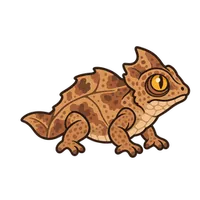
The chahoua (say it "cha-WA") is the chunky, mossy-looking cousin in the New Caledonian gecko family — a stout, prehensile-tailed tree-dweller in rusty red, brown, green, or gray. They're calm, long-lived, and don't need blazing heat, which makes them one of the easier arboreal geckos to keep happy. Just know going in: they want vertical space, high humidity, and more live bugs than a crestie, and a single healthy one can share your home for 15-20 years or more.
Worried, or still setting up? Free tools
Or browse common Chahoua Gecko questions →
Care at a glance
| Adult size | 10–12 in / 25–31 cm total length including the prehensile tail; a stout adult is roughly 40–80 g. |
|---|---|
| Lifespan | 15-20 years in good care, and 20+ is realistic for a well-kept animal |
| Enclosure | Minimum 24"L x 24"W x 36"H (60 x 60 x 90 cm) for a single adult, and bigger/taller is better — this is an arboreal climber that uses height, not floor space. A bioactive, heavily planted setup with lots of branches and cork suits them beautifully. |
| Basking / warm zone | Low warm spot of 82-85°F (28-29°C), measured with a digital probe thermometer at the basking branch — no intense heat lamp needed |
| Cool side | 72-75°F (22-24°C) on the cool end; brief highs into the upper 80s are stressful, so keep the enclosure below the mid-80s overall |
| Night | A natural night drop is fine and welcome — 65-72°F (18-22°C), and as low as 65°F is acceptable |
| UVB & lighting | Low-UVB species. They can survive without UVB if given dietary D3, but modern best practice is to provide low-level UVB so they thrive: a Zoo Med T8 ReptiSun 5.0 or an Arcadia ShadeDweller Arboreal kit, aimed to give a UVI of about 1.0-2.0 at the highest basking branch. Keep the branch no closer than about 6" below a low-output lamp and provide shaded hides so the gecko can self-regulate. This is a nocturnal/crepuscular gecko, so keep UVB gentle — not the high output a diurnal day gecko wants. |
| Humidity | 60-80% average on a digital probe hygrometer, with brief dips to ~50% and spikes to 100% after misting being fine. Aim for daily wet/dry cycles rather than a constant swamp — good airflow prevents mold and respiratory trouble. |
| Substrate | A moisture-retentive, bioactive-friendly substrate: Zoo Med ReptiSoil, Eco Earth (coconut fiber), or Exo Terra Plantation Soil; a common DIY blend is about 60% organic topsoil to 40% coconut fiber. A drainage layer and live plants/leaf litter help hold humidity in a taller enclosure. |
| Diet | Omnivore. Base the diet on a complete powdered gecko/crested-gecko diet (CGD) — brands like Pangea, Repashy, Black Panther Zoological, Zoo Med, or Lugarti — mixed with water, PLUS regular live insects. Chahoua want and eat noticeably more insect prey than crested or gargoyle geckos. Feeders: appropriately sized crickets, dubia/discoid/red-head roaches, and gut-loaded locusts. Rough schedule: juveniles (0-12 mo) get CGD daily with insects every other day (1-2x/week); adults (>12 mo) get CGD every 2-3 days with insects about 1-2x/week. |
| Supplements | Gut-load feeder insects 2-3 days before offering, then lightly dust them with a calcium/multivitamin supplement — e.g. Repashy SuperCal NoD, or a calcium powder such as Arcadia CalciumPro Mg / Miner-All. A quality CGD already carries much of the vitamin/mineral load, so keep insect dusting light rather than heavy. |
What it's like to live with a Chahoua Gecko
House chahoua geckos singly. They are territorial and keepers widely advise against cohabitation — mixing them (even a supposed pair) risks fighting, stress, tail/body injuries, and, with females, egg-related problems. One gecko per enclosure is the safe default.
Your first month together
The settling-in period, in order — so you know what's normal and when not to worry.
- Set the enclosure up and let it stabilize BEFORE the gecko arrives: confirm your warm spot reads 82-85°F, cool end 72-75°F, and humidity swings into the 60-80% range on a digital probe.
- Give a two-week hands-off settling-in period — let the new gecko eat, drink, and explore before you handle it.
- Offer a fresh CGD mix and a few appropriately sized, dusted insects; don't panic over a light appetite the first week, as new geckos often eat at night and hide by day.
- Watch that it's drinking — mist so water beads on leaves and glass, and confirm it's licking droplets.
- Once it's eating reliably, start short 5-minute handling sessions every other day and build up slowly, supporting the body and letting it walk hand-to-hand.
- Log weight weekly on a small gram scale so you catch problems early.
Through the year, and as they grow
Chahoua respond to gentle seasonal cues. A mild winter cool-down and shorter photoperiod (many keepers run lights ~11 hours in winter vs ~13.5 hours in summer) supports natural rhythms and is often used to trigger breeding. If you're not breeding, you can keep conditions stable year-round — just allow the normal nightly temperature drop and avoid overheating in summer.
The pet store gets these wrong
Common myths, kindly corrected — no shame for having believed them.
- "Chahoua eat the same as crested geckos, so powder alone is fine." Not really — chahoua crave and need far more live insects than cresties. Skimping on bugs shortchanges them.
- "You can keep a pair together for company." Geckos aren't social; chahoua are territorial and best kept one to an enclosure. Cohabbing invites fighting and injury.
- "They're nocturnal, so UVB is pointless." They can get by without it on dietary D3, but low-level UVB helps them thrive — it's a bonus, not a waste.
- "A chahoua's tail grows back exactly like other geckos." Its tail is strongly prehensile and resists dropping — but unlike a crested gecko (which can't regrow its tail at all), a chahoua that does lose its tail regenerates a cartilage rod that looks a little different. Handle gently and never grab the tail.
- "They need a hot basking bulb." No — a warm spot in the low-to-mid 80s°F is plenty; high heat stresses this cool-loving forest species.
Before you buy
- This is a tall, planted setup, not a shoebox — budget for at least a 24x24x36 in arboreal enclosure with branches and live/fake plants.
- Chahoua are pricier than most starter geckos and are typically bought from specialist breeders, not big-box stores.
- You'll be keeping live insects on hand alongside powdered diet — they eat more bugs than a crested gecko.
- Plan for a 15-20+ year commitment; this is a long-lived animal.
- Line up an exotics/reptile vet before you need one — good chahoua vets aren't on every corner.
- One gecko per enclosure — don't buy two expecting them to share.
💷 The chahoua gecko itself is usually the cheapest part — see the real cost of keeping one (upfront + ongoing, no sales pitch).
See a reptile vet if…
We can't diagnose from afar — but these are the signs to stop watching and get a professional:
- Weight loss, a shrinking tail base, or refusing all food (CGD and insects) for more than a couple of weeks
- Soft, rubbery, or bendy jaw/limbs, tremors, or a wobbly floppy gait — possible metabolic bone disease from calcium/D3 or UVB gaps
- Open-mouth breathing, wheezing, bubbling, or mucus around the nose/mouth — possible respiratory infection
- Stuck shed on toes or tail tip that constricts and darkens the tissue
- A female that looks swollen/gravid but is straining, lethargic, or off food — possible egg-binding (dystocia)
- Retained/stuck shed over the eyes, or eyes that are sunken, cloudy, or swollen
- Any wound, bite, or the tail suddenly dropped or injured — chahoua tails regenerate poorly, so injuries need prompt care
Heading in? Print the free Chahoua Gecko vet-prep sheet — what to bring, what to tell the vet, and the questions to ask.
Never
- Never house two chahoua together — even a 'pair.'
- Never grab, dangle, or restrain the gecko by its tail.
- Never let the enclosure bake — sustained temps in the upper 80s°F+ are dangerous for this cool-forest species.
- Never rely on live-insects-only or powder-only; they need both.
- Never keep humidity pegged at 100% with no drying-out or airflow — that breeds mold and respiratory disease.
- Never skip a digital thermometer/hygrometer and guess your temps and humidity.
- Never use loose sand or non-safe substrates that risk impaction.
Common chahoua gecko questions
How hard are Chahoua Geckos to keep — are they good for beginners?
Beginner–Intermediate. Like its New Caledonian cousins, the chahoua is forgiving: room-ish temps, no scorching basking bulb, and a big chunk of the diet comes out of a jar. What nudges it past a pure beginner pet is the price tag, the taller planted enclosure, and the fact that it eats far more live insects than a crested gecko does — so you can't skip the bug side of feeding.
What do Chahoua Geckos eat?
Omnivore. Base the diet on a complete powdered gecko/crested-gecko diet (CGD) — brands like Pangea, Repashy, Black Panther Zoological, Zoo Med, or Lugarti — mixed with water, PLUS regular live insects. Chahoua want and eat noticeably more insect prey than crested or gargoyle geckos. Feeders: appropriately sized crickets, dubia/discoid/red-head roaches, and gut-loaded locusts. Rough schedule: juveniles (0-12 mo) get CGD daily with insects every other day (1-2x/week); adults (>12 mo) get CGD every 2-3 days with insects about 1-2x/week.
How big an enclosure do Chahoua Geckos need?
Minimum 24"L x 24"W x 36"H (60 x 60 x 90 cm) for a single adult, and bigger/taller is better — this is an arboreal climber that uses height, not floor space. A bioactive, heavily planted setup with lots of branches and cork suits them beautifully.
What basking temperature do Chahoua Geckos need?
Low warm spot of 82-85°F (28-29°C), measured with a digital probe thermometer at the basking branch — no intense heat lamp needed
What should the cool side be for Chahoua Geckos?
72-75°F (22-24°C) on the cool end; brief highs into the upper 80s are stressful, so keep the enclosure below the mid-80s overall
What night-time temperature do Chahoua Geckos need?
A natural night drop is fine and welcome — 65-72°F (18-22°C), and as low as 65°F is acceptable
What UVB and lighting do Chahoua Geckos need?
Low-UVB species. They can survive without UVB if given dietary D3, but modern best practice is to provide low-level UVB so they thrive: a Zoo Med T8 ReptiSun 5.0 or an Arcadia ShadeDweller Arboreal kit, aimed to give a UVI of about 1.0-2.0 at the highest basking branch. Keep the branch no closer than about 6" below a low-output lamp and provide shaded hides so the gecko can self-regulate. This is a nocturnal/crepuscular gecko, so keep UVB gentle — not the high output a diurnal day gecko wants.
What humidity do Chahoua Geckos need?
60-80% average on a digital probe hygrometer, with brief dips to ~50% and spikes to 100% after misting being fine. Aim for daily wet/dry cycles rather than a constant swamp — good airflow prevents mold and respiratory trouble.
What substrate do Chahoua Geckos need?
A moisture-retentive, bioactive-friendly substrate: Zoo Med ReptiSoil, Eco Earth (coconut fiber), or Exo Terra Plantation Soil; a common DIY blend is about 60% organic topsoil to 40% coconut fiber. A drainage layer and live plants/leaf litter help hold humidity in a taller enclosure.
What supplements do Chahoua Geckos need?
Gut-load feeder insects 2-3 days before offering, then lightly dust them with a calcium/multivitamin supplement — e.g. Repashy SuperCal NoD, or a calcium powder such as Arcadia CalciumPro Mg / Miner-All. A quality CGD already carries much of the vitamin/mineral load, so keep insect dusting light rather than heavy.
How big do Chahoua Geckos get?
10–12 in / 25–31 cm total length including the prehensile tail; a stout adult is roughly 40–80 g.
How long do Chahoua Geckos live?
15-20 years in good care, and 20+ is realistic for a well-kept animal
What are the signs Chahoua Geckos are sick or need a vet?
See a reptile or exotics vet if you notice: Weight loss, a shrinking tail base, or refusing all food (CGD and insects) for more than a couple of weeks; Soft, rubbery, or bendy jaw/limbs, tremors, or a wobbly floppy gait — possible metabolic bone disease from calcium/D3 or UVB gaps; Open-mouth breathing, wheezing, bubbling, or mucus around the nose/mouth — possible respiratory infection; Stuck shed on toes or tail tip that constricts and darkens the tissue; A female that looks swollen/gravid but is straining, lethargic, or off food — possible egg-binding (dystocia); Retained/stuck shed over the eyes, or eyes that are sunken, cloudy, or swollen; Any wound, bite, or the tail suddenly dropped or injured — chahoua tails regenerate poorly, so injuries need prompt care.
Your first two weeks · Taming & handling · Behaviours explained · Won't eat? · Stuck shed · When to see a vet

Get the free Chahoua Gecko Starter Kit
A one-page setup criteria checklist and a first-30-days plan for your first chahoua gecko — what to get, what makes each thing matter, and the honest bits the pet shop skips. Join the den and we’ll send it over.
Free reptile care cheat-sheet the moment you join. No spam — unsubscribe anytime. See how we handle your data in our privacy notice.Sources & further reading
This guide was written and fact-checked against these authorities. It's kind, general guidance — not a diagnosis or a substitute for an exotics vet:
- ReptiFiles — Chahoua Gecko Care Sheet — Primary authority: enclosure 24x24x36, basking 82-85°F, cool 72-75°F, night 65-72°F, humidity 60-80%, UVB (ReptiSun 5.0 / Arcadia ShadeDweller, UVI 1.0-2.0), diet/supplement schedules, single-housing, handling.
- DubiaRoaches.com — Chahoua Gecko Care Sheet — Corroborates temps, humidity 60-80% (lows 50/highs 100), night as low as 65°F, photoperiod 11h winter / 13.5h summer, 20+ yr lifespan, feeding schedule, no-cohabitation.
- Wikipedia — Mniarogekko chahoua — Taxonomy (family Diplodactylidae), common names, New Caledonia range, 10-12 in size, strongly prehensile tail, color variation.
Written and fact-checked by The Baskden Team against veterinarian-authored sources — if your reptile shows a red-flag sign above, see an exotics vet promptly.