
Species · Beginner snake
Children's Python
Antaresia childreni
One of the best small pythons — calm, tops out around 3 ft, and genuinely beginner-friendly.
Difficulty: Beginner Printable care sheet →
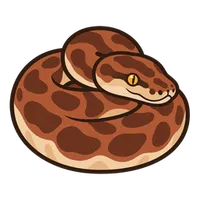
If you want a first snake that stays small, eats like clockwork, and doesn't need a fussy tropical setup, the Children's python is hard to beat. Despite the name, it has nothing to do with kids: it's named after John George Children, a curator at the British Museum. These northern-Australian pythons top out around 3 feet, tolerate a wide range of conditions, and reward you with a genuinely calm animal once they're past the wriggly hatchling stage.
Worried, or still setting up? Free tools
Or browse common Children's Python questions →
Care at a glance
| Adult size | Roughly 2-4 ft (60-120 cm), most commonly around 3 ft (90 cm); one of the smallest pythons. Females tend to run slightly larger than males. |
|---|---|
| Lifespan | Commonly 20-30 years in captivity; well-kept animals routinely reach 25-30 years, so plan for a multi-decade commitment. |
| Enclosure | Adult minimum 36 x 18 x 18 in (3 x 2 x 2 ft / ~90 x 45 x 45 cm) of floor space; bigger is always better. Being a ground-dwelling snake, prioritize length and width over height, and use a secure front-opening enclosure with a tight lid (pythons are excellent escape artists). |
| Basking / warm zone | 88-90°F (31-32°C) warm-side surface/hotspot, provided by an under-tank heater or overhead heat source on a thermostat. Verify with a probe or temp gun, never a stick-on dial. |
| Cool side | 75-80°F (24-27°C) at the cool end, giving the snake a true thermal gradient to choose from. |
| Night | A natural night drop is fine and healthy; roughly 68-75°F (20-24°C). Don't let the whole enclosure fall below the upper 60s°F. |
| UVB & lighting | Not required. This is a nocturnal, secretive species that does fine without UVB, though a low-output tube (roughly Ferguson Zone 1–2, a basking UVI of about 2.0–3.0) offers modest benefits for vitamin D synthesis and general well-being. If you skip it, provide a proper day/night light cycle instead. UVI need is low. |
| Humidity | Moderate, around 50-60%. They're forgiving of a fairly wide range, but bump humidity up (mist lightly or offer a humid hide) during a shed. Always keep a bowl of fresh water big enough to soak in. |
| Substrate | Aspen shavings, cypress mulch, coconut husk/coir, beech chip, or plain paper towels for quarantine/hatchlings, at about 2-3 in deep so the snake can burrow. Avoid cedar and pine, which give off oils that are toxic to reptiles. |
| Diet | Strict carnivore fed appropriately sized rodents. Prey should be no wider than the thickest part of the snake's body. Adults eat an adult mouse to a small rat roughly every 10-14 days; growing juveniles every 5-7 days. Use frozen-thawed prey rather than live. |
| Supplements | Whole prey (mice/rats) is nutritionally complete, so routine calcium/vitamin dusting isn't needed. Just feed properly sized, quality frozen-thawed rodents. |
What it's like to live with a Children's Python
House one snake per enclosure. Children's pythons are solitary; cohabiting risks stress, competition at feeding, and cannibalism, and it makes health monitoring nearly impossible. Keep it a one-snake home.
Your first month together
The settling-in period, in order — so you know what's normal and when not to worry.
- Set up and stabilize the enclosure BEFORE the snake arrives: confirm a 88-90°F warm side and 75-80°F cool side on thermostats with a real probe/temp gun.
- Provide a snug hide at BOTH the warm and cool ends plus a water bowl large enough to soak in.
- Give the new snake about a week of quiet to settle before the first feeding attempt.
- Offer an appropriately sized frozen-thawed rodent (no wider than the snake's thickest point); don't panic over one refused meal.
- Wait ~48 hours after a meal before handling so the snake can digest.
- Keep handling short and gentle at first; hatchlings can be nippy but tame down quickly with calm, consistent contact.
- Watch appetite, sheds, and droppings and note them so you learn this individual's normal.
Through the year, and as they grow
Many keepers see reduced appetite in the cooler months, and a mild seasonal cool-down is sometimes used to trigger breeding. A short feeding lull in winter is usually normal, but keep temperatures in range year-round and see a vet if fasting is prolonged or paired with weight loss.
The pet store gets these wrong
Common myths, kindly corrected — no shame for having believed them.
- "Children's python" has nothing to do with children or being a kids' pet: it's named after John George Children, a 19th-century British Museum curator.
- It is NOT a high-humidity rainforest snake. It comes from northern Australia's varied dry-to-wet habitats and does fine at a moderate ~50-60% humidity.
- You do not need UVB for it to survive: it's nocturnal and thrives without it, though low-level UVB is an optional bonus.
- A 10-gallon tank is not enough for life. Hatchlings can start small, but adults need real floor space (36 x 18 x 18 in minimum).
- "Feed it live so it learns to hunt" is a myth: frozen-thawed is safer (live rodents can bite and injure your snake) and captive-bred Children's pythons take F/T readily.
Before you buy
- This is a 20-30 year commitment: make sure you can care for it for its whole life.
- Buy captive-bred from a reputable breeder; they feed better and are far less stressed than wild-caught.
- Budget for a proper front-opening enclosure, a thermostat-controlled heat source, thermometers, two hides, and a water bowl before the snake comes home.
- You must be comfortable keeping frozen rodents in your freezer and thawing them to feed.
- They're nocturnal, so they're most active in the evening, not a daytime show animal.
- Locate an exotics/reptile vet near you before you need one.
💷 The children's python itself is usually the cheapest part — see the real cost of keeping one (upfront + ongoing, no sales pitch).
See a reptile vet if…
We can't diagnose from afar — but these are the signs to stop watching and get a professional:
- Open-mouth breathing, wheezing, popping/clicking sounds, or bubbles/mucus around the mouth or nose (possible respiratory infection) - see an exotics vet.
- Repeated incomplete or stuck sheds, especially retained eye caps, or a stuck shed on the tail tip that could cut off circulation.
- Refusing food for an extended stretch alongside weight loss or a sunken/dehydrated look.
- Mouth held open, redness, swelling, or cheesy material inside the mouth (possible mouth rot / stomatitis).
- Lumps, wounds, discoloration, mites (tiny moving specks), or regurgitating meals - book an exotics vet; this record is for triage, not diagnosis.
Heading in? Print the free Children's Python vet-prep sheet — what to bring, what to tell the vet, and the questions to ask.
Never
- Never use cedar or pine substrate; their oils are toxic to snakes.
- Never house two snakes together; risk of stress, feeding competition, and cannibalism.
- Never feed prey wider than the thickest part of the snake's body.
- Never leave live rodents unattended with your snake; they can bite and seriously injure it.
- Never rely on stick-on dial thermometers or an unregulated heat source; always use a thermostat and an accurate probe/temp gun.
- Never handle for ~48 hours after a meal, which can cause regurgitation.
Common children's python questions
How hard are Children's Pythons to keep — are they good for beginners?
Beginner. One of the world's smallest pythons: hardy, calm, feeds reliably, and thrives in a simple front-opening setup. The main "gotcha" is a long commitment (often 20-30 years) and the fact that hatchlings can be nippy until they settle.
What do Children's Pythons eat?
Strict carnivore fed appropriately sized rodents. Prey should be no wider than the thickest part of the snake's body. Adults eat an adult mouse to a small rat roughly every 10-14 days; growing juveniles every 5-7 days. Use frozen-thawed prey rather than live.
How big an enclosure do Children's Pythons need?
Adult minimum 36 x 18 x 18 in (3 x 2 x 2 ft / ~90 x 45 x 45 cm) of floor space; bigger is always better. Being a ground-dwelling snake, prioritize length and width over height, and use a secure front-opening enclosure with a tight lid (pythons are excellent escape artists).
What basking temperature do Children's Pythons need?
88-90°F (31-32°C) warm-side surface/hotspot, provided by an under-tank heater or overhead heat source on a thermostat. Verify with a probe or temp gun, never a stick-on dial.
What should the cool side be for Children's Pythons?
75-80°F (24-27°C) at the cool end, giving the snake a true thermal gradient to choose from.
What night-time temperature do Children's Pythons need?
A natural night drop is fine and healthy; roughly 68-75°F (20-24°C). Don't let the whole enclosure fall below the upper 60s°F.
What UVB and lighting do Children's Pythons need?
Not required. This is a nocturnal, secretive species that does fine without UVB, though a low-output tube (roughly Ferguson Zone 1–2, a basking UVI of about 2.0–3.0) offers modest benefits for vitamin D synthesis and general well-being. If you skip it, provide a proper day/night light cycle instead. UVI need is low.
What humidity do Children's Pythons need?
Moderate, around 50-60%. They're forgiving of a fairly wide range, but bump humidity up (mist lightly or offer a humid hide) during a shed. Always keep a bowl of fresh water big enough to soak in.
What substrate do Children's Pythons need?
Aspen shavings, cypress mulch, coconut husk/coir, beech chip, or plain paper towels for quarantine/hatchlings, at about 2-3 in deep so the snake can burrow. Avoid cedar and pine, which give off oils that are toxic to reptiles.
What supplements do Children's Pythons need?
Whole prey (mice/rats) is nutritionally complete, so routine calcium/vitamin dusting isn't needed. Just feed properly sized, quality frozen-thawed rodents.
How big do Children's Pythons get?
Roughly 2-4 ft (60-120 cm), most commonly around 3 ft (90 cm); one of the smallest pythons. Females tend to run slightly larger than males.
How long do Children's Pythons live?
Commonly 20-30 years in captivity; well-kept animals routinely reach 25-30 years, so plan for a multi-decade commitment.
What are the signs Children's Pythons are sick or need a vet?
See a reptile or exotics vet if you notice: Open-mouth breathing, wheezing, popping/clicking sounds, or bubbles/mucus around the mouth or nose (possible respiratory infection) - see an exotics vet.; Repeated incomplete or stuck sheds, especially retained eye caps, or a stuck shed on the tail tip that could cut off circulation.; Refusing food for an extended stretch alongside weight loss or a sunken/dehydrated look.; Mouth held open, redness, swelling, or cheesy material inside the mouth (possible mouth rot / stomatitis).; Lumps, wounds, discoloration, mites (tiny moving specks), or regurgitating meals - book an exotics vet; this record is for triage, not diagnosis..
Your first two weeks · Taming & handling · Behaviours explained · Won't eat? · Stuck shed · When to see a vet

Get the free Children's Python Starter Kit
A one-page setup criteria checklist and a first-30-days plan for your first children's python — what to get, what makes each thing matter, and the honest bits the pet shop skips. Join the den and we’ll send it over.
Free reptile care cheat-sheet the moment you join. No spam — unsubscribe anytime. See how we handle your data in our privacy notice.Sources & further reading
This guide was written and fact-checked against these authorities. It's kind, general guidance — not a diagnosis or a substitute for an exotics vet:
- Beginner Snakes - Children's Python Care Guide — Enclosure size, warm/cool/night temps, 50-60% humidity, UVB-optional, substrate, feeding schedule, beginner suitability
- Reptile Direct - Children's Python Care — Adult size 3-4 ft, 25-30 yr lifespan, 36x18x18 in min, temps, humidity, UVB not required for nocturnal species, name origin (John George Children)
- DubiaRoaches.com - Children's Python Care Sheet — Basking 85-90°F, cool 75-78°F, humidity range, UVB recommended-not-required, substrate, juvenile vs adult feeding frequency
- Wikipedia - Children's python (Antaresia childreni) — Family Pythonidae, northern Australia range, wild diet, >30 yr lifespan, name honors John George Children not kids
- Reptifauna - Children's Python Care Sheet — Metric temps (basking 32-34°C, cool 24-26°C, night 22°C), 70-100 cm size, floor-space emphasis, beginner myth on the name
Written and fact-checked by The Baskden Team against veterinarian-authored sources — if your reptile shows a red-flag sign above, see an exotics vet promptly.