
Species · Arid basking lizard
Common Chuckwalla
Sauromalus ater
A chunky desert herbivore that wedges into rock crevices and puffs up — a hardy hot-and-dry specialist.
Difficulty: Intermediate Printable care sheet →
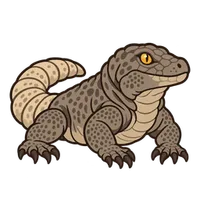
Chuckwallas are chunky, flat-bodied desert iguanas from the American Southwest and northern Mexico, and they are full of personality once settled. Their party trick is wedging into a rock crack and gulping air to balloon up so nothing can pull them out. They are true sun-worshippers who eat their weight in flowers and greens, so give them heat, high-end UVB, room to roam, and a salad bar, and a well-kept chuckwalla can be a companion for decades.
Worried, or still setting up? Free tools
Or browse common Common Chuckwalla questions →
Care at a glance
| Adult size | Around 15-20 inches (38-51 cm) total length, roughly half of that being tail; large adults can approach 2 lb (about 0.9 kg). Males are noticeably bigger and heavier-headed than females. |
|---|---|
| Lifespan | Commonly 25-30+ years in good captive care; individuals have been recorded living into their late 20s, and some keepers report longer. Plan for a multi-decade commitment. |
| Enclosure | For one adult, a minimum of 4' L x 2' W x 2' H (48 x 24 x 24 in / 120 gallons), giving at least about 8 sq ft of floor space; bigger is genuinely better for these active baskers. Add roughly a foot to each dimension per additional chuckwalla. Use a front-opening, well-ventilated enclosure. |
| Basking / warm zone | A hot basking surface of 110-125°F (43-52°C). Provide it with a cluster of overhead halogen flood bulbs over a flat rock or basking platform so the whole animal can warm up, and always measure the surface temperature with a probe or infrared thermometer. |
| Cool side | Cool end around 75-88°F (24-31°C) during the day, giving a clear thermal gradient across the enclosure so the lizard can self-regulate. |
| Night | Safe to drop to room temperature at night; anything above about 65°F (18°C) is fine, and a natural nighttime cool-down is healthy. No night heat is needed in a normal home. |
| UVB & lighting | High UVB requirement (Ferguson Zone 4, sun-basker). Wild chuckwallas bask at a UVI of roughly 2.6-3.5, and captive care guides target a basking UVI in the mid-single digits using a high-output desert bulb such as a 22" Arcadia T5 HO Dragon 14% or Zoo Med ReptiSun T5 HO 10.0 running the length of the basking zone. Mount so the basking surface sits about 9-12 in below the lamp if it is over mesh, or 14-16 in if inside the enclosure, and replace T5 bulbs every 12 months. |
| Humidity | Low and arid: aim for an average ambient humidity of about 15-30%, and it should generally stay under ~50%. Despite the dry air, provide a single humid hide/burrow they can retreat to, which mimics the cooler, more humid rock crevices they use in the wild. |
| Substrate | A naturalistic, diggable desert mix such as washed play sand blended with organic topsoil (or sandy soil), packed at least 3-4 in deep so it holds a burrow. Some keepers use sand/pea-gravel mixes or slate slabs; avoid loose calcium-carbonate "calci-sand," which risks impaction. Include stacked, secured rocks for climbing and wedging. |
| Diet | Herbivore. Offer a varied daily salad of dark leafy greens, edible flowers, and desert-appropriate weeds/plants making up the large majority of the diet (roughly 85% greens/plants/flowers), with a small portion of other vegetables and occasional fruit as a treat. Chuckwallas naturally eat creosote flowers, forbs, and grasses; live insects are not needed and, if offered at all, only very rarely. |
| Supplements | Dust salads with a plain calcium (no D3) supplement on most meals and a reptile multivitamin about 1-2x per week (juveniles at the higher end). A veggie-based dust such as Repashy SuperVeggie works well on the salad. Proper high UVB plus dietary calcium is what prevents metabolic bone disease. |
What it's like to live with a Common Chuckwalla
Best kept singly. Chuckwallas are territorial, and adult males will fight, sometimes seriously. A male-female or female-female pairing can sometimes work only in a very large, well-furnished enclosure with multiple basking and hiding zones, and only under close supervision for bullying, weight loss, or stress. When in doubt, house alone.
Your first month together
The settling-in period, in order — so you know what's normal and when not to worry.
- Build and dial in the enclosure BEFORE the lizard arrives: verify basking surface at 110-125°F, a cool end near 78-88°F, and the correct UVI with a Solarmeter if possible.
- Give a new chuckwalla 1-2 weeks of minimal handling to settle; just do quiet daily maintenance and feeding.
- Offer fresh salad daily and remove uneaten food; provide a shallow water dish even though most hydration comes from food.
- Watch that it is finding the basking spot and thermoregulating, and that droppings look normal.
- Track weight weekly with a kitchen scale to confirm it is eating and stable.
- Confirm your UVB bulb is a current, correct fixture (T5 HO, not a coil/compact) and note its install date for a 12-month replacement.
Through the year, and as they grow
In the wild, chuckwallas brumate (a reptile winter rest) through cold months and are inactive in extreme summer heat. In captivity many keepers give a mild winter cool-down with shorter day length (photoperiod dropping toward ~10 hours in winter and up to ~14 in summer). A cool-down can trigger breeding behavior, so only attempt a formal brumation with research and on a healthy, well-weighted adult.
The pet store gets these wrong
Common myths, kindly corrected — no shame for having believed them.
- "Chuckwallas need insects/protein." No. Adults are essentially herbivores; a salad of greens, flowers, and veg is the correct diet, and heavy insect feeding can harm them.
- "A 40-gallon tank is fine." No. These are large, active baskers that need at minimum a 4x2x2 ft enclosure, and more space is better.
- "Desert lizards don't need much UVB." The opposite: chuckwallas are high-UVB Ferguson Zone 4 baskers and need a strong, correctly placed T5 HO desert bulb.
- "They only live a few years like a common lizard." A well-kept chuckwalla is a 25-30+ year commitment.
- "Calci-sand is safe because they're desert animals." Loose calcium-carbonate sand can cause impaction; use a natural sandy-soil mix instead.
Before you buy
- This is a multi-decade commitment (25-30+ years).
- You need space and budget for at least a 4x2x2 ft enclosure plus strong heating and high-output UVB.
- Buy captive-bred where possible; wild-caught chuckwallas are protected in parts of their range and stress/parasite-prone.
- You must be able to source varied greens, edible flowers, and safe weeds year-round.
- They are best kept alone, so don't plan on a 'pair' unless you can build a very large setup and monitor closely.
- Find a reptile-savvy exotics vet before you bring one home.
💷 The common chuckwalla itself is usually the cheapest part — see the real cost of keeping one (upfront + ongoing, no sales pitch).
See a reptile vet if…
We can't diagnose from afar — but these are the signs to stop watching and get a professional:
- Swollen, bumpy, or bendy limbs/jaw, tremors, or trouble climbing (possible metabolic bone disease) - see an exotics vet.
- Not eating for an extended period, or steady weight loss despite offered food.
- Straining, no droppings, or a visibly bloated belly (possible impaction, especially on loose sand).
- Retained shed constricting toes or the tail tip, or discolored/blackening extremities.
- Runny or bubbly nose, open-mouth breathing, or wheezing (possible respiratory infection from too much humidity or too little heat).
- Any wounds, abscesses, or bite injuries from a cohabitant.
Heading in? Print the free Common Chuckwalla vet-prep sheet — what to bring, what to tell the vet, and the questions to ask.
Never
- Never keep two adult males together.
- Never rely on a coil/compact or 'daylight' bulb for UVB - use a proper T5 HO desert UVB tube.
- Never feed a diet built around insects or animal protein.
- Never let the enclosure stay damp or humid - chronic high humidity causes respiratory disease in this arid species.
- Never house on loose calcium-carbonate sand or feed off loose substrate where it can be swallowed.
- Never skip the hot basking zone or the thermal gradient - they can't digest or thrive when kept too cool.
Common common chuckwalla questions
How hard are Common Chuckwallas to keep — are they good for beginners?
Intermediate. Hardy and long-lived once set up right, but the setup itself is demanding: a big enclosure, a genuinely hot basking spot, strong desert UVB, and a strict plant-based diet. Not hard to keep alive, but easy to keep badly. Best for a keeper ready to build a proper arid habitat rather than a first-ever lizard.
What do Common Chuckwallas eat?
Herbivore. Offer a varied daily salad of dark leafy greens, edible flowers, and desert-appropriate weeds/plants making up the large majority of the diet (roughly 85% greens/plants/flowers), with a small portion of other vegetables and occasional fruit as a treat. Chuckwallas naturally eat creosote flowers, forbs, and grasses; live insects are not needed and, if offered at all, only very rarely.
How big an enclosure do Common Chuckwallas need?
For one adult, a minimum of 4' L x 2' W x 2' H (48 x 24 x 24 in / 120 gallons), giving at least about 8 sq ft of floor space; bigger is genuinely better for these active baskers. Add roughly a foot to each dimension per additional chuckwalla. Use a front-opening, well-ventilated enclosure.
What basking temperature do Common Chuckwallas need?
A hot basking surface of 110-125°F (43-52°C). Provide it with a cluster of overhead halogen flood bulbs over a flat rock or basking platform so the whole animal can warm up, and always measure the surface temperature with a probe or infrared thermometer.
What should the cool side be for Common Chuckwallas?
Cool end around 75-88°F (24-31°C) during the day, giving a clear thermal gradient across the enclosure so the lizard can self-regulate.
What night-time temperature do Common Chuckwallas need?
Safe to drop to room temperature at night; anything above about 65°F (18°C) is fine, and a natural nighttime cool-down is healthy. No night heat is needed in a normal home.
What UVB and lighting do Common Chuckwallas need?
High UVB requirement (Ferguson Zone 4, sun-basker). Wild chuckwallas bask at a UVI of roughly 2.6-3.5, and captive care guides target a basking UVI in the mid-single digits using a high-output desert bulb such as a 22" Arcadia T5 HO Dragon 14% or Zoo Med ReptiSun T5 HO 10.0 running the length of the basking zone. Mount so the basking surface sits about 9-12 in below the lamp if it is over mesh, or 14-16 in if inside the enclosure, and replace T5 bulbs every 12 months.
What humidity do Common Chuckwallas need?
Low and arid: aim for an average ambient humidity of about 15-30%, and it should generally stay under ~50%. Despite the dry air, provide a single humid hide/burrow they can retreat to, which mimics the cooler, more humid rock crevices they use in the wild.
What substrate do Common Chuckwallas need?
A naturalistic, diggable desert mix such as washed play sand blended with organic topsoil (or sandy soil), packed at least 3-4 in deep so it holds a burrow. Some keepers use sand/pea-gravel mixes or slate slabs; avoid loose calcium-carbonate "calci-sand," which risks impaction. Include stacked, secured rocks for climbing and wedging.
What supplements do Common Chuckwallas need?
Dust salads with a plain calcium (no D3) supplement on most meals and a reptile multivitamin about 1-2x per week (juveniles at the higher end). A veggie-based dust such as Repashy SuperVeggie works well on the salad. Proper high UVB plus dietary calcium is what prevents metabolic bone disease.
How big do Common Chuckwallas get?
Around 15-20 inches (38-51 cm) total length, roughly half of that being tail; large adults can approach 2 lb (about 0.9 kg). Males are noticeably bigger and heavier-headed than females.
How long do Common Chuckwallas live?
Commonly 25-30+ years in good captive care; individuals have been recorded living into their late 20s, and some keepers report longer. Plan for a multi-decade commitment.
What are the signs Common Chuckwallas are sick or need a vet?
See a reptile or exotics vet if you notice: Swollen, bumpy, or bendy limbs/jaw, tremors, or trouble climbing (possible metabolic bone disease) - see an exotics vet.; Not eating for an extended period, or steady weight loss despite offered food.; Straining, no droppings, or a visibly bloated belly (possible impaction, especially on loose sand).; Retained shed constricting toes or the tail tip, or discolored/blackening extremities.; Runny or bubbly nose, open-mouth breathing, or wheezing (possible respiratory infection from too much humidity or too little heat).; Any wounds, abscesses, or bite injuries from a cohabitant..
Your first two weeks · Taming & handling · Behaviours explained · Won't eat? · Stuck shed · When to see a vet

Get the free Common Chuckwalla Starter Kit
A one-page setup criteria checklist and a first-30-days plan for your first common chuckwalla — what to get, what makes each thing matter, and the honest bits the pet shop skips. Join the den and we’ll send it over.
Free reptile care cheat-sheet the moment you join. No spam — unsubscribe anytime. See how we handle your data in our privacy notice.Sources & further reading
This guide was written and fact-checked against these authorities. It's kind, general guidance — not a diagnosis or a substitute for an exotics vet:
- ReptiFiles - Common Chuckwalla Care Sheet — Enclosure 4x2x2 ft, basking 110-125°F, cool 78-88°F, night >65°F, Arcadia T5 HO Dragon 14% UVB, humidity 15-65%, herbivore diet, ~30 yr lifespan, 10-18 in.
- The Bio Dude - Chuckwalla Caresheet — 120 gal min, basking 110-125°F, cool 78-88°F, night >65°F, UVI target and 14% T5 UVB, 85/5/5 herbivore diet, supplement schedule.
- Reptile Centre - Chuckwalla Care Sheet — Ferguson Zone 4 (UVI 2.6-3.5), 4x2x2 ft enclosure, herbivore/low-humidity, T5 UVB mounted ~30cm from basking spot.
- Reptile Supply - How to Care for Your Chuckwalla — 48x24x24 in min, basking 120-130°F, cool 75-85°F, night 65-75°F, humidity 15-30%, adult 15-20 in, herbivore, substrate >=4 in.
- Arids Only - Chuckwalla Care Guide — 4x2x2 ft min, basking 125°F max, warm side 100-110°F, cool upper-70s, herbivore ~85% plants, lifespan into late 20s.
- Wikipedia - Sauromalus ater — Family Iguanidae; total length up to 20 in (51 cm), ~0.9 kg; herbivorous; gular-pump crevice-wedging defense; range/habitat.
Written and fact-checked by The Baskden Team against veterinarian-authored sources — if your reptile shows a red-flag sign above, see an exotics vet promptly.