
Species · Arid basking lizard
Collared Lizard
Crotaphytus collaris
A brilliant, sprint-happy desert lizard that can run on its hind legs — active, alert and hands-off.
Difficulty: Intermediate Printable care sheet →
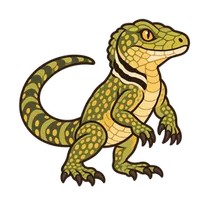
The collared lizard is a chunk of the American desert Southwest in scaly form: bright yellow, teal, and orange males, the signature double black "collar" behind the head, and enough attitude to run down crickets on their hind legs like a tiny dinosaur. They're a full-time sun-worshipper that wants it HOT and bright, a big open floor to sprint across, and a steady diet of bugs. Watch-don't-touch beauties more than lap pets, but honestly one of the most spectacular lizards you can keep if you give them what the desert gives them.
Worried, or still setting up? Free tools
Or browse common Collared Lizard questions →
Care at a glance
| Adult size | Roughly 8-14 in / 20-36 cm total length including the tail (the tail is about two-thirds of that). Males are noticeably larger, blockier-headed, and far more colorful than females. |
|---|---|
| Lifespan | Commonly 10+ years in good captive care, with well-kept individuals reaching 12-15 years. In the wild most only see 4-7 years because of predators and hard winters. |
| Enclosure | 36 x 18 x 18 in (90 x 45 x 45 cm) is the realistic minimum for one adult, but 48 x 24 x 24 in (120 x 60 x 60 cm) is a much better home and is what these fast, active runners deserve. Floor space matters more than height. Front-opening with a mesh/ventilated top. |
| Basking / warm zone | Hot. A basking SURFACE temperature of 104-118°F / 40-48°C, measured on the rock or platform with a probe or infrared temp gun (not an ambient dial thermometer). Build a rock/platform stack up toward the lamp to hit it. |
| Cool side | 77-90°F / 25-32°C on the cool end during the day, so the lizard can pick its own temperature across a real gradient. |
| Night | A natural nighttime drop to 68-79°F / 20-26°C is fine and healthy. No night heat is needed unless your room falls below the low 60s°F. |
| UVB & lighting | High. This is a Ferguson Zone 3-4 open-sun basker: provide strong UVB with a target UVI of 4.0-6.0 in the basking spot. A high-output T5 tube running roughly half the enclosure length works well - e.g. Arcadia Desert 12% T5 HO or Zoo Med Reptisun 10.0 T5 HO. Mount it over the warm side and set basking-spot distance by bulb (about 8-12 in below if over mesh; farther for a bare bulb). A Solarmeter 6.5 is the honest way to confirm your UVI. Run 10-12 hours a day. |
| Humidity | Low and arid. Aim for around 30-40% for the western/desert form; the eastern form tolerates a bit more (up to ~50%). Good ventilation, a mostly dry setup, and just a humid burrow/hide are enough - this is not a misting species. |
| Substrate | A naturalistic, diggable desert mix: washed play sand, or a roughly 60/40 blend of clean topsoil and fine sand, packed at least 4 in / 10 cm deep so they can burrow. Add flat rocks and stone piles for climbing, basking, and hiding. Skip loose calci-sand and dusty "desert sand" products. |
| Diet | Insectivore. The bulk of the diet is live insects - crickets, dubia and other roaches, black soldier fly larvae, the occasional hornworm - offered daily to a healthy adult, as much as they'll eagerly eat in a few minutes. In the wild they also grab spiders and even small lizards, but you don't need to feed vertebrate prey. A little leafy greens/flowers can be offered but is a minor extra, not a staple. |
| Supplements | Dust insects with a plain calcium (no D3) at most feedings, and use a reptile multivitamin that includes preformed vitamin A (retinol, not just beta-carotene) a couple times a week. With strong UVB in place you need little or no added D3, but a light D3 dusting weekly is a reasonable safety net. Gut-load feeder insects well. Replace supplement pots every ~6 months as potency fades. |
What it's like to live with a Collared Lizard
Best kept solo. Males are aggressively territorial and will fight, sometimes to the death, so never house two males together. Even male-female or female-female pairs can end in bullying, stress, and refused food, so pairing is for experienced keepers with a big enclosure and a plan to separate. When in doubt, one lizard per tank.
Your first month together
The settling-in period, in order — so you know what's normal and when not to worry.
- Set the enclosure up and run it EMPTY for a few days first: confirm basking surface hits 104-118°F, the cool end sits in the high 70s-80s°F, and your UVI reads ~4-6 in the basking spot before the lizard ever goes in.
- Expect a skittish, flighty animal at first - collareds are naturally wary. Leave it alone to settle for the first week or two beyond feeding and spot-cleaning.
- Offer appropriately sized live insects daily and watch that it's actively hunting and basking; a new lizard that won't eat after settling in, or that hides and never basks, is a red flag.
- Minimize handling early. These are fast, and they can drop their tail if grabbed or panicked. Build trust with feeding, not grabbing.
- Do a quick daily check: alert posture, bright eyes, using the full hot-to-cool gradient, and normal droppings.
Through the year, and as they grow
Wild collareds go through a real seasonal cycle - long, blazing summer days and a genuine winter dormancy (brumation) underground. In captivity you can mimic summer with a longer photoperiod (up to ~14 hrs) and a slightly shorter, cooler winter (down to ~10 hrs). A controlled winter cool-down is often used to trigger breeding, but it's optional and, done wrong, is risky - only cool down a healthy, well-weighted adult, and research the protocol first.
The pet store gets these wrong
Common myths, kindly corrected — no shame for having believed them.
- "They only need a 20-gallon tank." No. A collared lizard is a fast, long-legged sprinter that needs floor space - 36 x 18 in is the floor, and 48 x 24 in is genuinely better for one adult.
- "A basking bulb in the 90s°F is plenty." Not for this species. They bask HOT - a 104-118°F surface temperature - and struggle to digest and thrive if kept too cool.
- "Desert lizard, so it doesn't really need UVB." Backwards. Being an open-sun desert basker is exactly why they need STRONG UVB (UVI 4-6), not less.
- "You can keep two together for company." They're solitary and territorial; males will fight, and even mixed pairs often stress each other. Solo is the safe default.
- "They tame down into a handleable pet." Most stay skittish and are far happier as a display animal you observe than one you carry around.
Before you buy
- They want it hot and bright - a real 104-118°F basking surface plus strong UVB (UVI 4-6) means a decent power bill and quality lamps, not a single cheap bulb.
- You'll be buying (or breeding) live insects constantly - an adult eats daily. If bugs gross you out or you can't source feeders reliably, this isn't your lizard.
- Plan for a 48 x 24 in-class enclosure and the shelf space and cost that comes with it.
- This is a look-don't-hold pet for most people; if you want a lizard to handle daily, choose a different species.
- One lizard per enclosure unless you're experienced - budget and plan for solo housing.
💷 The collared lizard itself is usually the cheapest part — see the real cost of keeping one (upfront + ongoing, no sales pitch).
See a reptile vet if…
We can't diagnose from afar — but these are the signs to stop watching and get a professional:
- Not eating for an extended stretch once fully settled, or noticeable weight loss / a sunken, thin tail base
- Weakness, tremors, a rubbery or swollen jaw, or trouble walking - possible metabolic bone disease from poor UVB/calcium; see an exotics vet
- Sunken eyes, wrinkled skin, thick stringy saliva, or lethargy - possible dehydration
- Labored or open-mouth breathing, mucus, or wheezing - possible respiratory infection (often from being kept too cool or too damp)
- A retained shed that constricts toes or the tail tip, or any wound, swelling, or persistent open-mouth gaping
- Straining, no droppings for a long time, or a bulge/prolapse - see an exotics vet promptly
Heading in? Print the free Collared Lizard vet-prep sheet — what to bring, what to tell the vet, and the questions to ask.
Never
- Never keep two males (or crowd multiple lizards) together - fighting can be fatal.
- Never run a cool basking spot 'to be safe' - chronic under-heating quietly wrecks digestion and health in this hot-baskers.
- Never skip or skimp on UVB, and never rely on a weak coil bulb behind glass/plastic that filters it out.
- Never use loose calcium-carbonate 'calci-sand' - it can cause impaction and encourages harmful overeating of substrate.
- Never grab or snatch a collared lizard by the tail - they can autotomize (drop) it, and rough handling causes lasting stress.
Common collared lizard questions
How hard are Collared Lizards to keep — are they good for beginners?
Intermediate. Not hard to keep alive, but hard to keep RIGHT. Collareds demand a genuinely hot basking zone, strong UVB, a big footprint for their size, and a lot of live insects. They're skittish, fast, and rarely tame down into "handleable" pets. Get the heat, light, and space dialed in and they're rewarding; cut corners on any one and they fade. Not a good first lizard for someone wanting a cuddly beginner.
What do Collared Lizards eat?
Insectivore. The bulk of the diet is live insects - crickets, dubia and other roaches, black soldier fly larvae, the occasional hornworm - offered daily to a healthy adult, as much as they'll eagerly eat in a few minutes. In the wild they also grab spiders and even small lizards, but you don't need to feed vertebrate prey. A little leafy greens/flowers can be offered but is a minor extra, not a staple.
How big an enclosure do Collared Lizards need?
36 x 18 x 18 in (90 x 45 x 45 cm) is the realistic minimum for one adult, but 48 x 24 x 24 in (120 x 60 x 60 cm) is a much better home and is what these fast, active runners deserve. Floor space matters more than height. Front-opening with a mesh/ventilated top.
What basking temperature do Collared Lizards need?
Hot. A basking SURFACE temperature of 104-118°F / 40-48°C, measured on the rock or platform with a probe or infrared temp gun (not an ambient dial thermometer). Build a rock/platform stack up toward the lamp to hit it.
What should the cool side be for Collared Lizards?
77-90°F / 25-32°C on the cool end during the day, so the lizard can pick its own temperature across a real gradient.
What night-time temperature do Collared Lizards need?
A natural nighttime drop to 68-79°F / 20-26°C is fine and healthy. No night heat is needed unless your room falls below the low 60s°F.
What UVB and lighting do Collared Lizards need?
High. This is a Ferguson Zone 3-4 open-sun basker: provide strong UVB with a target UVI of 4.0-6.0 in the basking spot. A high-output T5 tube running roughly half the enclosure length works well - e.g. Arcadia Desert 12% T5 HO or Zoo Med Reptisun 10.0 T5 HO. Mount it over the warm side and set basking-spot distance by bulb (about 8-12 in below if over mesh; farther for a bare bulb). A Solarmeter 6.5 is the honest way to confirm your UVI. Run 10-12 hours a day.
What humidity do Collared Lizards need?
Low and arid. Aim for around 30-40% for the western/desert form; the eastern form tolerates a bit more (up to ~50%). Good ventilation, a mostly dry setup, and just a humid burrow/hide are enough - this is not a misting species.
What substrate do Collared Lizards need?
A naturalistic, diggable desert mix: washed play sand, or a roughly 60/40 blend of clean topsoil and fine sand, packed at least 4 in / 10 cm deep so they can burrow. Add flat rocks and stone piles for climbing, basking, and hiding. Skip loose calci-sand and dusty "desert sand" products.
What supplements do Collared Lizards need?
Dust insects with a plain calcium (no D3) at most feedings, and use a reptile multivitamin that includes preformed vitamin A (retinol, not just beta-carotene) a couple times a week. With strong UVB in place you need little or no added D3, but a light D3 dusting weekly is a reasonable safety net. Gut-load feeder insects well. Replace supplement pots every ~6 months as potency fades.
How big do Collared Lizards get?
Roughly 8-14 in / 20-36 cm total length including the tail (the tail is about two-thirds of that). Males are noticeably larger, blockier-headed, and far more colorful than females.
How long do Collared Lizards live?
Commonly 10+ years in good captive care, with well-kept individuals reaching 12-15 years. In the wild most only see 4-7 years because of predators and hard winters.
What are the signs Collared Lizards are sick or need a vet?
See a reptile or exotics vet if you notice: Not eating for an extended stretch once fully settled, or noticeable weight loss / a sunken, thin tail base; Weakness, tremors, a rubbery or swollen jaw, or trouble walking - possible metabolic bone disease from poor UVB/calcium; see an exotics vet; Sunken eyes, wrinkled skin, thick stringy saliva, or lethargy - possible dehydration; Labored or open-mouth breathing, mucus, or wheezing - possible respiratory infection (often from being kept too cool or too damp); A retained shed that constricts toes or the tail tip, or any wound, swelling, or persistent open-mouth gaping; Straining, no droppings for a long time, or a bulge/prolapse - see an exotics vet promptly.
Your first two weeks · Taming & handling · Behaviours explained · Won't eat? · Stuck shed · When to see a vet

Get the free Collared Lizard Starter Kit
A one-page setup criteria checklist and a first-30-days plan for your first collared lizard — what to get, what makes each thing matter, and the honest bits the pet shop skips. Join the den and we’ll send it over.
Free reptile care cheat-sheet the moment you join. No spam — unsubscribe anytime. See how we handle your data in our privacy notice.Sources & further reading
This guide was written and fact-checked against these authorities. It's kind, general guidance — not a diagnosis or a substitute for an exotics vet:
- ReptiFiles - Collared Lizard Care Sheet — Primary source for enclosure size (36x18x18 min), basking surface 104-118°F, cool side 77-90°F, night 68-79°F, UVI 4-6 with Arcadia Desert 12% / Reptisun 10.0, humidity bands, 4-inch diggable substrate, insectivore diet, and calcium + preformed vitamin A supplementation.
- DubiaRoaches.com - Collared Lizard Care Sheet — Corroborates 36x18x18 minimum enclosure, basking 105-120°F, cool side 75-90°F, humidity 30-40% (western) / 50-60% (eastern), 4-inch sand substrate, insectivore feeder list, calcium dusting, and 10-14 hr seasonal photoperiod.
- Animal Diversity Web (University of Michigan) - Crotaphytus collaris — Authority for taxonomy (family Crotaphytidae), 20-38 cm total length, 45-120 g, wild lifespan 4-7 yrs / captive 10-15 yrs, arid rocky habitat, and insectivorous diet with occasional small lizards - basis for the diet and lifespan figures.
- Northampton Reptile Centre - Eastern Collared Lizard Care & Setup Guide — UK keeper guide corroborating a 4x2x2 ft enclosure target, low-humidity arid setup, strong 10-12% UVB tube run 10-12 hrs/day, night drop to ~70°F, and full-time basking behavior.
Written and fact-checked by The Baskden Team against veterinarian-authored sources — if your reptile shows a red-flag sign above, see an exotics vet promptly.