
Species · Aquatic turtle
Eastern Mud Turtle
Kinosternon subrubrum
A tiny, shy bottom-walker — a modest swimmer that wants shallower water, a warm dock, and clean conditions.
Difficulty: Beginner–Intermediate Printable care sheet →
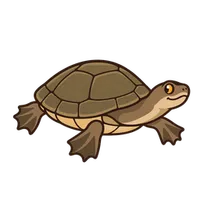
The Eastern Mud Turtle is a pocket-sized bog turtle with a plain, quietly handsome dark shell and a lot of personality packed into 3 to 5 inches. It's one of the smallest turtles in the United States, a weak swimmer that likes shallow, planted water and spends its days poking along the bottom hunting worms and snails. Don't let the small size fool you into a small tank, though: like every turtle, it needs heated, filtered water to live in and a warm, UVB-lit dock to dry off and bask on. Give it that, and it's a hardy, long-lived, low-drama companion that can be with you for decades.
Worried, or still setting up? Free tools
Or browse common Eastern Mud Turtle questions →
Care at a glance
| Adult size | Small — one of the smallest turtles in the US. Carapace roughly 3 to 5 inches (about 78–123 mm); records show males averaging ~94 mm and females ranging up to ~123 mm. It rarely tops 5 inches. |
|---|---|
| Lifespan | Long-lived: commonly 20–50 years, with individuals living several decades in good care (a documented captive female reached 38 years). Plan for a multi-decade commitment. |
| Tank | A glass aquarium is the tank — this is a fully aquatic setup, not a dry vivarium. Modern best practice for one adult is about 75 gallons, roughly 48"L × 18"W × 21"H, which gives a weak swimmer real room to forage. A 40-gallon breeder is the practical floor for a single small adult, but bigger is always better and easier to keep clean. House only one; never keep two males together. |
| Water temperature | 75–78°F (24–26°C) for adults, held steady with a guarded aquarium heater; keep it below ~85°F. Hatchlings a touch warmer (low 80s °F). Always use a thermometer — never guess. |
| Water depth | Moderate depth. Eastern Mud Turtles are only modest swimmers, so keep water roughly twice the turtle's shell length — about 8–10 in for a small adult — with gentle slopes or plants so it can always reach the surface and haul out easily. |
| Filtration | A canister or large hang-on-back filter rated for at least 2–3× the tank's actual water volume — turtles are messy and produce a lot of waste. Even with strong filtration, change about 25–30% of the water every 1–2 weeks and keep the flow gentle, since this species prefers calm water over strong current. |
| Basking dock | A dry basking dock — a floating platform, cork bark, or a stacked rock/log ramp that lets the turtle climb fully out and dry off completely. Aim for a surface temperature of about 85–90°F (29–32°C) directly under the heat lamp, measured with a probe or IR thermometer on the dock itself. Even though Eastern Mud Turtles bask less than sliders, the dry, warm dock is non-negotiable for shell health. |
| Night | Lights and basking heat off at night. Room temperature down into the high 60s to low 70s °F is fine as long as the heated water stays in its normal range; no separate night heat source is needed indoors at normal household temperatures. |
| UVB & lighting | A linear T5 HO UVB tube such as a Zoo Med ReptiSun T5 HO 5.0 or Arcadia Forest 6%, run over the basking dock for 10–12 hours a day. Mount it in a reflective fixture at the manufacturer's distance for the basking zone (roughly 6–9 in with a mesh screen, farther without). Replace the bulb every 6–12 months — UV output fades long before the light stops glowing. |
| Tank bottom | Bare-bottom is easiest to keep clean and perfectly acceptable. If you prefer a planted, natural look, use a layer of smooth, large river gravel too big to swallow, or fine sand for a species that likes to nose along the bottom. Avoid small gravel that can be gulped and cause impaction. |
| Diet | Omnivore, leaning carnivorous, and a bottom-forager by nature. Base the diet on a quality aquatic-turtle pellet, rotated with protein like earthworms, snails, small feeder invertebrates, and occasional bits of fish or thawed shrimp, plus leafy greens (dandelion, collard, mustard greens) offered in the water. Feed juveniles daily; feed adults a protein meal every other day with greens available in between. Only offer what's eaten in about 15–20 minutes. |
| Supplements | Dust food with a calcium (without D3, since UVB provides D3) supplement a couple of times a week, and offer a cuttlebone floated in the tank for free-choice calcium. Skip vitamin-A megadoses from the pet store — a varied diet plus real UVB covers a turtle's needs, and too much supplemental vitamin A is harmful; correct any true deficiency only under a vet's dosing. |
What it's like to live with a Eastern Mud Turtle
Living with an Eastern Mud Turtle is more "watching an aquarium" than "handling a pet." They're shy, largely crepuscular, and spend most of their time trundling along the bottom, occasionally surfacing for air or hauling out to dry. They tolerate brief handling for health checks but don't enjoy being picked up, and a stressed mud turtle will readily release a genuinely foul musk (the family's nickname is well earned). The real daily work is water quality — a turtle is a fish-sized animal producing waste in a small pool — so the keepers who succeed are the ones who stay on top of filtration and water changes. Do that, and you get a hardy, characterful, near-silent tankmate that can outlast a lot of other pets.
Your first month together
The settling-in period, in order — so you know what's normal and when not to worry.
- Before the turtle comes home, set up the whole tank and run it: heater dialed to the mid-70s °F, filter cycling, UVB and basking lamp over a dry dock hitting 85–90°F on the surface, and water temperature confirmed with a thermometer.
- Bring it home and leave it be. Expect a shy, hidey first week or two — dim the room, keep foot traffic low, and let it learn the tank without you hovering.
- Offer food but don't panic if it ignores meals for the first several days; a new turtle often won't eat until it feels settled. Try tempting protein like a live earthworm in the water.
- Watch, don't handle. Learn its normal: how it swims, basks, and surfaces. This baseline is what lets you spot trouble later.
- Keep water pristine — do a water change if anything looks or smells off, and check temps daily until you trust the equipment.
- Book a new-pet wellness exam with an exotics/reptile vet in the first few weeks, both to confirm health and to have an established vet before you ever need one urgently.
Through the year, and as they grow
Diet shifts with age: hatchlings and juveniles are hungrier and more carnivorous and eat daily, while adults settle into every-other-day protein with greens between — overfeeding an adult is a common cause of an overweight turtle. Season matters too: in the wild these turtles brumate (a reptile's version of hibernation) in mud and burrows through the cold months, but a healthy indoor turtle kept warm with proper light does NOT need to brumate and can stay active year-round. Never attempt brumation on a whim — it's only for healthy, well-fed adults and should be planned with a reptile vet, since a sick or underweight turtle can die during dormancy.
The pet store gets these wrong
Common myths, kindly corrected — no shame for having believed them.
- "Turtles only grow to the size of their tank." False and dangerous. A turtle's adult size is set by genetics, not by its enclosure. A too-small tank doesn't keep it small — it stresses the animal, wrecks water quality, and makes it sick. Buy the tank for the adult it will become.
- "It's a tiny turtle, so a tiny tank is fine." Small body, big needs. Eastern Mud Turtles are active bottom-foragers; a 40-gallon breeder is the floor and ~75 gallons is the modern target for one adult.
- "Turtles don't need UVB if they get vitamin supplements." No. Real UVB lets a turtle make its own vitamin D3 to use calcium; without it you get soft shell and metabolic bone disease. UVB is essential, and the bulb must be replaced every 6–12 months even though it still looks lit.
- "Mud turtles live in muck, so they don't need a filter or clean water." Wild turtles have a whole pond to dilute waste; your turtle has a small box. Clean, filtered, regularly changed water is one of the biggest levers on turtle health.
- "They rarely bask, so I can skip the basking dock and heat lamp." They bask less than sliders, but they still need a dry, warm haul-out to fully dry the shell and thermoregulate — no dry dock invites shell rot.
Before you buy
- A properly sized tank (aim ~75 gallons; 40-gallon breeder minimum) plus stand — this is the biggest cost, buy it first.
- A guarded aquarium heater and a reliable thermometer to hold water in the mid-70s °F.
- A canister or large HOB filter rated well above the tank volume, because turtles are messy.
- A UVB fixture with a T5 HO tube (ReptiSun 5.0 / Arcadia 6%) plus a separate basking heat lamp — and a spare UVB bulb, since it needs replacing every 6–12 months.
- A dry basking dock the turtle can fully climb onto, positioned under the heat and UVB.
- A budget and a plan for an exotics vet — reptile vets aren't everywhere, so find yours before you need one.
- A realistic look at the timeline: this animal can live 20–50 years. That's a decades-long commitment.
💷 The eastern mud turtle itself is usually the cheapest part — see the real cost of keeping one (upfront + ongoing, no sales pitch).
See a reptile vet if…
We can't diagnose from afar — but these are the signs to stop watching and get a professional:
- Puffy or swollen eyes, especially with pus-like discharge or an eye held shut — a classic sign of vitamin A deficiency and a reason to see an exotics vet.
- Bubbles or mucus at the mouth or nose, wheezing, open-mouth or neck-stretched breathing, or swimming lopsided/tilting to one side — possible respiratory infection or pneumonia; treat as urgent.
- Soft, spongy, or misshapen shell, or bowed/weak legs — signs of metabolic bone disease from too little UVB or calcium.
- Pits, ulcers, foul-smelling patches, or soft/discolored spots on the shell — possible shell rot; needs veterinary treatment, not just a home scrub.
- Not eating for an extended stretch, lethargy, or floating abnormally when it normally sinks and forages — a general 'something is wrong' flag.
- Hard swellings or lumps behind the eyes, on the head, or elsewhere — possible abscesses that need a vet.
- Any clear deviation from your turtle's normal behavior — when in doubt, call a reptile vet. This is triage guidance, not a diagnosis.
Heading in? Print the free Eastern Mud Turtle vet-prep sheet — what to bring, what to tell the vet, and the questions to ask.
Never
- Never keep it in unfiltered, unheated, or dirty water — poor water quality is behind a huge share of turtle illness.
- Never skip real UVB, and never let the bulb run past its 6–12 month life just because it still glows.
- Never house two male mud turtles together, and be cautious mixing turtles at all — they can be scrappy.
- Never keep it in deep water without easy exits; this is a weak swimmer that can tire and drown.
- Never feed a diet of only lettuce, only meat, or cheap feeder fish — that's the road to vitamin A deficiency and nutritional disease.
- Never dose vitamin A supplements on your own to 'fix' swollen eyes — overdosing is toxic; let a vet dose it.
- Never release an unwanted pet turtle into the wild — it's illegal in many places and can spread disease to native populations.
- Never attempt brumation with a sick, underweight, or unassessed turtle.
Common eastern mud turtle questions
How hard are Eastern Mud Turtles to keep — are they good for beginners?
Beginner–Intermediate. The care itself is simple and forgiving once the setup is right, and their small size keeps the tank manageable. The catch is the full aquatic rig you have to build first: a heater, a real filter you'll keep clean, a UVB bulb, and a dry basking dock under heat. Get those four things in place and this is one of the easier turtles to keep well; skip any of them and you'll be at the vet.
What do Eastern Mud Turtles eat?
Omnivore, leaning carnivorous, and a bottom-forager by nature. Base the diet on a quality aquatic-turtle pellet, rotated with protein like earthworms, snails, small feeder invertebrates, and occasional bits of fish or thawed shrimp, plus leafy greens (dandelion, collard, mustard greens) offered in the water. Feed juveniles daily; feed adults a protein meal every other day with greens available in between. Only offer what's eaten in about 15–20 minutes.
How big a tank do Eastern Mud Turtles need?
A glass aquarium is the tank — this is a fully aquatic setup, not a dry vivarium. Modern best practice for one adult is about 75 gallons, roughly 48"L × 18"W × 21"H, which gives a weak swimmer real room to forage. A 40-gallon breeder is the practical floor for a single small adult, but bigger is always better and easier to keep clean. House only one; never keep two males together.
What water temperature do Eastern Mud Turtles need?
75–78°F (24–26°C) for adults, held steady with a guarded aquarium heater; keep it below ~85°F. Hatchlings a touch warmer (low 80s °F). Always use a thermometer — never guess.
What water depth do Eastern Mud Turtles need?
Moderate depth. Eastern Mud Turtles are only modest swimmers, so keep water roughly twice the turtle's shell length — about 8–10 in for a small adult — with gentle slopes or plants so it can always reach the surface and haul out easily.
What filtration do Eastern Mud Turtles need?
A canister or large hang-on-back filter rated for at least 2–3× the tank's actual water volume — turtles are messy and produce a lot of waste. Even with strong filtration, change about 25–30% of the water every 1–2 weeks and keep the flow gentle, since this species prefers calm water over strong current.
What basking dock do Eastern Mud Turtles need?
A dry basking dock — a floating platform, cork bark, or a stacked rock/log ramp that lets the turtle climb fully out and dry off completely. Aim for a surface temperature of about 85–90°F (29–32°C) directly under the heat lamp, measured with a probe or IR thermometer on the dock itself. Even though Eastern Mud Turtles bask less than sliders, the dry, warm dock is non-negotiable for shell health.
What night-time temperature do Eastern Mud Turtles need?
Lights and basking heat off at night. Room temperature down into the high 60s to low 70s °F is fine as long as the heated water stays in its normal range; no separate night heat source is needed indoors at normal household temperatures.
What UVB and lighting do Eastern Mud Turtles need?
A linear T5 HO UVB tube such as a Zoo Med ReptiSun T5 HO 5.0 or Arcadia Forest 6%, run over the basking dock for 10–12 hours a day. Mount it in a reflective fixture at the manufacturer's distance for the basking zone (roughly 6–9 in with a mesh screen, farther without). Replace the bulb every 6–12 months — UV output fades long before the light stops glowing.
What substrate do Eastern Mud Turtles need?
Bare-bottom is easiest to keep clean and perfectly acceptable. If you prefer a planted, natural look, use a layer of smooth, large river gravel too big to swallow, or fine sand for a species that likes to nose along the bottom. Avoid small gravel that can be gulped and cause impaction.
What supplements do Eastern Mud Turtles need?
Dust food with a calcium (without D3, since UVB provides D3) supplement a couple of times a week, and offer a cuttlebone floated in the tank for free-choice calcium. Skip vitamin-A megadoses from the pet store — a varied diet plus real UVB covers a turtle's needs, and too much supplemental vitamin A is harmful; correct any true deficiency only under a vet's dosing.
How big do Eastern Mud Turtles get?
Small — one of the smallest turtles in the US. Carapace roughly 3 to 5 inches (about 78–123 mm); records show males averaging ~94 mm and females ranging up to ~123 mm. It rarely tops 5 inches.
How long do Eastern Mud Turtles live?
Long-lived: commonly 20–50 years, with individuals living several decades in good care (a documented captive female reached 38 years). Plan for a multi-decade commitment.
What are the signs Eastern Mud Turtles are sick or need a vet?
See a reptile or exotics vet if you notice: Puffy or swollen eyes, especially with pus-like discharge or an eye held shut — a classic sign of vitamin A deficiency and a reason to see an exotics vet.; Bubbles or mucus at the mouth or nose, wheezing, open-mouth or neck-stretched breathing, or swimming lopsided/tilting to one side — possible respiratory infection or pneumonia; treat as urgent.; Soft, spongy, or misshapen shell, or bowed/weak legs — signs of metabolic bone disease from too little UVB or calcium.; Pits, ulcers, foul-smelling patches, or soft/discolored spots on the shell — possible shell rot; needs veterinary treatment, not just a home scrub.; Not eating for an extended stretch, lethargy, or floating abnormally when it normally sinks and forages — a general 'something is wrong' flag.; Hard swellings or lumps behind the eyes, on the head, or elsewhere — possible abscesses that need a vet.; Any clear deviation from your turtle's normal behavior — when in doubt, call a reptile vet. This is triage guidance, not a diagnosis..
Your first two weeks · Taming & handling · Behaviours explained · Won't eat? · Stuck shed · When to see a vet

Get the free Eastern Mud Turtle Starter Kit
A one-page setup criteria checklist and a first-30-days plan for your first eastern mud turtle — what to get, what makes each thing matter, and the honest bits the pet shop skips. Join the den and we’ll send it over.
Free reptile care cheat-sheet the moment you join. No spam — unsubscribe anytime. See how we handle your data in our privacy notice.Sources & further reading
This guide was written and fact-checked against these authorities. It's kind, general guidance — not a diagnosis or a substitute for an exotics vet:
- Reptile Supply — How to Care for Your Mud Turtle — Enclosure 75 gal / 48x18x21, water 75–78°F, basking 86–92°F, UVB (ReptiSun T5 HO 5.0 / Arcadia Forest 6%) replace every 12 months, filtration 2–3x volume, diet, lifespan up to ~50 yrs.
- MedVet — Aquatic Turtle Care Recommendations (veterinary) — Vet source: basking 85–90°F, adult water 75–80°F, hatchling water 82–85°F, UVB 12–14 hrs, diet guidance; used to anchor temperature and UVB numbers.
- VCA Animal Hospitals — Common Diseases of Aquatic Turtles (veterinary) — Clinical signs of hypovitaminosis A, respiratory infection/pneumonia, metabolic bone disease, shell rot, abscesses — basis for vetFlags.
- Animal Diversity Web — Kinosternon subrubrum — Carapace lengths (males avg 93.7mm range 78.2–108.5; females avg 92.8mm range 75.7–123.0), lifespan 20–50 yrs (captive record 38), range, habitat, diet, brumation Nov–Mar.
- Dial A Vet — Vet-Approved Guide to Caring for Pet Mud Turtles — 40-gal minimum, water depth 4–6 in (poor swimmers), water 75–82°F, basking 85–90°F, UVB replace 6–12 months, health flags lethargy/swollen eyes/shell discoloration.
- Zilla — Husbandry Handbook: Mud Turtles (Kinosternon subrubrum) — Rarely over 5 inches, up to 50 yrs, 40 gal min (50–100 for larger females), water 74–78°F, depth ~2x shell length, UVB replace every 6 months.
- Wikipedia — Eastern mud turtle / Kinosternidae — Family Kinosternidae (mud and musk turtles), genus Kinosternon, taxonomy and subspecies.
Written and fact-checked by The Baskden Team against veterinarian-authored sources — if your reptile shows a red-flag sign above, see an exotics vet promptly.