
Species · Tropical (humid) skink
Fire Skink
Mochlus fernandi (formerly Lepidothyris fernandi)
A jewel-toned, secretive skink — stunning red-and-black flanks, though it spends much of its time burrowing.
Difficulty: Beginner–Intermediate Printable care sheet →
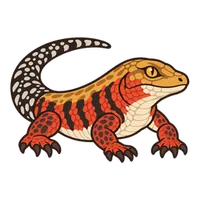
The Fire Skink earns its name — glossy black, gold, and molten-red scales that look enameled. These are shy, ground-dwelling forest skinks from West and Central Africa who spend most of their time burrowing through damp leaf litter and popping up to hunt. Give them a deep, humid, planted enclosure and they can share your home for 15 to 20 years. They are not a cuddly pet — think living jewel you get to observe rather than handle.
Worried, or still setting up? Free tools
Or browse common Fire Skink questions →
Care at a glance
| Adult size | About 12–15 in / 30–38 cm total length, including the tail. Males tend to run a little larger and bulkier than females. |
|---|---|
| Lifespan | 15–20 years with good care — these are a genuine long-term commitment, not a short-lived starter reptile. |
| Enclosure | Minimum for one adult is 36 x 18 x 18 in / 90 x 45 x 45 cm (roughly a 40-gallon), and bigger is strongly recommended. Floor space and substrate depth matter more than height for these burrowers. A secure, tight-fitting lid is a must — they are fast and can climb. |
| Basking / warm zone | 92–96°F (33–35.5°C) at the basking surface. This is the warm end of the gradient, not the whole tank. |
| Cool side | 75–85°F (24–29°C) on the cool end, so the skink can thermoregulate by moving between zones. |
| Night | A natural night drop to about 70–75°F (21–24°C) is fine and healthy; brief dips a little lower are tolerated. No colored "night" bulbs — turn overhead heat off after dark and use a thermostat-controlled source if the room gets cold. |
| UVB & lighting | Low but beneficial — this is a forest-floor animal, not a desert baskers. A linear T5 HO 6% ("Forest") UVB tube giving a basking-zone UVI of about 3.0–4.0 is the modern best practice; mount it roughly 8–10 in / 20–25 cm above the skink's back (further if over mesh). A fire skink can survive on dietary D3 alone, but UVB plus provided shade and cover is safer and more natural. Replace the tube every ~12 months. |
| Humidity | Average 60–70%, verified with a digital probe hygrometer. Achieve it with deep moisture-holding substrate and a daily misting (morning and evening), keeping the lower substrate layers damp while the surface and air still dry out between mistings to avoid stagnant, mold-prone conditions. |
| Substrate | A deep, moisture-retentive, burrowable mix — 4–6 in / 10–15 cm minimum. A blend like organic topsoil with coconut fiber and/or peat, plus a little play sand, works well; commercial options include ReptiSoil or plantation soil. Top with leaf litter and cork for hiding. These skinks spend real time underground, so depth is non-negotiable. |
| Diet | Insectivore. Offer a varied rotation of appropriately sized live insects — crickets, dubia/discoid roaches, black soldier fly larvae, isopods, the occasional mealworm/superworm — no larger than the space between the skink's eyes. Juveniles eat daily to every other day; adults eat roughly every 2–4 days, offering what they'll clean up in about 5 minutes. |
| Supplements | Dust feeders with a plain calcium (no D3) at most feedings; use a calcium-with-D3 and/or a reptile multivitamin lightly 1–2x weekly (or use an all-in-one like Repashy Calcium Plus). Skip a dusting occasionally so you don't over-supplement. Gut-load your insects 24–48 hrs before feeding. Proper calcium/D3 is what prevents metabolic bone disease. |
What it's like to live with a Fire Skink
Keep one per enclosure. Fire skinks are solitary and territorial; two males will fight, and even mixed or female groups risk stress, bullying, and food competition unless the enclosure is large and heavily planted with multiple hides — a project for experienced keepers only, not beginners. Solo is the safe default.
Your first month together
The settling-in period, in order — so you know what's normal and when not to worry.
- Set up and stabilize the enclosure BEFORE the skink arrives — run the heat, UVB, and misting for a week and confirm temps and 60–70% humidity with digital gauges.
- Expect your new skink to burrow and hide for days to weeks. This is normal — resist the urge to dig them out or handle them.
- Offer food every 1–2 days but don't panic over a slow start; a stressed new arrival may skip meals while settling in.
- Provide a shallow water dish from day one and keep the lower substrate layers damp.
- Minimize disturbance — let them establish burrows and feel secure before you try any brief, low, close-to-the-ground handling.
- Find a reptile-experienced exotics vet now and consider a fresh fecal check for parasites, common in wild-caught imports.
Through the year, and as they grow
In cooler months, watch that the enclosure doesn't drop too far at night and that room heating doesn't dry out your humidity — you may need to mist more often or add ambient heat on a thermostat. Keep the day/night light cycle consistent year-round; a modest seasonal night-temperature dip is natural, but they don't require a true brumation to stay healthy as pets.
The pet store gets these wrong
Common myths, kindly corrected — no shame for having believed them.
- "Fire skinks are hands-on pets." — They're not. They're shy, fast, and slippery, and most do best as look-but-don't-touch display animals. Interaction is watching them forage, not cuddling.
- "A 20-gallon tank is fine." — Too small. Give one adult at least a 36 x 18 x 18 in footprint, and more if you can. They roam and burrow.
- "They don't need UVB because they hide." — They can survive on dietary D3, but a low-level (6%) UVB tube plus shade is healthier and closer to their forest-edge natural exposure.
- "They're a desert lizard because they bask." — No. Fire skinks are humid-forest floor animals needing 60–70% humidity and damp, deep substrate, not a dry desert setup.
- "You can keep a pair or group together." — Risky. They're solitary; males fight, and cohabitation invites stress and injury. One per enclosure is the safe rule.
Before you buy
- This is a 15–20 year commitment — plan for the long haul.
- You'll need a tall, deep-substrate humid enclosure with heat, UVB, misting, and digital thermometer + hygrometer before the animal comes home.
- You must be comfortable keeping and feeding live insects, ideally gut-loaded, for the skink's whole life.
- Many fire skinks in the trade are wild-caught — ask the source, and be prepared for a parasite screen and a shyer, more skittish animal. Captive-bred is calmer and more ethical when available.
- This is a display pet, not a handling pet — if you want a lizard to hold, look elsewhere.
- Locate a qualified reptile/exotics vet before you buy.
💷 The fire skink itself is usually the cheapest part — see the real cost of keeping one (upfront + ongoing, no sales pitch).
See a reptile vet if…
We can't diagnose from afar — but these are the signs to stop watching and get a professional:
- Soft, rubbery, or swollen jaw or limbs, tremors, or trouble walking — possible metabolic bone disease from calcium/D3/UVB problems; see an exotics vet.
- Open-mouth breathing, wheezing, clicking or bubbling from the mouth or nose, or mucus — possible respiratory infection, which can worsen fast.
- Refusing food for an extended stretch with visible weight loss or a sunken body/hips — get it checked rather than waiting it out.
- Stuck shed, especially on toes, tail tip, or over the eyes — retained shed can cut off circulation; raise humidity and see a vet if it persists.
- Cheesy or discolored buildup, swelling, or redness in or around the mouth — possible mouth rot (stomatitis).
- Runny, bloody, or foul stool, visible worms, or ongoing weight loss — common in wild-caught animals; ask your vet about a fecal parasite exam.
- Persistent lethargy, weakness, or refusal to burrow/move even when warm and settled — a general 'something is wrong' sign worth a vet visit.
Heading in? Print the free Fire Skink vet-prep sheet — what to bring, what to tell the vet, and the questions to ask.
Never
- Never keep them in a dry, desert-style setup — chronic low humidity causes shedding problems and dehydration.
- Never skip calcium supplementation — it's the main cause of preventable metabolic bone disease.
- Never house two males together, and don't assume any group will get along.
- Never use shallow substrate — denying them the ability to burrow is major stress; give at least 4–6 in of deep, moist bedding.
- Never feed insects larger than the space between the eyes, or feed wild-caught bugs that may carry pesticides or parasites.
- Never rely on colored night bulbs or leave a hot basking lamp on 24/7 — they need a real day/night cycle and a night temperature drop.
- Never dig them out or over-handle a shy or newly arrived skink — let them settle and hide.
Common fire skink questions
How hard are Fire Skinks to keep — are they good for beginners?
Beginner–Intermediate. Hardy and long-lived once the setup is right, but they are shy burrowers who hide most of the day. The real work is a tall, deep-substrate, humid enclosure and feeding live insects — not the animal itself. Best for someone who wants a beautiful lizard to watch, not to hold.
What do Fire Skinks eat?
Insectivore. Offer a varied rotation of appropriately sized live insects — crickets, dubia/discoid roaches, black soldier fly larvae, isopods, the occasional mealworm/superworm — no larger than the space between the skink's eyes. Juveniles eat daily to every other day; adults eat roughly every 2–4 days, offering what they'll clean up in about 5 minutes.
How big an enclosure do Fire Skinks need?
Minimum for one adult is 36 x 18 x 18 in / 90 x 45 x 45 cm (roughly a 40-gallon), and bigger is strongly recommended. Floor space and substrate depth matter more than height for these burrowers. A secure, tight-fitting lid is a must — they are fast and can climb.
What basking temperature do Fire Skinks need?
92–96°F (33–35.5°C) at the basking surface. This is the warm end of the gradient, not the whole tank.
What should the cool side be for Fire Skinks?
75–85°F (24–29°C) on the cool end, so the skink can thermoregulate by moving between zones.
What night-time temperature do Fire Skinks need?
A natural night drop to about 70–75°F (21–24°C) is fine and healthy; brief dips a little lower are tolerated. No colored "night" bulbs — turn overhead heat off after dark and use a thermostat-controlled source if the room gets cold.
What UVB and lighting do Fire Skinks need?
Low but beneficial — this is a forest-floor animal, not a desert baskers. A linear T5 HO 6% ("Forest") UVB tube giving a basking-zone UVI of about 3.0–4.0 is the modern best practice; mount it roughly 8–10 in / 20–25 cm above the skink's back (further if over mesh). A fire skink can survive on dietary D3 alone, but UVB plus provided shade and cover is safer and more natural. Replace the tube every ~12 months.
What humidity do Fire Skinks need?
Average 60–70%, verified with a digital probe hygrometer. Achieve it with deep moisture-holding substrate and a daily misting (morning and evening), keeping the lower substrate layers damp while the surface and air still dry out between mistings to avoid stagnant, mold-prone conditions.
What substrate do Fire Skinks need?
A deep, moisture-retentive, burrowable mix — 4–6 in / 10–15 cm minimum. A blend like organic topsoil with coconut fiber and/or peat, plus a little play sand, works well; commercial options include ReptiSoil or plantation soil. Top with leaf litter and cork for hiding. These skinks spend real time underground, so depth is non-negotiable.
What supplements do Fire Skinks need?
Dust feeders with a plain calcium (no D3) at most feedings; use a calcium-with-D3 and/or a reptile multivitamin lightly 1–2x weekly (or use an all-in-one like Repashy Calcium Plus). Skip a dusting occasionally so you don't over-supplement. Gut-load your insects 24–48 hrs before feeding. Proper calcium/D3 is what prevents metabolic bone disease.
How big do Fire Skinks get?
About 12–15 in / 30–38 cm total length, including the tail. Males tend to run a little larger and bulkier than females.
How long do Fire Skinks live?
15–20 years with good care — these are a genuine long-term commitment, not a short-lived starter reptile.
What are the signs Fire Skinks are sick or need a vet?
See a reptile or exotics vet if you notice: Soft, rubbery, or swollen jaw or limbs, tremors, or trouble walking — possible metabolic bone disease from calcium/D3/UVB problems; see an exotics vet.; Open-mouth breathing, wheezing, clicking or bubbling from the mouth or nose, or mucus — possible respiratory infection, which can worsen fast.; Refusing food for an extended stretch with visible weight loss or a sunken body/hips — get it checked rather than waiting it out.; Stuck shed, especially on toes, tail tip, or over the eyes — retained shed can cut off circulation; raise humidity and see a vet if it persists.; Cheesy or discolored buildup, swelling, or redness in or around the mouth — possible mouth rot (stomatitis).; Runny, bloody, or foul stool, visible worms, or ongoing weight loss — common in wild-caught animals; ask your vet about a fecal parasite exam.; Persistent lethargy, weakness, or refusal to burrow/move even when warm and settled — a general 'something is wrong' sign worth a vet visit..
Your first two weeks · Taming & handling · Behaviours explained · Won't eat? · Stuck shed · When to see a vet

Get the free Fire Skink Starter Kit
A one-page setup criteria checklist and a first-30-days plan for your first fire skink — what to get, what makes each thing matter, and the honest bits the pet shop skips. Join the den and we’ll send it over.
Free reptile care cheat-sheet the moment you join. No spam — unsubscribe anytime. See how we handle your data in our privacy notice.Sources & further reading
This guide was written and fact-checked against these authorities. It's kind, general guidance — not a diagnosis or a substitute for an exotics vet:
- ReptiFiles — Fire Skink Care Sheet — Primary authority: enclosure size, 92–96°F basking, 75–85°F cool, 70–75°F night, T5 HO 6% UVB at UVI 3.0–4.0, 60–70% humidity, 4–6 in substrate, diet/feeding, solitary housing, 12–15 in size, 15–20 yr lifespan.
- The Bio Dude — Bioactive Fire Skink Care Sheet (Mochlus fernandi) — Corroborates temps (92–96 / 75–85 / 70–75°F), enclosure, 6% T5 HO UVB, 60–70% humidity, substrate mix, feeding frequency, no cohabitation, water dish.
- Dubia.com — Fire Skink Care Sheet — Corroborates ~95°F basking, 75–85°F cool, ~6 in substrate, feeding schedule, supplementation (Repashy Calcium Plus), water dish, cohabitation not recommended; MBD prevention via calcium/D3.
- Wikipedia — Fire skink (Mochlus fernandi) — Taxonomy (family Scincidae; Mochlus, formerly Riopa/Lepidothyris), native humid-forest range, ~37 cm size, insectivorous, fossorial burrowing behavior.
- Merck Veterinary Manual — Bacterial Diseases of Reptiles (stomatitis/mouth rot) — Vet-authority basis for mouth-rot and infection triage signals in vetFlags.
- PetMD — Reptile Conditions and Diseases (vet-reviewed) — Vet-reviewed basis for general illness red flags: anorexia/weight loss, respiratory signs, dysecdysis, lethargy.
Written and fact-checked by The Baskden Team against veterinarian-authored sources — if your reptile shows a red-flag sign above, see an exotics vet promptly.