
Species · Garter snake
Garter Snake
Thamnophis sirtalis
The active, diurnal little snake you actually see moving about — hardy and engaging, but fed on fish and worms rather than rodents.
Difficulty: Beginner–Intermediate Printable care sheet →
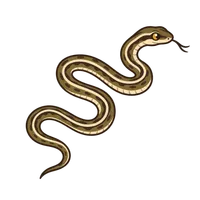
Garter snakes are the little snakes you actually SEE — fast, alert, diurnal foragers that cruise around by day rather than hiding like most pet snakes. They're one of the most common snakes in North America, manageably sized, hardy, and unusually for a snake they can even be kept in groups. The twist is the diet: they're not rodent feeders, they eat fish and earthworms (and the occasional whole prey), which brings its own rule — vary the diet, or an all-fish menu can cause a dangerous vitamin deficiency. Give them a big planted space, a pool to swim in, and a varied diet, and they're a lively, engaging first snake.
Worried, or still setting up? Free tools
Or browse common Garter Snake questions →
Care at a glance
| Adult size | 18–54 in (45–137 cm) depending on species/sex; females are larger |
|---|---|
| Lifespan | 10 years or more with good care |
| Enclosure | Roomy for an active diurnal forager: about 48×24×24 in (120×60×60 cm) for an adult, at least 18 in tall for safe lighting and climbing terrain. Unusually for a snake, garters CAN be group-housed (it can even lower stress in juveniles) — but each extra snake needs significantly more space. |
| Basking / warm zone | Basking area 85–90°F (29–32°C) from an overhead halogen over a flat basking rock or plank. Two bulbs make an even basking zone. Cool-side air above 91°F (33°C) is dangerous — garters overheat and can die of heat stroke. |
| Cool side | Cool side 75–80°F (23–27°C), giving a full gradient. |
| Night | Night 64–75°F (18–24°C); heat off at night. A winter cool-down to ~60–68°F by day is natural for them. |
| UVB & lighting | UVB is beneficial for a diurnal, day-active snake: a T5 HO bulb (Arcadia Forest 6%) giving UVI 2.0–3.0 at the basking spot. Replace every 12 months. |
| Humidity | Average 35–60% — higher on the cool end and at night, lower on the warm end. Consistently too damp or too dry causes problems, but the big water basin (below) does most of the humidity work. |
| Substrate | A moisture-retentive, burrowable mix (aspen is too dry-only; a topsoil/coco blend or a bioactive mix suits them) that holds a little humidity. Add cover, plants, and climbing terrain for a busy, exploring snake. |
| Diet | NOT a rodent snake — a fish-and-worm eater, and VARIETY is the rule. Feed a varied menu of earthworms / nightcrawlers and whole feeder fish, plus the occasional pinky mouse. Juveniles every 3–5 days, adults every 4–7 days (worm-eaters need feeding more often than fish- or mouse-eaters). Prey no more than ~1.5× the snake’s width; offer worms and fish several at a time. |
| Supplements | Vary the diet to prevent a vitamin B1 (thiamine) deficiency — some fish (notably goldfish and rosy-reds) contain thiaminase, which destroys thiamine, so never feed those as a staple. Lightly dust worm/fish meals with a calcium/multivitamin to round out a diet that’s less complete than whole rodents. |
🦎 Did you know? — Garter Snake fun facts
Little true delights about the garter snake — each one checked against a named source, no pet-shop myths.
- Common garter snakes don’t lay eggs — they bear live young, with litters ranging from a handful to as many as 80 babies. Animal Diversity Web
- A garter snake’s saliva is mildly toxic to its small prey, helping subdue it — but the snakes are essentially harmless to people. Animal Diversity Web
- Common garter snakes can eat newts and other amphibians armed with chemical defences that would poison most other predators. Animal Diversity Web
What it's like to live with a Garter Snake
A garter snake is the rare pet snake you actually watch being a snake. Where a ball python spends its life curled in a hide, a garter is out and about by day — foraging, swimming, tongue-flicking, and investigating its space with real energy. They can be kept as a small group, which is unusual and charming, and they tame down with gentle handling, though a nervous or freshly-caught one may release a harmless, smelly musk when first picked up. The one thing that sets them apart from every other beginner snake is the fish-and-worm diet — embrace the variety and they’re one of the most engaging small snakes you can keep.
Your first month together
The settling-in period, in order — so you know what's normal and when not to worry.
- Assume it may be wild-caught (garters are native and often collected): quarantine a new snake and consider a vet fecal check for parasites.
- Set up a big, planted enclosure with a proper water basin it can swim in and a 85–90°F basking spot before it arrives.
- Offer a VARIED diet from the start — earthworms and fish, not just one — and never rely on goldfish, to avoid a thiamine deficiency.
- Expect an active, exploring, day-active snake; a little musking when first handled is normal and harmless, and fades as it settles.
- Feed juveniles every 3–5 days and adults every 4–7, judging portions by the snake’s width and body condition.
Through the year, and as they grow
Garters are temperate snakes with a real seasonal rhythm: many naturally brumate in winter, and keepers often give a cool-down (daytime ~60–68°F) even without breeding. Appetite and activity rise in the warm months. Females can give live birth to large litters in the warm season, so a gravid female needs good nutrition and a vet if she becomes weak or stops feeding.
The pet store gets these wrong
Common myths, kindly corrected — no shame for having believed them.
- A garter is just a small corn snake — no; it eats fish and worms, not rodents, and needs a varied diet to stay healthy.
- Feed it only fish — no; some fish (goldfish, rosy-reds) cause a thiamine deficiency. Vary the diet with worms and whole prey.
- All snakes must live alone — garters are a real exception and can be group-housed with enough space.
- It doesn’t need water beyond a small bowl — no; it’s semi-aquatic and wants a basin big enough to swim and soak in.
- A tiny tank is fine for a small snake — no; it’s an active diurnal forager that needs room and climbing terrain.
Before you buy
- A roomy ~48×24×24 in planted enclosure with a water basin big enough to swim in.
- Comfort feeding earthworms and whole fish (not just rodents), and a plan to keep the diet varied.
- Overhead heat for an 85–90°F basking spot and UVB, plus acceptance that many garters are wild-caught (quarantine + vet fecal).
- A 10+ year commitment, and an exotics/reptile vet within reach.
💷 The garter snake itself is usually the cheapest part — see the real cost of keeping one (upfront + ongoing, no sales pitch).
See a reptile vet if…
We can't diagnose from afar — but these are the signs to stop watching and get a professional:
- Tremors, weakness, loss of coordination, or "stargazing" (possible vitamin B1 / thiamine deficiency — classically from an all-fish, thiaminase-rich diet).
- Open-mouth breathing, wheezing, or mucus/bubbles (possible respiratory infection).
- Repeated stuck sheds or retained eye caps; cheesy matter in the mouth (mouth rot); or mites (tiny moving dots).
- Regurgitating meals, poor weight, or abnormal/worm-visible droppings (parasites — common in wild-caught garters).
- A female straining and unwell around birthing, or any tissue protruding from the vent (prolapse).
Heading in? Print the free Garter Snake vet-prep sheet — what to bring, what to tell the vet, and the questions to ask.
Never
- Never feed an all-fish diet of goldfish or rosy-reds — the thiaminase causes a dangerous B1 deficiency; keep the diet varied.
- Never keep it without a water basin big enough to swim in — it’s a semi-aquatic snake.
- Never let the cool side climb above ~91°F — garters overheat and can die of heat stroke.
- Never assume it eats rodents like a corn or ball python — it’s a fish-and-worm feeder.
- Never crowd a group into too small a space — group housing needs generous room per snake.
Common garter snake questions
How hard are Garter Snakes to keep — are they good for beginners?
Beginner–Intermediate. Hardy, active, and manageably sized — but NOT a rodent-fed ambush snake. A garter eats fish and worms, needs a varied diet to avoid a thiamine deficiency, wants water to swim in, and is a busy diurnal animal that actually needs space. Simple to keep once you understand it isn't a corn snake.
What do Garter Snakes eat?
NOT a rodent snake — a fish-and-worm eater, and VARIETY is the rule. Feed a varied menu of earthworms / nightcrawlers and whole feeder fish, plus the occasional pinky mouse. Juveniles every 3–5 days, adults every 4–7 days (worm-eaters need feeding more often than fish- or mouse-eaters). Prey no more than ~1.5× the snake’s width; offer worms and fish several at a time.
How big an enclosure do Garter Snakes need?
Roomy for an active diurnal forager: about 48×24×24 in (120×60×60 cm) for an adult, at least 18 in tall for safe lighting and climbing terrain. Unusually for a snake, garters CAN be group-housed (it can even lower stress in juveniles) — but each extra snake needs significantly more space.
What basking temperature do Garter Snakes need?
Basking area 85–90°F (29–32°C) from an overhead halogen over a flat basking rock or plank. Two bulbs make an even basking zone. Cool-side air above 91°F (33°C) is dangerous — garters overheat and can die of heat stroke.
What should the cool side be for Garter Snakes?
Cool side 75–80°F (23–27°C), giving a full gradient.
What night-time temperature do Garter Snakes need?
Night 64–75°F (18–24°C); heat off at night. A winter cool-down to ~60–68°F by day is natural for them.
What UVB and lighting do Garter Snakes need?
UVB is beneficial for a diurnal, day-active snake: a T5 HO bulb (Arcadia Forest 6%) giving UVI 2.0–3.0 at the basking spot. Replace every 12 months.
What humidity do Garter Snakes need?
Average 35–60% — higher on the cool end and at night, lower on the warm end. Consistently too damp or too dry causes problems, but the big water basin (below) does most of the humidity work.
What substrate do Garter Snakes need?
A moisture-retentive, burrowable mix (aspen is too dry-only; a topsoil/coco blend or a bioactive mix suits them) that holds a little humidity. Add cover, plants, and climbing terrain for a busy, exploring snake.
What supplements do Garter Snakes need?
Vary the diet to prevent a vitamin B1 (thiamine) deficiency — some fish (notably goldfish and rosy-reds) contain thiaminase, which destroys thiamine, so never feed those as a staple. Lightly dust worm/fish meals with a calcium/multivitamin to round out a diet that’s less complete than whole rodents.
How big do Garter Snakes get?
18–54 in (45–137 cm) depending on species/sex; females are larger
How long do Garter Snakes live?
10 years or more with good care
What are the signs Garter Snakes are sick or need a vet?
See a reptile or exotics vet if you notice: Tremors, weakness, loss of coordination, or "stargazing" (possible vitamin B1 / thiamine deficiency — classically from an all-fish, thiaminase-rich diet).; Open-mouth breathing, wheezing, or mucus/bubbles (possible respiratory infection).; Repeated stuck sheds or retained eye caps; cheesy matter in the mouth (mouth rot); or mites (tiny moving dots).; Regurgitating meals, poor weight, or abnormal/worm-visible droppings (parasites — common in wild-caught garters).; A female straining and unwell around birthing, or any tissue protruding from the vent (prolapse)..
Your first two weeks · Taming & handling · Behaviours explained · Won't eat? · Stuck shed · When to see a vet

Get the free Garter Snake Starter Kit
A one-page setup criteria checklist and a first-30-days plan for your first garter snake — what to get, what makes each thing matter, and the honest bits the pet shop skips. Join the den and we’ll send it over.
Free reptile care cheat-sheet the moment you join. No spam — unsubscribe anytime. See how we handle your data in our privacy notice.Sources & further reading
This guide was written and fact-checked against these authorities. It's kind, general guidance — not a diagnosis or a substitute for an exotics vet:
- ReptiFiles — Garter Snake Care Sheet — 18–54 in, 10+ yr; enclosure ~48×24×24 in (≥18″ tall), CAN be group-housed; basking 85–90°F / cool 75–80°F / night 64–75°F (cool-side >91°F dangerous); UVI 2.0–3.0 (Arcadia Forest 6%); humidity 35–60% + a large water basin to swim in; varied fish-and-worm diet (juvenile every 3–5 d, adult every 4–7 d, prey ≤1.5× width); avoid thiaminase fish (goldfish) → B1 deficiency; often wild-caught.
- Baines et al. (2016), “How much UVB does my reptile need? The UV-Tool” — Ferguson Zone 2–3 target UVI ~2.0–3.0 for a diurnal, day-active snake.
- Association of Reptilian & Amphibian Veterinarians (ARAV) — Find-an-exotics-vet; thiamine deficiency, respiratory infection, parasites, mouth rot.
- Merck Veterinary Manual — reptiles — Thiamine (vitamin B1) deficiency, respiratory infection, endoparasites, dysecdysis.
Written and fact-checked by The Baskden Team against veterinarian-authored sources — if your reptile shows a red-flag sign above, see an exotics vet promptly.