
Species · Tropical arboreal gecko
Giant Day Gecko
Phelsuma grandis
A dazzling green day gecko active in daylight — beautiful, but delicate-skinned and not for handling.
Difficulty: Intermediate Printable care sheet →
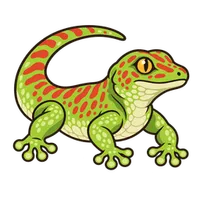
If you want a gecko that looks like a living piece of emerald jewelry, this is it. The Giant Day Gecko is a bold, sun-loving, day-active climber from Madagascar that spends its time scaling glass and branches in a lush planted tank. They're stunning and surprisingly hardy, but they aren't a hands-on pet, they're a watch-and-admire one, so the reward is a gorgeous slice of a rainforest on your wall.
Worried, or still setting up? Free tools
Or browse common Giant Day Gecko questions →
Care at a glance
| Adult size | Around 9-11 inches (23-28 cm) total length, including the tail. Males typically end up a touch larger and bulkier than females. |
|---|---|
| Lifespan | 15-20 years with good care, so this is a genuine long-term commitment. |
| Enclosure | Minimum 24 x 24 x 48 inches (60 x 60 x 120 cm) tall for a single adult, and bigger is better. Height and vertical climbing surfaces matter far more than floor space for this arboreal species. Use a front-opening or well-ventilated planted vivarium; screen tops help airflow but you'll need to manage humidity. |
| Basking / warm zone | Basking surface 85-90°F (29-32°C), created with an overhead heat source on one end. (Note: some guides list a hotter spot up to ~95°F; the 85-90°F range is the more widely recommended target.) |
| Cool side | 77-82°F (25-28°C) on the cool end, giving the gecko a clear gradient to move through. |
| Night | A natural night drop to about 73-77°F (23-25°C) is fine and healthy. No nighttime heat is usually needed at normal room temperatures. |
| UVB & lighting | Yes, they need it. Day geckos are diurnal and bask, so UVB is important for healthy calcium metabolism and their best color. Target a UVI of about 3.0-4.0 in the basking zone using a quality T5 HO bulb such as an Arcadia Forest 6% or Zoo Med Reptisun 5.0 (or an Arcadia ShadeDweller for shorter mounting distances), placed at the manufacturer's recommended distance. Replace UVB bulbs every 12 months even if they still glow. |
| Humidity | Aim for an average of roughly 40-75%, cycling higher after misting and drying out between mistings. Mist once or twice daily; good airflow prevents stagnant, moldy conditions. They rarely drink from a bowl, so they hydrate by lapping water droplets off leaves and glass. |
| Substrate | A moisture-retentive bioactive-friendly mix works well: organic topsoil blended with coconut fiber (for example ~60/40), or a ready-made option like Zoo Med ReptiSoil / Eco Earth or Exo Terra Plantation Soil. Top with leaf litter and add live plants (pothos, bromeliads, sansevieria) plus cork bark, bamboo, and sturdy branches for climbing. |
| Diet | Omnivorous leaning toward insects plus fruit/nectar. Feed a powdered complete gecko diet (CGD, e.g. Pangea or Repashy) plus gut-loaded feeder insects (crickets, dubia/discoid roaches, hornworms, silkworms, occasional grasshoppers). A common adult routine is insects 2-3x per week and CGD roughly 1x per week; juveniles eat more often. Offer insects slightly smaller than the gecko's head. |
| Supplements | Lightly dust feeder insects with plain calcium (no D3) at most feedings, and use a calcium-with-D3 or reptile multivitamin on a lighter schedule (roughly once or twice a week, per product directions). Prepared CGD is already fortified, so don't double up heavily. A proper UVB source plus balanced supplements is what prevents metabolic bone disease. |
What it's like to live with a Giant Day Gecko
Best kept one gecko per enclosure. Adult males will fight, often to serious injury, and cannot be housed together. Females or an established breeding pair can sometimes cohabit in a larger, well-planted tank with multiple basking and sight-line options, but even females can bully each other. For most keepers, solo housing is the safest, lowest-stress choice.
Your first month together
The settling-in period, in order — so you know what's normal and when not to worry.
- Set the tank up and run it empty for several days first, confirming the temperature gradient and UVI with a thermometer and a Solarmeter/UV index reading before the gecko goes in.
- Expect a new gecko to be skittish and hide; give it space and resist handling while it settles.
- Mist once or twice daily and watch that droplets are available, since they lap water off leaves and glass rather than a bowl.
- Offer food in the first few days but don't panic over a small appetite at first; note what it actually eats.
- Do a quick daily visual health check: bright eyes, good grip, no swollen limbs or kinked jaw, and normal droppings.
Through the year, and as they grow
A mild seasonal rhythm is natural: slightly longer 'summer' photoperiods (around 13 hours) and shorter 'winter' ones (around 11 hours), with a modest cool-season temperature dip. This can trigger breeding behavior in pairs. Keep humidity a touch higher during any cooler, drier household spells and watch that winter heating doesn't dry the room out too much.
The pet store gets these wrong
Common myths, kindly corrected — no shame for having believed them.
- Myth: day geckos don't need UVB because you can just supplement with D3. Reality: they're diurnal baskers and do best with real UVB; skimping on it is a classic path to metabolic bone disease.
- Myth: they're friendly pets you can handle. Reality: they're fast, easily stressed, and their skin tears easily, so they're a display animal, not a handling one.
- Myth: a standard 20-gallon or a wide floor tank is fine. Reality: they're arboreal and want height, so vertical space (48 inches tall) beats floor space every time.
- Myth: they only eat crickets. Reality: they're omnivores that also need a powdered gecko diet and fruit/nectar, not an insect-only menu.
- Myth: you can keep two together for company. Reality: males fight and even females can bully; solo housing is usually best.
Before you buy
- This is a 15-20 year commitment, not a short-term pet.
- You'll need a tall planted vivarium plus UVB and heat lighting before the gecko comes home; the setup costs more than the animal.
- It's a look-but-don't-touch species, so if you want a lizard to hold, this isn't your match.
- Daily misting and attention to humidity and temperature are part of the routine.
- Find an exotics/reptile vet in your area now, before you need one.
💷 The giant day gecko itself is usually the cheapest part — see the real cost of keeping one (upfront + ongoing, no sales pitch).
See a reptile vet if…
We can't diagnose from afar — but these are the signs to stop watching and get a professional:
- Trembling, shaking, weak or 'rubbery' limbs, a swollen or soft jaw, or a kinked tail can signal metabolic bone disease, see an exotics vet.
- Sudden weight loss, sunken eyes, or refusing food for an extended period warrants a vet visit.
- A female straining, staying swollen, or looking egg-bound (unable to pass eggs) is an emergency, see a vet promptly.
- Persistent lethargy, staying dark/dull colored, labored breathing, or unhealed skin wounds should be checked.
- Retained shed around toes or the tail tip that constricts circulation needs attention if it doesn't clear.
Heading in? Print the free Giant Day Gecko vet-prep sheet — what to bring, what to tell the vet, and the questions to ask.
Never
- Never grab or restrain them by the tail, it can drop and they don't regrow it as perfectly.
- Never house two adult males together.
- Never rely on D3 supplements alone as a substitute for proper UVB.
- Never let the enclosure sit hot and stagnant; combine warmth with real airflow.
- Never use hot rocks or unguarded heat elements they can contact and burn on.
- Never handle them casually as an everyday pet, chronic stress and torn skin are the result.
Common giant day gecko questions
How hard are Giant Day Geckos to keep — are they good for beginners?
Intermediate. Their needs aren't complicated once you learn them, but they're a look-don't-touch gecko: fast, flighty, and their skin tears easily, so this is a display animal, not a cuddle pet. The intermediate rating comes from getting the tall planted setup, UVB, and humidity dialed in correctly.
What do Giant Day Geckos eat?
Omnivorous leaning toward insects plus fruit/nectar. Feed a powdered complete gecko diet (CGD, e.g. Pangea or Repashy) plus gut-loaded feeder insects (crickets, dubia/discoid roaches, hornworms, silkworms, occasional grasshoppers). A common adult routine is insects 2-3x per week and CGD roughly 1x per week; juveniles eat more often. Offer insects slightly smaller than the gecko's head.
How big an enclosure do Giant Day Geckos need?
Minimum 24 x 24 x 48 inches (60 x 60 x 120 cm) tall for a single adult, and bigger is better. Height and vertical climbing surfaces matter far more than floor space for this arboreal species. Use a front-opening or well-ventilated planted vivarium; screen tops help airflow but you'll need to manage humidity.
What basking temperature do Giant Day Geckos need?
Basking surface 85-90°F (29-32°C), created with an overhead heat source on one end. (Note: some guides list a hotter spot up to ~95°F; the 85-90°F range is the more widely recommended target.)
What should the cool side be for Giant Day Geckos?
77-82°F (25-28°C) on the cool end, giving the gecko a clear gradient to move through.
What night-time temperature do Giant Day Geckos need?
A natural night drop to about 73-77°F (23-25°C) is fine and healthy. No nighttime heat is usually needed at normal room temperatures.
What UVB and lighting do Giant Day Geckos need?
Yes, they need it. Day geckos are diurnal and bask, so UVB is important for healthy calcium metabolism and their best color. Target a UVI of about 3.0-4.0 in the basking zone using a quality T5 HO bulb such as an Arcadia Forest 6% or Zoo Med Reptisun 5.0 (or an Arcadia ShadeDweller for shorter mounting distances), placed at the manufacturer's recommended distance. Replace UVB bulbs every 12 months even if they still glow.
What humidity do Giant Day Geckos need?
Aim for an average of roughly 40-75%, cycling higher after misting and drying out between mistings. Mist once or twice daily; good airflow prevents stagnant, moldy conditions. They rarely drink from a bowl, so they hydrate by lapping water droplets off leaves and glass.
What substrate do Giant Day Geckos need?
A moisture-retentive bioactive-friendly mix works well: organic topsoil blended with coconut fiber (for example ~60/40), or a ready-made option like Zoo Med ReptiSoil / Eco Earth or Exo Terra Plantation Soil. Top with leaf litter and add live plants (pothos, bromeliads, sansevieria) plus cork bark, bamboo, and sturdy branches for climbing.
What supplements do Giant Day Geckos need?
Lightly dust feeder insects with plain calcium (no D3) at most feedings, and use a calcium-with-D3 or reptile multivitamin on a lighter schedule (roughly once or twice a week, per product directions). Prepared CGD is already fortified, so don't double up heavily. A proper UVB source plus balanced supplements is what prevents metabolic bone disease.
How big do Giant Day Geckos get?
Around 9-11 inches (23-28 cm) total length, including the tail. Males typically end up a touch larger and bulkier than females.
How long do Giant Day Geckos live?
15-20 years with good care, so this is a genuine long-term commitment.
What are the signs Giant Day Geckos are sick or need a vet?
See a reptile or exotics vet if you notice: Trembling, shaking, weak or 'rubbery' limbs, a swollen or soft jaw, or a kinked tail can signal metabolic bone disease, see an exotics vet.; Sudden weight loss, sunken eyes, or refusing food for an extended period warrants a vet visit.; A female straining, staying swollen, or looking egg-bound (unable to pass eggs) is an emergency, see a vet promptly.; Persistent lethargy, staying dark/dull colored, labored breathing, or unhealed skin wounds should be checked.; Retained shed around toes or the tail tip that constricts circulation needs attention if it doesn't clear..
Your first two weeks · Taming & handling · Behaviours explained · Won't eat? · Stuck shed · When to see a vet

Get the free Giant Day Gecko Starter Kit
A one-page setup criteria checklist and a first-30-days plan for your first giant day gecko — what to get, what makes each thing matter, and the honest bits the pet shop skips. Join the den and we’ll send it over.
Free reptile care cheat-sheet the moment you join. No spam — unsubscribe anytime. See how we handle your data in our privacy notice.Sources & further reading
This guide was written and fact-checked against these authorities. It's kind, general guidance — not a diagnosis or a substitute for an exotics vet:
- ReptiFiles - Giant Day Gecko Care Sheet — Primary authority: enclosure 24x24x48in, basking 85-90F, cool 77-82F, night 73-77F, UVI 3.0-4.0, humidity 40-75%, size 9-11in, lifespan 15-20yr, cohabitation guidance.
- The Bio Dude - Giant Day Gecko (Phelsuma grandis) Care & Bioactive Maintenance — Cross-check on temps, UVB bulbs/UVI, substrate mix, diet & feeding schedule, supplement (calcium dusting), males cannot cohabit.
- PetMD (vet-reviewed) - Metabolic Bone Disease (MBD) in Reptiles — Vet-reviewed MBD signs (tremors, swollen/rubbery limbs, jaw swelling, lethargy, weight loss) and causes (UVB/calcium/D3/temperature) for vet-flag triage.
- VeterinaryPartner (VIN) - Nutritional Secondary Hyperparathyroidism in Reptiles — Vet source on calcium/phosphorus/D3 imbalance and husbandry causes behind MBD; supports supplement and UVB guidance.
Written and fact-checked by The Baskden Team against veterinarian-authored sources — if your reptile shows a red-flag sign above, see an exotics vet promptly.