
Species · Beginner snake
Kenyan Sand Boa
Eryx colubrinus
The stumpy little burrowing boa that lurks buried with just its eyes showing — hardy, small, and low-drama.
Difficulty: Beginner Printable care sheet →
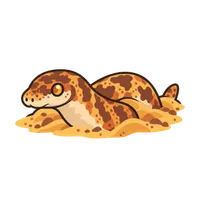
Kenyan sand boas are the hobby's best "now you see it, now you don't" snake — a small, thick, wormlike boa that spends almost its whole life buried in loose sand with just its beady eyes poking out, waiting to ambush prey. They're docile, rarely bite, stay small, and can live for decades on beautifully simple care. The one thing that makes or breaks keeping them is substrate: they are true burrowers, so a deep bed of dry, sandy soil to submerge in isn't decoration — it's the whole point of the animal.
Worried, or still setting up? Free tools
Or browse common Kenyan Sand Boa questions →
Care at a glance
| Adult size | 12–24 in (30–60 cm); females much larger than males (exceptional females reach ~36 in) |
|---|---|
| Lifespan | 15–30 years — a long-lived little snake |
| Enclosure | Minimum 24×12×12 in (60×30×30 cm) for an average sand boa — floor space matters far more than height, since they burrow rather than climb. A secure lid still matters. House ONE per enclosure. |
| Basking / warm zone | Warm/basking surface 93–95°F (34–35°C) from an overhead halogen (two low-wattage bulbs heat a coiled body more evenly). Put the warm hide directly under the basking spot so it can thermoregulate while staying buried. |
| Cool side | Cool zone 78–83°F (26–28°C), giving a full warm-to-cool gradient. |
| Night | Heating off at night; a natural room-temperature drop is fine. No coloured night bulbs. |
| UVB & lighting | UVB isn’t strictly required but is beneficial (they’re crepuscular): a low-output T5 HO bulb (about half the enclosure length, warm side) giving UVI 2.0–3.0 at the basking spot. Replace every 12 months. |
| Humidity | An ARID species — keep it mostly dry, and humidity is generally not something to fuss over. Provide ONE humid hide (a box of lightly moist substrate or sphagnum on the cool side) for shedding, and mist occasionally, but otherwise let the enclosure stay dry. Chronic damp causes scale and respiratory problems. |
| Substrate | The heart of the setup: at least 3–4 in (deeper is better) of loose, burrowable sand or sandy soil (a 60% topsoil / 40% play-sand mix works well). They submerge and travel through it, so it must be deep and loose enough to disappear into. Spot-clean daily; full refresh every few months. |
| Diet | Carnivore fed whole prey — an ambush hunter that strikes from under the sand. Feed appropriately-sized prey (roughly the width of the snake’s thickest point): juveniles every 1–2 weeks, adults every 2–4 weeks. Mice are the staple, but variety (young rats, quail, chicks) makes for a healthier, less picky snake. Offer frozen/thawed, warmed to ~90°F. |
| Supplements | None needed — a varied whole-prey diet is nutritionally complete. |
🦎 Did you know? — Kenyan Sand Boa fun facts
Little true delights about the kenyan sand boa — each one checked against a named source, no pet-shop myths.
What it's like to live with a Kenyan Sand Boa
A sand boa is a snake you keep for its behaviour, not for showy time out in the open. For most of the day it is simply gone — submerged in the sand with only its little upturned eyes showing — and then it erupts to take a meal in a flash. They are docile and almost never bite defensively, tolerate gentle handling, and stay small and easy their whole (long) lives. The single most important thing you provide is a deep bed of loose, dry, sandy substrate; get that right and the rest of the care is about as simple as snake-keeping gets.
Your first month together
The settling-in period, in order — so you know what's normal and when not to worry.
- Set up a deep (3–4 in+) bed of loose, dry, sandy substrate from day one — a sand boa with nowhere to bury is a stressed sand boa.
- Leave it alone for the first week or two and let it settle in and submerge; expect it to be buried and out of sight most of the time — that is normal, healthy behaviour.
- Feed inside the enclosure with frozen/thawed prey on tongs, and don’t worry about the odd early refusal while it settles.
- Because it is an ambush predator, tap it gently with a paper-towel roll before lifting so it knows a hand — not prey — is coming.
- Keep it warm and dry with a single humid hide; watch that it is feeding and shedding cleanly over the first weeks.
Through the year, and as they grow
Sand boas are hardy and undemanding across the year, though appetite can dip a little in cooler months. Many keepers give a mild seasonal cool-down for breeding, but it is not required for a pet. Females are much larger than males and eat more; judge feeding by body condition rather than a fixed calendar.
The pet store gets these wrong
Common myths, kindly corrected — no shame for having believed them.
- It needs hides and climbing branches like other snakes — mostly no; it needs DEEP loose sand to burrow into, and lives buried.
- Keep it humid like a ball python — no; it’s an arid species kept mostly dry, with just one humid hide for shedding.
- A thin layer of substrate is fine — no; it needs at least 3–4 in of loose sandy substrate to submerge in.
- It struck at me, so it’s aggressive — no; that’s an ambush feeding response from a buried snake. Tap it first and it’s docile.
- Feed it as often as you like — no; it’s a slow feeder — adults eat every 2–4 weeks, and overfeeding causes obesity.
Before you buy
- A 24×12×12 in (or larger) enclosure with a secure lid and at least 3–4 in of loose sandy substrate.
- Overhead heat for a 93–95°F basking surface, and comfort feeding frozen/thawed rodents.
- Acceptance that it will be buried and out of sight much of the time — this is a behaviour pet, not a display one.
- A 15–30 year commitment, and an exotics/reptile vet within reach.
💷 The kenyan sand boa itself is usually the cheapest part — see the real cost of keeping one (upfront + ongoing, no sales pitch).
See a reptile vet if…
We can't diagnose from afar — but these are the signs to stop watching and get a professional:
- Open-mouth breathing, wheezing, or mucus/bubbles (possible respiratory infection — often from being kept too damp or too cool).
- Repeated stuck sheds or retained eye caps (offer the humid hide; persistent problems need a vet).
- Cheesy matter in the mouth (possible mouth rot), or mites (tiny moving dots).
- Regurgitating meals, or a firm swollen belly with no droppings (possible impaction — sometimes from swallowed substrate on a hard surface).
- Any tissue protruding from the vent (prolapse) — keep it moist and go now.
Heading in? Print the free Kenyan Sand Boa vet-prep sheet — what to bring, what to tell the vet, and the questions to ask.
Never
- Never keep it on thin or hard substrate — it needs a deep, loose, sandy bed to burrow into.
- Never keep it damp — an arid species kept wet gets scale and respiratory disease.
- Never feed live rodents — use frozen/thawed on tongs.
- Never grab it without tapping first — a buried ambush predator can strike at a hand it mistakes for prey.
- Never house two sand boas together.
Common kenyan sand boa questions
How hard are Kenyan Sand Boas to keep — are they good for beginners?
Beginner. A small, hardy, low-drama snake with genuinely simple care — as long as you understand it is a BURROWER. It wants deep, loose, sandy substrate to submerge in and a mostly-dry, warm setup, not the hides-and-humidity approach of a ball python. Get the substrate right and it is one of the easiest snakes there is.
What do Kenyan Sand Boas eat?
Carnivore fed whole prey — an ambush hunter that strikes from under the sand. Feed appropriately-sized prey (roughly the width of the snake’s thickest point): juveniles every 1–2 weeks, adults every 2–4 weeks. Mice are the staple, but variety (young rats, quail, chicks) makes for a healthier, less picky snake. Offer frozen/thawed, warmed to ~90°F.
How big an enclosure do Kenyan Sand Boas need?
Minimum 24×12×12 in (60×30×30 cm) for an average sand boa — floor space matters far more than height, since they burrow rather than climb. A secure lid still matters. House ONE per enclosure.
What basking temperature do Kenyan Sand Boas need?
Warm/basking surface 93–95°F (34–35°C) from an overhead halogen (two low-wattage bulbs heat a coiled body more evenly). Put the warm hide directly under the basking spot so it can thermoregulate while staying buried.
What should the cool side be for Kenyan Sand Boas?
Cool zone 78–83°F (26–28°C), giving a full warm-to-cool gradient.
What night-time temperature do Kenyan Sand Boas need?
Heating off at night; a natural room-temperature drop is fine. No coloured night bulbs.
What UVB and lighting do Kenyan Sand Boas need?
UVB isn’t strictly required but is beneficial (they’re crepuscular): a low-output T5 HO bulb (about half the enclosure length, warm side) giving UVI 2.0–3.0 at the basking spot. Replace every 12 months.
What humidity do Kenyan Sand Boas need?
An ARID species — keep it mostly dry, and humidity is generally not something to fuss over. Provide ONE humid hide (a box of lightly moist substrate or sphagnum on the cool side) for shedding, and mist occasionally, but otherwise let the enclosure stay dry. Chronic damp causes scale and respiratory problems.
What substrate do Kenyan Sand Boas need?
The heart of the setup: at least 3–4 in (deeper is better) of loose, burrowable sand or sandy soil (a 60% topsoil / 40% play-sand mix works well). They submerge and travel through it, so it must be deep and loose enough to disappear into. Spot-clean daily; full refresh every few months.
What supplements do Kenyan Sand Boas need?
None needed — a varied whole-prey diet is nutritionally complete.
How big do Kenyan Sand Boas get?
12–24 in (30–60 cm); females much larger than males (exceptional females reach ~36 in)
How long do Kenyan Sand Boas live?
15–30 years — a long-lived little snake
What are the signs Kenyan Sand Boas are sick or need a vet?
See a reptile or exotics vet if you notice: Open-mouth breathing, wheezing, or mucus/bubbles (possible respiratory infection — often from being kept too damp or too cool).; Repeated stuck sheds or retained eye caps (offer the humid hide; persistent problems need a vet).; Cheesy matter in the mouth (possible mouth rot), or mites (tiny moving dots).; Regurgitating meals, or a firm swollen belly with no droppings (possible impaction — sometimes from swallowed substrate on a hard surface).; Any tissue protruding from the vent (prolapse) — keep it moist and go now..
Your first two weeks · Taming & handling · Behaviours explained · Won't eat? · Stuck shed · When to see a vet

Get the free Kenyan Sand Boa Starter Kit
A one-page setup criteria checklist and a first-30-days plan for your first kenyan sand boa — what to get, what makes each thing matter, and the honest bits the pet shop skips. Join the den and we’ll send it over.
Free reptile care cheat-sheet the moment you join. No spam — unsubscribe anytime. See how we handle your data in our privacy notice.Sources & further reading
This guide was written and fact-checked against these authorities. It's kind, general guidance — not a diagnosis or a substitute for an exotics vet:
- ReptiFiles — Kenyan Sand Boa Care Sheet — Min 24×12×12 in; basking surface 93–95°F / cool 78–83°F / heat off at night; UVI 2.0–3.0 (beneficial, not required); arid — mostly dry + one humid hide; substrate ≥3–4″ loose sand / 60-40 topsoil-sand; whole-prey carnivore (juvenile every 1–2 wk, adult every 2–4 wk, prey ~snake’s width); 12–24 in (females larger), up to 30 yr; house solo; ambush predator (tap before handling).
- Association of Reptilian & Amphibian Veterinarians (ARAV) — Find-an-exotics-vet; respiratory infection, mouth rot, mites.
- Merck Veterinary Manual — reptiles — Respiratory infection, dysecdysis, impaction, mites.
Written and fact-checked by The Baskden Team against veterinarian-authored sources — if your reptile shows a red-flag sign above, see an exotics vet promptly.