
Species · Tortoise (chelonian)
Leopard Tortoise
Stigmochelys pardalis
A big, beautifully-marked grassland grazer — hardy and gentle, but it gets LARGE and lives for decades.
Difficulty: Intermediate Printable care sheet →
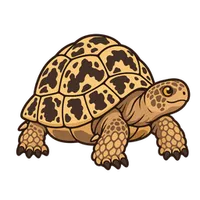
Leopard tortoises are gorgeous, gentle, high-domed grazers from the savannas and grasslands of eastern and southern Africa, and they're built to walk and eat all day. They're one of the larger tortoises in the hobby, they can outlive their owners, and they truly need to live like a little cow: lots of space, lots of grass, sunshine or strong UVB, and warmth. Get the space and the grass right and they're wonderfully low-drama; get talked into a small tank and a fruity diet and you'll fight pyramiding and health problems for years.
Worried, or still setting up? Free tools
Or browse common Leopard Tortoise questions →
Care at a glance
| Adult size | Commonly 10-18 in (25-45 cm) carapace and roughly 20-40 lb, with larger subspecies/individuals reaching 24-30 in and well over 40 lb. One of the larger tortoises kept as pets. |
|---|---|
| Lifespan | Typically 50-100 years; 80-100 years is a realistic captive figure with good care. Plan for a pet that may outlive you and needs to be written into your estate plans. |
| Enclosure | Bigger than most people expect. Adults are best kept in a large outdoor pen where climate allows: a pair fits in roughly a 10 ft x 10 ft pen, and about 60-80 sq ft is a reasonable floor for a single adult, with a solid, opaque wall at least 18 in tall (buried 12-24 in) to stop pacing and digging out. Indoors, use the largest tortoise table you can build (a small terrarium is not adequate for an adult); hatchlings can start in a smaller table for the first year or two. |
| Basking / warm zone | Basking spot about 95°F (35°C), with warm-side ambient around 82-85°F (28-29°C). Some vet sources cite a basking range up to ~95-104°F; aim for a clear hot spot near 95°F under the light with room to move away. |
| Cool side | Cool end around 72-75°F (22-24°C). The whole point is a gradient so the tortoise can choose its temperature across the enclosure. |
| Night | Nighttime can safely drop into the high 60s to low 70s°F (around 68-72°F / 20-22°C). If ambient falls below about 60°F, move the tortoise indoors or into a heated house kept around 60-70°F. Leopard tortoises are NOT a hibernating/brumating species. |
| UVB & lighting | High UVB need. Indoors, use a strong linear T5 HO tube such as an Arcadia T5 HO 12% or Zoo Med T5 HO Reptisun 10.0 running the length of the basking zone, mounted roughly 17-18 in above the shell to deliver a basking UV Index (UVI) of about 3.0-5.0 (verify with a Solarmeter). Run about 12-14 hours in summer and ~10 hours in winter. Natural unfiltered sunlight outdoors is even better (glass and most plastics block UVB). |
| Humidity | Adults do well in moderately dry conditions, about 40-50%. Hatchlings and juveniles need noticeably more, roughly 60-80%, plus a humid hide/microclimate; this is a major factor in preventing shell pyramiding. Provide humid retreats even for adults so they can self-regulate. Wild leopards shelter in burrows and dense grass where humidity is much higher than the open savanna air. |
| Substrate | A deep, slightly-damp organic substrate: plain topsoil, or topsoil mixed with coco coir (some keepers use a ~60/40 topsoil-to-play-sand blend), at least 3 in deep so they can dig in and hold humidity at ground level. Outdoors, natural soil planted with grasses works best. Avoid pure sand and dry, dusty beddings; spot-clean often and refresh indoor substrate every few months. |
| Diet | A grazer. Feed roughly 90% grasses and weeds and about 10% leafy "salad" greens. Great staples: Bermuda grass, orchard grass, timothy/grass hay, dandelion (leaves, stems, flowers), plantain (Plantago), sow thistle, clover, hibiscus leaves and flowers, mallow, grape leaves, and cactus pads (Opuntia), plus greens like endive, escarole, romaine, collard/mustard/turnip greens. High-fibre, low-protein, low-sugar. Fruit is not part of the natural diet: skip it, or offer only tiny amounts (well under 5% of the diet, or none) as a rare treat. Never feed dog/cat food or other animal protein. |
| Supplements | Keep a cuttlebone in the enclosure at all times for free-choice calcium. Lightly dust food with a plain calcium (calcium carbonate) supplement a couple of times a week for adults and more often for growing juveniles and gravid females. With strong UVB or natural sunlight plus a varied grazing diet, added vitamin D3 is usually unnecessary; avoid over-supplementing. |
What it's like to live with a Leopard Tortoise
Best kept singly or in a well-matched group with plenty of space; they're generally peaceful but can compete over food and basking spots, and males may harass or ram others, especially in tight quarters. House with the same species only. Do NOT mix leopard tortoises with other tortoise species or with sulcatas, box turtles, etc.: differing climate needs plus disease transmission (notably herpesvirus and the flagellate/protozoan risks) make mixing dangerous. Quarantine any new arrival.
Your first month together
The settling-in period, in order — so you know what's normal and when not to worry.
- Set up the space FIRST and confirm it's big enough for the adult this animal will become, not just the hatchling in your hands.
- Nail the gradient before the tortoise moves in: verify a ~95°F basking spot, a ~72-75°F cool end, and UVI ~3-5 at basking level with a meter or by following bulb-distance specs.
- Keep hatchlings/juveniles on the humid side (~60-80%) with a damp hide; this window matters most for smooth shell growth.
- Offer grass and weeds daily and a shallow water dish big enough to soak in; soak young tortoises in shallow warm water a few times a week to keep them hydrated.
- Weigh your tortoise and log it; steady weight and active grazing are your best early health signals.
- Find a reptile/exotics vet now and book a first wellness check plus a fecal test for parasites, which are common in imported and pet-trade tortoises.
Through the year, and as they grow
Leopard tortoises stay active year-round and do not hibernate/brumate, so keep them warm through winter rather than cooling them down. In cooler months they may naturally slow down and eat a bit less; that's fine, but maintain heat and UVB and monitor weight. Outdoors, bring them in (or into a heated house) once nights or daytime highs drop too low, and give strong summer sun whenever weather allows.
The pet store gets these wrong
Common myths, kindly corrected — no shame for having believed them.
- 'They're desert tortoises, so keep them bone-dry.' No. They're grassland/savanna animals, and chronic low humidity (especially in babies) is a leading cause of shell pyramiding. Adults like it drier, but hatchlings need humid microclimates and hydration.
- 'Pyramiding is caused by too much protein.' The old high-protein theory has been largely overturned. Modern evidence points mainly to low humidity/dehydration (and husbandry factors like heat/growth rate) as the drivers, though a low-protein, high-fibre grazing diet is still correct for other reasons.
- 'A tortoise only grows to the size of its enclosure.' False and harmful. Cramped housing stresses the animal and stunts/deforms it; it does not safely limit adult size.
- 'Fruit is a healthy treat.' Leopard tortoises don't eat fruit in the wild; sugary fruit can upset their gut flora and cause diarrhea. Grass and weeds, not fruit.
- 'They can hibernate like a Russian or Hermann's tortoise.' No. Leopard tortoises are a warm-climate, non-hibernating species and should be kept warm all year.
- 'A big glass terrarium is enough.' Adults need floor space measured in tens of square feet, ideally an outdoor pen. A tank is a hatchling stopgap at best.
Before you buy
- This is a decades-long, possibly lifelong commitment. 50-100 years means planning for who cares for it after you.
- Adults are large and need a lot of space: realistically an outdoor pen or a very large indoor table, which is hard in cold climates or small homes.
- They need warmth year-round and can't be hibernated to skip winter heating costs.
- Buy captive-bred from a reputable breeder; wild-caught/imported leopards often carry heavy parasite loads and stress-related illness.
- Vet care means finding a reptile/exotics vet, which isn't available everywhere and isn't cheap.
- Check local laws: some places restrict or require permits for large tortoises.
💷 The leopard tortoise itself is usually the cheapest part — see the real cost of keeping one (upfront + ongoing, no sales pitch).
See a reptile vet if…
We can't diagnose from afar — but these are the signs to stop watching and get a professional:
- Not eating for an extended period, sunken eyes, or a lightweight 'hollow' feel when lifted (signs of dehydration/anorexia).
- Runny or bubbly nose, mouth-breathing, wheezing, gaping, or lots of mucus (possible respiratory infection/pneumonia) - a common and serious problem in tortoises kept too cold or damp-cold.
- Soft, misshapen, or rapidly pyramiding shell, soft jaw, or weak/wobbly legs (possible metabolic bone disease).
- Straining, no urates/feces, or gritty white stones passed or stuck (possible bladder stones or impaction).
- Swollen, weepy, or crusted eyes; swellings, abscesses, or a beak/nails badly overgrown.
- Diarrhea, worms visible in feces, or a new tortoise before it has had a fecal check (parasites). See a reptile/exotics vet for any of these; this list is for triage, not diagnosis.
Heading in? Print the free Leopard Tortoise vet-prep sheet — what to bring, what to tell the vet, and the questions to ask.
Never
- Never keep an adult in a small terrarium or 'tortoise table' meant for a hatchling.
- Never feed fruit as a staple, or any animal protein (dog/cat food, meat) - it's a herbivorous grazer.
- Never attempt to hibernate a leopard tortoise; keep it warm all year.
- Never house it long-term without UVB (or real sunlight) - MBD will follow.
- Never keep it on bone-dry substrate as a hatchling/juvenile, and never let it get chilled and damp.
- Never mix it with other tortoise or turtle species (disease + clashing needs).
- Never use sand-only or dusty substrate, or feed off loose sand (impaction risk).
Common leopard tortoise questions
How hard are Leopard Tortoises to keep — are they good for beginners?
Intermediate. Not hard to feed, but hard to house well. A leopard tortoise is a large, grazing grassland animal that needs serious floor space (realistically a whole outdoor pen or a huge indoor table as an adult), strong UVB, a warm year-round climate, and a diet almost entirely of grass and weeds. The care is simple; the space, the decades-long commitment, and getting humidity right as a hatchling are what trip people up.
What do Leopard Tortoises eat?
A grazer. Feed roughly 90% grasses and weeds and about 10% leafy "salad" greens. Great staples: Bermuda grass, orchard grass, timothy/grass hay, dandelion (leaves, stems, flowers), plantain (Plantago), sow thistle, clover, hibiscus leaves and flowers, mallow, grape leaves, and cactus pads (Opuntia), plus greens like endive, escarole, romaine, collard/mustard/turnip greens. High-fibre, low-protein, low-sugar. Fruit is not part of the natural diet: skip it, or offer only tiny amounts (well under 5% of the diet, or none) as a rare treat. Never feed dog/cat food or other animal protein.
How big an enclosure do Leopard Tortoises need?
Bigger than most people expect. Adults are best kept in a large outdoor pen where climate allows: a pair fits in roughly a 10 ft x 10 ft pen, and about 60-80 sq ft is a reasonable floor for a single adult, with a solid, opaque wall at least 18 in tall (buried 12-24 in) to stop pacing and digging out. Indoors, use the largest tortoise table you can build (a small terrarium is not adequate for an adult); hatchlings can start in a smaller table for the first year or two.
What basking temperature do Leopard Tortoises need?
Basking spot about 95°F (35°C), with warm-side ambient around 82-85°F (28-29°C). Some vet sources cite a basking range up to ~95-104°F; aim for a clear hot spot near 95°F under the light with room to move away.
What should the cool side be for Leopard Tortoises?
Cool end around 72-75°F (22-24°C). The whole point is a gradient so the tortoise can choose its temperature across the enclosure.
What night-time temperature do Leopard Tortoises need?
Nighttime can safely drop into the high 60s to low 70s°F (around 68-72°F / 20-22°C). If ambient falls below about 60°F, move the tortoise indoors or into a heated house kept around 60-70°F. Leopard tortoises are NOT a hibernating/brumating species.
What UVB and lighting do Leopard Tortoises need?
High UVB need. Indoors, use a strong linear T5 HO tube such as an Arcadia T5 HO 12% or Zoo Med T5 HO Reptisun 10.0 running the length of the basking zone, mounted roughly 17-18 in above the shell to deliver a basking UV Index (UVI) of about 3.0-5.0 (verify with a Solarmeter). Run about 12-14 hours in summer and ~10 hours in winter. Natural unfiltered sunlight outdoors is even better (glass and most plastics block UVB).
What humidity do Leopard Tortoises need?
Adults do well in moderately dry conditions, about 40-50%. Hatchlings and juveniles need noticeably more, roughly 60-80%, plus a humid hide/microclimate; this is a major factor in preventing shell pyramiding. Provide humid retreats even for adults so they can self-regulate. Wild leopards shelter in burrows and dense grass where humidity is much higher than the open savanna air.
What substrate do Leopard Tortoises need?
A deep, slightly-damp organic substrate: plain topsoil, or topsoil mixed with coco coir (some keepers use a ~60/40 topsoil-to-play-sand blend), at least 3 in deep so they can dig in and hold humidity at ground level. Outdoors, natural soil planted with grasses works best. Avoid pure sand and dry, dusty beddings; spot-clean often and refresh indoor substrate every few months.
What supplements do Leopard Tortoises need?
Keep a cuttlebone in the enclosure at all times for free-choice calcium. Lightly dust food with a plain calcium (calcium carbonate) supplement a couple of times a week for adults and more often for growing juveniles and gravid females. With strong UVB or natural sunlight plus a varied grazing diet, added vitamin D3 is usually unnecessary; avoid over-supplementing.
How big do Leopard Tortoises get?
Commonly 10-18 in (25-45 cm) carapace and roughly 20-40 lb, with larger subspecies/individuals reaching 24-30 in and well over 40 lb. One of the larger tortoises kept as pets.
How long do Leopard Tortoises live?
Typically 50-100 years; 80-100 years is a realistic captive figure with good care. Plan for a pet that may outlive you and needs to be written into your estate plans.
What are the signs Leopard Tortoises are sick or need a vet?
See a reptile or exotics vet if you notice: Not eating for an extended period, sunken eyes, or a lightweight 'hollow' feel when lifted (signs of dehydration/anorexia).; Runny or bubbly nose, mouth-breathing, wheezing, gaping, or lots of mucus (possible respiratory infection/pneumonia) - a common and serious problem in tortoises kept too cold or damp-cold.; Soft, misshapen, or rapidly pyramiding shell, soft jaw, or weak/wobbly legs (possible metabolic bone disease).; Straining, no urates/feces, or gritty white stones passed or stuck (possible bladder stones or impaction).; Swollen, weepy, or crusted eyes; swellings, abscesses, or a beak/nails badly overgrown.; Diarrhea, worms visible in feces, or a new tortoise before it has had a fecal check (parasites). See a reptile/exotics vet for any of these; this list is for triage, not diagnosis..
Your first two weeks · Taming & handling · Behaviours explained · Won't eat? · Stuck shed · When to see a vet

Get the free Leopard Tortoise Starter Kit
A one-page setup criteria checklist and a first-30-days plan for your first leopard tortoise — what to get, what makes each thing matter, and the honest bits the pet shop skips. Join the den and we’ll send it over.
Free reptile care cheat-sheet the moment you join. No spam — unsubscribe anytime. See how we handle your data in our privacy notice.Sources & further reading
This guide was written and fact-checked against these authorities. It's kind, general guidance — not a diagnosis or a substitute for an exotics vet:
- Reptiles Magazine - Leopard Tortoise Care Sheet — Adult size 10-18 in (subspecies to 24-30 in), lifespan 50-100 yrs, 10x10 ft outdoor pen, ambient 75-90°F, basking 95°F, fruit <5%, calcium/UVB guidance.
- Chicago Exotics Animal Hospital - Leopard Tortoise Care (exotic vet) — Vet source: size 12-18 in (to 31 in), enclosure >=4x carapace / up to 4x8 ft, buried fence 12-24 in, basking 95-104°F, night 68-86°F, move in below 60°F, humidity 40-60% day / 70-80% night, diet 85% grass/hay, veg <=10%, fruit <=5%, calcium 2-4x/wk; health warnings MBD, pyramiding, pneumonia, parasites.
- Dubia.com (ReptiFiles methodology) - Leopard Tortoise Care Sheet — Basking ~95°F, ambient 75-85°F, below 60°F indoors (heat house 60-70°F), UVB Arcadia T5 HO 12% or Zoo Med T5 HO Reptisun 10.0 at 17-18 in / UVI 3-5, 14h summer/10h winter, humidity 40-50%, substrate topsoil 60/40 play sand >=3 in, diet 90% grass/weeds 10% greens, cuttlebone for calcium.
- Tortoise Resource Center - Leopard Tortoise Care Guide — ~30 lb, captive lifespan 80-100 yrs, 60-80 sq ft single adult, 18 in wall, basking ~95°F, humidity 75%+ hatchling / ~60% juvenile / ~45% adult, substrate orchid bark/coco coir (no sand), fruit once or twice a month or omit, overfeeding->pyramiding.
- The Tortoise Table - Plant Database — Authoritative safe/toxic plant database; diet principle high-fibre, calcium-rich, low-protein, wide variety; used to confirm safe grazing plants (grasses, dandelion, hibiscus, clover, plantain, etc.).
- Merck Veterinary Manual - Management and Husbandry of Reptiles — Vet reference on reptile husbandry: humid microclimates for arid species reduce pyramiding and dysecdysis; general thermal-gradient and UVB principles.
- Loehr et al., peer-reviewed study on supplemental heat & pyramiding in Stigmochelys pardalis (via ScienceDirect listing) — Cited for the modern understanding that husbandry factors (heat/growth rate/humidity), not simply dietary protein, drive carapacial scute pyramiding in leopard and sulcata tortoises.
Written and fact-checked by The Baskden Team against veterinarian-authored sources — if your reptile shows a red-flag sign above, see an exotics vet promptly.