
Species · Tortoise (chelonian)
Marginated Tortoise
Testudo marginata
Europe's largest Mediterranean tortoise — hardy and cold-tolerant, with a dramatic flared 'skirt' shell.
Difficulty: Intermediate Printable care sheet →
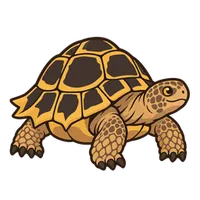
The marginated tortoise is the biggest tortoise native to Europe, named for the flared, skirt-like "margins" on the rear of its shell that fan out dramatically as it ages. It's a dry-country grazer from the hills of Greece, Italy and the Balkans that spends its days plodding, munching weeds, and basking. If you can give it real floor space and a proper cool winter rest, it's a hardy, long-lived companion that can genuinely outlive you.
Worried, or still setting up? Free tools
Or browse common Marginated Tortoise questions →
Care at a glance
| Adult size | Roughly 10-14 in (25-35 cm) shell length is typical, with big males reaching ~30-40 cm; it's the largest European tortoise (record specimens near 52 cm). Adults weigh about 2-5 kg. Males are larger and have the most exaggerated flared marginals. |
|---|---|
| Lifespan | A serious, multi-decade commitment — commonly cited at 50-100+ years in good captive care (individuals of 70+ years are documented). Plan for a tortoise that may outlive you and name it in your will. |
| Enclosure | Think floor space, not tank. A single adult wants an outdoor pen of at least ~8 x 4 ft (many keepers target ~100 sq ft / a large secure garden run); indoors, a big open-topped tortoise table, not a glass vivarium. Juveniles start around 3 x 2 ft and scale up. Bury walls ~6 in and make them ~18 in tall — these are strong, determined diggers and climbers. |
| Basking / warm zone | A hot basking spot of about 95-100°F (35-38°C) directly under the lamp, so the tortoise can properly heat up each morning. |
| Cool side | Ambient daytime of ~75-85°F (24-29°C) across the rest of the enclosure, with a genuine cool, shaded retreat — never a uniformly hot box. |
| Night | A natural night drop to about 65-72°F (18-22°C) is fine and healthy; don't let it fall below ~59°F (15°C) for animals that aren't being deliberately brumated. |
| UVB & lighting | UVB is non-negotiable for shell and bone health. This is a Ferguson Zone 3 open basker: aim for a basking-zone UV Index of about 2.9-7.4, fading to shade. Use a quality linear T5 HO tube (e.g. ReptiSun 10.0 or Arcadia 12%) mounted at the manufacturer's stated distance (roughly 17-18 in over the shell for these tubes) — measure with a Solarmeter if you can. Run ~12-14 hrs in summer, ~10 hrs in winter. Real unfiltered sunlight outdoors is best of all. Skip cheap coil bulbs. |
| Humidity | Moderate and dry-leaning for adults: around 40-60% ambient. Provide one damp microclimate (a humid hide with moist sphagnum) rather than a wet enclosure. Hatchlings are far more prone to dehydration and want higher local humidity (~60%+) plus regular soaks; cool AND damp together is what causes trouble. |
| Substrate | A deep, diggable, well-draining mix — topsoil/coir blended ~50/50 with play sand works well — at least ~4 in deep (deeper for adults) so they can burrow and it holds a little moisture without going soggy. Outdoors, natural well-drained soil with grass and edible weeds is ideal. |
| Diet | A high-fibre, low-protein grazer. Base the diet on weeds, grasses and leafy greens: dandelion (leaves and flowers), plantain (broad- and narrow-leaf), clover in moderation, sow thistle, mallow, hibiscus leaves/flowers, and prickly-pear cactus pads. Offer chopped greens daily. Keep it varied and coarse — the gut is built for fibre, not soft supermarket veg. |
| Supplements | Dust food with a plain calcium (no phosphorus) supplement regularly and leave a cuttlebone available for free-choice gnawing. A calcium-with-D3 or multivitamin can be used lightly (roughly once or twice a week), but proper UVB and sunlight do most of the D3 work. A grassland tortoise pellet (e.g. Mazuri, Zoo Med Grassland) can supplement — not replace — fresh forage. |
What it's like to live with a Marginated Tortoise
Generally best kept alone or in carefully managed groups with plenty of space and sight-breaks. Adult males can be territorial and will ram, bite and pester others (especially females), so a lone tortoise is often the kindest, simplest choice. Never house with other tortoise species (disease and behaviour risk).
Your first month together
The settling-in period, in order — so you know what's normal and when not to worry.
- Set up and dial in the enclosure BEFORE the tortoise arrives — confirm the 95-100°F basking spot, cool-side gradient, and a working UVB tube with a thermometer/UV meter.
- Expect a settling-in period of shyness; keep handling to a minimum for the first weeks and let it explore and start grazing.
- Soak your new tortoise in shallow, warm water (~15-20 min) a few times a week to hydrate and encourage drinking, especially for juveniles.
- Weigh it and start a simple growth/weight log — steady, non-lumpy growth is your best early health signal.
- Book a new-pet check with an exotics/reptile vet, ideally with a fecal test for parasites.
Through the year, and as they grow
In the wild this species brumates (hibernates) through the cold months, and healthy adults benefit from a proper cool winter rest of roughly 2-4 months. Only brumate a tortoise that is a healthy adult, at a good weight, and with an empty gut — and cool it gradually to a stable, controlled low temperature (never freezing, and never a damp fridge/shed left to chance). Warm up over-wintered animals promptly in spring with heat, UVB and soaks. If you're unsure, have a vet health-check first, or keep it awake indoors under lights for the winter — an unsafe brumation is worse than none.
The pet store gets these wrong
Common myths, kindly corrected — no shame for having believed them.
- "Tortoises love fruit." Not this one. Marginateds are dry-country grazers built for high-fibre weeds; regular fruit causes runny stools, gut upset and long-term problems. Treat fruit as essentially off the menu.
- "A tortoise only grows to the size of its enclosure." False and harmful — cramped space stunts and stresses them; they need the biggest floor you can give.
- "Glass tanks and coil UVB bulbs are fine." Glass vivs trap heat and humidity and stress tortoises (they don't understand the invisible wall); use an open table or outdoor pen, and a linear T5 tube, not a coil.
- "Pyramiding is just how tortoise shells look." Lumpy, pyramided shell is a husbandry warning sign (often too dry-with-poor-hydration, wrong diet or poor UVB), not normal decoration.
Before you buy
- Space is the real cost: an adult needs a room-sized indoor table or a secure outdoor garden pen — not a tabletop tank.
- This is a 50-100+ year commitment; it may outlive you, so plan for its long-term future.
- You'll need a winter plan every year: either a safe, controlled brumation or heated/lit overwintering indoors.
- Find a reptile/exotics vet BEFORE you buy — general vets often can't treat tortoises.
- Buy captive-bred from a reputable source and check your local laws/CITES paperwork (Testudo species are protected).
- Ongoing costs add up: UVB tubes (replaced ~every 6-12 months), heat, a large enclosure, and a constant supply of safe weeds.
💷 The marginated tortoise itself is usually the cheapest part — see the real cost of keeping one (upfront + ongoing, no sales pitch).
See a reptile vet if…
We can't diagnose from afar — but these are the signs to stop watching and get a professional:
- Soft, flexible, or lumpy/pyramiding shell, or bowed/weak legs — possible metabolic bone disease from poor calcium/UVB; see an exotics vet.
- Nasal discharge, mouth bubbles, wheezing, open-mouth or neck-stretched breathing — signs of a respiratory infection; get it seen promptly.
- Swollen, puffy or discharging eyes, plus lethargy and not eating — possible vitamin-A/infection issue; vet check.
- Soft spots, pitting, foul smell, oozing or discoloration on the shell — possible shell rot/infection; needs veterinary care.
- Straining, vocalizing while straining, or no droppings — possible bladder stone or obstruction; treat as urgent.
- A female restless, digging repeatedly and off her food may be egg-bound (dystocia) — an emergency, see a vet.
- Not eating, sudden weight loss, or persistent lethargy outside of planned brumation always warrants a vet visit.
Heading in? Print the free Marginated Tortoise vet-prep sheet — what to bring, what to tell the vet, and the questions to ask.
Never
- Never feed a diet of fruit, dog/cat food, or other animal protein — it's built for high-fibre weeds and grasses.
- Never keep it in a small glass tank as a permanent home, or on a uniformly hot enclosure with no cool shade.
- Never skip UVB (or rely on a cheap coil bulb) — you'll cause metabolic bone disease.
- Never brumate a sick, underweight, or full-gutted tortoise, and never let it freeze or brumate somewhere damp/uncontrolled.
- Never cohabit it with other tortoise species, and watch aggressive males kept together.
- Never house it long-term cool AND damp together — that combination invites respiratory and shell disease.
Common marginated tortoise questions
How hard are Marginated Tortoises to keep — are they good for beginners?
Intermediate. Care is straightforward once the setup is right, but this is Europe's LARGEST tortoise, so the honest hurdle is space (an adult wants a room-sized floor or a real outdoor pen), a multi-decade commitment, and a cool winter brumation most keepers underestimate. Get the enclosure, UVB, and grazing diet right and they are hardy, calm animals.
What do Marginated Tortoises eat?
A high-fibre, low-protein grazer. Base the diet on weeds, grasses and leafy greens: dandelion (leaves and flowers), plantain (broad- and narrow-leaf), clover in moderation, sow thistle, mallow, hibiscus leaves/flowers, and prickly-pear cactus pads. Offer chopped greens daily. Keep it varied and coarse — the gut is built for fibre, not soft supermarket veg.
How big an enclosure do Marginated Tortoises need?
Think floor space, not tank. A single adult wants an outdoor pen of at least ~8 x 4 ft (many keepers target ~100 sq ft / a large secure garden run); indoors, a big open-topped tortoise table, not a glass vivarium. Juveniles start around 3 x 2 ft and scale up. Bury walls ~6 in and make them ~18 in tall — these are strong, determined diggers and climbers.
What basking temperature do Marginated Tortoises need?
A hot basking spot of about 95-100°F (35-38°C) directly under the lamp, so the tortoise can properly heat up each morning.
What should the cool side be for Marginated Tortoises?
Ambient daytime of ~75-85°F (24-29°C) across the rest of the enclosure, with a genuine cool, shaded retreat — never a uniformly hot box.
What night-time temperature do Marginated Tortoises need?
A natural night drop to about 65-72°F (18-22°C) is fine and healthy; don't let it fall below ~59°F (15°C) for animals that aren't being deliberately brumated.
What UVB and lighting do Marginated Tortoises need?
UVB is non-negotiable for shell and bone health. This is a Ferguson Zone 3 open basker: aim for a basking-zone UV Index of about 2.9-7.4, fading to shade. Use a quality linear T5 HO tube (e.g. ReptiSun 10.0 or Arcadia 12%) mounted at the manufacturer's stated distance (roughly 17-18 in over the shell for these tubes) — measure with a Solarmeter if you can. Run ~12-14 hrs in summer, ~10 hrs in winter. Real unfiltered sunlight outdoors is best of all. Skip cheap coil bulbs.
What humidity do Marginated Tortoises need?
Moderate and dry-leaning for adults: around 40-60% ambient. Provide one damp microclimate (a humid hide with moist sphagnum) rather than a wet enclosure. Hatchlings are far more prone to dehydration and want higher local humidity (~60%+) plus regular soaks; cool AND damp together is what causes trouble.
What substrate do Marginated Tortoises need?
A deep, diggable, well-draining mix — topsoil/coir blended ~50/50 with play sand works well — at least ~4 in deep (deeper for adults) so they can burrow and it holds a little moisture without going soggy. Outdoors, natural well-drained soil with grass and edible weeds is ideal.
What supplements do Marginated Tortoises need?
Dust food with a plain calcium (no phosphorus) supplement regularly and leave a cuttlebone available for free-choice gnawing. A calcium-with-D3 or multivitamin can be used lightly (roughly once or twice a week), but proper UVB and sunlight do most of the D3 work. A grassland tortoise pellet (e.g. Mazuri, Zoo Med Grassland) can supplement — not replace — fresh forage.
How big do Marginated Tortoises get?
Roughly 10-14 in (25-35 cm) shell length is typical, with big males reaching ~30-40 cm; it's the largest European tortoise (record specimens near 52 cm). Adults weigh about 2-5 kg. Males are larger and have the most exaggerated flared marginals.
How long do Marginated Tortoises live?
A serious, multi-decade commitment — commonly cited at 50-100+ years in good captive care (individuals of 70+ years are documented). Plan for a tortoise that may outlive you and name it in your will.
What are the signs Marginated Tortoises are sick or need a vet?
See a reptile or exotics vet if you notice: Soft, flexible, or lumpy/pyramiding shell, or bowed/weak legs — possible metabolic bone disease from poor calcium/UVB; see an exotics vet.; Nasal discharge, mouth bubbles, wheezing, open-mouth or neck-stretched breathing — signs of a respiratory infection; get it seen promptly.; Swollen, puffy or discharging eyes, plus lethargy and not eating — possible vitamin-A/infection issue; vet check.; Soft spots, pitting, foul smell, oozing or discoloration on the shell — possible shell rot/infection; needs veterinary care.; Straining, vocalizing while straining, or no droppings — possible bladder stone or obstruction; treat as urgent.; A female restless, digging repeatedly and off her food may be egg-bound (dystocia) — an emergency, see a vet.; Not eating, sudden weight loss, or persistent lethargy outside of planned brumation always warrants a vet visit..
Your first two weeks · Taming & handling · Behaviours explained · Won't eat? · Stuck shed · When to see a vet

Get the free Marginated Tortoise Starter Kit
A one-page setup criteria checklist and a first-30-days plan for your first marginated tortoise — what to get, what makes each thing matter, and the honest bits the pet shop skips. Join the den and we’ll send it over.
Free reptile care cheat-sheet the moment you join. No spam — unsubscribe anytime. See how we handle your data in our privacy notice.Sources & further reading
This guide was written and fact-checked against these authorities. It's kind, general guidance — not a diagnosis or a substitute for an exotics vet:
- Reptiles Magazine — Marginated Tortoise Information and Care — Basking 95-100°F, night 65-70°F, UVB bulbs/hours, substrate depth, hatchling humidity/soaks, adult size 12-15 in.
- The Tortoise Spot — Marginated Tortoise Species Profile — Adult 25-35 cm / 2-5 kg, lifespan 50-100+ yrs, 8x4 ft outdoor / 4x2 ft indoor, 75-85°F ambient, 95-100°F basking, 65-72°F night, 40-60% humidity, brumation, native range.
- Dubia.com — Marginated Tortoise Care Sheet — Adult 100 sq ft floor, juvenile 3x2 ft, buried 18-in walls, basking 95°F / ambient 75-80°F / night <72°F, T5 HO 10-12% UVB at 17-18 in, 50/50 sand-topsoil substrate 4 in, cuttlebone.
- Reptile Centre (UK) — Which Ferguson Zone are Mediterranean Tortoises? — Testudo (incl. T. marginata) = Ferguson Zone 3; basking-zone UV Index 2.9-7.4.
- Tropical Edu International — Marginated Tortoise, largest land tortoise in Europe — Family Testudinidae, record 52 cm, avg males 27-32 cm / females 25-27 cm, 2-3.5 kg, native Greece/Albania/Turkey/Italy up to ~1,600 m, herbivorous, wild brumation.
- VCA Animal Hospitals — Common Diseases of Tortoises — Vet red flags: MBD (soft/misshapen shell), respiratory infection (mucus/bubbles/open-mouth breathing), vitamin-A deficiency (swollen eyes), shell rot, cloacoliths (straining), parasites.
- Home & Roost (UK) — Marginated Tortoise Care — Ambient 25-30°C day, don't drop below 15°C at night, UVB replaced ~every 6 months, safe plant list, avoid high-protein/fruit, low-humidity to prevent shell rot.
Written and fact-checked by The Baskden Team against veterinarian-authored sources — if your reptile shows a red-flag sign above, see an exotics vet promptly.