
Species · Aquatic turtle
Common Musk Turtle
Sternotherus odoratus
The palm-sized "stinkpot" bottom-walker — one of the smallest, most manageable aquatic turtles, but still a heated, filtered, decades-long pet.
Difficulty: Beginner–Intermediate Printable care sheet →
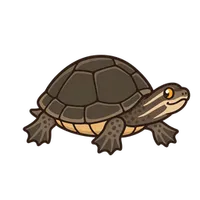
The Common Musk Turtle earned the nickname "Stinkpot" honestly — startle a wild one and it releases a musky drop from glands under its shell. In captivity, that defense almost never comes up; what you get instead is a charming, palm-sized bottom-walker that stalks the tank floor like a tiny armored dinosaur. It's one of the smallest and most manageable aquatic turtles you can keep, which makes it a genuine beginner pet — as long as you remember "small turtle" still means "heated, filtered aquarium and a lifetime of care."
Worried, or still setting up? Free tools
Or browse common Common Musk Turtle questions →
Care at a glance
| Adult size | Small for an aquatic turtle: adults reach a carapace (shell) length of about 3–5 in (7.5–13 cm); a commonly cited large individual is around 5.4 in (13.7 cm). They stay this size for life — a tiny tank does not keep them tiny. |
|---|---|
| Lifespan | A long-term commitment: commonly 30–50 years in captivity with good care. The verified maximum on record is 54.8 years (AnAge). Wild individuals typically live far shorter (often 15–19 years). |
| Tank | A 20-gallon long tank is the realistic minimum for one adult, with 30+ gallons better; many keepers and bioactive guides recommend stepping up to a 40–75-gallon footprint for water quality and floor space. Footprint (length × width) matters more than height for a bottom-walking turtle — go long and wide, not tall. One turtle per tank is safest; musk turtles can be scrappy with each other. |
| Water temperature | Filtered water at 72–78°F (22–26°C) for adults; keep hatchlings and juveniles a touch warmer, around 78–80°F (26–27°C). Use a guarded aquarium heater and a thermometer — don't guess. |
| Water depth | Deeper than pet-store lore claims. Musk turtles are poor swimmers and prefer to walk the bottom, so provide about 8–12 in (20–30 cm) of water for an adult, with plenty of submerged rocks, wood, and plants they can climb to reach the surface for air. Hatchlings start shallower with easy footholds; increase depth as they grow. |
| Filtration | Strong, over-rated filtration is the heart of turtle keeping. Use a canister (or robust submersible) filter rated for roughly 2–3× the tank's water volume — turtles are messy carnivores. Pair it with weekly ~25–30% water changes and a test kit; a mild current is fine and often welcome. |
| Basking dock | A DRY, easily-climbed dock (flat stone, cork, or a commercial platform) that lets the turtle fully leave the water and dry off. Surface temperature under the basking lamp should read about 85–95°F (29–35°C) — aim for ~90°F. They bask less than sliders but absolutely still do it, so the dock is not optional. |
| Night | Turn heat and lights off at night and let the room provide a natural drop. A cooler night in the mid-to-upper 60s°F (roughly 18–21°C) is fine and healthy; you only need supplemental night heat if your home gets genuinely cold. Water rarely swings much overnight, so no separate night heater is usually required. |
| UVB & lighting | A linear T5 HO UVB tube (e.g., Zoo Med ReptiSun 5.0 or Arcadia 6%) in a reflective fixture, spanning part of the enclosure over the basking dock. Mount it so the basking surface reads a UV Index (UVI) of about 3.0–4.0 (roughly 13–14 in / 33–36 cm above the dock, farther if there's mesh between). Run it 10–12 hours a day and replace the tube about every 12 months, as UVB output fades before the light does. |
| Tank bottom | Optional. Bare-bottom is the easiest to keep spotless. If you want a naturalistic look, use fine sand or smooth river rock too large to swallow — avoid small/medium gravel, which musk turtles can ingest while foraging. A bioactive soil base under stone works for experienced keepers. |
| Diet | Predominantly carnivorous. Base the diet on a quality aquatic-turtle pellet (Mazuri Aquatic Turtle Diet, ReptoMin) plus varied protein: earthworms, snails, crickets, ghost/frozen shrimp, and small pieces of fish. Feed juveniles daily; feed adults every other day (or 3–4×/week) to prevent obesity. Adults will also nibble aquatic plants. Skip wild-caught snails/insects (parasite and pesticide risk). |
| Supplements | Offer a cuttlebone floating in the tank as a free-choice calcium source (replace every 1–2 months as it dissolves). With real UVB and a varied, pellet-based diet, heavy supplement dusting usually isn't needed; a light calcium (with D3) dusting on non-pellet foods a couple times a week is a reasonable extra for growing juveniles. |
What it's like to live with a Common Musk Turtle
Day to day, a musk turtle is low-drama and quietly entertaining. It spends most of its time trundling along the tank floor, poking its snout into crevices for food, then surfacing for a gulp of air before sinking again — they'd rather walk than swim. They're more crepuscular/nocturnal than showy baskers, so you'll often see the most activity in the evening. The "stinkpot" musk is a wild defense; captive-raised turtles handled calmly and infrequently rarely deploy it. Like all turtles they can bite and don't enjoy being held, so they're a watch-and-marvel pet, not a cuddly one. The real ongoing work isn't the turtle — it's the water: filter maintenance, weekly changes, and keeping temps stable. Nail that and they're remarkably undemanding for a decades-long companion.
Your first month together
The settling-in period, in order — so you know what's normal and when not to worry.
- Before the turtle comes home, set up and cycle the tank: heater, filter, basking dock, UVB, and thermometers all running and stable for at least a week (ideally a fully cycled filter).
- Days 1–3: let it settle. Expect a shy, hiding turtle. Keep the room calm, don't handle it, and just confirm temps and water depth are right.
- Days 3–7: offer small amounts of food (pellets, a chopped earthworm). A stressed new turtle may refuse food for several days — that's normal; remove uneaten food to protect water quality.
- Week 2: watch for a settling-in routine — bottom-walking, surfacing to breathe, occasional basking. Test the water (ammonia/nitrite should read 0) and do a partial change.
- Weeks 3–4: establish the long-term rhythm — feed on schedule, weekly ~25–30% water change, wipe the glass, and confirm the basking dock actually dries the turtle. Book a first exotics-vet wellness/parasite check if you can.
Through the year, and as they grow
Babies vs adults: hatchlings need slightly warmer water (~78–80°F), shallower water with lots of climb-outs, and daily feeding; adults drop to 72–78°F, deeper water, and every-other-day feeding to avoid obesity. Seasonally, healthy adults may slow down and eat less if the water cools in winter — a mild, natural lull is fine, but true brumation is an advanced, deliberate process and is not necessary for pet musk turtles kept warm year-round. If you're not intentionally brumating, keep temperatures stable through winter and a lethargic, non-eating turtle warrants a vet check rather than being assumed to be "just cold."
The pet store gets these wrong
Common myths, kindly corrected — no shame for having believed them.
- "Turtles stay small in a small tank." False — and cruel. Cramped turtles don't stay small; they get sick, stressed, and stunted while the water fouls fast. Musk turtles stay small because that's their adult size, not because of the tank.
- "A tiny 5–10 gallon tank is plenty for a little musk turtle." No. Even the smallest aquatic turtle needs stable heated, filtered water — plan on a 20-gallon-long minimum and ideally 30–40+ gallons for a single adult.
- "Musk turtles don't need UVB because they barely bask." Misleading. They bask less than sliders, but real UVB supports calcium metabolism and shell/bone health. Provide proper UVB and a dry basking spot — both.
- "They don't really swim, so keep the water super shallow (a few inches)." Overcorrected. Yes, they're bottom-walkers and poor swimmers, but they still want meaningful depth (roughly 8–12 in for an adult) with climbable structure to reach the surface — not a puddle.
- "They're called stinkpots, so they always stink." No. The musk is a startle defense. A calm, well-kept, minimally-handled captive turtle almost never releases it; ongoing tank odor means the water/filtration needs work, not the turtle.
Before you buy
- This is a 30–50-year commitment — plan for who cares for it across decades, moves, and life changes.
- Budget for the setup, not just the turtle: tank, canister filter, heater, UVB fixture + tube, basking lamp and dock, and a water test kit add up to far more than the animal.
- You need an exotics/reptile vet you can actually reach — line one up before buying.
- Ongoing work is real: weekly water changes and filter upkeep for the life of the turtle.
- Buy captive-bred from a reputable source; avoid wild-caught animals (stress, parasites, and conservation impact).
- Check local laws — some regions restrict keeping or selling native turtles.
- It's a look-don't-cuddle pet: musk turtles can bite and dislike handling.
💷 The common musk turtle itself is usually the cheapest part — see the real cost of keeping one (upfront + ongoing, no sales pitch).
See a reptile vet if…
We can't diagnose from afar — but these are the signs to stop watching and get a professional:
- Soft, pyramided, or misshapen shell, or a shell that flakes/pits abnormally — possible metabolic bone disease or shell infection; see an exotics vet.
- Puffy, swollen, or shut eyes — often linked to vitamin A deficiency or infection; get it checked.
- Open-mouth breathing, wheezing, bubbles/mucus from nose or mouth, or swimming lopsided/listing — possible respiratory infection; treat as urgent.
- Refusing food for more than a week (once settled), sudden lethargy, or floating abnormally — book a vet visit.
- White/fuzzy patches, red streaks, foul-smelling lesions on skin or shell — possible infection; see a vet.
- Straining or unable to pass eggs (gravid females) — an emergency; go to an exotics vet promptly.
Heading in? Print the free Common Musk Turtle vet-prep sheet — what to bring, what to tell the vet, and the questions to ask.
Never
- Never keep them in unheated, unfiltered, or dirty water — poor water quality is the #1 cause of illness.
- Never skip UVB and a dry basking dock because 'they don't bask much.'
- Never use small or medium gravel they can swallow while foraging.
- Never feed a protein-only diet to the point of obesity, or rely on cheap 'floating stick' feeder foods alone.
- Never house two adults in a cramped tank — musk turtles can be aggressive and injure each other.
- Never release a pet turtle into the wild — it's illegal in many places and spreads disease.
- Never assume a small turtle needs only a small tank.
Common common musk turtle questions
How hard are Common Musk Turtles to keep — are they good for beginners?
Beginner–Intermediate. A great "first turtle" if you go in with real expectations: they stay small, tolerate a range of temperatures, and are hardy. The intermediate part is the water — heated, filtered, and kept genuinely clean — plus a 30–50-year commitment. The setup work is front-loaded; the daily care is simple once it's dialed in.
What do Common Musk Turtles eat?
Predominantly carnivorous. Base the diet on a quality aquatic-turtle pellet (Mazuri Aquatic Turtle Diet, ReptoMin) plus varied protein: earthworms, snails, crickets, ghost/frozen shrimp, and small pieces of fish. Feed juveniles daily; feed adults every other day (or 3–4×/week) to prevent obesity. Adults will also nibble aquatic plants. Skip wild-caught snails/insects (parasite and pesticide risk).
How big a tank do Common Musk Turtles need?
A 20-gallon long tank is the realistic minimum for one adult, with 30+ gallons better; many keepers and bioactive guides recommend stepping up to a 40–75-gallon footprint for water quality and floor space. Footprint (length × width) matters more than height for a bottom-walking turtle — go long and wide, not tall. One turtle per tank is safest; musk turtles can be scrappy with each other.
What water temperature do Common Musk Turtles need?
Filtered water at 72–78°F (22–26°C) for adults; keep hatchlings and juveniles a touch warmer, around 78–80°F (26–27°C). Use a guarded aquarium heater and a thermometer — don't guess.
What water depth do Common Musk Turtles need?
Deeper than pet-store lore claims. Musk turtles are poor swimmers and prefer to walk the bottom, so provide about 8–12 in (20–30 cm) of water for an adult, with plenty of submerged rocks, wood, and plants they can climb to reach the surface for air. Hatchlings start shallower with easy footholds; increase depth as they grow.
What filtration do Common Musk Turtles need?
Strong, over-rated filtration is the heart of turtle keeping. Use a canister (or robust submersible) filter rated for roughly 2–3× the tank's water volume — turtles are messy carnivores. Pair it with weekly ~25–30% water changes and a test kit; a mild current is fine and often welcome.
What basking dock do Common Musk Turtles need?
A DRY, easily-climbed dock (flat stone, cork, or a commercial platform) that lets the turtle fully leave the water and dry off. Surface temperature under the basking lamp should read about 85–95°F (29–35°C) — aim for ~90°F. They bask less than sliders but absolutely still do it, so the dock is not optional.
What night-time temperature do Common Musk Turtles need?
Turn heat and lights off at night and let the room provide a natural drop. A cooler night in the mid-to-upper 60s°F (roughly 18–21°C) is fine and healthy; you only need supplemental night heat if your home gets genuinely cold. Water rarely swings much overnight, so no separate night heater is usually required.
What UVB and lighting do Common Musk Turtles need?
A linear T5 HO UVB tube (e.g., Zoo Med ReptiSun 5.0 or Arcadia 6%) in a reflective fixture, spanning part of the enclosure over the basking dock. Mount it so the basking surface reads a UV Index (UVI) of about 3.0–4.0 (roughly 13–14 in / 33–36 cm above the dock, farther if there's mesh between). Run it 10–12 hours a day and replace the tube about every 12 months, as UVB output fades before the light does.
What substrate do Common Musk Turtles need?
Optional. Bare-bottom is the easiest to keep spotless. If you want a naturalistic look, use fine sand or smooth river rock too large to swallow — avoid small/medium gravel, which musk turtles can ingest while foraging. A bioactive soil base under stone works for experienced keepers.
What supplements do Common Musk Turtles need?
Offer a cuttlebone floating in the tank as a free-choice calcium source (replace every 1–2 months as it dissolves). With real UVB and a varied, pellet-based diet, heavy supplement dusting usually isn't needed; a light calcium (with D3) dusting on non-pellet foods a couple times a week is a reasonable extra for growing juveniles.
How big do Common Musk Turtles get?
Small for an aquatic turtle: adults reach a carapace (shell) length of about 3–5 in (7.5–13 cm); a commonly cited large individual is around 5.4 in (13.7 cm). They stay this size for life — a tiny tank does not keep them tiny.
How long do Common Musk Turtles live?
A long-term commitment: commonly 30–50 years in captivity with good care. The verified maximum on record is 54.8 years (AnAge). Wild individuals typically live far shorter (often 15–19 years).
What are the signs Common Musk Turtles are sick or need a vet?
See a reptile or exotics vet if you notice: Soft, pyramided, or misshapen shell, or a shell that flakes/pits abnormally — possible metabolic bone disease or shell infection; see an exotics vet.; Puffy, swollen, or shut eyes — often linked to vitamin A deficiency or infection; get it checked.; Open-mouth breathing, wheezing, bubbles/mucus from nose or mouth, or swimming lopsided/listing — possible respiratory infection; treat as urgent.; Refusing food for more than a week (once settled), sudden lethargy, or floating abnormally — book a vet visit.; White/fuzzy patches, red streaks, foul-smelling lesions on skin or shell — possible infection; see a vet.; Straining or unable to pass eggs (gravid females) — an emergency; go to an exotics vet promptly..
Your first two weeks · Taming & handling · Behaviours explained · Won't eat? · Stuck shed · When to see a vet

Get the free Common Musk Turtle Starter Kit
A one-page setup criteria checklist and a first-30-days plan for your first common musk turtle — what to get, what makes each thing matter, and the honest bits the pet shop skips. Join the den and we’ll send it over.
Free reptile care cheat-sheet the moment you join. No spam — unsubscribe anytime. See how we handle your data in our privacy notice.Sources & further reading
This guide was written and fact-checked against these authorities. It's kind, general guidance — not a diagnosis or a substitute for an exotics vet:
- Austin's Turtle Page — Stinkpot (Common Musk) Care Sheet — Tank/water depth, water & basking temps, carnivorous diet, filtration; author documents wild stinkpots basking (myth correction).
- The Bio Dude — Care and Maintenance of the Common Musk Turtle (ReptiFiles-aligned methodology) — Adult size, lifespan, best-practice tank size, water/basking temps, UVB bulb + UVI 3.0–4.0 + replacement, filtration (2–3x), cuttlebone.
- Tree of Life Exotic Pet Medical Center — Common Musk Turtle Care (exotics vet) — Vet-sourced tank size, water temp/depth, basking temp, UVB hours, water parameters, and signs of illness / when to see a vet.
- Virginia Herpetological Society — Eastern Musk Turtle (Sternotherus odoratus) — Family Kinosternidae, carapace size incl. 5.4 in max, wild lifespan, range/habitat, wild diet, and the musk-gland defense.
- AnAge (Human Ageing Genomic Resources) — Sternotherus odoratus longevity — Verified maximum longevity of 54.8 years (captivity).
- Reptiles Magazine — Common Musk Turtle Care Sheet — Corroborates adult size 4–4.5 in, water temp 72–78°F, ~90°F basking, 12h UVB cycle, substrate and filtration guidance.
Written and fact-checked by The Baskden Team against veterinarian-authored sources — if your reptile shows a red-flag sign above, see an exotics vet promptly.