
Species · Arid basking lizard
Rankin's Dragon
Pogona henrylawsoni
The pocket-sized bearded dragon — the same sunny, hand-tame charm in a lizard half the size.
Difficulty: Beginner–Intermediate Printable care sheet →
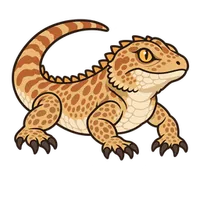
Think of a Rankin's dragon as a bearded dragon's pocket-sized cousin — same sunbathing, head-bobbing, arm-waving personality in a body that tops out around a foot long. They're alert, curious, and often bold enough to take food from your hand within weeks. Because they're small and even-tempered, they get sold as "easy," but easy still means a big enclosure, a proper basking hotspot, and strong UVB. Do that and you've got a decade-plus of one of the most engaging little lizards in the hobby.
Worried, or still setting up? Free tools
Or browse common Rankin's Dragon questions →
Care at a glance
| Adult size | 10–12 in (25–30 cm) total length including tail; occasional large females to ~14 in |
|---|---|
| Lifespan | 8–15 years in captivity with good care; most well-kept dragons reach 10–12 years |
| Enclosure | Minimum 36 x 18 x 18 in (roughly a 40-gallon "breeder"-footprint) for a single adult — bigger is better. A 48 x 24 x 24 in front-opening enclosure gives far more room to thermoregulate and forage, and is required footprint if you ever consider a pair. |
| Basking / warm zone | Basking surface 105–113°F (40–45°C) directly under the lamp. Rankin's are a full-time basking species — this is a real, measured hotspot from an overhead halogen/incandescent flood, not a stick-on gauge guess. |
| Cool side | Cool end 77–85°F (25–29°C), giving a true warm-to-cool gradient across the enclosure |
| Night | Night drop is healthy — down to 65–72°F (18–22°C) is ideal, and brief dips to ~55°F (13°C) are tolerated with no supplemental heat. All lights off at night; no colored "night bulbs." |
| UVB & lighting | High UVB — same requirement as a bearded dragon (Ferguson Zone 3–4, target UVI ~3.0–4.5 at the basking spot on a Solarmeter 6.5). Use a linear T5 HO tube (Arcadia Desert 12% / Dragon 14% or Zoo Med ReptiSun T5 HO 10.0) running about 1/2–2/3 the enclosure length, in a reflector. Mount over the basking end: roughly 11–12 in above the basking surface if over mesh, or 16–18 in if inside with no screen. Replace T5 tubes every 12 months. |
| Humidity | Low/arid — 30–40% average is the sweet spot (fluctuations up to ~50% are fine). This is a dry-country species; chronic damp invites respiratory infection. |
| Substrate | Loose, diggable, arid substrate at least 2 in deep — a washed play sand + topsoil mix (~60/40), or a commercial desert-soil blend. Skip pure calci-sand and loose walnut shell. Bare tile or paper towel works for quarantine/hatchlings but a naturalistic dig substrate lets adults burrow and thermoregulate. |
| Diet | Omnivore that shifts with age. Juveniles (roughly 3–12 months) lean insect-heavy — about 60–70% gut-loaded feeder bugs, 30–40% greens, bugs offered 1–2x daily. Adults flip to plant-forward — about 20–30% insects (2–3x/week) and 70–80% leafy greens and veg daily. Staple insects: dubia roaches, crickets, black soldier fly larvae. Staple greens: collard, turnip, mustard greens, dandelion, endive. Always offer fresh water. |
| Supplements | Lightly dust feeder insects with calcium. Simplest modern approach: an all-in-one like Repashy Calcium Plus LoD on every insect feeding (it supplies calcium + low-dose D3 + vitamins). If using plain supplements instead, alternate plain calcium (most feedings) with a reptile multivitamin (about once weekly) — proper UVB does the heavy lifting on D3, so avoid over-dosing D3. |
What it's like to live with a Rankin's Dragon
Best kept solo. They're social to watch, not social to house — cohabiting risks bullying, stress, tail/toe nips, and one animal quietly monopolizing the basking spot while the other declines. If anyone attempts a pair, it demands a much larger enclosure (48 x 24 x 24 in minimum), duplicate basking/UVB zones, and constant weight monitoring; never house two males, and never mix Rankin's with true bearded dragons (P. vitticeps).
Your first month together
The settling-in period, in order — so you know what's normal and when not to worry.
- Build and dial in the enclosure BEFORE the dragon comes home — verify basking surface temp with a digital probe/IR thermometer and UVI with a Solarmeter, don't trust bulb-box claims.
- Give a week or two of low-handling settling time; let it eat and bask reliably first.
- Offer food at the same time daily and log what's eaten — appetite is your #1 health signal.
- Keep it simple at first (paper towel substrate + hides) so you can monitor droppings and spot any parasites; move to dig substrate once settled.
- Find and phone an exotics/reptile vet now, and budget for an initial fecal parasite check.
Through the year, and as they grow
Many healthy adults slow down or brumate in the cooler months — reduced appetite, more hiding, and long sleeps for weeks to a couple of months. It's normal in a dragon that's a good weight and was recently vet-checked; keep water available, don't force-feed, and weigh weekly. Photoperiod naturally shifts too (about 11 hrs light in winter, 13 in summer). A brumating-but-thin or unwell dragon is NOT normal — see a vet before assuming brumation.
The pet store gets these wrong
Common myths, kindly corrected — no shame for having believed them.
- "They're tiny, so a 20-gallon is fine." No — small dragon, big needs: 36 x 18 x 18 in is the floor, and bigger genuinely makes them more active and healthier.
- "Rankin's don't need much UVB because they're small." False — they're a full-sun basking species with the same high-UVB requirement as a full-size bearded dragon.
- "They're a good beginner lizard because they need little." They're beginner-friendly in temperament, not in equipment — the heat/UVB/enclosure bill is the same as a beardie.
- "You can keep two together for company." They don't need companions and usually do worse in pairs; solo is the safe default.
- "A colored night bulb keeps them warm safely." Skip it — they need darkness and a natural night drop, and red/blue night lamps disrupt sleep.
Before you buy
- A 36 x 18 x 18 in (or larger) front-opening enclosure — the biggest single cost, buy it first.
- A proper lighting rig: overhead basking flood on a dimmer/thermostat PLUS a linear T5 HO UVB tube in a reflector — this pair is non-negotiable.
- Measuring tools: a digital probe or IR thermometer for the basking surface, and ideally a Solarmeter for UVI.
- A steady feeder-insect supply (dubia/crickets/BSFL) you can gut-load, plus fresh greens weekly.
- A located exotics vet and a small emergency fund — these dragons live 10+ years.
💷 The rankin's dragon itself is usually the cheapest part — see the real cost of keeping one (upfront + ongoing, no sales pitch).
See a reptile vet if…
We can't diagnose from afar — but these are the signs to stop watching and get a professional:
- Not eating for more than a week or two outside of brumation, or clear weight loss you can feel along the spine/hips.
- Any open-mouth breathing, mucus, wheezing, or puffing at the throat when not basking — possible respiratory infection.
- Weak, jerky, or trembling limbs, a rubbery jaw, or a dragon that can't lift itself to walk — classic signs of metabolic bone disease (UVB/calcium failure).
- Straining, no droppings for an unusually long stretch, or a swollen firm belly — possible impaction, an emergency in a dragon on the wrong substrate/temps.
- Sunken eyes, thick stringy saliva, wrinkled skin, or sustained lethargy — dehydration or systemic illness; see an exotics vet, don't wait it out.
Heading in? Print the free Rankin's Dragon vet-prep sheet — what to bring, what to tell the vet, and the questions to ask.
Never
- Never rely on UVB claims from the box — measure UVI or replace T5 tubes on a strict 12-month schedule.
- Never use a heat rock or under-tank heat mat as the main heat source — dragons need overhead radiant heat and can get contact burns.
- Never leave a colored night light on — they need true darkness and a night temperature drop.
- Never feed wild-caught insects or fireflies (fireflies are toxic and can be fatal).
- Never house two males together, and never mix Rankin's with full-size bearded dragons.
Common rankin's dragon questions
How hard are Rankin's Dragons to keep — are they good for beginners?
Beginner–Intermediate. Hardy, calm, and forgiving — genuinely one of the friendlier first lizards. What bumps it above "pure beginner" is the same thing every arid basker needs: real overhead heat, strong UVB with the right mounting distance, and a big enough enclosure. Get the lighting and space right up front and the day-to-day is easy.
What do Rankin's Dragons eat?
Omnivore that shifts with age. Juveniles (roughly 3–12 months) lean insect-heavy — about 60–70% gut-loaded feeder bugs, 30–40% greens, bugs offered 1–2x daily. Adults flip to plant-forward — about 20–30% insects (2–3x/week) and 70–80% leafy greens and veg daily. Staple insects: dubia roaches, crickets, black soldier fly larvae. Staple greens: collard, turnip, mustard greens, dandelion, endive. Always offer fresh water.
How big an enclosure do Rankin's Dragons need?
Minimum 36 x 18 x 18 in (roughly a 40-gallon "breeder"-footprint) for a single adult — bigger is better. A 48 x 24 x 24 in front-opening enclosure gives far more room to thermoregulate and forage, and is required footprint if you ever consider a pair.
What basking temperature do Rankin's Dragons need?
Basking surface 105–113°F (40–45°C) directly under the lamp. Rankin's are a full-time basking species — this is a real, measured hotspot from an overhead halogen/incandescent flood, not a stick-on gauge guess.
What should the cool side be for Rankin's Dragons?
Cool end 77–85°F (25–29°C), giving a true warm-to-cool gradient across the enclosure
What night-time temperature do Rankin's Dragons need?
Night drop is healthy — down to 65–72°F (18–22°C) is ideal, and brief dips to ~55°F (13°C) are tolerated with no supplemental heat. All lights off at night; no colored "night bulbs."
What UVB and lighting do Rankin's Dragons need?
High UVB — same requirement as a bearded dragon (Ferguson Zone 3–4, target UVI ~3.0–4.5 at the basking spot on a Solarmeter 6.5). Use a linear T5 HO tube (Arcadia Desert 12% / Dragon 14% or Zoo Med ReptiSun T5 HO 10.0) running about 1/2–2/3 the enclosure length, in a reflector. Mount over the basking end: roughly 11–12 in above the basking surface if over mesh, or 16–18 in if inside with no screen. Replace T5 tubes every 12 months.
What humidity do Rankin's Dragons need?
Low/arid — 30–40% average is the sweet spot (fluctuations up to ~50% are fine). This is a dry-country species; chronic damp invites respiratory infection.
What substrate do Rankin's Dragons need?
Loose, diggable, arid substrate at least 2 in deep — a washed play sand + topsoil mix (~60/40), or a commercial desert-soil blend. Skip pure calci-sand and loose walnut shell. Bare tile or paper towel works for quarantine/hatchlings but a naturalistic dig substrate lets adults burrow and thermoregulate.
What supplements do Rankin's Dragons need?
Lightly dust feeder insects with calcium. Simplest modern approach: an all-in-one like Repashy Calcium Plus LoD on every insect feeding (it supplies calcium + low-dose D3 + vitamins). If using plain supplements instead, alternate plain calcium (most feedings) with a reptile multivitamin (about once weekly) — proper UVB does the heavy lifting on D3, so avoid over-dosing D3.
How big do Rankin's Dragons get?
10–12 in (25–30 cm) total length including tail; occasional large females to ~14 in
How long do Rankin's Dragons live?
8–15 years in captivity with good care; most well-kept dragons reach 10–12 years
What are the signs Rankin's Dragons are sick or need a vet?
See a reptile or exotics vet if you notice: Not eating for more than a week or two outside of brumation, or clear weight loss you can feel along the spine/hips.; Any open-mouth breathing, mucus, wheezing, or puffing at the throat when not basking — possible respiratory infection.; Weak, jerky, or trembling limbs, a rubbery jaw, or a dragon that can't lift itself to walk — classic signs of metabolic bone disease (UVB/calcium failure).; Straining, no droppings for an unusually long stretch, or a swollen firm belly — possible impaction, an emergency in a dragon on the wrong substrate/temps.; Sunken eyes, thick stringy saliva, wrinkled skin, or sustained lethargy — dehydration or systemic illness; see an exotics vet, don't wait it out..
Your first two weeks · Taming & handling · Behaviours explained · Won't eat? · Stuck shed · When to see a vet

Get the free Rankin's Dragon Starter Kit
A one-page setup criteria checklist and a first-30-days plan for your first rankin's dragon — what to get, what makes each thing matter, and the honest bits the pet shop skips. Join the den and we’ll send it over.
Free reptile care cheat-sheet the moment you join. No spam — unsubscribe anytime. See how we handle your data in our privacy notice.Sources & further reading
This guide was written and fact-checked against these authorities. It's kind, general guidance — not a diagnosis or a substitute for an exotics vet:
- ReptiFiles — Bearded Dragon Temperatures & UVB Requirements (same genus/Ferguson zone; basking 108–113°F/42–45°C, cool 77–85°F/25–29°C, UVI 4.0–4.5, T5 HO mounting distances) — Modern best-practice temps, UVI targets, and UVB bulb/mounting guidance for Pogona; Rankin's share the genus and lighting requirement.
- Dubia.com — Rankin's Dragon Care Sheet (enclosure 36x18x18, basking, cool side, night to 55°F, humidity 30–50%, substrate 2" deep, diet schedule, Repashy Calcium Plus LoD) — Species-specific enclosure, humidity, substrate, diet, and supplementation numbers.
- Reptile Supply — How to Care for Your Rankin's Dragon (enclosure, basking 95–100°F, humidity 30–50%, diet by age, aka names, UVB bulbs, photoperiod) — Corroborates enclosure size, humidity, diet ratios, common names, and UVB bulbs.
- Reptile Direct — Rankin's Dragon Care: Size, Diet, Lifespan & Setup (lifespan 8–15 yrs, adult 10–12 in, family Agamidae, basking 105–115°F, cool 78–82°F, humidity 30–40%, diet ratios) — Lifespan, adult size, family, and age-based omnivore diet ratios.
- Wikipedia — Rankin's dragon (Pogona henrylawsoni): family Agamidae, size <30 cm, native Queensland, etymology and alternate names — Taxonomy, adult size cap, native range, and common-name confirmation.
Written and fact-checked by The Baskden Team against veterinarian-authored sources — if your reptile shows a red-flag sign above, see an exotics vet promptly.