
Species · Tropical (humid) skink
Red-Eyed Crocodile Skink
Tribolonotus gracilis
The tiny "dragon" of the skink world — armoured, orange-eyed and famously shy; a humidity-loving display animal, not a handling pet.
Difficulty: Intermediate Printable care sheet →
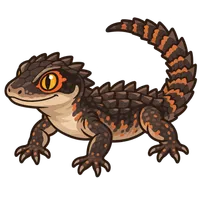
Red-eyed crocodile skinks look like a pocket dragon — armoured rows of backward-curving spikes down the back, a big triangular head, and a vivid orange ring around each eye. They come from the damp tropical forests of New Guinea, usually near water, and that origin is everything: they want it humid, cool, and full of cover, the opposite of a desert skink. They're famously shy — a display animal to admire, not a lizard to handle — and unusually, they vocalise and even show parental care. Get the moisture and the hides right and they're one of the most characterful little lizards you can keep.
Worried, or still setting up? Free tools
Or browse common Red-Eyed Crocodile Skink questions →
Care at a glance
| Adult size | 6–8 in (16–20 cm) — small and stout |
|---|---|
| Lifespan | Up to about 10 years with good care |
| Enclosure | Minimum 24×18×18 in (60×45×45 cm) for one, densely planted with lots of cover and leaf litter, PLUS a larger-than-usual water area it can climb into and soak. They are shy and semi-fossorial, so hides and clutter matter enormously. Best kept singly or as a single male–female pair — males will fight. |
| Basking / warm zone | A gentle warm hide / basking area of 80–82°F (27–28°C) from a low-wattage bulb — this is a cool-running forest species, not a hot basker, so it must not overheat. |
| Cool side | Cool zone 75–78°F (24–26°C). |
| Night | Night 72–75°F (22–24°C) — a mild drop is fine. |
| UVB & lighting | UVB isn’t strictly required (they’re nocturnal) but is beneficial: a low-output T5 bulb (Arcadia ShadeDweller) giving UVI 1.0–2.0 at the top of the enclosure. If you skip UVB you MUST supplement vitamin D3 — UVB is the better route. Replace the bulb yearly. |
| Humidity | HIGH and moisture-dependent — 70–80% by day, rising to 80–100% at night. Mist morning and evening (and often midday), run a fogger at night, and keep a deep moist substrate. This is the single biggest difference from an arid skink: kept dry, a crocodile skink dehydrates and does poorly. |
| Substrate | A moisture-retentive, burrowable mix (a bioactive-style soil/coco blend) at least 2–4 in deep, topped with leaf litter and cork for cover. It holds the humidity and gives them somewhere to hide and dig, which lowers stress. |
| Diet | Insectivore — a varied menu of appropriately-sized insects (crickets, dubia/discoid roaches, black soldier fly larvae, silkworms, earthworms, the occasional canned snail), each feeder roughly half the width of the skink’s head. Juveniles daily; adults every other day, offering as much as they’ll eat in about 5 minutes. |
| Supplements | Dust feeder insects with calcium at every feeding, and add a multivitamin on a rotation. Calcium + D3 matters especially if you provide little or no UVB. Always keep a bowl of clean water available too. |
🦎 Did you know? — Red-Eyed Crocodile Skink fun facts
Little true delights about the red-eyed crocodile skink — each one checked against a named source, no pet-shop myths.
What it's like to live with a Red-Eyed Crocodile Skink
A red-eyed crocodile skink is a terrarium jewel to watch, not a lizard to handle. Left in peace in a damp, well-planted, cover-rich tank, it will potter, dig, soak, and hunt at dusk — and it is one of the few reptiles known to vocalise (a distress squeak if grabbed) and even to show parental care of its eggs. Picked up, though, it stresses badly: it may squeak, play dead, or drop its tail. The kind way to interact is at a distance and through tong-feeding. For a keeper who wants a shy, dragon-like display animal rather than a hands-on pet, it is endlessly charming.
Your first month together
The settling-in period, in order — so you know what's normal and when not to worry.
- Assume wild-caught: quarantine a new skink and get a vet fecal check — most in the trade are imports and arrive stressed and parasitised.
- Set up a humid, heavily-planted tank with lots of hides, leaf litter, and a soaking water area BEFORE it arrives — cover is what makes a shy skink feel safe.
- Give it near-total privacy at first and expect it to hide; a new crocodile skink seen out and calm is a good sign, not a given.
- Feed a varied, calcium-dusted insect menu (juveniles daily, adults every other day) and mist to keep humidity high day and night.
- Interact by tong-feeding, not handling — building trust slowly is the whole relationship with this species.
Through the year, and as they grow
Crocodile skinks don’t brumate like a temperate species, but they respond to the wet/dry rhythm of their forest home — keep humidity consistently high year-round. Unusually for a lizard they show parental care: a female may guard her single egg, and a gravid female who goes off food and becomes weak or straining needs a vet (egg-binding).
The pet store gets these wrong
Common myths, kindly corrected — no shame for having believed them.
- It’s a skink, so keep it like a blue-tongue — completely wrong; this is a cool, HUMID forest species, not an arid omnivore.
- Skinks are hardy handling pets — no; the crocodile skink is a shy, look-don’t-touch display animal that stresses when handled.
- A water bowl is enough moisture — no; it needs 70–80% day / 80–100% night humidity and a water area to soak in.
- It doesn’t need UVB because it’s nocturnal — it does better with low UVB; skip it only if you diligently supplement D3.
- Vocalising or “playing dead” is cute to trigger — it’s a stress response; leave handling alone.
Before you buy
- A humid, densely-planted 24×18×18 in (or larger) tank with lots of cover and a soaking water area.
- A misting/fogging routine to hold 70–80% day / 80–100% night humidity — this is a moisture-dependent species.
- Acceptance that it’s look-don’t-touch, and that most are wild-caught (budget for quarantine and a vet fecal).
- A varied insect supply with calcium/vitamin dusting, and an exotics/reptile vet who sees small lizards.
💷 The red-eyed crocodile skink itself is usually the cheapest part — see the real cost of keeping one (upfront + ongoing, no sales pitch).
See a reptile vet if…
We can't diagnose from afar — but these are the signs to stop watching and get a professional:
- Sunken eyes, wrinkled skin, or lethargy (dehydration — usually from humidity kept too low).
- A rubbery jaw, bowed or wavy limbs, or tremors (signs pointing to metabolic bone disease / too little calcium or UVB).
- Open-mouth breathing, mucus, or wheezing (possible respiratory infection — often from being kept too cool or damp-stale).
- Poor weight, or abnormal/worm-visible droppings in a new import (parasites — very common in wild-caught skinks).
- A female straining and off her food (egg-binding), retained stuck shed, or any tissue protruding from the vent (prolapse).
Heading in? Print the free Red-Eyed Crocodile Skink vet-prep sheet — what to bring, what to tell the vet, and the questions to ask.
Never
- Never keep it dry like a desert skink — it needs high humidity and a soaking water area.
- Never handle it for fun — it stresses badly, vocalises, plays dead, and may drop its tail.
- Never let it overheat — it’s a cool forest species; keep the warm spot around 80–82°F.
- Never house two males together — they fight; keep it singly or as a single male–female pair.
- Never skip calcium/vitamin supplementation, especially if you provide little UVB.
Common red-eyed crocodile skink questions
How hard are Red-Eyed Crocodile Skinks to keep — are they good for beginners?
Intermediate. A tiny "living dragon" — and nothing like the hardy, arid blue-tongue. It needs high humidity, cooler temperatures, a water area to soak in, and lots of cover, and it is a shy, look-don't-touch display animal that stresses easily. Add that most are wild-caught, and it earns its Intermediate rating.
What do Red-Eyed Crocodile Skinks eat?
Insectivore — a varied menu of appropriately-sized insects (crickets, dubia/discoid roaches, black soldier fly larvae, silkworms, earthworms, the occasional canned snail), each feeder roughly half the width of the skink’s head. Juveniles daily; adults every other day, offering as much as they’ll eat in about 5 minutes.
How big an enclosure do Red-Eyed Crocodile Skinks need?
Minimum 24×18×18 in (60×45×45 cm) for one, densely planted with lots of cover and leaf litter, PLUS a larger-than-usual water area it can climb into and soak. They are shy and semi-fossorial, so hides and clutter matter enormously. Best kept singly or as a single male–female pair — males will fight.
What basking temperature do Red-Eyed Crocodile Skinks need?
A gentle warm hide / basking area of 80–82°F (27–28°C) from a low-wattage bulb — this is a cool-running forest species, not a hot basker, so it must not overheat.
What should the cool side be for Red-Eyed Crocodile Skinks?
Cool zone 75–78°F (24–26°C).
What night-time temperature do Red-Eyed Crocodile Skinks need?
Night 72–75°F (22–24°C) — a mild drop is fine.
What UVB and lighting do Red-Eyed Crocodile Skinks need?
UVB isn’t strictly required (they’re nocturnal) but is beneficial: a low-output T5 bulb (Arcadia ShadeDweller) giving UVI 1.0–2.0 at the top of the enclosure. If you skip UVB you MUST supplement vitamin D3 — UVB is the better route. Replace the bulb yearly.
What humidity do Red-Eyed Crocodile Skinks need?
HIGH and moisture-dependent — 70–80% by day, rising to 80–100% at night. Mist morning and evening (and often midday), run a fogger at night, and keep a deep moist substrate. This is the single biggest difference from an arid skink: kept dry, a crocodile skink dehydrates and does poorly.
What substrate do Red-Eyed Crocodile Skinks need?
A moisture-retentive, burrowable mix (a bioactive-style soil/coco blend) at least 2–4 in deep, topped with leaf litter and cork for cover. It holds the humidity and gives them somewhere to hide and dig, which lowers stress.
What supplements do Red-Eyed Crocodile Skinks need?
Dust feeder insects with calcium at every feeding, and add a multivitamin on a rotation. Calcium + D3 matters especially if you provide little or no UVB. Always keep a bowl of clean water available too.
How big do Red-Eyed Crocodile Skinks get?
6–8 in (16–20 cm) — small and stout
How long do Red-Eyed Crocodile Skinks live?
Up to about 10 years with good care
What are the signs Red-Eyed Crocodile Skinks are sick or need a vet?
See a reptile or exotics vet if you notice: Sunken eyes, wrinkled skin, or lethargy (dehydration — usually from humidity kept too low).; A rubbery jaw, bowed or wavy limbs, or tremors (signs pointing to metabolic bone disease / too little calcium or UVB).; Open-mouth breathing, mucus, or wheezing (possible respiratory infection — often from being kept too cool or damp-stale).; Poor weight, or abnormal/worm-visible droppings in a new import (parasites — very common in wild-caught skinks).; A female straining and off her food (egg-binding), retained stuck shed, or any tissue protruding from the vent (prolapse)..
Your first two weeks · Taming & handling · Behaviours explained · Won't eat? · Stuck shed · When to see a vet

Get the free Red-Eyed Crocodile Skink Starter Kit
A one-page setup criteria checklist and a first-30-days plan for your first red-eyed crocodile skink — what to get, what makes each thing matter, and the honest bits the pet shop skips. Join the den and we’ll send it over.
Free reptile care cheat-sheet the moment you join. No spam — unsubscribe anytime. See how we handle your data in our privacy notice.Sources & further reading
This guide was written and fact-checked against these authorities. It's kind, general guidance — not a diagnosis or a substitute for an exotics vet:
- ReptiFiles — Red-Eyed Crocodile Skink Care Sheet — 6–8 in, ~10 yr; min 24×18×18 in + large soaking water area; warm 80–82°F / cool 75–78°F / night 72–75°F; UVI 1.0–2.0 (beneficial, D3 if none); humidity 70–80% day / 80–100% night; moisture-retentive substrate 2–4″; varied insectivore (juvenile daily, adult every other day, feeder ~½ head width) + calcium every feeding; shy display animal, vocalises/plays dead; house solo or M-F pair.
- Hartdegen, Russell & Young (2001), “Vocalization of the crocodile skink (Tribolonotus gracilis) and evidence of parental care” — Peer-reviewed basis for the species’ vocalisation and unusual parental-care behaviour.
- Baines et al. (2016), “How much UVB does my reptile need? The UV-Tool” — Low Ferguson Zone 1–2 target UVI 1.0–2.0 for a shade-dwelling, mostly-nocturnal forest lizard.
- Association of Reptilian & Amphibian Veterinarians (ARAV) — Find-an-exotics-vet; dehydration, MBD, respiratory infection, parasites, dystocia.
- Merck Veterinary Manual — reptiles — Metabolic bone disease, dehydration, respiratory infection, endoparasites, dystocia.
Written and fact-checked by The Baskden Team against veterinarian-authored sources — if your reptile shows a red-flag sign above, see an exotics vet promptly.