
Species · Tortoise (chelonian)
Red-Footed Tortoise
Chelonoidis carbonarius
A colourful, personable tropical tortoise — more humidity-loving and a touch more omnivorous than a Mediterranean.
Difficulty: Intermediate Printable care sheet →
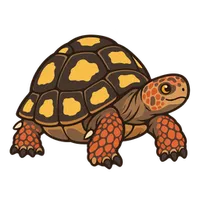
The red-foot is one of the friendliest, most curious tortoises you can keep — a South American forest-edge species with cherry-red-and-orange leg scales and a real appetite for exploring. Unlike the arid Mediterranean tortoises everyone pictures, this one wants warmth, humidity, and (refreshingly) a proper helping of fruit and even the occasional bit of animal protein. Get them the space and the moisture they need and they're rewarding, long-lived companions. Just remember: "long-lived" here means they'll likely outlive the car, the mortgage, and possibly you.
Worried, or still setting up? Free tools
Or browse common Red-Footed Tortoise questions →
Care at a glance
| Adult size | Carapace typically 12–16 in (30–41 cm); males often reach ~13.5 in and females ~11 in, though large individuals can hit 18 in (46 cm) and rare giants up to 24 in (61 cm). A moderate-to-large tortoise. |
|---|---|
| Lifespan | 50+ years is normal, and well-kept red-foots are commonly cited as living 80 years or more — a genuine multi-generational commitment. |
| Enclosure | Bigger is always better. Aim for a minimum of about 8 ft × 4 ft (roughly 32 sq ft / 3 sq m) of floor space for one adult, using an open-topped tortoise table or large custom pen rather than a glass tank. Outdoors is ideal in warm weather: a predator-proof, dig-proof pen with walls at least 2 ft tall and a barrier sunk ~12 in into the soil, plus a shaded hide and a shallow water/wallow area. |
| Basking / warm zone | A warm basking spot of about 90–95°F (32–35°C) under the heat/UVB lamp. |
| Cool side | Cool end around 75–80°F (24–27°C); daytime ambient across the enclosure should stay warm (roughly 74–85°F / 23–29°C). This is a tropical species — don't let it get cold. |
| Night | Night can safely drop to about 68–75°F (20–23°C). If your room falls below that, use a thermostat-controlled ceramic heat emitter (no light at night). |
| UVB & lighting | Yes — daily UVB is essential to prevent metabolic bone disease. Use a linear T5 HO tube (e.g. Arcadia 6% or Zoo Med ReptiSun 5.0 over a screen; a 12%/10.0 if mounted higher/behind mesh), roughly half the enclosure length, mounted over the basking zone to give a UVI of about 2.0–3.0 where the tortoise basks. Run lights ~11–13 hrs/day (shorter in winter) and replace UVB tubes every 6–12 months even if they still glow. |
| Humidity | High — target roughly 60–80% (vet clinics often cite 50–70% ambient with a moist "humid hide"/dig box near 80%). Provide a large soaking dish, a damp mossy or dig-box area, and daily misting. Critically, pair humidity with good airflow — stagnant humid air causes respiratory and shell problems. |
| Substrate | Deep, richly organic, moisture-retentive substrate (topsoil/coir/cypress-mulch blends) at least 4 in deep indoors, deeper outdoors, topped with ~1 in of leaf litter for foraging and humidity. Spot-clean daily; keep it damp enough to hold humidity but never waterlogged or mouldy. |
| Diet | Broad-leaf grazer and opportunistic omnivore — the key difference from Mediterranean tortoises. Base the diet on dark leafy greens, weeds and flowers (dandelion, plantain, clover, hibiscus, mulberry leaf, spring greens, leaf lettuces, opuntia/prickly-pear pads). Red-foots genuinely eat fruit in the wild — offer modest amounts of soft fruit (papaya, melon, guava, berries; go easy on banana) as a real part of the diet, not a rare treat. They also naturally eat mushrooms and a little animal protein. Avoid large amounts of goitrogenic/oxalate-heavy foods (kale, broccoli, spinach) and never feed dog/cat food as a staple. |
| Supplements | Dust food with a calcium (D3-optional if UVB is strong) supplement 2–3× weekly and a reptile multivitamin ~weekly; leave a cuttlebone available for self-regulation. Small amount of animal protein about once weekly (e.g. a couple of earthworms, or a small portion of low-fat protein) — red-foots need a bit more protein than grassland tortoises, but too much causes shell pyramiding and kidney strain. |
What it's like to live with a Red-Footed Tortoise
Best kept singly or in carefully monitored groups with plenty of space, multiple feeding/basking/hide stations, and sight breaks. Males can be pushy and will harass or ram each other and females; two males together is a recipe for injuries. Never mix with other tortoise species (disease and husbandry mismatch). Watch for one animal being bullied off food or water.
Your first month together
The settling-in period, in order — so you know what's normal and when not to worry.
- Set up and stabilize the enclosure BEFORE the tortoise arrives — confirm your basking spot (~90–95°F), cool end, UVI (2.0–3.0), and 60–80% humidity with a thermometer/hygrometer and a UVB check.
- Soak your new tortoise in shallow, lukewarm water for 10–15 minutes 2–3× a week (daily for hatchlings) to keep it hydrated while it settles.
- Offer food daily and note what it actually eats; misting the greens just before feeding often triggers appetite. Don't panic over a few quiet, low-appetite days during the move.
- Keep handling to a minimum for the first couple of weeks — let it learn its hides, water, and basking spot first.
- Find and phone an exotics/reptile vet now, and book a new-pet health/fecal check so you have a baseline and a relationship before an emergency.
Through the year, and as they grow
This is NOT a hibernating species — never cool it down to brumate like a Russian or Hermann's tortoise. Do give a mild seasonal rhythm: slightly longer, warmer "summer" day-lengths and shorter "winter" ones. In warm months, supervised outdoor time in a secure pen provides unbeatable natural UVB, grazing, and exercise; bring them in well before nights turn cold.
The pet store gets these wrong
Common myths, kindly corrected — no shame for having believed them.
- "All tortoises should avoid fruit." False for red-foots — that rule is for arid Mediterranean/grassland species. Red-foots are forest-edge omnivores that eat fruit (and mushrooms) in the wild and should get some in captivity.
- "Tortoises are desert animals that need it hot and dry." Not this one. Red-foots come from humid savannah and forest edge and need 60–80% humidity; kept too dry they get shell pyramiding and dehydration.
- "A tortoise can live its whole life in a glass tank or tortoise 'starter' box." No — they need large floor space and airflow; small enclosures stunt behavior and health.
- "They hibernate in winter." No — red-foots do not brumate; cooling one down can be dangerous.
- "They're pure herbivores." Red-foots naturally take a little animal protein and benefit from a small weekly portion — but too much causes pyramiding and kidney problems, so it's a supplement, not a staple.
Before you buy
- This is a decades-long commitment — plan for 50–80+ years and who inherits the tortoise.
- You need real space: an 8×4 ft (or larger) indoor table AND ideally a secure outdoor pen for warm months — a tabletop tank won't do.
- Recurring costs are real: UVB tubes replaced twice a year, heating, a big varied fresh diet, and exotics-vet visits.
- Confirm there's a reptile/exotics vet within reach before you commit.
- Buy captive-bred from a reputable breeder, not wild-caught imports (welfare, disease, and conservation reasons); all tortoises can carry Salmonella, so wash hands after contact.
- Check your local/national laws — Chelonoidis species can be regulated or require paperwork in some regions.
💷 The red-footed tortoise itself is usually the cheapest part — see the real cost of keeping one (upfront + ongoing, no sales pitch).
See a reptile vet if…
We can't diagnose from afar — but these are the signs to stop watching and get a professional:
- Runny nose, bubbling/mucus around the mouth or nose, open-mouth breathing, or wheezing — possible respiratory infection; see an exotics vet.
- Soft, flexible, or deforming shell, or rubbery jaw — signs of metabolic bone disease (usually UVB/calcium related).
- Not eating for more than a week, sudden weight loss, or a sunken/lethargic tortoise — get it checked.
- Straining, no urates/feces, blood in stool or urine, or visible stones/grit — possible bladder stone or obstruction.
- Prolapse (tissue protruding from the tail end) is an emergency — see a vet the same day.
- Deep or spreading shell damage, cracks, or foul-smelling soft/discolored shell areas (shell rot) — needs veterinary treatment.
Heading in? Print the free Red-Footed Tortoise vet-prep sheet — what to bring, what to tell the vet, and the questions to ask.
Never
- Never brumate/hibernate a red-foot — they are tropical and don't hibernate.
- Never keep it dry and cold like a desert tortoise — chronic low humidity and cold cause pyramiding and respiratory illness.
- Never rely on a coil/compact UVB bulb or an untested lamp, or skip replacing UVB tubes — MBD develops silently.
- Never feed dog/cat food (or high-protein pellets) as a staple — kidney damage and pyramiding.
- Never house two males together, or mix red-foots with other tortoise species.
- Never keep one long-term in a small glass tank without airflow, or with no deep substrate to dig and burrow.
Common red-footed tortoise questions
How hard are Red-Footed Tortoises to keep — are they good for beginners?
Intermediate. Hardy and famously personable, but this is a big, decades-long, humidity-loving tortoise that needs real floor space (ideally outdoor time in warm months) and a diet that is genuinely different from a Mediterranean tortoise. The care itself isn't fiddly — the commitment and the space are the hard parts.
What do Red-Footed Tortoises eat?
Broad-leaf grazer and opportunistic omnivore — the key difference from Mediterranean tortoises. Base the diet on dark leafy greens, weeds and flowers (dandelion, plantain, clover, hibiscus, mulberry leaf, spring greens, leaf lettuces, opuntia/prickly-pear pads). Red-foots genuinely eat fruit in the wild — offer modest amounts of soft fruit (papaya, melon, guava, berries; go easy on banana) as a real part of the diet, not a rare treat. They also naturally eat mushrooms and a little animal protein. Avoid large amounts of goitrogenic/oxalate-heavy foods (kale, broccoli, spinach) and never feed dog/cat food as a staple.
How big an enclosure do Red-Footed Tortoises need?
Bigger is always better. Aim for a minimum of about 8 ft × 4 ft (roughly 32 sq ft / 3 sq m) of floor space for one adult, using an open-topped tortoise table or large custom pen rather than a glass tank. Outdoors is ideal in warm weather: a predator-proof, dig-proof pen with walls at least 2 ft tall and a barrier sunk ~12 in into the soil, plus a shaded hide and a shallow water/wallow area.
What basking temperature do Red-Footed Tortoises need?
A warm basking spot of about 90–95°F (32–35°C) under the heat/UVB lamp.
What should the cool side be for Red-Footed Tortoises?
Cool end around 75–80°F (24–27°C); daytime ambient across the enclosure should stay warm (roughly 74–85°F / 23–29°C). This is a tropical species — don't let it get cold.
What night-time temperature do Red-Footed Tortoises need?
Night can safely drop to about 68–75°F (20–23°C). If your room falls below that, use a thermostat-controlled ceramic heat emitter (no light at night).
What UVB and lighting do Red-Footed Tortoises need?
Yes — daily UVB is essential to prevent metabolic bone disease. Use a linear T5 HO tube (e.g. Arcadia 6% or Zoo Med ReptiSun 5.0 over a screen; a 12%/10.0 if mounted higher/behind mesh), roughly half the enclosure length, mounted over the basking zone to give a UVI of about 2.0–3.0 where the tortoise basks. Run lights ~11–13 hrs/day (shorter in winter) and replace UVB tubes every 6–12 months even if they still glow.
What humidity do Red-Footed Tortoises need?
High — target roughly 60–80% (vet clinics often cite 50–70% ambient with a moist "humid hide"/dig box near 80%). Provide a large soaking dish, a damp mossy or dig-box area, and daily misting. Critically, pair humidity with good airflow — stagnant humid air causes respiratory and shell problems.
What substrate do Red-Footed Tortoises need?
Deep, richly organic, moisture-retentive substrate (topsoil/coir/cypress-mulch blends) at least 4 in deep indoors, deeper outdoors, topped with ~1 in of leaf litter for foraging and humidity. Spot-clean daily; keep it damp enough to hold humidity but never waterlogged or mouldy.
What supplements do Red-Footed Tortoises need?
Dust food with a calcium (D3-optional if UVB is strong) supplement 2–3× weekly and a reptile multivitamin ~weekly; leave a cuttlebone available for self-regulation. Small amount of animal protein about once weekly (e.g. a couple of earthworms, or a small portion of low-fat protein) — red-foots need a bit more protein than grassland tortoises, but too much causes shell pyramiding and kidney strain.
How big do Red-Footed Tortoises get?
Carapace typically 12–16 in (30–41 cm); males often reach ~13.5 in and females ~11 in, though large individuals can hit 18 in (46 cm) and rare giants up to 24 in (61 cm). A moderate-to-large tortoise.
How long do Red-Footed Tortoises live?
50+ years is normal, and well-kept red-foots are commonly cited as living 80 years or more — a genuine multi-generational commitment.
What are the signs Red-Footed Tortoises are sick or need a vet?
See a reptile or exotics vet if you notice: Runny nose, bubbling/mucus around the mouth or nose, open-mouth breathing, or wheezing — possible respiratory infection; see an exotics vet.; Soft, flexible, or deforming shell, or rubbery jaw — signs of metabolic bone disease (usually UVB/calcium related).; Not eating for more than a week, sudden weight loss, or a sunken/lethargic tortoise — get it checked.; Straining, no urates/feces, blood in stool or urine, or visible stones/grit — possible bladder stone or obstruction.; Prolapse (tissue protruding from the tail end) is an emergency — see a vet the same day.; Deep or spreading shell damage, cracks, or foul-smelling soft/discolored shell areas (shell rot) — needs veterinary treatment..
Your first two weeks · Taming & handling · Behaviours explained · Won't eat? · Stuck shed · When to see a vet

Get the free Red-Footed Tortoise Starter Kit
A one-page setup criteria checklist and a first-30-days plan for your first red-footed tortoise — what to get, what makes each thing matter, and the honest bits the pet shop skips. Join the den and we’ll send it over.
Free reptile care cheat-sheet the moment you join. No spam — unsubscribe anytime. See how we handle your data in our privacy notice.Sources & further reading
This guide was written and fact-checked against these authorities. It's kind, general guidance — not a diagnosis or a substitute for an exotics vet:
- ReptiFiles — Red-Footed Tortoise Care Sheet — Detailed modern care sheet: enclosure size/formula, basking 90–95°F, cool 75–85°F, night 68–75°F, UVI 2.0–3.0 with T5 HO bulb recommendations, 70–90% humidity, 4 in+ substrate, size 12–18 in, 50+ yr lifespan, 90/10 plant-to-animal diet.
- Chicago Exotics Animal Hospital — Red-foot Tortoise Care (Erica Mede, CVT) — Veterinary clinic care sheet: 12–18 in carapace, >80 yr lifespan, day 74–80°F with 82–90°F basking, night down to ~70°F, 50–70% humidity with ~80% humid hide, UVB required (ReptiSun 5.0), diet ratios, does NOT hibernate.
- The Tortoise Trust — Feeding Red-foot and Yellow-foot Tortoises — Authority on the fruit/fungus/protein diet: fruit ~40–70% of wild intake by season, ~20% leaves, ~20% fungi/misc, one weekly protein meal, warns of amino-acid deficiency on all-herbivore diets and the need for high humidity/soaking water.
- Wikipedia — Red-footed tortoise (Chelonoidis carbonarius) — Taxonomy (family Testudinidae), native range (humid tropical forest to savannah), omnivorous diet including fruit, flowers, fungi and occasional invertebrates; adult size averages ~30 cm, up to 40+ cm.
Written and fact-checked by The Baskden Team against veterinarian-authored sources — if your reptile shows a red-flag sign above, see an exotics vet promptly.