
Species · Aquatic turtle
Reeves' Turtle
Mauremys reevesii
A small, hardy, personable pet turtle — a great semi-aquatic starter once the heated, filtered setup is right.
Difficulty: Beginner–Intermediate Printable care sheet →
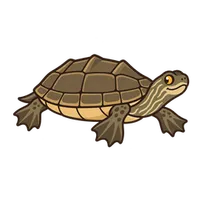
The Reeves' turtle is the friendly, level-headed one of the aquatic-turtle world. It stays small (most adults are palm-to-saucer sized, not dinner-plate huge like a slider), it's calm and curious, and it shrugs off a wide range of temperatures — which is exactly why it gets recommended to first-time turtle keepers. Just don't mistake "hardy" for "low-effort": like every water turtle, it needs a roomy heated tank with strong filtration, a dry dock to bask on, and a proper UVB bulb. Give it those and you've got a genuinely rewarding, decades-long companion.
Worried, or still setting up? Free tools
Or browse common Reeves' Turtle questions →
Care at a glance
| Adult size | Most adults reach about 5–6 in (13–15 cm) carapace length; females run larger, and some lines/wild individuals can exceed 9 in (23 cm). Carapace has three distinct keels (the "Chinese three-keeled pond turtle"). |
|---|---|
| Lifespan | Commonly 15–20+ years in good care; well-kept turtles can live 25+ years, so plan for a decades-long commitment. |
| Tank | Go by water volume, not "gallons of tank." The modern rule of thumb is at least 10 US gallons of WATER per inch of the turtle's adult shell length — so a 6-inch adult wants roughly 60+ gallons of water, plus extra length above the waterline for the basking dock. A single adult is happiest in a long tank at least ~90 cm (3 ft) wide. Bigger is always better; long footprint beats tall. |
| Water temperature | 70–80°F (about 21–27°C) for a healthy active adult, held with a guarded aquarium heater. Hatchlings and sick turtles are kept at the warmer end. |
| Water depth | Give real but not extreme depth. Minimum roughly 1.5× shell length; adults do well around 8–12 in (20–30 cm) once they're confident swimmers (Reeves are only moderately good swimmers). Hatchlings start shallow (~2 in) with easy exits until they swim strongly — too-deep water is a drowning risk for tiny turtles. |
| Filtration | Turtles are messy; filtration is non-negotiable. Use a canister (or turtle-rated) filter rated for at least 2–3× the tank's actual water volume. Even with a strong filter, change ~30% of the water every 1–2 weeks to keep ammonia and nitrate down. |
| Basking dock | A DRY basking dock (cork, floating platform, or stacked slate) the turtle can climb fully out onto and dry off completely. Basking-surface temperature ~85–95°F (30–35°C). It must be genuinely dry — a permanently damp shell leads to shell rot. |
| Night | Lights and basking heat off at night is fine; this is a temperate species that tolerates a natural night drop. Let air fall to normal room temperature (roughly high 60s–low 70s°F / ~20–22°C). Keep the WATER within its daytime range with the heater; avoid letting it drop below the low 70s°F for an active (non-brumating) turtle. |
| UVB & lighting | A linear T5 HO UVB tube running roughly half the tank length in a reflective fixture — e.g. Zoo Med Reptisun T5 HO 5.0 or Arcadia Forest 6% (higher-output ~10–12% tubes are also used over the basking area). Mount ~8–11 in above the dock if firing through mesh, ~13–15 in if unobstructed. Replace the bulb every 12 months even if it still glows (UVB output fades before the visible light does). |
| Tank bottom | Bare-bottom is easiest to keep clean, or a thin layer of large river stones / sand too big to swallow. For any land/soil area, a semi-moist sandy soil mix (roughly 80% clean topsoil, 20% play sand) works. Avoid small gravel that can be eaten and cause impaction. |
| Diet | Omnivore that shifts toward more plants with age. Base the diet on a quality aquatic-turtle pellet, rotated with protein (earthworms, crickets, mealworms, occasional cooked fish/shrimp) and leafy greens/aquatic plants (kale, dandelion, duckweed, water lettuce). Hatchlings: protein daily. 6–12 months: protein every other day. Adults: protein only ~2–3×/week, with greens/plants offered daily. |
| Supplements | Leave a cuttlebone or calcium block floating in the tank at all times for free-choice calcium. A calcium (with D3) dust on food a couple of times a week is a common belt-and-braces addition, but real UVB plus a varied diet does most of the work. |
What it's like to live with a Reeves' Turtle
Day to day, a Reeves' turtle is an easygoing tankmate for you — it swims, forages, and hauls out to bask, and many become bold enough to beg at the glass. The real work isn't the turtle, it's the water: expect a serious filter, weekly-ish water changes, and the up-front cost of tank, heater, UVB, and lamp. They're best kept singly or in a well-matched group with plenty of space, since crowding causes squabbles and fouls the water fast. They don't want to be handled a lot — they're watch-and-admire pets more than cuddle pets — but they're interactive, long-lived, and refreshingly undramatic once the setup is dialed in.
Your first month together
The settling-in period, in order — so you know what's normal and when not to worry.
- Before the turtle comes home, build and run the whole system for at least a few days: heater holding 70–80°F water, canister filter cycling, UVB and basking lamp giving a 90–95°F dry dock.
- Days 1–7: expect a shy, hidey turtle. Keep water clean, offer food but don't panic if it eats little at first, and resist the urge to handle it.
- Weeks 2–3: watch that it's basking daily (dry, all the way out of the water) and swimming confidently — both are signs it's settling and thermoregulating well.
- Ideally book a new-pet check with an exotics/reptile vet in the first month to establish a baseline and rule out parasites, especially for a wild-type or unknown-origin turtle.
- By week 4: you should see steady appetite, active swimming, regular basking, and clear eyes — settle into the water-change and feeding rhythm from here.
Through the year, and as they grow
This is a temperate East-Asian species with real seasons built in. Hatchlings and juveniles eat far more protein and daily; adults taper to plant-heavy with protein only a couple times a week. In the wild, Reeves' turtles brumate (hibernate) through winter — entering as nights fall below ~15°C, roughly late October, and emerging around March once days rise back above ~15°C. In captivity you do NOT have to brumate a pet turtle: keep the water heated and lights on year-round and it stays active. If a keeper ever attempts brumation (typically only for planned breeding), it must be done deliberately with a vet-checked, healthy, well-fed adult and controlled cool temperatures — never by accident from a cold room.
The pet store gets these wrong
Common myths, kindly corrected — no shame for having believed them.
- "A turtle only grows as big as its tank." False and dangerous — a cramped tank doesn't keep a turtle small, it stunts and deforms it, fouls the water, and shortens its life. They reach their adult size regardless; give them room.
- "Reeves' turtles are tiny, so a little 10-gallon tank is fine." No. Even a small aquatic turtle needs real water volume (about 10 gallons of water per inch of shell) and swimming depth. Small species still make big messes.
- "They don't really need UVB — a normal light is enough." Wrong. Without UVB (or injected vitamin D) turtles can't process calcium properly and develop metabolic bone disease. A real UVB tube, replaced yearly, is core equipment, not optional.
- "Basking is just sunbathing, they can bask on a rock in the water." The dock must be fully DRY and warm enough to raise the shell temperature. A wet or too-cool 'basking' spot won't dry the shell or drive vitamin-D synthesis, and a permanently damp shell invites shell rot.
- "Because they're hardy, they're a cheap easy first pet." Hardy means forgiving of small mistakes — not cheap. The tank, filter, heater, and UVB setup is a real investment, and the commitment is measured in decades.
Before you buy
- A properly sized filtered tank (roughly 10 gal water per adult inch, ~90 cm+ long) plus its stand — this is the single biggest cost and space commitment.
- A canister/turtle filter rated for 2–3× the water volume, plus a guarded heater to hold 70–80°F.
- A basking lamp + a linear T5 HO UVB tube (and the fixture), remembering the UVB bulb is a yearly replacement cost.
- A dry basking dock the turtle can fully climb out onto and dry off.
- A realistic look at the 15–25+ year commitment and access to an exotics/reptile vet before you buy.
- Where the turtle comes from — buy captive-bred; Reeves' turtles are threatened in the wild, so avoid wild-caught animals.
💷 The reeves' turtle itself is usually the cheapest part — see the real cost of keeping one (upfront + ongoing, no sales pitch).
See a reptile vet if…
We can't diagnose from afar — but these are the signs to stop watching and get a professional:
- Swollen, sunken, or crusty eyes, or eyes held shut — see an exotics vet (possible infection or vitamin-A/hygiene issue).
- Soft, pyramided, or discolored shell, or a turtle that can't lift itself to walk/bask — possible metabolic bone disease; get UVB/diet reviewed by a vet.
- Soft, flaky, foul-smelling, or pitted patches on the shell or skin (possible shell rot / infection).
- Open-mouth breathing, wheezing, bubbles from the nose/mouth, or a turtle listing to one side while swimming — possible respiratory infection; see a vet promptly.
- Refusing food for an extended period, unusual lethargy, or straining/not passing waste — get it checked rather than waiting it out.
- Any wound, bite, or bleeding from tankmate conflict.
Heading in? Print the free Reeves' Turtle vet-prep sheet — what to bring, what to tell the vet, and the questions to ask.
Never
- Never keep it in a bare bowl or tiny tank with no swimming room — that stunts and sickens the turtle.
- Never run the tank without UVB (or vet-directed vitamin D) — metabolic bone disease is the result.
- Never let the basking dock stay wet or skip it entirely — a turtle that can't fully dry off gets shell rot.
- Never use loose small gravel it can swallow, or feed exclusively cheap pellets with no greens or calcium.
- Never buy a wild-caught Reeves' turtle — the species is threatened; choose captive-bred.
- Never let a healthy active turtle's water go cold by accident thinking it's 'hibernating' — unplanned cooling of an unprepared turtle is dangerous, not brumation.
- Never assume 'hardy' means it can survive dirty water — skip filtration/water changes and ammonia will poison it.
Common reeves' turtle questions
How hard are Reeves' Turtles to keep — are they good for beginners?
Beginner–Intermediate. Genuinely one of the hardier, more forgiving aquatic turtles — smaller and calmer than a red-eared slider, and tolerant of a wide temperature range. But "hardy" is not "cheap or easy": it still needs a big filtered heated tank, real UVB, and a dry basking dock, and those cost real money and space up front.
What do Reeves' Turtles eat?
Omnivore that shifts toward more plants with age. Base the diet on a quality aquatic-turtle pellet, rotated with protein (earthworms, crickets, mealworms, occasional cooked fish/shrimp) and leafy greens/aquatic plants (kale, dandelion, duckweed, water lettuce). Hatchlings: protein daily. 6–12 months: protein every other day. Adults: protein only ~2–3×/week, with greens/plants offered daily.
How big a tank do Reeves' Turtles need?
Go by water volume, not "gallons of tank." The modern rule of thumb is at least 10 US gallons of WATER per inch of the turtle's adult shell length — so a 6-inch adult wants roughly 60+ gallons of water, plus extra length above the waterline for the basking dock. A single adult is happiest in a long tank at least ~90 cm (3 ft) wide. Bigger is always better; long footprint beats tall.
What water temperature do Reeves' Turtles need?
70–80°F (about 21–27°C) for a healthy active adult, held with a guarded aquarium heater. Hatchlings and sick turtles are kept at the warmer end.
What water depth do Reeves' Turtles need?
Give real but not extreme depth. Minimum roughly 1.5× shell length; adults do well around 8–12 in (20–30 cm) once they're confident swimmers (Reeves are only moderately good swimmers). Hatchlings start shallow (~2 in) with easy exits until they swim strongly — too-deep water is a drowning risk for tiny turtles.
What filtration do Reeves' Turtles need?
Turtles are messy; filtration is non-negotiable. Use a canister (or turtle-rated) filter rated for at least 2–3× the tank's actual water volume. Even with a strong filter, change ~30% of the water every 1–2 weeks to keep ammonia and nitrate down.
What basking dock do Reeves' Turtles need?
A DRY basking dock (cork, floating platform, or stacked slate) the turtle can climb fully out onto and dry off completely. Basking-surface temperature ~85–95°F (30–35°C). It must be genuinely dry — a permanently damp shell leads to shell rot.
What night-time temperature do Reeves' Turtles need?
Lights and basking heat off at night is fine; this is a temperate species that tolerates a natural night drop. Let air fall to normal room temperature (roughly high 60s–low 70s°F / ~20–22°C). Keep the WATER within its daytime range with the heater; avoid letting it drop below the low 70s°F for an active (non-brumating) turtle.
What UVB and lighting do Reeves' Turtles need?
A linear T5 HO UVB tube running roughly half the tank length in a reflective fixture — e.g. Zoo Med Reptisun T5 HO 5.0 or Arcadia Forest 6% (higher-output ~10–12% tubes are also used over the basking area). Mount ~8–11 in above the dock if firing through mesh, ~13–15 in if unobstructed. Replace the bulb every 12 months even if it still glows (UVB output fades before the visible light does).
What substrate do Reeves' Turtles need?
Bare-bottom is easiest to keep clean, or a thin layer of large river stones / sand too big to swallow. For any land/soil area, a semi-moist sandy soil mix (roughly 80% clean topsoil, 20% play sand) works. Avoid small gravel that can be eaten and cause impaction.
What supplements do Reeves' Turtles need?
Leave a cuttlebone or calcium block floating in the tank at all times for free-choice calcium. A calcium (with D3) dust on food a couple of times a week is a common belt-and-braces addition, but real UVB plus a varied diet does most of the work.
How big do Reeves' Turtles get?
Most adults reach about 5–6 in (13–15 cm) carapace length; females run larger, and some lines/wild individuals can exceed 9 in (23 cm). Carapace has three distinct keels (the "Chinese three-keeled pond turtle").
How long do Reeves' Turtles live?
Commonly 15–20+ years in good care; well-kept turtles can live 25+ years, so plan for a decades-long commitment.
What are the signs Reeves' Turtles are sick or need a vet?
See a reptile or exotics vet if you notice: Swollen, sunken, or crusty eyes, or eyes held shut — see an exotics vet (possible infection or vitamin-A/hygiene issue).; Soft, pyramided, or discolored shell, or a turtle that can't lift itself to walk/bask — possible metabolic bone disease; get UVB/diet reviewed by a vet.; Soft, flaky, foul-smelling, or pitted patches on the shell or skin (possible shell rot / infection).; Open-mouth breathing, wheezing, bubbles from the nose/mouth, or a turtle listing to one side while swimming — possible respiratory infection; see a vet promptly.; Refusing food for an extended period, unusual lethargy, or straining/not passing waste — get it checked rather than waiting it out.; Any wound, bite, or bleeding from tankmate conflict..
Your first two weeks · Taming & handling · Behaviours explained · Won't eat? · Stuck shed · When to see a vet

Get the free Reeves' Turtle Starter Kit
A one-page setup criteria checklist and a first-30-days plan for your first reeves' turtle — what to get, what makes each thing matter, and the honest bits the pet shop skips. Join the den and we’ll send it over.
Free reptile care cheat-sheet the moment you join. No spam — unsubscribe anytime. See how we handle your data in our privacy notice.Sources & further reading
This guide was written and fact-checked against these authorities. It's kind, general guidance — not a diagnosis or a substitute for an exotics vet:
- Reptile Supply — How to Care for Your Reeve's Turtle (ReptiFiles-authored care sheet) — 10 gal water/inch tank rule, water 70-80°F, basking 95°F, water depth up to 16in for 2.5in+ turtles / ~2in for hatchlings, ReptiSun T5 HO 5.0 & Arcadia Forest 6% UVB replaced every 12 months, canister filter 2-3x volume + 30% water changes every 1-2 weeks, diet schedule by age, cuttlebone/calcium block.
- Dubia.com — Reeve's Turtle Care Sheet — Adult 5-6in (some 12in+), 15+ yr lifespan, water 70-80°F, basking 95°F, UVB placement 8-11in (mesh) / 13-15in (no mesh), 80% topsoil/20% sand substrate, cuttlebone free-choice.
- Blue Lizard Reptiles — Reeves' Turtle Caresheet — Adult 6-9in, 15-25+ yr, 90cm (3ft) min tank, water 22-26°C (72-78°F), basking 30-32°C (86-90°F), T5 10-12% UVB, canister filtration, omnivorous diet list.
- iNaturalist — Chinese Pond Turtle (Mauremys reevesii) — Family Geoemydidae; three-keeled carapace; East Asian aquatic species; carapace length to ~300mm; common names.
- IUCN TFTSG — Mauremys reevesii species account — Conservation status (threatened in the wild) supporting captive-bred sourcing advice; taxonomy/distribution.
- Wu et al. 2022 (PMC9495146) — Hibernation in Reeves' Turtles in Hubei, China — Wild brumation begins late October when night lows fall below ~15°C and ends around March when day highs exceed ~15°C; supports seasonal/brumation section.
Written and fact-checked by The Baskden Team against veterinarian-authored sources — if your reptile shows a red-flag sign above, see an exotics vet promptly.