
Species · Tortoise (chelonian)
Russian Tortoise
Testudo horsfieldii
The small, hardy, dog-tame tortoise — a wonderful first tortoise if you can give it the floor space and the decades.
Difficulty: Beginner–Intermediate Printable care sheet →
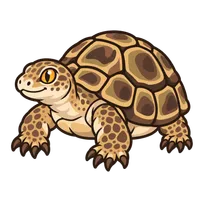
Russian tortoises are small, round, endlessly busy little grazers with real personality — they dig, they explore, and many learn to trot over to their keeper. They're one of the best first tortoises, but "beginner" doesn't mean low-effort: they want a lot of floor space (ideally an outdoor grazing pen), a high-fibre weed-and-green diet, strong UVB, and they can easily outlive you. Get those right and they're hardy, charming, and decades-long companions.
Worried, or still setting up? Free tools
Or browse common Russian Tortoise questions →
Care at a glance
| Adult size | 5–10 in (13–25 cm); males are smaller than females |
|---|---|
| Lifespan | ~50 years or more — a multi-decade, sometimes multi-generational commitment |
| Enclosure | Floor space matters far more than height. Indoor minimum for one is 7×3.5×2 ft (about 24.5 sq ft of floor) — a small terrarium or “tortoise table” alone is not enough. An outdoor, predator-proof grazing pen is ideal whenever the weather allows. Add ~10 sq ft per extra tortoise; they’re fine kept singly. |
| Basking / warm zone | Basking area 95°F (35°C) from an overhead halogen flood on a thermostat (avoid dimmers — they cut the beneficial infrared). |
| Cool side | Cool zone 75–85°F (24–29°C), giving a full gradient. |
| Night | Night 70–75°F (21–23°C); a natural drop is fine. |
| UVB & lighting | Strong UVB is essential for a diurnal grazer: a T5 HO bulb giving UVI 3.0–4.0 in the basking area (Ferguson Zone 3–4), plus a bright ~6500K LED for daylight. Run 14 hours in summer, 10 in winter to mirror the seasons. Replace the UVB bulb every 12 months. |
| Humidity | Ambient 40–75% — lower by day, higher at night — with a humid hide/burrow. Too-dry keeping is a main cause of a bumpy, “pyramided” shell, so don’t keep them bone-dry. |
| Substrate | A deep, burrowable substrate they can dig into (a topsoil/coco/sand mix) that holds a little moisture. They are avid diggers and burrowers. |
| Diet | A grazing HERBIVORE that needs a high-fibre, LOW-protein, LOW-sugar diet: mostly leafy greens, grasses, and edible “weeds” (dandelion, plantain, clover) plus flowers as treats. NOT the vegetables and fruit from the produce aisle — those are too high in protein and sugar. Fruit and the odd insect are rare treats at most. |
| Supplements | Provide a cuttlebone in the enclosure (calcium + it keeps the beak trimmed), and lightly dust food with calcium; a light multivitamin on a rotation. |
🦎 Did you know? — Russian Tortoise fun facts
Little true delights about the russian tortoise — each one checked against a named source, no pet-shop myths.
- Two Russian tortoises flew around the Moon and back on the Soviet Zond 5 mission in September 1968 — the first Earth creatures to travel to the Moon. Wikipedia
- Russian tortoises are champion diggers, excavating burrows up to about 2 metres deep to shelter from midday heat and cold nights. Wikipedia
- These tortoises can spend as much as nine months of the year dormant, sleeping away long stretches of harsh weather. Wikipedia
What it's like to live with a Russian Tortoise
A Russian tortoise is a long-haul companion — often a multi-decade one — with far more personality than people expect. They are grazers and diggers, happiest with floor space to roam, weeds to browse, and soil to burrow into. This is not a handling pet; a tortoise would rather be pottering than picked up, but a settled one is curious, food-motivated, and will trundle over to investigate you. The daily rhythm is calm and grounding: fresh greens in the morning, a good basking session, some digging and exploring, then a dig-down for the night.
Your first month together
The settling-in period, in order — so you know what's normal and when not to worry.
- Give it space and time to explore and settle — a new tortoise will dig, hide, and pace the edges as it maps its territory. Let it.
- Offer a wide variety of leafy weeds and greens daily; a settling tortoise may be cautious about food at first, then tuck in once it feels at home.
- Provide a warm basking spot and proper UVB from day one, and soak a new tortoise in shallow warm water a few times a week to keep it hydrated.
- Watch that it is eating, basking, and passing droppings within the first week or two — those are your core "settling in well" signs.
- Handle minimally and low to the ground; tortoises feel unsafe when lifted, and a dropped tortoise can be badly hurt.
Through the year, and as they grow
Russian tortoises have one of the strongest seasonal rhythms of any beginner reptile: many naturally brumate (hibernate) through winter, slowing right down and going off food. In a healthy, well-fed adult this can be normal and even beneficial — but brumation is only ever for a tortoise a vet has confirmed is healthy, and a sick or underweight tortoise must be kept warm and awake instead. Appetite and activity swing with the seasons, so expect a livelier, hungrier tortoise in the warmer months.
The pet store gets these wrong
Common myths, kindly corrected — no shame for having believed them.
- A tortoise is happy in a small terrarium or tortoise table — no; it needs a lot of floor space, ideally an outdoor pen.
- Feed it grocery lettuce, veg, and fruit — no; those are too rich. Feed weeds, greens, and grasses.
- Tortoises are easy, low-commitment starter pets — hardy, yes, but this is a ~50-year, space-hungry animal.
- Keep it bone-dry — no; too-dry keeping causes a pyramided shell. It needs moderate humidity and a humid hide.
- “Dog/cat food or high protein helps it grow” — dangerous; excess protein causes shell pyramiding and kidney/gout problems.
Before you buy
- Real floor space — 24.5 sq ft indoors minimum, ideally an outdoor grazing pen.
- A ~50-year commitment (make a plan for who inherits it).
- A weed-and-green grazing diet, not grocery veg/fruit; strong UVB; a cuttlebone.
- A decision about winter hibernation — and an exotics/reptile vet who sees tortoises.
💷 The russian tortoise itself is usually the cheapest part — see the real cost of keeping one (upfront + ongoing, no sales pitch).
See a reptile vet if…
We can't diagnose from afar — but these are the signs to stop watching and get a professional:
- A soft, lumpy, or badly “pyramided” shell, or a rubbery beak (signs pointing to metabolic bone disease / husbandry problems).
- A runny or bubbling nose, or open-mouth breathing (possible respiratory infection — common in tortoises).
- Not eating with straining, or a female restless and straining (possible impaction or egg-binding).
- An overgrown beak or nails, or swollen/puffy eyes.
- Lethargy or weight loss going into or coming out of hibernation — see a vet, don’t “sleep it off”.
Heading in? Print the free Russian Tortoise vet-prep sheet — what to bring, what to tell the vet, and the questions to ask.
Never
- Never feed dog/cat food or a high-protein diet — it causes shell pyramiding and kidney/gout disease.
- Never hibernate a sick, underweight, or unwell tortoise.
- Never keep it in a small terrarium or bare tortoise table as its only space.
- Never house two males together.
- Never let it get cold without proper hibernation prep and a vet check first.
Common russian tortoise questions
How hard are Russian Tortoises to keep — are they good for beginners?
Beginner–Intermediate. Hardy and dog-tame, and often called a good first tortoise — but the space it needs, the ~50-year commitment, the specific weed-and-green diet, and the winter-hibernation question make it more than a casual pet.
What do Russian Tortoises eat?
A grazing HERBIVORE that needs a high-fibre, LOW-protein, LOW-sugar diet: mostly leafy greens, grasses, and edible “weeds” (dandelion, plantain, clover) plus flowers as treats. NOT the vegetables and fruit from the produce aisle — those are too high in protein and sugar. Fruit and the odd insect are rare treats at most.
How big an enclosure do Russian Tortoises need?
Floor space matters far more than height. Indoor minimum for one is 7×3.5×2 ft (about 24.5 sq ft of floor) — a small terrarium or “tortoise table” alone is not enough. An outdoor, predator-proof grazing pen is ideal whenever the weather allows. Add ~10 sq ft per extra tortoise; they’re fine kept singly.
What basking temperature do Russian Tortoises need?
Basking area 95°F (35°C) from an overhead halogen flood on a thermostat (avoid dimmers — they cut the beneficial infrared).
What should the cool side be for Russian Tortoises?
Cool zone 75–85°F (24–29°C), giving a full gradient.
What night-time temperature do Russian Tortoises need?
Night 70–75°F (21–23°C); a natural drop is fine.
What UVB and lighting do Russian Tortoises need?
Strong UVB is essential for a diurnal grazer: a T5 HO bulb giving UVI 3.0–4.0 in the basking area (Ferguson Zone 3–4), plus a bright ~6500K LED for daylight. Run 14 hours in summer, 10 in winter to mirror the seasons. Replace the UVB bulb every 12 months.
What humidity do Russian Tortoises need?
Ambient 40–75% — lower by day, higher at night — with a humid hide/burrow. Too-dry keeping is a main cause of a bumpy, “pyramided” shell, so don’t keep them bone-dry.
What substrate do Russian Tortoises need?
A deep, burrowable substrate they can dig into (a topsoil/coco/sand mix) that holds a little moisture. They are avid diggers and burrowers.
What supplements do Russian Tortoises need?
Provide a cuttlebone in the enclosure (calcium + it keeps the beak trimmed), and lightly dust food with calcium; a light multivitamin on a rotation.
How big do Russian Tortoises get?
5–10 in (13–25 cm); males are smaller than females
How long do Russian Tortoises live?
~50 years or more — a multi-decade, sometimes multi-generational commitment
What are the signs Russian Tortoises are sick or need a vet?
See a reptile or exotics vet if you notice: A soft, lumpy, or badly “pyramided” shell, or a rubbery beak (signs pointing to metabolic bone disease / husbandry problems).; A runny or bubbling nose, or open-mouth breathing (possible respiratory infection — common in tortoises).; Not eating with straining, or a female restless and straining (possible impaction or egg-binding).; An overgrown beak or nails, or swollen/puffy eyes.; Lethargy or weight loss going into or coming out of hibernation — see a vet, don’t “sleep it off”..
Your first two weeks · Taming & handling · Behaviours explained · Won't eat? · Stuck shed · When to see a vet

Get the free Russian Tortoise Starter Kit
A one-page setup criteria checklist and a first-30-days plan for your first russian tortoise — what to get, what makes each thing matter, and the honest bits the pet shop skips. Join the den and we’ll send it over.
Free reptile care cheat-sheet the moment you join. No spam — unsubscribe anytime. See how we handle your data in our privacy notice.Sources & further reading
This guide was written and fact-checked against these authorities. It's kind, general guidance — not a diagnosis or a substitute for an exotics vet:
- ReptiFiles — Russian Tortoise Care Sheet — Indoor min 7×3.5×2 ft / 24.5 sq ft, basking 95°F / cool 75–85°F / night 70–75°F, UVI 3.0–4.0 + 6500K LED, humidity 40–75%, high-fibre herbivore diet (greens/weeds/grasses, no grocery veg/fruit), cuttlebone, 5–10 in, ~50 yr.
- Baines et al. (2016), “How much UVB does my reptile need? The UV-Tool” — Ferguson Zone 3–4 target UVI 3.0–4.0 for a diurnal open-habitat grazer.
- Association of Reptilian & Amphibian Veterinarians (ARAV) — Find-an-exotics-vet; MBD, respiratory infection, egg-binding.
- Merck Veterinary Manual — reptiles — Metabolic bone disease, shell pyramiding, respiratory infection, dystocia.
Written and fact-checked by The Baskden Team against veterinarian-authored sources — if your reptile shows a red-flag sign above, see an exotics vet promptly.