
Species · Monitor lizard
Savannah Monitor
Varanus exanthematicus
The stocky African monitor sold as a bargain beginner lizard — rewarding, but genuinely advanced and too often kept badly.
Difficulty: Advanced Printable care sheet →
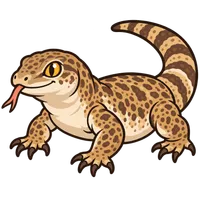
Savannah (or "Bosc") monitors are stocky, powerful, intelligent African lizards — a genuine small dinosaur. The tragedy is how they're sold: cheap, tiny, and marketed as an easy starter monitor, when the truth is the opposite. In the wild they range for miles eating insects; in captivity they're too often stuck in a glass tank, fed a bowl of dog food or rodents, and quietly killed by obesity and fatty-liver disease. Done right — a room-sized enclosure, a scorching basking zone, a deep bed of moist soil to burrow in, and a diet built on insects — they are hardy, fascinating, and can even tame down. Done wrong, they're heartbreak.
Worried, or still setting up? Free tools
Or browse common Savannah Monitor questions →
Care at a glance
| Adult size | 3–4 ft (90–120 cm) — a heavy, powerful, thick-bodied lizard |
|---|---|
| Lifespan | 10–15+ years with good care — but poor husbandry (obesity) commonly cuts it far shorter |
| Enclosure | Big: an absolute minimum of 8×4×4 ft (about 32 sq ft of floor) for one adult, and bigger is genuinely better — this is a roaming, active animal. A glass tank is not enough; most keepers build a custom enclosure. House ONE per enclosure. |
| Basking / warm zone | A large, intensely hot basking SURFACE of roughly 130–150°F (55–66°C) — the monitor hallmark — from a tight cluster of halogen floods, measured with a temp gun at the basking surface (not air temperature). It needs a broad hot zone big enough to warm its whole body. |
| Cool side | Cool side 75–85°F (24–29°C). A real cool retreat is essential — a monitor that can’t escape the heat can suffer heat stroke. |
| Night | Night no lower than about 72°F (22°C); a mild drop is fine, but add gentle background heat if the room is cold. |
| UVB & lighting | Strong UVB for a diurnal open-habitat basker: a T5 HO bulb (Arcadia Desert 12% or Zoo Med ReptiSun 10.0) giving UVI ~3.0–4.0 at basking height (Ferguson Zone 3), plus bright daylight LED. Replace the UVB bulb yearly. |
| Humidity | Moderate ambient humidity (40–60%) but — as with the ackie — the real key is a deep, MOIST burrow. The bottom of the substrate is kept damp so it holds high humidity down where the monitor digs and sleeps. Dry air over a humid burrow is how a savannah stays hydrated; kept bone-dry with no burrow, it dehydrates. |
| Substrate | DEEP and burrowable — at least 12 in for a juvenile and 18–24 in for an adult — of a soil/sand mix that packs and holds a tunnel, kept moist near the bottom. In the wild they dig long, complex burrows; a monitor that can’t burrow is a stressed, dehydrated monitor. |
| Diet | An insect-based CARNIVORE — not a rodent pet. Field studies of wild savannahs show a diet dominated by insects and other invertebrates, so base captive feeding on a large, varied supply of gut-loaded insects (dubia and other roaches, crickets, locusts, snails), with whole prey (the occasional egg, or a fuzzy) only as an occasional extra. OBESITY is the number-one killer: never free-feed rodents, dog food, or cat food. Growing animals eat a lot; adults eat far less — feed to a lean body condition, not to appetite. |
| Supplements | Dust insects with calcium; add a multivitamin on a rotation (about weekly). |
🦎 Did you know? — Savannah Monitor fun facts
Little true delights about the savannah monitor — each one checked against a named source, no pet-shop myths.
- Adult savannah monitors have blunt teeth and jaws built for leverage at the back — perfect for crushing the snail shells they love to eat. Animal Diversity Web
- To eat toxic millipedes safely, a savannah monitor rubs its chin on the prey for up to fifteen minutes first, apparently to make it discharge its noxious fluids. Animal Diversity Web
- A cornered savannah monitor hisses, thrashes its tail and rears to strike — and if all that fails, some have been known to play dead. Animal Diversity Web
What it's like to live with a Savannah Monitor
A well-kept savannah monitor is a genuinely impressive animal — big, strong, curious, and intelligent, forever digging, foraging, and investigating its space. With patient, consistent work many tame down and learn to hand-feed and tolerate handling, though a stressed wild-caught import can start out defensive. The honest picture, though, is that this is a lot of animal: a room-sized enclosure, a fierce basking zone, a deep bed of soil, and a constant supply of insects — plus the discipline NOT to overfeed. For the right keeper it is one of the most rewarding lizards there is; for an unprepared one it is the reptile most likely to end up obese, sick, or surrendered.
Your first month together
The settling-in period, in order — so you know what's normal and when not to worry.
- Assume wild-caught: quarantine a new savannah, and get a vet fecal check — imports commonly carry heavy parasite loads and arrive stressed and dehydrated.
- Set up a deep bed of moist, burrowable substrate before it arrives — a monitor with somewhere to dig and tunnel settles far faster.
- Verify that basking surface is genuinely hot with a temp gun, and that there is a real cool retreat — monitors thermoregulate hard.
- Feed insects to body condition from day one; savannahs are enthusiastic eaters and obesity is the classic, deadly mistake.
- Build trust slowly with hand-feeding rather than grabbing — a wild-caught monitor needs weeks to decompress.
Through the year, and as they grow
Wild savannah monitors live a boom-and-bust year: they feast on insects through the wet season and then fast and shelter through the long dry season. That matters in captivity because it is a reminder NOT to feed an adult heavily year-round — appetite and activity naturally swing with warmth, and a lean, seasonally-varied feeding pattern is far healthier than a constant full bowl. Growing juveniles, by contrast, do eat a great deal.
The pet store gets these wrong
Common myths, kindly corrected — no shame for having believed them.
- It’s a cheap, easy beginner monitor — false; it’s sold cheaply but is genuinely advanced and among the most mismanaged reptiles.
- Feed it rodents, dog food, or cat food — no; that drives obesity and fatty-liver disease. It’s an insect-based carnivore.
- A 4×2×2 ft tank is fine — false; an adult needs at least an 8×4×4 ft enclosure.
- Keep it dry like a desert lizard — dry-ish AIR, yes, but it must have a deep, moist burrow to dig into.
- It’ll stay small and manageable — no; it becomes a 3–4 ft, powerful, strong-jawed animal.
Before you buy
- Room for an 8×4×4 ft (or larger) enclosure that holds BOTH a scorching basking zone and a proper cool retreat.
- A foot-plus of moist, burrowable substrate — this is not optional for a savannah.
- A big, ongoing feeder-insect supply, and the discipline to feed to condition and avoid the obesity trap.
- Acceptance that most are wild-caught: budget for quarantine, a vet fecal, and a settling-in period.
- An exotics/reptile vet who treats large lizards, and honesty that this is an advanced animal.
💷 The savannah monitor itself is usually the cheapest part — see the real cost of keeping one (upfront + ongoing, no sales pitch).
See a reptile vet if…
We can't diagnose from afar — but these are the signs to stop watching and get a professional:
- Obvious obesity — a bloated body, fat pads at the base of the tail and limbs, spread scales, no waist (the No. 1 savannah problem, and a gateway to fatty-liver and organ disease).
- Lethargy, swollen gritty joints, or going off food (possible gout / organ disease, often from a fatty, rodent-heavy diet).
- Weak or bent limbs, tremors, or a rubbery jaw (signs pointing to metabolic bone disease).
- Open-mouth breathing, wheezing, or mucus, especially in a chilled or damp animal (possible respiratory infection).
- Poor weight, abnormal or worm-visible droppings in a new import (parasites), or any tissue protruding from the vent (prolapse).
Heading in? Print the free Savannah Monitor vet-prep sheet — what to bring, what to tell the vet, and the questions to ask.
Never
- Never base the diet on rodents, dog food, or cat food — obesity and fatty-liver disease follow; feed insects, to body condition.
- Never keep it on shallow substrate — no burrow means dehydration and chronic stress.
- Never keep it in a too-small glass tank — it needs a room-sized enclosure.
- Never run it without a genuine cool retreat — heat stroke can kill even at a correct basking temperature.
- Never house two savannah monitors together.
Common savannah monitor questions
How hard are Savannah Monitors to keep — are they good for beginners?
Advanced. Sold cheaply as an "easy beginner monitor" — and it is one of the most mismanaged reptiles in the hobby. Most are wild-caught, they grow to 3–4 ft, and they are chronically kept too small, too cool, and far too fat. A genuinely advanced carnivore that needs serious space, extreme heat, a deep moist burrow, and an insect-based diet — rewarding for a committed keeper, wrong for a first reptile.
What do Savannah Monitors eat?
An insect-based CARNIVORE — not a rodent pet. Field studies of wild savannahs show a diet dominated by insects and other invertebrates, so base captive feeding on a large, varied supply of gut-loaded insects (dubia and other roaches, crickets, locusts, snails), with whole prey (the occasional egg, or a fuzzy) only as an occasional extra. OBESITY is the number-one killer: never free-feed rodents, dog food, or cat food. Growing animals eat a lot; adults eat far less — feed to a lean body condition, not to appetite.
How big an enclosure do Savannah Monitors need?
Big: an absolute minimum of 8×4×4 ft (about 32 sq ft of floor) for one adult, and bigger is genuinely better — this is a roaming, active animal. A glass tank is not enough; most keepers build a custom enclosure. House ONE per enclosure.
What basking temperature do Savannah Monitors need?
A large, intensely hot basking SURFACE of roughly 130–150°F (55–66°C) — the monitor hallmark — from a tight cluster of halogen floods, measured with a temp gun at the basking surface (not air temperature). It needs a broad hot zone big enough to warm its whole body.
What should the cool side be for Savannah Monitors?
Cool side 75–85°F (24–29°C). A real cool retreat is essential — a monitor that can’t escape the heat can suffer heat stroke.
What night-time temperature do Savannah Monitors need?
Night no lower than about 72°F (22°C); a mild drop is fine, but add gentle background heat if the room is cold.
What UVB and lighting do Savannah Monitors need?
Strong UVB for a diurnal open-habitat basker: a T5 HO bulb (Arcadia Desert 12% or Zoo Med ReptiSun 10.0) giving UVI ~3.0–4.0 at basking height (Ferguson Zone 3), plus bright daylight LED. Replace the UVB bulb yearly.
What humidity do Savannah Monitors need?
Moderate ambient humidity (40–60%) but — as with the ackie — the real key is a deep, MOIST burrow. The bottom of the substrate is kept damp so it holds high humidity down where the monitor digs and sleeps. Dry air over a humid burrow is how a savannah stays hydrated; kept bone-dry with no burrow, it dehydrates.
What substrate do Savannah Monitors need?
DEEP and burrowable — at least 12 in for a juvenile and 18–24 in for an adult — of a soil/sand mix that packs and holds a tunnel, kept moist near the bottom. In the wild they dig long, complex burrows; a monitor that can’t burrow is a stressed, dehydrated monitor.
What supplements do Savannah Monitors need?
Dust insects with calcium; add a multivitamin on a rotation (about weekly).
How big do Savannah Monitors get?
3–4 ft (90–120 cm) — a heavy, powerful, thick-bodied lizard
How long do Savannah Monitors live?
10–15+ years with good care — but poor husbandry (obesity) commonly cuts it far shorter
What are the signs Savannah Monitors are sick or need a vet?
See a reptile or exotics vet if you notice: Obvious obesity — a bloated body, fat pads at the base of the tail and limbs, spread scales, no waist (the No. 1 savannah problem, and a gateway to fatty-liver and organ disease).; Lethargy, swollen gritty joints, or going off food (possible gout / organ disease, often from a fatty, rodent-heavy diet).; Weak or bent limbs, tremors, or a rubbery jaw (signs pointing to metabolic bone disease).; Open-mouth breathing, wheezing, or mucus, especially in a chilled or damp animal (possible respiratory infection).; Poor weight, abnormal or worm-visible droppings in a new import (parasites), or any tissue protruding from the vent (prolapse)..
Your first two weeks · Taming & handling · Behaviours explained · Won't eat? · Stuck shed · When to see a vet

Get the free Savannah Monitor Starter Kit
A one-page setup criteria checklist and a first-30-days plan for your first savannah monitor — what to get, what makes each thing matter, and the honest bits the pet shop skips. Join the den and we’ll send it over.
Free reptile care cheat-sheet the moment you join. No spam — unsubscribe anytime. See how we handle your data in our privacy notice.Sources & further reading
This guide was written and fact-checked against these authorities. It's kind, general guidance — not a diagnosis or a substitute for an exotics vet:
- Reptile Supply — How to Care for Your Savannah Monitor — Min 8×4×4 ft, basking surface 140–150°F, cool 75–85°F, UVB Arcadia Desert 12% / ReptiSun 10.0, ambient ~50%, substrate ≥12″ deep, insectivore/obesity-prone (adults fast part of the year).
- The Tye-Dyed Iguana — Savannah Monitor Care Sheet — Adult 3–4 ft, 10–15 yr; enclosure ~8×4×3 ft, basking ~120°F, cool ~75°F, humidity ~60%, substrate 1–2 ft peat/coco (holds a burrow), insect-based diet, calcium daily + multivitamin weekly, limit fatty foods.
- Bennett, D. — wild savannah monitor field studies (Mampam Conservation) — Wild diet dominated by insects and invertebrates (not rodents), with strong wet-season feeding / dry-season fasting — the basis for the insect-based, feed-to-condition welfare standard.
- Baines et al. (2016), “How much UVB does my reptile need? The UV-Tool” — Ferguson Zone 3 target UVI ~3.0–4.0 for a diurnal open-habitat basking monitor.
- Association of Reptilian & Amphibian Veterinarians (ARAV) — Find-an-exotics-vet; obesity, gout / hepatic lipidosis, MBD, respiratory infection, parasites.
- Merck Veterinary Manual — reptiles — Obesity, hepatic lipidosis, gout, metabolic bone disease, respiratory infection, endoparasites.
Written and fact-checked by The Baskden Team against veterinarian-authored sources — if your reptile shows a red-flag sign above, see an exotics vet promptly.