
Species · Omnivorous skink
Schneider's Skink
Eumeces schneiderii
A stout, golden desert skink — hardy, active and one of the more handleable smaller skinks.
Difficulty: Beginner–Intermediate Printable care sheet →
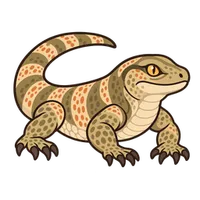
The Schneider's skink is one of the most underrated lizards in the hobby: a shiny, muscular, golden-brown ground skink with orange-flecked flanks, a bulldozer's love of digging, and a surprisingly bold, curious personality. They come from the hot, dry, rocky country stretching from North Africa across the Middle East into Central Asia, so they want warmth, sun, and sand to burrow through. Give a Schneider's skink a big footprint, a deep bed to tunnel in, and a proper basking lamp, and you'll have a chunky, hand-tame companion that can share your life for 15 to 20 years.
Worried, or still setting up? Free tools
Or browse common Schneider's Skink questions →
Care at a glance
| Adult size | Typically 12–18 inches (30–46 cm) total length as adults, occasionally larger; roughly half of that is tail. Wikipedia gives a wild snout-to-vent length around 6.5 in (16.5 cm) plus an 8 in (20 cm) tail. They're heavy-bodied and muscular for their length. |
|---|---|
| Lifespan | 15–20 years with good care; many sources cite 15+ years and some individuals live longer. This is a long-term commitment, not a short-lived starter pet. |
| Enclosure | Aim for a horizontal, floor-space-first enclosure. 36"L x 18"W x 18"H (a "3x2") is the practical minimum for a small adult under about 14 inches; a full-grown adult does much better in 48"L x 24"W x 24"H (a "4x2x2," ~120 gallon). Bigger is always better — these are active, ground-cruising diggers. Floor area matters far more than height. |
| Basking / warm zone | Modern best practice is a basking surface of 105–115°F (41–46°C), measured with an infrared temp gun on the actual basking rock or sand under the lamp — not a stick-on dial. (Older care sheets list 95–100°F; the higher modern range better matches this hot, sun-loving desert species. Provide the gradient and let the skink choose.) |
| Cool side | 75–85°F (24–29°C) on the cool end, giving a true thermal gradient across the enclosure so the skink can self-regulate. |
| Night | A natural night drop is fine and healthy; temperatures should not fall below about 65°F (18°C). No nighttime light is needed — use a non-light heat source (like a thermostat-controlled ceramic emitter) only if your room gets colder than that. |
| UVB & lighting | Yes — provide UVB. Despite old claims that skinks "don't need it," this is a diurnal, sun-basking desert species and does best with UVB plus dietary D3. Use a linear T5 HO tube run along part of the enclosure: for a 16–18" tall enclosure, an Arcadia Forest 6% or Zoo Med ReptiSun 5.0 mounted about 7–9" above the basking surface; for a taller ~24" enclosure, an Arcadia Desert 12% or Zoo Med ReptiSun 10.0 about 13–15" above the basking spot (further if there's no mesh in between). Target a basking-zone UVI around 3–4. Replace T5 tubes about every 12 months. |
| Humidity | Low — keep the ambient average under about 50%, measured with a digital probe hygrometer; many keepers run it lower (30–40%). This is a dry-country species and chronic damp invites skin and respiratory problems. Offer a humid hide or lightly moisten the deeper substrate layer to help with shedding rather than misting the whole enclosure. |
| Substrate | A deep, diggable, sandy substrate at least 4 inches (10 cm) deep so the skink can burrow and tunnel — this is essential natural behavior, not optional decoration. A washed play-sand / topsoil blend or a reptile desert sand (e.g., ZooMed ReptiSand, Exo Terra Desert Sand) works well; deeper is better. Avoid loose calci-sand and keep the bed on the dry side. Spot-clean regularly and refresh fully every few months. |
| Diet | Omnivore that leans insectivore — think roughly an 80/20 insect-to-plant split. Staple feeders: dubia/discoid roaches, crickets, black soldier fly larvae, plus occasional mealworms, superworms, hornworms, and silkworms. Add a modest share of leafy greens (collard, mustard, turnip, dandelion) and small amounts of fruit/veg. Juveniles eat daily; adults eat 2–3 times a week, offering what they'll finish in about 5–10 minutes. Gut-load feeders well. |
| Supplements | Dust feeders with a quality calcium/vitamin supplement. A simple reliable routine is an all-in-one like Repashy Calcium Plus LoD lightly dusted on feeders, or plain calcium (with D3) on most feedings plus a reptile multivitamin about once a week. Because they get UVB, use lower-D3 products and don't over-supplement. |
What it's like to live with a Schneider's Skink
Best kept singly, especially for beginners. If you want to try a pair or a small group, only a much larger enclosure will do (a 4x2x2 can hold up to about three skinks) and you should never house two males together — they'll fight. Watch closely for bullying, hiding, or one skink getting all the food, and be ready to separate. Do not mix with other species.
Your first month together
The settling-in period, in order — so you know what's normal and when not to worry.
- Set up and stabilize the enclosure BEFORE bringing the skink home: confirm the basking surface hits ~105-115°F and the cool end sits at 75-85°F over several days with a temp gun.
- Give at least 4 inches of dry, diggable sand substrate and multiple hides (warm hide, cool hide, and a slightly humid hide for shedding).
- Let the new skink settle for the first week or so with minimal handling — just quiet feeding and water changes — so it learns the enclosure is safe.
- Offer appropriately sized, gut-loaded, calcium-dusted insects; a hungry, alert skink that's burrowing and basking is a good sign.
- Provide a shallow, sturdy water dish and keep humidity low; wipe up spills so the sand bed stays dry.
- Start short, calm handling sessions after it's eating reliably — support the whole body and never grab or dangle it by the tail (it can drop its tail).
- Log basking temp, UVI, feeding, and sheds so you spot problems early.
Through the year, and as they grow
In the wild they experience hot summers and cooler winters, so a mild seasonal shift is natural: many keepers lengthen the photoperiod toward ~14 hours in summer and shorten it to ~10 hours in winter, with a modest cool-down. A gentle winter slowdown (reduced appetite, more burrowing) can be normal — but never let temperatures crash, and don't attempt a true brumation without research and, ideally, guidance from an exotics vet.
The pet store gets these wrong
Common myths, kindly corrected — no shame for having believed them.
- "Skinks don't need UVB." Outdated. As a diurnal desert basker, a Schneider's skink does best with proper UVB plus dietary D3 — it supports calcium metabolism and helps prevent metabolic bone disease.
- "A 20-gallon or 30x12x12 tank is fine." That's a cramped, outdated minimum. These are active, ground-dwelling diggers; a 3x2 footprint is the practical floor and a 4x2x2 is far better for an adult.
- "They just need a hot tank." They need a GRADIENT — a hot basking surface AND a genuine cool end — so they can thermoregulate. A uniformly hot box is stressful and dangerous.
- "Sand is dangerous / they need a bare floor." Wrong for this species. A deep, dry, diggable sand bed is essential enrichment; the real risks are calci-sand, feeding on loose substrate carelessly, and keeping it damp.
- "Berber skink and Schneider's skink are different animals." "Berber skink" is a common name for E. schneiderii — though the hobby sometimes muddles it with the larger Algerian/Berber skink E. algeriensis, so check the scientific name when buying.
Before you buy
- Space and a long commitment: plan for a 3x2 to 4x2x2 enclosure and 15-20 years of care.
- You'll need a hot basking lamp on a dimming thermostat, a linear T5 HO UVB tube, an infrared temp gun, and a digital probe hygrometer — not cheap stick-on gauges.
- Several inches of dry, diggable sand substrate and multiple hides are non-negotiable for a digger.
- A steady supply of gut-loaded insects (roaches/crickets/BSFL) plus some greens, and calcium/vitamin supplements.
- Locate an exotics/reptile vet before you need one — not every clinic sees lizards.
- Check the scientific name (Eumeces schneiderii) at purchase so you don't accidentally buy a different, larger "Berber" species.
💷 The schneider's skink itself is usually the cheapest part — see the real cost of keeping one (upfront + ongoing, no sales pitch).
See a reptile vet if…
We can't diagnose from afar — but these are the signs to stop watching and get a professional:
- Soft jaw or limbs, tremors, swollen or bowed legs, or repeated unexplained fractures — possible metabolic bone disease; see an exotics vet and review UVB and calcium.
- Not eating for an extended period, obvious weight loss, or a suddenly sunken/thin body — get it checked, especially if temps and setup look right.
- Open-mouth breathing, wheezing, bubbling, or mucus around the nose/mouth — possible respiratory infection (often from too-cool or too-damp conditions).
- Retained shed, especially rings of stuck skin on toes or the tail tip that can cut off circulation — needs help and a humidity review.
- Runny, bloody, or persistently abnormal droppings, or visible parasites — collect a fresh fecal sample for the vet.
- Lethargy, lopsided posture, dragging a limb, or any wound, burn, or swelling that doesn't improve.
- Straining, or a female that seems gravid but can't pass eggs (egg-binding) — this is an urgent exotics-vet visit.
Heading in? Print the free Schneider's Skink vet-prep sheet — what to bring, what to tell the vet, and the questions to ask.
Never
- Never house two males together, or crowd skinks into a too-small enclosure — expect fighting and injuries.
- Never skip the thermal gradient or run the whole enclosure hot; always give a real cool end.
- Never grab, restrain, or lift the skink by its tail — it can autotomize (drop) the tail.
- Never keep the substrate wet or run high humidity for this dry-country species.
- Never rely on a coiled/compact UVB bulb placed too far away, and don't let UVB pass through glass or fine mesh that blocks it; replace tubes on schedule.
- Never use calci-sand, and never feed exclusively on loose sand in a way that risks impaction — use a dish or feeding station for messy items.
- Never place the enclosure in a window for 'UVB' — glass blocks UVB and can cook the animal via greenhouse heating.
Common schneider's skink questions
How hard are Schneider's Skinks to keep — are they good for beginners?
Beginner–Intermediate. A hardy, forgiving desert skink that tolerates handling well, so it's a genuinely good "first big lizard." The catch is that it needs real space, a deep sand bed to burrow in, a hot basking spot, and UVB done properly — get those four things right and the rest is easy.
What do Schneider's Skinks eat?
Omnivore that leans insectivore — think roughly an 80/20 insect-to-plant split. Staple feeders: dubia/discoid roaches, crickets, black soldier fly larvae, plus occasional mealworms, superworms, hornworms, and silkworms. Add a modest share of leafy greens (collard, mustard, turnip, dandelion) and small amounts of fruit/veg. Juveniles eat daily; adults eat 2–3 times a week, offering what they'll finish in about 5–10 minutes. Gut-load feeders well.
How big an enclosure do Schneider's Skinks need?
Aim for a horizontal, floor-space-first enclosure. 36"L x 18"W x 18"H (a "3x2") is the practical minimum for a small adult under about 14 inches; a full-grown adult does much better in 48"L x 24"W x 24"H (a "4x2x2," ~120 gallon). Bigger is always better — these are active, ground-cruising diggers. Floor area matters far more than height.
What basking temperature do Schneider's Skinks need?
Modern best practice is a basking surface of 105–115°F (41–46°C), measured with an infrared temp gun on the actual basking rock or sand under the lamp — not a stick-on dial. (Older care sheets list 95–100°F; the higher modern range better matches this hot, sun-loving desert species. Provide the gradient and let the skink choose.)
What should the cool side be for Schneider's Skinks?
75–85°F (24–29°C) on the cool end, giving a true thermal gradient across the enclosure so the skink can self-regulate.
What night-time temperature do Schneider's Skinks need?
A natural night drop is fine and healthy; temperatures should not fall below about 65°F (18°C). No nighttime light is needed — use a non-light heat source (like a thermostat-controlled ceramic emitter) only if your room gets colder than that.
What UVB and lighting do Schneider's Skinks need?
Yes — provide UVB. Despite old claims that skinks "don't need it," this is a diurnal, sun-basking desert species and does best with UVB plus dietary D3. Use a linear T5 HO tube run along part of the enclosure: for a 16–18" tall enclosure, an Arcadia Forest 6% or Zoo Med ReptiSun 5.0 mounted about 7–9" above the basking surface; for a taller ~24" enclosure, an Arcadia Desert 12% or Zoo Med ReptiSun 10.0 about 13–15" above the basking spot (further if there's no mesh in between). Target a basking-zone UVI around 3–4. Replace T5 tubes about every 12 months.
What humidity do Schneider's Skinks need?
Low — keep the ambient average under about 50%, measured with a digital probe hygrometer; many keepers run it lower (30–40%). This is a dry-country species and chronic damp invites skin and respiratory problems. Offer a humid hide or lightly moisten the deeper substrate layer to help with shedding rather than misting the whole enclosure.
What substrate do Schneider's Skinks need?
A deep, diggable, sandy substrate at least 4 inches (10 cm) deep so the skink can burrow and tunnel — this is essential natural behavior, not optional decoration. A washed play-sand / topsoil blend or a reptile desert sand (e.g., ZooMed ReptiSand, Exo Terra Desert Sand) works well; deeper is better. Avoid loose calci-sand and keep the bed on the dry side. Spot-clean regularly and refresh fully every few months.
What supplements do Schneider's Skinks need?
Dust feeders with a quality calcium/vitamin supplement. A simple reliable routine is an all-in-one like Repashy Calcium Plus LoD lightly dusted on feeders, or plain calcium (with D3) on most feedings plus a reptile multivitamin about once a week. Because they get UVB, use lower-D3 products and don't over-supplement.
How big do Schneider's Skinks get?
Typically 12–18 inches (30–46 cm) total length as adults, occasionally larger; roughly half of that is tail. Wikipedia gives a wild snout-to-vent length around 6.5 in (16.5 cm) plus an 8 in (20 cm) tail. They're heavy-bodied and muscular for their length.
How long do Schneider's Skinks live?
15–20 years with good care; many sources cite 15+ years and some individuals live longer. This is a long-term commitment, not a short-lived starter pet.
What are the signs Schneider's Skinks are sick or need a vet?
See a reptile or exotics vet if you notice: Soft jaw or limbs, tremors, swollen or bowed legs, or repeated unexplained fractures — possible metabolic bone disease; see an exotics vet and review UVB and calcium.; Not eating for an extended period, obvious weight loss, or a suddenly sunken/thin body — get it checked, especially if temps and setup look right.; Open-mouth breathing, wheezing, bubbling, or mucus around the nose/mouth — possible respiratory infection (often from too-cool or too-damp conditions).; Retained shed, especially rings of stuck skin on toes or the tail tip that can cut off circulation — needs help and a humidity review.; Runny, bloody, or persistently abnormal droppings, or visible parasites — collect a fresh fecal sample for the vet.; Lethargy, lopsided posture, dragging a limb, or any wound, burn, or swelling that doesn't improve.; Straining, or a female that seems gravid but can't pass eggs (egg-binding) — this is an urgent exotics-vet visit..
Your first two weeks · Taming & handling · Behaviours explained · Won't eat? · Stuck shed · When to see a vet

Get the free Schneider's Skink Starter Kit
A one-page setup criteria checklist and a first-30-days plan for your first schneider's skink — what to get, what makes each thing matter, and the honest bits the pet shop skips. Join the den and we’ll send it over.
Free reptile care cheat-sheet the moment you join. No spam — unsubscribe anytime. See how we handle your data in our privacy notice.Sources & further reading
This guide was written and fact-checked against these authorities. It's kind, general guidance — not a diagnosis or a substitute for an exotics vet:
- Reptile Supply — How to Care for Your Schneider's Skink — Modern keeper care sheet: size 12-18", 15+ yr lifespan, 36x18x16 min to 48x24x24, basking 105-115°F, cool 75-85°F, night not below 65°F, T5 HO UVB bulb/height specs, humidity under 50%, 4"+ sand, feeding schedule, Repashy Calcium Plus LoD.
- Dubia.com — Schneider's Skink Care Sheet — Corroborates size, lifespan 15+, 36x18x18 to 4x2x2 (120 gal, up to 3 skinks), basking 105-115°F, cool 75-85°F, night as low as 65°F, T5 HO 12% UVB w/ mesh distances, humidity <50%, 4"+ desert sand, feeder list & supplement.
- The Vet Desk / PangoVet — Schneider's Skink Complete Care Guide — Family Scincidae, Eumeces schneiderii, 12-16", lifespan 15-20 yr, cool end/warm side gradient, UVB required, low humidity, 2-3" burrowing substrate, 80/20 omnivore diet; author is a zoologist (not vet-reviewed). Note: lists older 95-100°F basking / 30x12x12 minimum.
- Wikipedia — Schneider's skink (Eumeces schneiderii) — Taxonomy: Eumeces schneiderii (Daudin, 1802), family Scincidae, synonym Novoeumeces; common names Schneider's/Berber skink; native range across N. Africa, Middle East, Central Asia; habitat rocky/grassland/shrubland 150-1,800 m; SVL ~6.5" + ~8" tail.
Written and fact-checked by The Baskden Team against veterinarian-authored sources — if your reptile shows a red-flag sign above, see an exotics vet promptly.