
Species · Tropical arboreal gecko
Tokay Gecko
Gekko gecko
A big, brilliant-blue arboreal gecko with a legendary bite — stunning to watch, not a hold-me pet.
Difficulty: Intermediate Printable care sheet →
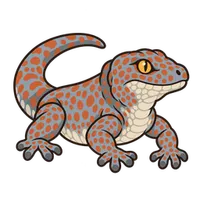
The tokay is the loudmouth of the gecko world: a big, gorgeous, blue-grey-and-orange-spotted lizard that barks its own name ("to-KAY!") in the middle of the night and means every word of it. These are stunning display animals with real attitude. Give one a tall, humid, planted enclosure and let it be the beautiful, opinionated jungle dweller it is, and it will thrive for well over a decade.
Worried, or still setting up? Free tools
Or browse common Tokay Gecko questions →
Care at a glance
| Adult size | Typically 10-12 in / 25-30 cm, with large males reaching up to 16 in / 40 cm. Tokays are one of the largest true geckos and are noticeably heavy-bodied. |
|---|---|
| Lifespan | Commonly 10+ years in captivity, and well-kept tokays can live 15-20 years. Buy captive-bred if you can and treat this as a long commitment. |
| Enclosure | Minimum for one adult is a tall 24 × 24 × 48 in (60 × 60 × 120 cm) per modern authority guidance (ReptiFiles, The Bio Dude); bigger is better. These are arboreal, so height and vertical climbing space matter more than floor space. One tokay per enclosure, always. |
| Basking / warm zone | A warm basking spot of 90-100°F (32-38°C) measured with a digital probe on the basking surface. (Some sources cite up to 105°F; keep the true basking surface in the low-to-mid range and always offer a gradient.) |
| Cool side | 80-85°F (26-29°C) on the cool end, giving the gecko a real thermal gradient to move through. |
| Night | A natural nighttime drop to about 75-80°F (24-26°C) is fine; do not let it fall below ~75°F (24°C). Use a non-light heat source (like a ceramic heat emitter) if the room gets cold, so you don't disrupt the day/night cycle. |
| UVB & lighting | Yes, provide low-level UVB. Tokays are nocturnal so they can technically survive on dietary D3 alone, but modern keepers get healthier animals with UVB. Aim for a Ferguson Zone 1 basking UVI of about 1.0-2.0 using a T5 or T8 tube such as a Zoo Med ReptiSun 5.0 or an Arcadia ShadeDweller, mounted so the basking branch sits roughly 6-10 in below the lamp (measure with a Solarmeter to be sure). Replace UVB bulbs every 12 months. |
| Humidity | High: aim for roughly 60-80% average, measured with a digital probe hygrometer, allowing it to cycle down between mistings rather than sitting soggy. Mist 1-2x daily. Ventilation matters just as much as moisture; a stagnant, waterlogged tank causes skin and respiratory infections. |
| Substrate | A moisture-holding tropical substrate at least 2 in (5 cm) deep: coconut fiber (Zoo Med Eco Earth), a soil mix like ReptiSoil or Exo Terra Plantation Soil, or a bioactive soil blend. Loose substrate holds humidity and supports live plants; a planted/bioactive setup with cleanup crew is ideal. If using loose soil non-bioactively, spot-clean constantly and replace it every few months. |
| Diet | Insectivore. Feed a rotation of appropriately sized feeders: crickets, dubia and discoid roaches, red runner roaches, locusts/grasshoppers, hornworms, and silkworms. Prey should be no larger than the space between the gecko's eyes (roughly its head). Juveniles daily, adults every other day, offering what the gecko eats in about 5 minutes. An occasional pinky mouse or crested-gecko diet can be given roughly 2x/month as a treat, not a staple. |
| Supplements | Dust feeders and gut-load. A common approach is an all-in-one like Repashy Calcium Plus LoD dusted on feeders at each meal. If using plain supplements instead: calcium with D3 (more often for growing juveniles than adults, e.g. daily for juveniles vs. 2-3x/week for adults) plus a reptile multivitamin about 1-2x weekly. Gut-load insects for 2-3 days before feeding. |
What it's like to live with a Tokay Gecko
Solo only. Tokays are strongly territorial and will fight, sometimes fatally, if housed together. Do not cohabit them, and do not house them with other species. Even breeding pairs are managed carefully and separated outside of controlled introductions.
Your first month together
The settling-in period, in order — so you know what's normal and when not to worry.
- Set up and stabilize the tall, humid enclosure BEFORE the gecko arrives, and confirm your gradient with a digital probe thermometer/hygrometer for several days.
- Expect a defensive, gaping, barking animal at first. This is normal. Resist handling; let it settle for at least the first week or two.
- Offer food in the evening (they are nocturnal) and don't panic if a new, stressed tokay skips a meal or two while acclimating.
- Buy captive-bred if at all possible. Wild-caught tokays are heavily imported, often loaded with parasites, dehydrated, and extremely stressed, so a fecal check with an exotics vet is smart for any new import.
- Mist to trigger drinking and watch that it's hydrated (plump tail, clear eyes, sheds coming off cleanly).
Through the year, and as they grow
In winter, indoor heating can crash humidity, so watch your hygrometer and increase misting as needed while keeping ventilation up. A modest natural seasonal dip in nighttime temperature and daylight is fine and can be normal, but never let the cage go below ~75°F (24°C) at night; add a thermostatically controlled non-light heat source if your home cools off.
The pet store gets these wrong
Common myths, kindly corrected — no shame for having believed them.
- "They're nocturnal, so they don't need UVB." They can survive on dietary D3, but low-level UVB produces healthier animals and is now considered best practice, not optional-because-nocturnal.
- "Tokays are cheap, so they're a great starter lizard." Cheap price tag, but the classic bold-and-bitey temperament makes them a poor first lizard if you want to handle it. Care difficulty is really about attitude, not equipment.
- "A tokay will tame down if I just handle it enough." Some individuals mellow with slow trust-building, but many never become handleable. Buy one to admire, not to cuddle.
- "A 10-gallon or small tank is fine." Tokays are large and arboreal; they need vertical space and climbing structure, so a tall enclosure (min 18x18x36 in, better 24x24x48 in) is the real standard.
- "They need the tank soaking wet all the time." They want high humidity AND good airflow. A constantly waterlogged, stagnant tank causes skin and respiratory infections; let humidity cycle between mistings.
Before you buy
- This is a display animal with a serious bite. If you want a lizard to hold, this is not it.
- It is loud. Tokays vocalize (that famous barking) at night, which can be a real issue in a bedroom or shared space.
- It needs a tall, humid, well-ventilated planted enclosure plus proper heating and low-level UVB, not a small dry tank.
- Strongly prefer captive-bred over wild-caught to avoid a stressed, parasite-laden import and an exotics-vet parasite bill on day one.
- This is a 10-20 year commitment to a fast, strong, opinionated animal.
💷 The tokay gecko itself is usually the cheapest part — see the real cost of keeping one (upfront + ongoing, no sales pitch).
See a reptile vet if…
We can't diagnose from afar — but these are the signs to stop watching and get a professional:
- Refusing food for an extended period alongside weight loss or a thinning tail (dehydration/parasites/illness) warrants an exotics vet visit.
- Stuck shed, especially around the toes or tail tip, that could cut off circulation.
- Soft, rubbery, or bent jaw/limbs, tremors, or twitching, which can signal metabolic bone disease from calcium/D3/UVB problems.
- Open-mouth breathing, wheezing, clicking, or bubbles/mucus around the nose or mouth, which can indicate a respiratory infection (often from too-cold or too-stagnant-wet conditions).
- Any new wild-caught or freshly imported tokay: get a fecal exam, as heavy parasite loads are common.
- Lethargy, sunken eyes, or a persistently gaping/limp animal that is unlike its normal bold self.
Heading in? Print the free Tokay Gecko vet-prep sheet — what to bring, what to tell the vet, and the questions to ask.
Never
- Never house two tokays (or a tokay with another species) together; they are territorial and will fight, sometimes to the death.
- Never grab or restrain a tokay expecting a calm response; the bite is powerful and they latch on.
- Never rely on a bare, dry, floor-space-only tank; skipping vertical climbing space and humidity is a welfare fail for an arboreal tropical gecko.
- Never let night temps drop below ~75°F (24°C) or run without a proper warm-side gradient.
- Never use unregulated heat sources; always run heaters on a thermostat.
- Never assume it needs no UVB or no supplements just because it's nocturnal; skip both and you risk metabolic bone disease.
- Never leave a heat lamp as the only nighttime heat if the room is cold; use a non-light heat source so you don't wreck the day/night cycle.
Common tokay gecko questions
How hard are Tokay Geckos to keep — are they good for beginners?
Intermediate. The husbandry itself (tall tropical setup, insects, high humidity) is very doable. What bumps this to Intermediate is temperament: tokays are famously bold, fast, and will bite hard. They are a look-don't-touch display animal, not a beginner's "hold me" pet. Skip this one if you specifically want a lizard to handle.
What do Tokay Geckos eat?
Insectivore. Feed a rotation of appropriately sized feeders: crickets, dubia and discoid roaches, red runner roaches, locusts/grasshoppers, hornworms, and silkworms. Prey should be no larger than the space between the gecko's eyes (roughly its head). Juveniles daily, adults every other day, offering what the gecko eats in about 5 minutes. An occasional pinky mouse or crested-gecko diet can be given roughly 2x/month as a treat, not a staple.
How big an enclosure do Tokay Geckos need?
Minimum for one adult is a tall 24 × 24 × 48 in (60 × 60 × 120 cm) per modern authority guidance (ReptiFiles, The Bio Dude); bigger is better. These are arboreal, so height and vertical climbing space matter more than floor space. One tokay per enclosure, always.
What basking temperature do Tokay Geckos need?
A warm basking spot of 90-100°F (32-38°C) measured with a digital probe on the basking surface. (Some sources cite up to 105°F; keep the true basking surface in the low-to-mid range and always offer a gradient.)
What should the cool side be for Tokay Geckos?
80-85°F (26-29°C) on the cool end, giving the gecko a real thermal gradient to move through.
What night-time temperature do Tokay Geckos need?
A natural nighttime drop to about 75-80°F (24-26°C) is fine; do not let it fall below ~75°F (24°C). Use a non-light heat source (like a ceramic heat emitter) if the room gets cold, so you don't disrupt the day/night cycle.
What UVB and lighting do Tokay Geckos need?
Yes, provide low-level UVB. Tokays are nocturnal so they can technically survive on dietary D3 alone, but modern keepers get healthier animals with UVB. Aim for a Ferguson Zone 1 basking UVI of about 1.0-2.0 using a T5 or T8 tube such as a Zoo Med ReptiSun 5.0 or an Arcadia ShadeDweller, mounted so the basking branch sits roughly 6-10 in below the lamp (measure with a Solarmeter to be sure). Replace UVB bulbs every 12 months.
What humidity do Tokay Geckos need?
High: aim for roughly 60-80% average, measured with a digital probe hygrometer, allowing it to cycle down between mistings rather than sitting soggy. Mist 1-2x daily. Ventilation matters just as much as moisture; a stagnant, waterlogged tank causes skin and respiratory infections.
What substrate do Tokay Geckos need?
A moisture-holding tropical substrate at least 2 in (5 cm) deep: coconut fiber (Zoo Med Eco Earth), a soil mix like ReptiSoil or Exo Terra Plantation Soil, or a bioactive soil blend. Loose substrate holds humidity and supports live plants; a planted/bioactive setup with cleanup crew is ideal. If using loose soil non-bioactively, spot-clean constantly and replace it every few months.
What supplements do Tokay Geckos need?
Dust feeders and gut-load. A common approach is an all-in-one like Repashy Calcium Plus LoD dusted on feeders at each meal. If using plain supplements instead: calcium with D3 (more often for growing juveniles than adults, e.g. daily for juveniles vs. 2-3x/week for adults) plus a reptile multivitamin about 1-2x weekly. Gut-load insects for 2-3 days before feeding.
How big do Tokay Geckos get?
Typically 10-12 in / 25-30 cm, with large males reaching up to 16 in / 40 cm. Tokays are one of the largest true geckos and are noticeably heavy-bodied.
How long do Tokay Geckos live?
Commonly 10+ years in captivity, and well-kept tokays can live 15-20 years. Buy captive-bred if you can and treat this as a long commitment.
What are the signs Tokay Geckos are sick or need a vet?
See a reptile or exotics vet if you notice: Refusing food for an extended period alongside weight loss or a thinning tail (dehydration/parasites/illness) warrants an exotics vet visit.; Stuck shed, especially around the toes or tail tip, that could cut off circulation.; Soft, rubbery, or bent jaw/limbs, tremors, or twitching, which can signal metabolic bone disease from calcium/D3/UVB problems.; Open-mouth breathing, wheezing, clicking, or bubbles/mucus around the nose or mouth, which can indicate a respiratory infection (often from too-cold or too-stagnant-wet conditions).; Any new wild-caught or freshly imported tokay: get a fecal exam, as heavy parasite loads are common.; Lethargy, sunken eyes, or a persistently gaping/limp animal that is unlike its normal bold self..
Your first two weeks · Taming & handling · Behaviours explained · Won't eat? · Stuck shed · When to see a vet

Get the free Tokay Gecko Starter Kit
A one-page setup criteria checklist and a first-30-days plan for your first tokay gecko — what to get, what makes each thing matter, and the honest bits the pet shop skips. Join the den and we’ll send it over.
Free reptile care cheat-sheet the moment you join. No spam — unsubscribe anytime. See how we handle your data in our privacy notice.Sources & further reading
This guide was written and fact-checked against these authorities. It's kind, general guidance — not a diagnosis or a substitute for an exotics vet:
- ReptiFiles - Tokay Gecko Care Sheet — Detailed keeper care guide: enclosure 24x24x48 in min, size 10-12 in (to 16 in), lifespan 15-20 yr, basking 90-100°F, cool 80-85°F, night 76-80°F, UVI 1.0-2.0 (ReptiSun 5.0/ShadeDweller, 6 in below, replace 12 mo), humidity 60-80%, 2 in substrate, insectivore diet + Repashy Calcium Plus LoD, one per enclosure.
- PetMD - Tokay Gecko Care Sheet (vet-reviewed by Melissa Witherell, DVM) — Vet-reviewed: adult length 8-16 in, lifespan 10+ yr, basking 90-105°F, daytime 80-85°F, night no lower than 75°F, humidity 60-80%, calcium+D3 and multivitamin schedule, territorial/house individually, easily stressed and may bite.
- DubiaRoaches.com - Tokay Gecko Care Sheet — Absolute minimum enclosure 18x18x36 in, size 10-12 in (to 16 in), basking 90-105°F, cool 80-85°F, night 75-80°F, humidity 70-80% with 1-2x daily misting, UVB recommended not required, one per enclosure, defensive/aggressive display animal.
- Animal Diversity Web - Gekko gecko — Taxonomy and natural history: family Gekkonidae, nocturnal arboreal true gecko, native to South and Southeast Asia.
Written and fact-checked by The Baskden Team against veterinarian-authored sources — if your reptile shows a red-flag sign above, see an exotics vet promptly.