
Species · Aquatic turtle
Yellow-Bellied Slider
Trachemys scripta scripta
The red-eared slider's close cousin — the same big, heated-aquarium, decades-long commitment.
Difficulty: Intermediate Printable care sheet →
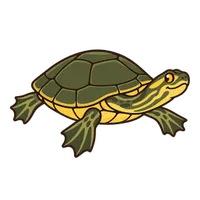
The yellow-bellied slider is the southeastern US cousin of the famous red-eared slider, and honestly, it's one of the most rewarding aquatic turtles you can keep, as long as you go in with open eyes. That palm-sized hatchling is going to become a strong, curious, food-motivated turtle the length of your forearm that lives longer than most dogs and cats combined. Care isn't complicated, but it is big: heated water to swim in, a dry dock under real heat and UVB, and a filter that works overtime. Give it the space and the light and you'll have a bold, personable animal that swims up to greet you for decades.
Worried, or still setting up? Free tools
Or browse common Yellow-Bellied Slider questions →
Care at a glance
| Adult size | Males roughly 5–9 in (13–23 cm) shell length; females larger at 8–13 in (20–33 cm). Most captive adults settle around 8–11 in. Females are noticeably bigger and heavier than males, so plan your tank for a large female even if you buy a hatchling. |
|---|---|
| Lifespan | Up to ~30 years in the wild and 40+ in good captive care — a multi-decade commitment, not a starter pet. |
| Tank | Minimum 100 US gallons (about 379 L) of water for a single adult, using the standard 10 gallons of water per inch of shell length rule. A 120-gallon tank (roughly 48" x 24" x 25") is a more realistic, widely available target and is what most keepers should aim for. Bigger is always better; stock tanks and large Waterland-style tubs are excellent alternatives to glass aquariums. |
| Water temperature | Adults: 70–88°F (21–31°C). Juveniles run a bit warmer (around 74–76°F) and hatchlings warmer still (about 78–82°F / 24–29°C). Use an aquarium heater rated for your full water volume, guarded so the turtle can't crack or burn against it. |
| Water depth | At least as deep as the turtle's shell is long, and preferably deeper. These are strong, active swimmers that dive and forage, so give them a genuine water column, not a puddle, as long as they can always reach the basking dock and the surface easily. |
| Filtration | Turtles are messy, so oversize your filter: a canister filter rated for at least 2–3x your actual water volume is the working standard (many keepers go 3–4x). For a ~100–120 gallon tank that means a canister rated in the 300–400+ gallon range. Even with strong filtration, do a partial water change of roughly 30% every 1–2 weeks and clean the filter monthly. |
| Basking dock | A large, sturdy DRY dock or platform (big enough for the whole turtle to climb fully out and dry off) positioned under the heat lamp, with a basking surface temperature of about 104°F (40°C). Air temperature just above the basking spot should sit around 85–90°F (30–32°C). An easy climb-out ramp is essential. |
| Night | Lights and heat lamp off at night is fine, and the basking area can cool to room temperature. Many keepers turn the water heater off overnight and back on in the morning for adults; keep hatchlings on consistent warmth instead. Don't let the room get cold-drafty. |
| UVB & lighting | A linear T5 HO UVB tube is the standard, such as a Zoo Med Reptisun 5.0 (T5 HO) or Arcadia Forest 6% (T5 HO). Yellow-bellied/pond sliders fall in Ferguson Zone 3; aim for a UV Index of 3.0–4.0 on the basking surface. Mount a 5.0/6% bulb about 11–13" (28–33 cm) above the basking spot (further for stronger 10.0/12% bulbs), never closer than 10". The bulb should span 50–75% of the tank length. Replace T5 HO tubes about every 12 months, and run lights 11–13 hours/day (shorter in winter, longer in summer). |
| Tank bottom | Bare-bottom is the easiest and cleanest option for an adult tank and makes water changes simple. If you want a naturalistic look, large smooth river stones (too big to swallow) or a play-sand shoreline area work; avoid small gravel, which turtles can ingest. |
| Diet | Omnivore with a lifelong shift: hatchlings and juveniles are mostly carnivorous (insects, worms, small fish, crustaceans), while adults become predominantly plant-eating. Base the captive diet on a quality aquatic-turtle pellet plus lots of leafy greens and aquatic plants, with protein (feeder insects, earthworms, occasional fish) a smaller share for adults. Feed juveniles daily; adults a portion every 2–3 days. |
| Supplements | Even with good UVB, dust food with a calcium supplement (calcium carbonate, no phosphorus) regularly, and offer a cuttlebone floated in the tank for free-choice calcium. A vitamin/D3 supplement can be used sparingly, especially indoors, but real UVB is the primary way sliders make vitamin D3, so it is not a substitute for a good bulb. |
What it's like to live with a Yellow-Bellied Slider
Living with a yellow-bellied slider is less like having a fish and more like running a small aquatic zoo exhibit. They are bold, alert, and food-obsessed; yours will learn to recognize you and paddle over expecting dinner. The flip side is honesty about the workload: they foul water fast, so you're committed to real filtration and regular water changes, and the tank is heavy and takes up a lot of room. They're best kept solo (or in generously oversized setups) because they can be nippy and compete over basking spots. Handling should be minimal, they tolerate it but don't enjoy being held, and every interaction ends with washing your hands. Do all that and you get a genuinely engaging animal that's still greeting you at the glass in your 40s and beyond.
Your first month together
The settling-in period, in order — so you know what's normal and when not to worry.
- Before the turtle comes home, have the full setup running and stable: heated water at temperature, the basking dock dry and hitting ~104°F surface, UVB tube on a timer, and the filter cycling.
- Week 1: expect a shy, watchful turtle. Keep the room calm, offer food but don't panic if a stressed new arrival eats lightly for a few days. Watch that it basks and swims normally.
- Weeks 1–2: dial in temperatures with an actual thermometer (water and basking) and confirm UVI with a meter if you can. Establish the feeding routine and start light handling only for health checks.
- Weeks 2–4: settle into the maintenance rhythm, ~30% water change every 1–2 weeks, monthly filter clean, and watch appetite, activity, eyes, and shell. A turtle that's eating, basking, and swimming actively is a turtle that's settling in well.
- Within the first month or two, book a wellness exam with an exotics/reptile vet to establish a baseline and screen for early problems.
Through the year, and as they grow
Care shifts in two ways. Over a lifetime: baby and juvenile sliders are protein-heavy carnivores fed daily and kept in warmer water, while adults swing to a mostly-plant diet fed every few days, so your feeding plan should evolve as the turtle grows. Across the year (indoors): you can mirror natural daylight by running lights toward 13 hours in summer and closer to 11 in winter. Healthy sliders may become less active and eat less in cooler months. True brumation is not necessary for a pet indoors and shouldn't be attempted casually; if a turtle slows dramatically, verify temperatures rather than assuming it's "just winter." Outdoor-pond keepers in suitable climates face a whole separate seasonal protocol, get species-specific guidance before overwintering a turtle outside.
The pet store gets these wrong
Common myths, kindly corrected — no shame for having believed them.
- MYTH: A turtle only grows to the size of its tank. False, and dangerous. Shell size is set by genetics and health, not enclosure size. A turtle crammed in a small tank doesn't stay small; it grows stunted, stressed, and sick while looking 'small.'
- MYTH: A 20- or 40-gallon tank is plenty. That's an outdated pet-store minimum. A single adult needs about 100 gallons (10 gallons per inch of shell), with 120 gallons a more realistic real-world target.
- MYTH: Turtles don't really need UVB, a regular light is fine. False. Without proper UVB, sliders can't make vitamin D3, can't use calcium, and develop metabolic bone disease (soft, deformed shells). A quality T5 HO UVB bulb is non-negotiable indoors.
- MYTH: They're cheap, low-effort 'kid pets.' The turtle is cheap; the correct setup and the 40-year commitment are not. This is a serious long-term animal, not a disposable one.
- MYTH: They can live in just shallow water. No, these are strong swimmers that need water deeper than their shell is long, plus a dry basking dock.
Before you buy
- Space and weight: a full 100–120 gallon water setup is huge and extremely heavy. Be sure your floor and your room can take it before you buy the turtle.
- The 40-year timeline: this animal may outlive your current home, relationships, and jobs. Have a real plan for its whole life, including who takes it if you can't.
- Ongoing cost and effort: powerful canister filter, big heater, UVB bulbs replaced yearly, and regular water changes are the actual commitment, more than the turtle's price.
- Salmonella and kids: all turtles can carry salmonella even when healthy. They're a poor fit for households with very young children or immunocompromised people; strict handwashing is mandatory.
- Legality and sourcing: in the US, selling turtles under 4 inches is restricted, and sliders are invasive if released. Buy captive-bred, never release one into the wild, and check local laws.
💷 The yellow-bellied slider itself is usually the cheapest part — see the real cost of keeping one (upfront + ongoing, no sales pitch).
See a reptile vet if…
We can't diagnose from afar — but these are the signs to stop watching and get a professional:
- Soft, spongy, or misshapen shell, twitching, weak limbs, or fractures, classic metabolic bone disease from poor UVB/calcium. See an exotics vet.
- Bubbles or mucus from the nose, wheezing, open-mouth breathing, listing/swimming lopsided, or a sudden loss of appetite, possible respiratory infection. See a vet promptly.
- Swollen or crusted-shut eyes, often a sign of hypovitaminosis A or infection, needs a vet.
- Pitting, sores, foul smell, discoloration, or lifting/shedding scutes on the shell, possible shell rot/infection, which can become life-threatening.
- A female straining, restless, digging, then going off food and becoming lethargic, possible egg binding, an emergency.
- Any prolapsed/protruding tissue from the vent or tail, treat as an emergency and see a vet immediately.
- Persistent not-basking, floating abnormally, lethargy, or refusing food for an extended period, general 'something's wrong,' get a check-up rather than waiting.
Heading in? Print the free Yellow-Bellied Slider vet-prep sheet — what to bring, what to tell the vet, and the questions to ask.
Never
- Never keep a turtle in a small tank to 'keep it small', it doesn't work and causes lifelong harm.
- Never skip UVB or rely on a normal bulb; that leads straight to metabolic bone disease.
- Never house them without a truly dry basking area that reaches basking temperature, permanently wet turtles get shell and skin infections.
- Never use small gravel they can swallow, and never leave an aquarium heater unguarded.
- Never release an unwanted slider into the wild, they're invasive and it's often illegal; rehome responsibly instead.
- Never handle the turtle or clean its tank and then touch your face or food without washing your hands (salmonella).
Common yellow-bellied slider questions
How hard are Yellow-Bellied Sliders to keep — are they good for beginners?
Intermediate. Not hard to keep alive, but genuinely hard to keep WELL. The commitment is the real difficulty: a hatchling the size of a cookie grows into a dinner-plate turtle that needs a 100+ gallon setup, powerful filtration, real UVB, and 40+ years of your life. Get the big-picture husbandry right and the day-to-day is forgiving.
What do Yellow-Bellied Sliders eat?
Omnivore with a lifelong shift: hatchlings and juveniles are mostly carnivorous (insects, worms, small fish, crustaceans), while adults become predominantly plant-eating. Base the captive diet on a quality aquatic-turtle pellet plus lots of leafy greens and aquatic plants, with protein (feeder insects, earthworms, occasional fish) a smaller share for adults. Feed juveniles daily; adults a portion every 2–3 days.
How big a tank do Yellow-Bellied Sliders need?
Minimum 100 US gallons (about 379 L) of water for a single adult, using the standard 10 gallons of water per inch of shell length rule. A 120-gallon tank (roughly 48" x 24" x 25") is a more realistic, widely available target and is what most keepers should aim for. Bigger is always better; stock tanks and large Waterland-style tubs are excellent alternatives to glass aquariums.
What water temperature do Yellow-Bellied Sliders need?
Adults: 70–88°F (21–31°C). Juveniles run a bit warmer (around 74–76°F) and hatchlings warmer still (about 78–82°F / 24–29°C). Use an aquarium heater rated for your full water volume, guarded so the turtle can't crack or burn against it.
What water depth do Yellow-Bellied Sliders need?
At least as deep as the turtle's shell is long, and preferably deeper. These are strong, active swimmers that dive and forage, so give them a genuine water column, not a puddle, as long as they can always reach the basking dock and the surface easily.
What filtration do Yellow-Bellied Sliders need?
Turtles are messy, so oversize your filter: a canister filter rated for at least 2–3x your actual water volume is the working standard (many keepers go 3–4x). For a ~100–120 gallon tank that means a canister rated in the 300–400+ gallon range. Even with strong filtration, do a partial water change of roughly 30% every 1–2 weeks and clean the filter monthly.
What basking dock do Yellow-Bellied Sliders need?
A large, sturdy DRY dock or platform (big enough for the whole turtle to climb fully out and dry off) positioned under the heat lamp, with a basking surface temperature of about 104°F (40°C). Air temperature just above the basking spot should sit around 85–90°F (30–32°C). An easy climb-out ramp is essential.
What night-time temperature do Yellow-Bellied Sliders need?
Lights and heat lamp off at night is fine, and the basking area can cool to room temperature. Many keepers turn the water heater off overnight and back on in the morning for adults; keep hatchlings on consistent warmth instead. Don't let the room get cold-drafty.
What UVB and lighting do Yellow-Bellied Sliders need?
A linear T5 HO UVB tube is the standard, such as a Zoo Med Reptisun 5.0 (T5 HO) or Arcadia Forest 6% (T5 HO). Yellow-bellied/pond sliders fall in Ferguson Zone 3; aim for a UV Index of 3.0–4.0 on the basking surface. Mount a 5.0/6% bulb about 11–13" (28–33 cm) above the basking spot (further for stronger 10.0/12% bulbs), never closer than 10". The bulb should span 50–75% of the tank length. Replace T5 HO tubes about every 12 months, and run lights 11–13 hours/day (shorter in winter, longer in summer).
What substrate do Yellow-Bellied Sliders need?
Bare-bottom is the easiest and cleanest option for an adult tank and makes water changes simple. If you want a naturalistic look, large smooth river stones (too big to swallow) or a play-sand shoreline area work; avoid small gravel, which turtles can ingest.
What supplements do Yellow-Bellied Sliders need?
Even with good UVB, dust food with a calcium supplement (calcium carbonate, no phosphorus) regularly, and offer a cuttlebone floated in the tank for free-choice calcium. A vitamin/D3 supplement can be used sparingly, especially indoors, but real UVB is the primary way sliders make vitamin D3, so it is not a substitute for a good bulb.
How big do Yellow-Bellied Sliders get?
Males roughly 5–9 in (13–23 cm) shell length; females larger at 8–13 in (20–33 cm). Most captive adults settle around 8–11 in. Females are noticeably bigger and heavier than males, so plan your tank for a large female even if you buy a hatchling.
How long do Yellow-Bellied Sliders live?
Up to ~30 years in the wild and 40+ in good captive care — a multi-decade commitment, not a starter pet.
What are the signs Yellow-Bellied Sliders are sick or need a vet?
See a reptile or exotics vet if you notice: Soft, spongy, or misshapen shell, twitching, weak limbs, or fractures, classic metabolic bone disease from poor UVB/calcium. See an exotics vet.; Bubbles or mucus from the nose, wheezing, open-mouth breathing, listing/swimming lopsided, or a sudden loss of appetite, possible respiratory infection. See a vet promptly.; Swollen or crusted-shut eyes, often a sign of hypovitaminosis A or infection, needs a vet.; Pitting, sores, foul smell, discoloration, or lifting/shedding scutes on the shell, possible shell rot/infection, which can become life-threatening.; A female straining, restless, digging, then going off food and becoming lethargic, possible egg binding, an emergency.; Any prolapsed/protruding tissue from the vent or tail, treat as an emergency and see a vet immediately.; Persistent not-basking, floating abnormally, lethargy, or refusing food for an extended period, general 'something's wrong,' get a check-up rather than waiting..
Your first two weeks · Taming & handling · Behaviours explained · Won't eat? · Stuck shed · When to see a vet

Get the free Yellow-Bellied Slider Starter Kit
A one-page setup criteria checklist and a first-30-days plan for your first yellow-bellied slider — what to get, what makes each thing matter, and the honest bits the pet shop skips. Join the den and we’ll send it over.
Free reptile care cheat-sheet the moment you join. No spam — unsubscribe anytime. See how we handle your data in our privacy notice.Sources & further reading
This guide was written and fact-checked against these authorities. It's kind, general guidance — not a diagnosis or a substitute for an exotics vet:
- ReptiFiles — Pond Sliders (Trachemys scripta subspecies), incl. yellow-bellied — Confirms the yellow-bellied slider is a Trachemys scripta subspecies (avg 8–11 in) and that the red-eared slider care guide applies to all three subspecies.
- ReptiFiles — Tank Size Requirements — 100 gal minimum, 10 gal/inch rule, 120 gal (48x24x25) preferred, water depth ≥ shell length, and the small-tank myth debunk.
- ReptiFiles — Basking Temperatures & Heat — Basking surface 104°F/40°C, air 85–90°F, adult water 70–88°F (juvenile/hatchling tiers), night heater guidance.
- ReptiFiles — UVB & Lighting — T5 HO Reptisun 5.0 / Arcadia Forest 6%, Ferguson Zone 3, UVI 3.0–4.0, mount 11–13 in, span 50–75% of tank, photoperiod 11–13 h.
- ReptiFiles — Filters & Water Treatment — Canister filter rated 2–3x water volume; ~30% water change every 1–2 weeks; monthly filter clean.
- ReptiFiles — Tank Setup / Shopping List — Canister rated for 400 US gal, heater for 200 US gal, play-sand shoreline, stock-tank alternative.
- Wikipedia — Yellow-bellied slider (Trachemys scripta scripta) — Family Emydidae; males 5–9 in, females 8–13 in; wild 30+ / captive 40+ years; native range; omnivore diet shift to ~95% plants as adults.
- PetMD — Red-Eared Slider (vet-reviewed) — Adult size, feeding frequency (adults every 2–3 days), calcium/D3 supplementation indoors, MBD and respiratory-infection signs, salmonella/handwashing.
- VCA Animal Hospitals — Common Problems in Aquatic Turtles — Vet warning signs: irregular/soft shell, prolapse (emergency), dystocia/egg binding, salmonella carriage without symptoms.
- Zilla — Yellow-Bellied Slider Husbandry Handbook — Cross-check: 75–100 gal adult tank, UVB 10–12 h/day, up to 40-yr lifespan, adult diet mostly vegetables + pellets, partial water changes.
Written and fact-checked by The Baskden Team against veterinarian-authored sources — if your reptile shows a red-flag sign above, see an exotics vet promptly.