
Species · Beginner snake
Ball Python
Python regius
The gentle, shy beginner snake famous for curling into a defensive 'ball'.
Difficulty: Beginner Printable care sheet →
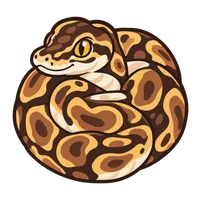
Ball pythons are shy, gentle, slow-moving snakes that curl into a nervous little ball when startled — hence the name. They're a superb first snake: hardy, undemanding to handle, and long-lived. The two things new keepers underestimate are humidity (get it wrong and shedding goes bad) and their habit of simply refusing food for weeks, which is usually completely normal.
Worried, or still setting up? Free tools
Or browse common Ball Python questions →
Care at a glance
| Adult size | 3–5 ft (females larger than males) |
|---|---|
| Lifespan | 20–30+ years — often a multi-decade commitment |
| Enclosure | Adult minimum 4×2×2 ft (a 120-gallon footprint, ~8 sq ft of floor). A snake should be able to stretch out fully; give ≥2 ft of height as they do climb. The old "tiny tub forever" approach is out. |
| Basking / warm zone | Warm/basking surface 86–90°F (30–32°C) from an overhead heat source (a ≥2-bulb halogen cluster over a proper-size enclosure) — not a heat mat as the primary heat once you have a real enclosure. |
| Cool side | Cool side ~75–80°F (24–27°C); provide a full warm-to-cool gradient with hides on both ends. |
| Night | Night 70–78°F (21–26°C). If your home drops below ~70°F, add a lightless heat source (ceramic emitter / radiant panel) — never a coloured night bulb. |
| UVB & lighting | UVB is recommended (not strictly required): a T5 HO bulb giving UVI 2.0–3.0 at the basking spot, on the correct Ferguson-zone distance. Replace every 12 months. |
| Humidity | Ambient 60–80%, rising higher at night — this is the spec people most often get wrong. Use a thick (≥4″) moisture-retentive substrate and a humid hide; poor humidity causes stuck, patchy sheds. |
| Substrate | Moisture-holding substrate ≥4″ deep: coconut husk/fibre, a topsoil-coco-play-sand mix, or a bioactive mix with live plants. Never cedar or pine (toxic oils). |
| Diet | Carnivore — appropriately-sized frozen/thawed rodents about 10–15% of the snake's body weight (roughly every 7–14 days depending on size, adjusting to body condition). Long voluntary fasts are normal and rarely an emergency if weight holds. |
| Supplements | None needed — a whole-prey rodent diet is nutritionally complete. |
🦎 Did you know? — Ball Python fun facts
Little true delights about the ball python — each one checked against a named source, no pet-shop myths.
- The ball python is named for its defence of curling into a tight ball when frightened, with its head and neck tucked safely in the middle. Wikipedia
- Its other name, "royal python," comes from the Latin regius meaning kingly — African rulers were said to keep them. The Reptile Database
- A mother ball python coils around her clutch of eggs and stays wrapped around them until they hatch about two months later. Animal Diversity Web
What it's like to live with a Ball Python
Ball pythons are the quiet, low-key companions of the snake world. They are not explorers or escape artists — a happy ball python spends most of the day curled tight in a snug hide and comes out to cruise in the evenings. They tolerate calm, regular handling well and rarely bite; most keepers describe them as gentle and almost meditative to hold. The trade-off for that easygoing nature is that they are famously particular eaters — a well-kept ball python refusing the odd meal is one of the most normal things in the hobby, and learning not to panic about it is half of keeping one.
Your first month together
The settling-in period, in order — so you know what's normal and when not to worry.
- Leave it completely alone for the first week or two — no handling at all. A new ball python needs to decide its enclosure is safe before anything else.
- Do not be alarmed if it refuses its first meal or two. Settling-in food refusal is extremely common and rarely means anything is wrong, as long as weight holds.
- Feed inside its own enclosure, in the evening, and check both hides are tight and dark — a ball python that feels exposed will not eat.
- Give it a week or two of quiet, then offer the first meal; wait for one or two successful feeds before you begin brief, gentle handling.
- Track weight, not the calendar — a stable weight means a fast is nothing to worry about; steady weight loss is what sends you to a vet.
Through the year, and as they grow
Appetite naturally ebbs and flows. In cooler, darker months and during the breeding season, many ball pythons eat far less or fast for weeks at a time — a healthy adult can skip meals for a surprisingly long stretch with no harm. Judge by body condition and weight rather than by how many meals it "should" have eaten, and keep offering food on a normal schedule so it can take one when it is ready.
The pet store gets these wrong
Common myths, kindly corrected — no shame for having believed them.
- A small tub is fine forever — no; an adult needs at least 4×2×2 ft.
- A heat mat is enough — not in a proper-size enclosure; you need overhead heat for correct ambient temps.
- Ball pythons don't climb — they do; give height and sturdy branches.
- Refusing food for weeks means it's sick — usually it's just a normal fast; watch weight, not the calendar.
Before you buy
- A 4×2×2 ft enclosure and the humidity to keep it at 60–80%.
- Comfort feeding frozen/thawed rodents (never live).
- A 20–30+ year commitment — genuinely a long time.
- An exotics/reptile vet within reach.
💷 The ball python itself is usually the cheapest part — see the real cost of keeping one (upfront + ongoing, no sales pitch).
See a reptile vet if…
We can't diagnose from afar — but these are the signs to stop watching and get a professional:
- Open-mouth breathing, wheezing, clicking, or mucus/bubbles (possible respiratory infection — common in BPs kept too cool/damp-stale).
- A fast that comes with real weight loss (>10% of body weight) or a sunken, thin body.
- Repeated stuck sheds or retained eye caps despite correct humidity.
- Mouth held open, cheesy matter in the mouth (possible mouth rot), or mites (tiny moving dots).
- "Stargazing", corkscrewing, or an inability to right itself (neurological — notably in some spider-gene morphs).
- Any tissue protruding from the vent (prolapse) — keep moist, go now.
Heading in? Print the free Ball Python vet-prep sheet — what to bring, what to tell the vet, and the questions to ask.
Never
- Never feed live rodents — a live rat can badly injure or kill your snake; use frozen/thawed.
- Never house two snakes together.
- Never use pine or cedar substrate.
- Never handle for ~48 hours after a meal (risk of regurgitation).
- Never let it run chronically dry — bad sheds and respiratory issues follow.
Common ball python questions
How hard are Ball Pythons to keep — are they good for beginners?
Beginner. One of the calmest, most forgiving pet snakes — as long as you get the humidity and a proper thermal gradient right, and you can stay calm about their famous fasting.
What do Ball Pythons eat?
Carnivore — appropriately-sized frozen/thawed rodents about 10–15% of the snake's body weight (roughly every 7–14 days depending on size, adjusting to body condition). Long voluntary fasts are normal and rarely an emergency if weight holds.
How big an enclosure do Ball Pythons need?
Adult minimum 4×2×2 ft (a 120-gallon footprint, ~8 sq ft of floor). A snake should be able to stretch out fully; give ≥2 ft of height as they do climb. The old "tiny tub forever" approach is out.
What basking temperature do Ball Pythons need?
Warm/basking surface 86–90°F (30–32°C) from an overhead heat source (a ≥2-bulb halogen cluster over a proper-size enclosure) — not a heat mat as the primary heat once you have a real enclosure.
What should the cool side be for Ball Pythons?
Cool side ~75–80°F (24–27°C); provide a full warm-to-cool gradient with hides on both ends.
What night-time temperature do Ball Pythons need?
Night 70–78°F (21–26°C). If your home drops below ~70°F, add a lightless heat source (ceramic emitter / radiant panel) — never a coloured night bulb.
What UVB and lighting do Ball Pythons need?
UVB is recommended (not strictly required): a T5 HO bulb giving UVI 2.0–3.0 at the basking spot, on the correct Ferguson-zone distance. Replace every 12 months.
What humidity do Ball Pythons need?
Ambient 60–80%, rising higher at night — this is the spec people most often get wrong. Use a thick (≥4″) moisture-retentive substrate and a humid hide; poor humidity causes stuck, patchy sheds.
What substrate do Ball Pythons need?
Moisture-holding substrate ≥4″ deep: coconut husk/fibre, a topsoil-coco-play-sand mix, or a bioactive mix with live plants. Never cedar or pine (toxic oils).
What supplements do Ball Pythons need?
None needed — a whole-prey rodent diet is nutritionally complete.
How big do Ball Pythons get?
3–5 ft (females larger than males)
How long do Ball Pythons live?
20–30+ years — often a multi-decade commitment
What are the signs Ball Pythons are sick or need a vet?
See a reptile or exotics vet if you notice: Open-mouth breathing, wheezing, clicking, or mucus/bubbles (possible respiratory infection — common in BPs kept too cool/damp-stale).; A fast that comes with real weight loss (>10% of body weight) or a sunken, thin body.; Repeated stuck sheds or retained eye caps despite correct humidity.; Mouth held open, cheesy matter in the mouth (possible mouth rot), or mites (tiny moving dots).; "Stargazing", corkscrewing, or an inability to right itself (neurological — notably in some spider-gene morphs).; Any tissue protruding from the vent (prolapse) — keep moist, go now..
Your first two weeks · Taming & handling · Behaviours explained · Won't eat? · Stuck shed · When to see a vet

Get the free Ball Python Starter Kit
A setup criteria checklist and a first-30-days plan for your first ball python — including the humidity and the famous fasting most new keepers get told to panic about. Join the den and we’ll send it over.
Free reptile care cheat-sheet the moment you join. No spam — unsubscribe anytime. See how we handle your data in our privacy notice.Sources & further reading
This guide was written and fact-checked against these authorities. It's kind, general guidance — not a diagnosis or a substitute for an exotics vet:
- ReptiFiles — Ball Python Care — Enclosure size, temps, UVB (UVI 2.0–3.0), humidity 60–80%, feeding (10–15% body weight), substrate.
- Association of Reptilian & Amphibian Veterinarians (ARAV) — Find-an-exotics-vet; respiratory infection, mouth rot.
- Merck Veterinary Manual — reptiles — Respiratory infection, dysecdysis, mites.
Written and fact-checked by The Baskden Team against veterinarian-authored sources — if your reptile shows a red-flag sign above, see an exotics vet promptly.