
Species · Arid ground gecko
Leopard Gecko
Eublepharis macularius
The classic starter gecko — hardy, handleable, and no big lights needed.
Difficulty: Beginner Printable care sheet →
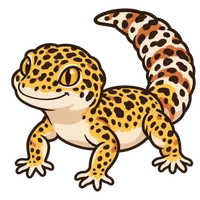
Leopard geckos are the friendly, spotty, ground-dwelling gecko that made a generation fall in love with reptiles. They're active at dawn and dusk, they don't need towering enclosures or intense sun, and they'll happily sit in your hand. Modern care has moved on from the old bare-tank-and-mealworms approach — a little UVB, real hides, and varied insects make a big difference.
Worried, or still setting up? Free tools
Or browse common Leopard Gecko questions →
Care at a glance
| Adult size | 7–10 in (18–25 cm) |
|---|---|
| Lifespan | 10–20 years |
| Enclosure | Adult minimum 36×18×18 in (≥4.5 sq ft of floor); bigger is better. A front-opening enclosure with three hides (warm, cool, and a humid hide) suits them well. |
| Basking / warm zone | A warm basking surface of 94–97°F (34–36°C), with a warm hide around 90–92°F so the gut gets the heat it needs to digest — provided by overhead heat, not a dangerous belly heat-rock. |
| Cool side | Cool side 70–77°F (21–25°C). |
| Night | Night can fall to room temperature; no coloured night bulbs (a light-on-at-night disrupts them). |
| UVB & lighting | Low-level UVB is now recommended (the old "leos don't need UVB" line is outdated): UVI ~0.5–1.5 at the basking spot for normal morphs, and a gentler 0.5–0.7 for pale/albino/less-pigmented morphs, which are light-sensitive. Ferguson Zone 1. |
| Humidity | Ambient 30–40%, plus a dedicated humid hide at 70–80% so they can shed cleanly. |
| Substrate | A naturalistic loose mix (e.g. ~60% organic topsoil / 30% play sand / 10% excavator clay), packed ≥4″ deep, actually suits their digging — and, done right, is not the impaction bogeyman. Paper towel or tile works for quarantine. Avoid dusty calci-sand. |
| Diet | Strict insectivore — no fruit, veg, or meat. Juveniles daily; young adults every other day; adults whose tail is fatter than their neck every ~5 days. Feeder insects no larger than the space between the eyes. Don't leave loose feeders in overnight — crickets nibble sleeping geckos. |
| Supplements | Dust insects with calcium (with D3 if UVB is minimal) and a multivitamin on a rotation. A fat tail = good energy stores; a pencil-thin tail is a warning sign. |
🦎 Did you know? — Leopard Gecko fun facts
Little true delights about the leopard gecko — each one checked against a named source, no pet-shop myths.
- Unlike most geckos, leopard geckos have movable eyelids and can blink and close their eyes. Animal Diversity Web
- A leopard gecko’s ear canals pass right through its head, so light shone at one ear can be seen coming out the other side. Animal Diversity Web
- Leopard geckos lack the sticky toe-pads of climbing geckos, walking instead on clawed toes. Animal Diversity Web
What it's like to live with a Leopard Gecko
Leopard geckos are the reptile a lot of keepers learn on, and for good reason. They are crepuscular — most active around dawn and dusk — so they spend the bright part of the day tucked in a hide and come out to hunt and potter in the evening, which fits neatly around a normal human schedule. They are quiet, they do not need big lights or a hot lamp, and they tame readily: most will happily sit in a warm hand once they trust you. That fat tail is both charming and useful — it is the fuel gauge you read every time you look at them.
Your first month together
The settling-in period, in order — so you know what's normal and when not to worry.
- Let a new leo have a quiet week before much handling — it will spend most of the day hidden, exactly as it should.
- Offer food in the evening when it naturally wakes up; a settling gecko may eat little at first, then find its appetite once it feels secure.
- Learn where its hides are and let it choose the warm, cool, and humid ones itself — a humid hide is what makes shedding go smoothly.
- Watch for the first shed and check it comes off cleanly, especially the toes and tail tip; leos usually eat the shed afterward, which is expected.
- Start gentle, low, over-a-soft-surface handling once it is eating steadily — and never, ever grab or grip the tail, which it can drop when frightened.
Through the year, and as they grow
Leopard geckos often slow down in the cooler, darker months — eating less and moving less in a mild, brumation-like dip that is usually nothing to worry about in a healthy adult on correct temperatures. Feeding also changes with age: hatchlings and juveniles eat daily, while adults do well on smaller meals every other day. Read the tail — a plump tail through any slowdown means all is well.
The pet store gets these wrong
Common myths, kindly corrected — no shame for having believed them.
- Leos don't need UVB — outdated; low-level UVB benefits them.
- A 10-gallon tank is enough — no; an adult wants 36×18×18 or larger.
- Sand will always kill them — oversimplified; dusty calci-sand and cold temps are the real risks, a proper naturalistic mix is fine.
- Mealworms or waxworms alone are a fine diet — no; they need variety, gut-loaded and dusted.
Before you buy
- A 36×18×18 in (or larger) enclosure with three hides.
- A steady supply of varied feeder insects (not just mealworms).
- Calcium + multivitamin supplements.
- A 10–20 year commitment.
💷 The leopard gecko itself is usually the cheapest part — see the real cost of keeping one (upfront + ongoing, no sales pitch).
See a reptile vet if…
We can't diagnose from afar — but these are the signs to stop watching and get a professional:
- Weak or bent limbs, tremors, or a soft/rubbery jaw (signs pointing to metabolic bone disease).
- A rapidly thinning ("pencil") tail with weight loss and not eating.
- Chronic runny stool and wasting despite eating (a vet should rule out cryptosporidiosis).
- Stuck shed on the toes (can cut off circulation and cost toes) or over the eyes.
- A firm, swollen belly with no droppings (possible impaction).
- Any tissue protruding from the vent (prolapse).
Heading in? Print the free Leopard Gecko vet-prep sheet — what to bring, what to tell the vet, and the questions to ask.
Never
- Never use a heat rock — they cause serious belly burns.
- Never keep pale/albino morphs under strong UVB or bright light without shade.
- Never feed a mono-diet of mealworms or waxworms.
- Never house two males together.
- Never grab or dangle by the tail — it can drop (and regrows lumpy).
Common leopard gecko questions
How hard are Leopard Geckos to keep — are they good for beginners?
Beginner. A brilliant first reptile — small, hardy, handleable, and no giant lighting rig required. Just don't believe the outdated "10-gallon, no UVB, sand" pet-store setup.
What do Leopard Geckos eat?
Strict insectivore — no fruit, veg, or meat. Juveniles daily; young adults every other day; adults whose tail is fatter than their neck every ~5 days. Feeder insects no larger than the space between the eyes. Don't leave loose feeders in overnight — crickets nibble sleeping geckos.
How big an enclosure do Leopard Geckos need?
Adult minimum 36×18×18 in (≥4.5 sq ft of floor); bigger is better. A front-opening enclosure with three hides (warm, cool, and a humid hide) suits them well.
What basking temperature do Leopard Geckos need?
A warm basking surface of 94–97°F (34–36°C), with a warm hide around 90–92°F so the gut gets the heat it needs to digest — provided by overhead heat, not a dangerous belly heat-rock.
What should the cool side be for Leopard Geckos?
Cool side 70–77°F (21–25°C).
What night-time temperature do Leopard Geckos need?
Night can fall to room temperature; no coloured night bulbs (a light-on-at-night disrupts them).
What UVB and lighting do Leopard Geckos need?
Low-level UVB is now recommended (the old "leos don't need UVB" line is outdated): UVI ~0.5–1.5 at the basking spot for normal morphs, and a gentler 0.5–0.7 for pale/albino/less-pigmented morphs, which are light-sensitive. Ferguson Zone 1.
What humidity do Leopard Geckos need?
Ambient 30–40%, plus a dedicated humid hide at 70–80% so they can shed cleanly.
What substrate do Leopard Geckos need?
A naturalistic loose mix (e.g. ~60% organic topsoil / 30% play sand / 10% excavator clay), packed ≥4″ deep, actually suits their digging — and, done right, is not the impaction bogeyman. Paper towel or tile works for quarantine. Avoid dusty calci-sand.
What supplements do Leopard Geckos need?
Dust insects with calcium (with D3 if UVB is minimal) and a multivitamin on a rotation. A fat tail = good energy stores; a pencil-thin tail is a warning sign.
How big do Leopard Geckos get?
7–10 in (18–25 cm)
How long do Leopard Geckos live?
10–20 years
What are the signs Leopard Geckos are sick or need a vet?
See a reptile or exotics vet if you notice: Weak or bent limbs, tremors, or a soft/rubbery jaw (signs pointing to metabolic bone disease).; A rapidly thinning ("pencil") tail with weight loss and not eating.; Chronic runny stool and wasting despite eating (a vet should rule out cryptosporidiosis).; Stuck shed on the toes (can cut off circulation and cost toes) or over the eyes.; A firm, swollen belly with no droppings (possible impaction).; Any tissue protruding from the vent (prolapse)..
Your first two weeks · Taming & handling · Behaviours explained · Won't eat? · Stuck shed · When to see a vet

Get the free Leopard Gecko Starter Kit
A setup criteria checklist and a first-30-days plan for your first leo — the modern care the old “10-gallon, no UVB, sand” pet-store setup skips. Join the den and we’ll send it over.
Free reptile care cheat-sheet the moment you join. No spam — unsubscribe anytime. See how we handle your data in our privacy notice.Sources & further reading
This guide was written and fact-checked against these authorities. It's kind, general guidance — not a diagnosis or a substitute for an exotics vet:
- ReptiFiles — Leopard Gecko Care — Enclosure ≥36×18×18, basking 94–97°F / warm hide 90–92°F, cool 70–77°F, UVI (per F. Baines), humid hide 70–80% + ambient 30–40%, insectivore schedule, substrate.
- Association of Reptilian & Amphibian Veterinarians (ARAV) — Find-an-exotics-vet; MBD, cryptosporidiosis.
- Merck Veterinary Manual — reptiles — Metabolic bone disease, dysecdysis, impaction.
Written and fact-checked by The Baskden Team against veterinarian-authored sources — if your reptile shows a red-flag sign above, see an exotics vet promptly.