
Species · Monitor lizard
Ackie Monitor
Varanus acanthurus
The dwarf monitor with a dog's smarts — an interactive, dinosaur-like lizard for a dedicated keeper.
Difficulty: Intermediate Printable care sheet →
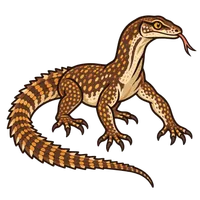
Ackie monitors are dwarf monitors — a compact, dinosaur-like lizard with a spiny whip tail, a flicking snake-like tongue, and startling intelligence. They recognise their keeper, problem-solve, and can become genuinely interactive, which is why they're the monitor most often recommended to newer keepers. "Most accessible" still means advanced, though: they need a scorching basking spot, a big enclosure with a foot or more of moist burrowing substrate, and a lot of food and attention. For a dedicated keeper, they're the closest thing to a pet dinosaur.
Worried, or still setting up? Free tools
Or browse common Ackie Monitor questions →
Care at a glance
| Adult size | ~2 ft (17–30 in / 44–76 cm); males a little larger |
|---|---|
| Lifespan | 15+ years (20 is possible) with good care |
| Enclosure | Minimum 5×2.5×4 ft (about 12.5 sq ft of floor) for one — larger is always better, and the deep substrate below is non-negotiable. House ONE: males fight (sometimes fatally) and females often clash too. |
| Basking / warm zone | A very hot basking SURFACE of 158–172°F (70–78°C) — the monitor hallmark, made with a tight cluster of halogen floods and measured with a temp gun at the basking rock. Warm ambient air 84–100°F (29–38°C). |
| Cool side | Cool side 75–82°F (24–28°C). A real cool retreat is vital — an ackie that can’t escape the heat can die of heat stroke even with a correct basking temperature. |
| Night | Night at room temperature (a drop is fine); no coloured night bulbs. |
| UVB & lighting | Strong UVB for a diurnal high-basker: a T5 HO bulb (Arcadia Desert 12%) giving UVI ~3.0–4.0 at basking height (Ferguson Zone 3–4), plus a bright 6500K daylight LED. Replace the UVB bulb yearly. |
| Humidity | Dry AIR (ambient 20–50%) but a humid BURROW: the deep substrate is kept moist near the bottom so it holds 80%+ humidity down where the ackie digs. This dry-air / humid-burrow split is the key to ackie hydration. |
| Substrate | DEEP and burrowable — at least 12″ for males and 18″ for females — of a soil/sand mix that packs and holds a tunnel, kept moist at the bottom. Burrowing is essential for hydration, thermoregulation, and security. |
| Diet | Carnivore, primarily insectivorous: a large volume of varied gut-loaded insects (dubia, crickets, roaches), plus occasional whole prey (a pinky/fuzzy, egg) and lean meats. They’re voracious and food-motivated, so obesity from overfeeding is common — feed to body condition, not to appetite. |
| Supplements | Dust insects with calcium; add a multivitamin on a rotation. |
🦎 Did you know? — Ackie Monitor fun facts
Little true delights about the ackie monitor — each one checked against a named source, no pet-shop myths.
- The ackie is a "dwarf" monitor, reaching only about 70 cm long — yet it belongs to the same lizard family as the giant Komodo dragon. Wikipedia
- Its spiny tail is a defence tool: the ackie wedges itself into a rock crevice so predators can’t pull it out. Wikipedia
- In the wild, female ackie monitors have been recorded sharing massive burrows and nesting communally together. Wikipedia
What it's like to live with a Ackie Monitor
Ackie monitors pack the brains and boldness of the big monitors into a manageable, room-sized package. They are active, intelligent, endlessly busy lizards — digging, foraging, and investigating — and with a patient keeper they can become surprisingly interactive, learning to hand-feed and recognise you. They want a large enclosure, a fierce basking spot, and a deep bed of substrate to burrow into and shape into tunnels. This is more work than a beardie, but for a keeper ready to step up it is one of the most rewarding lizards in the hobby.
Your first month together
The settling-in period, in order — so you know what's normal and when not to worry.
- Set it up with a deep bed of substrate to burrow and tunnel in — a monitor with somewhere to dig settles far faster.
- Feed to body condition rather than to appetite from day one; ackies are enthusiastic eaters and obesity is an easy mistake.
- Expect lots of digging and hiding early on — that is a comfortable, exploring monitor, not a distressed one.
- Build trust slowly with hand-feeding rather than rushing to pick it up; interaction is earned over weeks.
- Make sure that basking spot is genuinely hot and verified — ackies thermoregulate hard and need the heat to digest.
Through the year, and as they grow
An ackie's appetite and activity swing with temperature and season, dipping in cooler months and surging when it is warm. Growing monitors eat a great deal, but adults need watching, because obesity from overfeeding is the most common long-term health mistake keepers make. Feed to a lean, well-muscled body condition all year.
The pet store gets these wrong
Common myths, kindly corrected — no shame for having believed them.
- Monitors are all aggressive and untameable — ackies are the intelligent, tameable exception, but you earn their trust.
- Any basking bulb will do — no; they need an exceptionally hot 158–172°F basking surface most reptiles never get.
- Keep it dry like a desert lizard — dry AIR, yes, but it must have a deep, moist burrow to dig into.
- A 4×2×2 ft is plenty — too small; aim for at least 12.5 sq ft of floor plus deep substrate.
- Feed it all the rodents it wants — that drives obesity; base the diet on insects and feed to condition.
Before you buy
- A large enclosure that can hold BOTH a 158–172°F basking spot and a proper cool retreat.
- A foot-plus of moist burrowing substrate — this is not optional for an ackie.
- A big, ongoing feeder-insect supply, and time to engage a smart animal daily.
- Honesty that this is an advanced, not beginner, lizard — plus an exotics/reptile vet.
💷 The ackie monitor itself is usually the cheapest part — see the real cost of keeping one (upfront + ongoing, no sales pitch).
See a reptile vet if…
We can't diagnose from afar — but these are the signs to stop watching and get a professional:
- Gaping and lethargy in the heat with no cool escape (heat stroke — an emergency; cool it and call a vet).
- Weak or bent limbs, tremors, or a rubbery jaw (signs pointing to metabolic bone disease).
- Obvious obesity — a bloated body, spread scales, no waist (very common on overfeeding).
- Open-mouth breathing, wheezing, or mucus (possible respiratory infection).
- A firm, swollen belly with no droppings (possible impaction), or any tissue protruding from the vent (prolapse).
Heading in? Print the free Ackie Monitor vet-prep sheet — what to bring, what to tell the vet, and the questions to ask.
Never
- Never run it without a genuine cool zone — heat stroke kills even at a correct basking temperature.
- Never keep it on shallow substrate — no burrow means dehydration and stress.
- Never house two ackies together.
- Never base the diet on rodents — obesity follows; feed mostly insects, to body condition.
- Never treat it as a decoration — it needs heat, space, and daily engagement.
Common ackie monitor questions
How hard are Ackie Monitors to keep — are they good for beginners?
Intermediate. The most beginner-accessible monitor — but still a serious, high-input, intensely intelligent carnivore. Expect extreme basking heat, a big deep-substrate enclosure, a heavy feeder-insect supply, and daily engagement.
What do Ackie Monitors eat?
Carnivore, primarily insectivorous: a large volume of varied gut-loaded insects (dubia, crickets, roaches), plus occasional whole prey (a pinky/fuzzy, egg) and lean meats. They’re voracious and food-motivated, so obesity from overfeeding is common — feed to body condition, not to appetite.
How big an enclosure do Ackie Monitors need?
Minimum 5×2.5×4 ft (about 12.5 sq ft of floor) for one — larger is always better, and the deep substrate below is non-negotiable. House ONE: males fight (sometimes fatally) and females often clash too.
What basking temperature do Ackie Monitors need?
A very hot basking SURFACE of 158–172°F (70–78°C) — the monitor hallmark, made with a tight cluster of halogen floods and measured with a temp gun at the basking rock. Warm ambient air 84–100°F (29–38°C).
What should the cool side be for Ackie Monitors?
Cool side 75–82°F (24–28°C). A real cool retreat is vital — an ackie that can’t escape the heat can die of heat stroke even with a correct basking temperature.
What night-time temperature do Ackie Monitors need?
Night at room temperature (a drop is fine); no coloured night bulbs.
What UVB and lighting do Ackie Monitors need?
Strong UVB for a diurnal high-basker: a T5 HO bulb (Arcadia Desert 12%) giving UVI ~3.0–4.0 at basking height (Ferguson Zone 3–4), plus a bright 6500K daylight LED. Replace the UVB bulb yearly.
What humidity do Ackie Monitors need?
Dry AIR (ambient 20–50%) but a humid BURROW: the deep substrate is kept moist near the bottom so it holds 80%+ humidity down where the ackie digs. This dry-air / humid-burrow split is the key to ackie hydration.
What substrate do Ackie Monitors need?
DEEP and burrowable — at least 12″ for males and 18″ for females — of a soil/sand mix that packs and holds a tunnel, kept moist at the bottom. Burrowing is essential for hydration, thermoregulation, and security.
What supplements do Ackie Monitors need?
Dust insects with calcium; add a multivitamin on a rotation.
How big do Ackie Monitors get?
~2 ft (17–30 in / 44–76 cm); males a little larger
How long do Ackie Monitors live?
15+ years (20 is possible) with good care
What are the signs Ackie Monitors are sick or need a vet?
See a reptile or exotics vet if you notice: Gaping and lethargy in the heat with no cool escape (heat stroke — an emergency; cool it and call a vet).; Weak or bent limbs, tremors, or a rubbery jaw (signs pointing to metabolic bone disease).; Obvious obesity — a bloated body, spread scales, no waist (very common on overfeeding).; Open-mouth breathing, wheezing, or mucus (possible respiratory infection).; A firm, swollen belly with no droppings (possible impaction), or any tissue protruding from the vent (prolapse)..
Your first two weeks · Taming & handling · Behaviours explained · Won't eat? · Stuck shed · When to see a vet

Get the free Ackie Monitor Starter Kit
A one-page setup criteria checklist and a first-30-days plan for your first ackie monitor — what to get, what makes each thing matter, and the honest bits the pet shop skips. Join the den and we’ll send it over.
Free reptile care cheat-sheet the moment you join. No spam — unsubscribe anytime. See how we handle your data in our privacy notice.Sources & further reading
This guide was written and fact-checked against these authorities. It's kind, general guidance — not a diagnosis or a substitute for an exotics vet:
- ReptiFiles — Ackie Monitor Care Guide — Min 5×2.5×4 ft / 12.5 sq ft, basking surface 158–172°F / warm air 84–100°F / cool 75–82°F, UVB Arcadia Desert 12% (UVI ~3–4, Zone 3–4), ambient humidity 20–50% but moist burrow 80%+, deep substrate 12″ (male) / 18″ (female), carnivore/insectivore + obesity risk, ~2 ft, 15+ yr, house solo.
- Baines et al. (2016), “How much UVB does my reptile need? The UV-Tool” — Ferguson Zone 3–4 target UVI ~3.0–4.0 for a diurnal high-basking monitor.
- Association of Reptilian & Amphibian Veterinarians (ARAV) — Find-an-exotics-vet; heat stress, MBD, obesity, respiratory infection.
- Merck Veterinary Manual — reptiles — Thermal stress, metabolic bone disease, obesity, respiratory infection.
Written and fact-checked by The Baskden Team against veterinarian-authored sources — if your reptile shows a red-flag sign above, see an exotics vet promptly.