
Species · Beginner snake
Blood Python
Python brongersmai
A short but massively thick python — today's captive-bred animals are calm, yet this is a LOT of snake for its length.
Difficulty: Intermediate Printable care sheet →
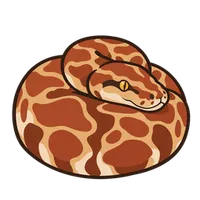
The blood python is a short, unbelievably thick, jewel-toned snake from the swamps and marshes of Malaysia and Sumatra. It has a bad-tempered reputation that is mostly outdated: today's captive-bred bloods are usually not aggressive, just anxious, and they settle beautifully in a calm, well-heated, humid home. What they are is heavy, sensitive to overheating, and a bit particular — which is why we treat them as an intermediate snake rather than a starter. Get the gradient and humidity right and give one time to settle, and you'll have a stunning, long-lived, surprisingly docile tank of a snake.
Worried, or still setting up? Free tools
Or browse common Blood Python questions →
Care at a glance
| Adult size | Around 4-6 ft (1.2-1.8 m) but extremely heavy-bodied. Males are typically 3-5 ft, females larger; adults commonly exceed 20 lb (9+ kg). The bulk, not the length, is what surprises people. |
|---|---|
| Lifespan | 20-25+ years in good care; individuals over 30 years are documented. |
| Enclosure | Adult minimum roughly 48" L x 24" D (a 4 x 2 ft footprint, about 1,000+ sq in of floor space); a 6 x 2 ft enclosure is better for a big female. Height can be modest (12-24") since they are terrestrial, not climbers. A front-opening, solid-walled terrarium or tub holds humidity and helps a nervous snake feel secure. |
| Basking / warm zone | Warm end / hotspot around 86-88°F (30-31°C). This species is heat-sensitive: keep ambient warm-side temps in the 78-82°F range and treat 85°F as the ceiling for the general warm area. Use a thermostat on all heat sources and verify with a probe thermometer, not the dial. |
| Cool side | Cool end 75-78°F (24-26°C). The gradient between warm and cool is what lets the snake self-regulate. |
| Night | A mild night drop into the low-to-mid 70s°F is fine and natural; do not let it fall to 65°F (18°C) or below. |
| UVB & lighting | Low / optional. Blood pythons are nocturnal-to-crepuscular and there is no proven UVB requirement, so they can be kept successfully without it. Modern best practice is that a low-output UVB bulb (a low Ferguson-zone lamp giving a UVI of roughly 1-2 at basking height) is a reasonable enrichment upgrade rather than a necessity. If you skip UVB, feeding whole rodents covers vitamin D3. |
| Humidity | 60-70% ambient, with many experienced keepers targeting around 60% average as the sweet spot. Too dry causes bad sheds and respiratory trouble; chronically soggy, stale, poorly ventilated air causes scale rot and infection. Aim for a large water bowl, a humid hide, and good airflow rather than constant misting. |
| Substrate | A deep (at least 4", ideally 4-6") layer of a moisture-holding but breathable substrate: cypress mulch is the keeper favorite; sphagnum moss, coconut husk chips, or peat blends also work. Spot-clean constantly and fully replace every few months. Avoid cedar and pine (toxic oils). |
| Diet | Strict carnivore fed appropriately sized frozen-thawed rodents. Hatchlings start on mice/small rats; adults eat large rats (very large females may take small rabbits). Prey should be roughly the girth of the snake, about 10% of its body weight, and no more than ~1.5x its widest point. |
| Supplements | Generally none needed when feeding whole, appropriately sized frozen-thawed rodents — a whole prey item supplies calcium and vitamin D3. Supplementation is not part of routine blood python care. |
What it's like to live with a Blood Python
House one snake per enclosure. Blood pythons are solitary; cohabitation causes stress, feeding problems, competition for the best hide, and the risk of one eating the other. There is no companionship benefit to a snake.
Your first month together
The settling-in period, in order — so you know what's normal and when not to worry.
- Set the enclosure up and run it EMPTY for several days first — confirm the warm end holds ~86-88°F, the cool end sits at 75-78°F, and humidity holds 60-70% before the snake ever arrives.
- Provide two snug hides, one on the warm end and one on the cool end, plus a water bowl big enough for the snake to soak in.
- Give it space. Leave a new blood python alone for at least 3-4 weeks (aside from spot-cleaning and water) to settle in and start eating before you handle it.
- Offer the first meal a few days after arrival; don't panic over an early refusal, and try again in about a week.
- Once it's eating reliably, begin short, calm, confident handling sessions — support the whole heavy body and avoid handling for 48 hours after a meal or during a shed.
Through the year, and as they grow
These are equatorial swamp snakes, so they don't need a hard winter cooldown to thrive. Watch household heating in winter, which can crash both temperature and humidity — you may need to boost humidity and check the cool end doesn't drop too low. Breeders deliberately introduce a mild seasonal cool/night drop to trigger breeding, but that's optional and not needed for a pet.
The pet store gets these wrong
Common myths, kindly corrected — no shame for having believed them.
- "Blood pythons are vicious." Mostly outdated. Wild-caught imports of the past earned the reputation; today's captive-bred bloods are usually not aggressive, just anxious, and a properly kept one is calmer than many ball pythons.
- "They're a good beginner snake because they stay short." No. They're short but enormously heavy, heat-sensitive, and less forgiving of husbandry mistakes — intermediate, not starter.
- "They need a swamp — soak them in high humidity." They like 60-70%, not a rainforest. Chronically wet, stagnant air causes scale rot; balanced humidity with airflow is the goal.
- "Snakes need a hot basking bulb like a lizard." Blood pythons overheat easily; anything much above 85°F ambient stresses them. A gentle, thermostat-controlled gradient beats a blazing hotspot.
- "They must have UVB." There's no proven UVB requirement for this nocturnal species; low-level UVB is a reasonable extra, not a mandate.
Before you buy
- Buy captive-bred from a reputable breeder — it's the single biggest factor in temperament and health, and it avoids stressed, parasite-laden wild-caught animals.
- This is a 20-30 year commitment to a powerful, 15-20+ lb snake; be honest about whether you can house and handle that long term.
- Budget for a large, solid-walled adult enclosure plus a good thermostat and reliable thermometer/hygrometer up front — the gear matters more here than the snake's price.
- Know an exotics vet near you before you buy; blood pythons hide illness and respiratory issues need prompt professional care.
- Expect a nervous first month and slow, infrequent adult feeding — patience is part of the deal.
💷 The blood python itself is usually the cheapest part — see the real cost of keeping one (upfront + ongoing, no sales pitch).
See a reptile vet if…
We can't diagnose from afar — but these are the signs to stop watching and get a professional:
- Open-mouth breathing, wheezing, clicking, bubbling from the nose or mouth, or excess mucus — possible respiratory infection; see an exotics vet.
- Retained, patchy, or stuck shed (especially over the eyes) despite correct humidity, or repeated bad sheds.
- Discolored, blistered, sunken, or foul-smelling belly scales — possible scale rot from overly wet or dirty substrate.
- Refusing several meals in a row with visible weight loss, a sunken body, or lethargy (beyond a normal seasonal slow-down).
- Regurgitating a meal, straining, or a swollen/bloated body — stop feeding and seek veterinary advice.
- Tiny moving specks on the snake or in the water bowl (mites), or any wound, burn, or sudden behavior change.
Heading in? Print the free Blood Python vet-prep sheet — what to bring, what to tell the vet, and the questions to ask.
Never
- Never keep two blood pythons together — solitary only.
- Never rely on an unregulated heat source; overheating (above ~85°F ambient) is a real danger for this heat-sensitive species — always use a thermostat.
- Never trust the dial on a heat mat or lamp — measure warm and cool ends with a real probe thermometer.
- Never use cedar or pine substrate (toxic oils), and never keep them on constantly soggy, stale, unventilated bedding.
- Never feed live rodents (bite injuries) or prey that's too large; never handle for 48 hours after a meal or while the snake is in shed.
- Never buy a wild-caught blood python if a captive-bred one is available.
Common blood python questions
How hard are Blood Pythons to keep — are they good for beginners?
Intermediate. Do not let the "short and stocky" reputation fool you. Blood pythons are a genuinely intermediate-to-advanced snake, and most authority keepers (ReptiFiles, Mortal Coil Serpentry) do not recommend them as a first snake. They get heavy and powerful, they overheat far more easily than a ball python, and their humidity and temperature needs are less forgiving of mistakes. A well-started, captive-bred baby from a good breeder in the right setup can be calm and rewarding — but the margin for error is smaller than with a corn snake or a ball python.
What do Blood Pythons eat?
Strict carnivore fed appropriately sized frozen-thawed rodents. Hatchlings start on mice/small rats; adults eat large rats (very large females may take small rabbits). Prey should be roughly the girth of the snake, about 10% of its body weight, and no more than ~1.5x its widest point.
How big an enclosure do Blood Pythons need?
Adult minimum roughly 48" L x 24" D (a 4 x 2 ft footprint, about 1,000+ sq in of floor space); a 6 x 2 ft enclosure is better for a big female. Height can be modest (12-24") since they are terrestrial, not climbers. A front-opening, solid-walled terrarium or tub holds humidity and helps a nervous snake feel secure.
What basking temperature do Blood Pythons need?
Warm end / hotspot around 86-88°F (30-31°C). This species is heat-sensitive: keep ambient warm-side temps in the 78-82°F range and treat 85°F as the ceiling for the general warm area. Use a thermostat on all heat sources and verify with a probe thermometer, not the dial.
What should the cool side be for Blood Pythons?
Cool end 75-78°F (24-26°C). The gradient between warm and cool is what lets the snake self-regulate.
What night-time temperature do Blood Pythons need?
A mild night drop into the low-to-mid 70s°F is fine and natural; do not let it fall to 65°F (18°C) or below.
What UVB and lighting do Blood Pythons need?
Low / optional. Blood pythons are nocturnal-to-crepuscular and there is no proven UVB requirement, so they can be kept successfully without it. Modern best practice is that a low-output UVB bulb (a low Ferguson-zone lamp giving a UVI of roughly 1-2 at basking height) is a reasonable enrichment upgrade rather than a necessity. If you skip UVB, feeding whole rodents covers vitamin D3.
What humidity do Blood Pythons need?
60-70% ambient, with many experienced keepers targeting around 60% average as the sweet spot. Too dry causes bad sheds and respiratory trouble; chronically soggy, stale, poorly ventilated air causes scale rot and infection. Aim for a large water bowl, a humid hide, and good airflow rather than constant misting.
What substrate do Blood Pythons need?
A deep (at least 4", ideally 4-6") layer of a moisture-holding but breathable substrate: cypress mulch is the keeper favorite; sphagnum moss, coconut husk chips, or peat blends also work. Spot-clean constantly and fully replace every few months. Avoid cedar and pine (toxic oils).
What supplements do Blood Pythons need?
Generally none needed when feeding whole, appropriately sized frozen-thawed rodents — a whole prey item supplies calcium and vitamin D3. Supplementation is not part of routine blood python care.
How big do Blood Pythons get?
Around 4-6 ft (1.2-1.8 m) but extremely heavy-bodied. Males are typically 3-5 ft, females larger; adults commonly exceed 20 lb (9+ kg). The bulk, not the length, is what surprises people.
How long do Blood Pythons live?
20-25+ years in good care; individuals over 30 years are documented.
What are the signs Blood Pythons are sick or need a vet?
See a reptile or exotics vet if you notice: Open-mouth breathing, wheezing, clicking, bubbling from the nose or mouth, or excess mucus — possible respiratory infection; see an exotics vet.; Retained, patchy, or stuck shed (especially over the eyes) despite correct humidity, or repeated bad sheds.; Discolored, blistered, sunken, or foul-smelling belly scales — possible scale rot from overly wet or dirty substrate.; Refusing several meals in a row with visible weight loss, a sunken body, or lethargy (beyond a normal seasonal slow-down).; Regurgitating a meal, straining, or a swollen/bloated body — stop feeding and seek veterinary advice.; Tiny moving specks on the snake or in the water bowl (mites), or any wound, burn, or sudden behavior change..
Your first two weeks · Taming & handling · Behaviours explained · Won't eat? · Stuck shed · When to see a vet

Get the free Blood Python Starter Kit
A one-page setup criteria checklist and a first-30-days plan for your first blood python — what to get, what makes each thing matter, and the honest bits the pet shop skips. Join the den and we’ll send it over.
Free reptile care cheat-sheet the moment you join. No spam — unsubscribe anytime. See how we handle your data in our privacy notice.Sources & further reading
This guide was written and fact-checked against these authorities. It's kind, general guidance — not a diagnosis or a substitute for an exotics vet:
- ReptiFiles — The Truth About Blood Python Temperament — Authority care resource: ambient 78-82°F, 85°F ceiling, 60% humidity, feeding intervals, temperament myth-busting, advanced-level classification.
- Reptile.Guide — Blood Python Care Sheet — Adult size/weight, 25-30 year lifespan, 4-5 x 2 ft enclosure, 78-82°F, 60-70% humidity, substrate and F/T rat diet.
- The Tye-Dyed Iguana — Red Blood Python Care Sheet — 48x18x12 adult minimum, basking 90°F, cool 75-80°F, night not below 65°F, 60-70% humidity, UVB not required, 4-6 in substrate.
- Dubia.com — Blood Python Care Sheet — Basking 84-88°F, cool 75-78°F, 60-75% humidity, prey ~10% body weight / 1.5x width, advanced-level note.
- Mortal Coil Serpentry — Blood Python Care Guide — Experienced-breeder guide: 4.5-6 ft heavy-bodied, warm 86°F, cool 76-78°F, 60-70% humidity, enclosure 4-6 ft, not for beginners, UVB optional.
- Wikipedia — Python brongersmai — Family Pythonidae, native range (Malaysia/Sumatra swamps), adult length data, common names.
Written and fact-checked by The Baskden Team against veterinarian-authored sources — if your reptile shows a red-flag sign above, see an exotics vet promptly.