
Species · Arid ground gecko
Chinese Cave Gecko
Goniurosaurus luii
A striking cool-climate ground gecko — a look-don't-handle species that hates heat and loves humidity.
Difficulty: Intermediate Printable care sheet →
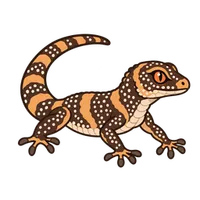
If you love the leopard-gecko body plan but want something cool, moody, and jewel-toned, the Chinese cave gecko is a stunner, dark purple-gray with bright orange bands and big red eyes. Here's the thing most shops won't tell you: these are cave animals, not desert animals. They want it cool, humid, and dim, and they overheat where a leopard gecko would thrive. They're also under real pressure in the wild, so buying captive-bred isn't optional here, it's the whole point.
Worried, or still setting up? Free tools
Or browse common Chinese Cave Gecko questions →
Care at a glance
| Adult size | Around 6-8 in (15-20 cm) total length, including the tail. The genus Goniurosaurus ranges roughly 5.5-9.5 in (14-24 cm) depending on species. |
|---|---|
| Lifespan | 10-12+ years in captivity with good husbandry; some individuals reach 15. |
| Enclosure | Minimum 24 x 18 x 18 in (60 x 45 x 45 cm) of floor-and-height space for a single adult (ReptiFiles); PetMD lists a comparable ~30 x 12 x 12 in minimum. Bigger is always better, and a planted, cave-like build with height suits them since they'll use vertical cork and backgrounds. A pair or small female group needs a 40-gallon-breeder footprint or larger. |
| Basking / warm zone | No hot basking spot. The warm end / warm hide should top out at 80-82°F (27-28°C) and never higher, this is a warm hide, not a heat lamp target. |
| Cool side | 70-77°F (21-25°C). A true cool retreat is essential; ambient room temperature is often close to ideal. |
| Night | 68-72°F (20-22°C); safely down to about 65°F (18°C). A natural night drop is welcomed and normal. |
| UVB & lighting | Low but beneficial. Use a low-output UVB such as an Arcadia ShadeDweller T5 targeting a UVI of just 1.0-2.0 at basking height (about 8-12 in / 20-31 cm away), or an equivalent low (5.0 / 2-5%) tube. As nocturnal shade-dwellers they need far less than a diurnal lizard, so provide plenty of shade and never overexpose them. |
| Humidity | 60-80% is a good working target, cycling lower by day and higher (up to ~90% in humid hides/microclimates) at night. Mist morning and evening and keep a moist hide; track it with a digital hygrometer probe placed mid-enclosure. |
| Substrate | A moisture-holding mix, coconut fiber (coco coir) blended with organic topsoil and/or sphagnum moss, or orchid bark, at least 2-4 in (5-10 cm) deep so it burrows and holds humidity. Spot-clean daily; replace sections that get waterlogged or soiled. |
| Diet | Insectivore. Feed a rotating variety of appropriately sized live insects: crickets, dubia roaches, mealworms, superworms, and occasional treats like waxworms, hornworms, or calci-worms. Juveniles daily; adults every other day (about 3-4 times a week). Gut-load feeders and offer a shallow water dish at all times. |
| Supplements | Dust with calcium: daily for juveniles, every 2-3 feedings for adults. Add a reptile multivitamin once or twice a week. Because UVB is low, use a calcium-with-D3 product (or a multivitamin containing D3) rather than assuming they'll make all their own. |
What it's like to live with a Chinese Cave Gecko
Best kept singly, especially by beginners. Two males will fight, no exceptions, so never house males together. Females can sometimes be kept in small groups, and one male with females works for breeders, but only in a large, heavily furnished enclosure with multiple hides and sightline breaks, and only with close monitoring for bullying or feeding competition. When in doubt, keep them solo; nobody's cave gecko has ever been lonely.
Your first month together
The settling-in period, in order — so you know what's normal and when not to worry.
- Insist on a captive-bred animal with paperwork before you buy, wild-caught Goniurosaurus luii are common in the trade and it's a conservation problem (see Before You Buy).
- Set up and stabilize the enclosure BEFORE the gecko arrives: verify the warm hide never exceeds 82°F/28°C and the cool end stays in the low 70s°F.
- Give a quiet week with minimal handling. These are shy, nocturnal animals, let them settle and explore at night.
- Offer food every 1-2 days but don't panic if a new arrival skips a few meals; stress-fasting is normal at first.
- Mist morning and evening and confirm a humid hide stays damp; watch that first shed comes off cleanly, especially the toes.
- Weigh weekly on a kitchen scale to track that it's eating and holding condition.
Through the year, and as they grow
In summer, heat is the real danger, not cold. Watch that ambient temps don't creep above the low 80s°F; you may need a cooler room, a fan, or AC rather than any added heat. In winter, a natural cool-down and slight night drop is fine and can even help cycle breeders, but don't let it get damp-and-frigid. A modest seasonal temperature and daylight rhythm mimics their limestone-cave home.
The pet store gets these wrong
Common myths, kindly corrected — no shame for having believed them.
- "It's a gecko, so keep it hot and dry like a leopard gecko." Wrong, and dangerous. This is a cool, humid cave species that heat-stresses above ~82°F/28°C. Desert setups can kill it.
- "Geckos climb glass, so no lid worries." Chinese cave geckos are eyelid geckos with no sticky toe pads, they can't stick to smooth surfaces. But they do climb decor and can escape, so a secure lid still matters.
- "Nocturnal reptiles don't need UVB." They do best with a little low-level UVB (UVI ~1.0-2.0); it's not required the way it is for a bearded dragon, but it supports health as long as you also dust with D3.
- "You can keep a pair or trio together to be social." Males fight, and mixed groups need lots of space and supervision. Solo is the safe default; these are not social animals that crave company.
Before you buy
- Goniurosaurus luii is IUCN-listed as Vulnerable and CITES Appendix II, heavily pressured by wild collection for the pet trade. Buy CAPTIVE-BRED only, from a breeder who can show lineage; refusing wild-caught animals is the single most important ethical choice you'll make here.
- They need it cool. If you can't reliably keep a room in the 70s°F and prevent summer spikes above the low 80s°F, this isn't your species.
- This is a look-don't-cuddle pet. They're shy, nocturnal, and don't enjoy handling, budget for a naturalistic bioactive-style enclosure you'll enjoy watching.
- Plan for a 10-15 year commitment and access to an exotics vet.
- Expect higher humidity maintenance (twice-daily misting or a good humid hide) than a typical desert gecko.
💷 The chinese cave gecko itself is usually the cheapest part — see the real cost of keeping one (upfront + ongoing, no sales pitch).
See a reptile vet if…
We can't diagnose from afar — but these are the signs to stop watching and get a professional:
- Cloudy, swollen, or discharging eyes, or eyes kept shut, see an exotics vet.
- Retained shed, especially rings stuck on toes or over the eyes, which can cause loss of toes if ignored.
- Lethargy, refusing food for an extended period, or noticeable weight/fat-tail loss.
- Signs of overheating: gaping, frantic pacing, or hiding at the cool end and refusing to move, check temps immediately, then a vet if it doesn't recover.
- Nasal discharge, open-mouth or labored breathing, or bubbling (possible respiratory infection).
- Lumps, swellings, mouth sores/discoloration, tremors or twitching (possible calcium/metabolic issue), or a prolapse, all warrant a vet.
Heading in? Print the free Chinese Cave Gecko vet-prep sheet — what to bring, what to tell the vet, and the questions to ask.
Never
- Never let it get hot, sustained temps above ~82°F/28°C cause heat stress and can be fatal.
- Never keep two males together, and don't crowd mixed groups into small enclosures.
- Never house it dry like a desert gecko, chronic low humidity causes bad sheds and dehydration.
- Never knowingly buy a wild-caught animal, you'd be funding the decline of a Vulnerable, CITES-listed species.
- Never use loose calcium-sand or overexpose these shade-dwellers to bright UVB.
- Never handle roughly or by the tail, they can drop it; keep handling brief and rare.
Common chinese cave gecko questions
How hard are Chinese Cave Geckos to keep — are they good for beginners?
Intermediate. Not hard to keep once set up, but the margin for error on heat is thin: they come from cool, humid limestone caves and get heat-stressed above about 82°F/28°C, which trips up keepers used to hot desert geckos. The bigger catch is ethical, not technical, most in the trade are wild-caught from a Vulnerable, CITES-listed species, so sourcing captive-bred is part of the job.
What do Chinese Cave Geckos eat?
Insectivore. Feed a rotating variety of appropriately sized live insects: crickets, dubia roaches, mealworms, superworms, and occasional treats like waxworms, hornworms, or calci-worms. Juveniles daily; adults every other day (about 3-4 times a week). Gut-load feeders and offer a shallow water dish at all times.
How big an enclosure do Chinese Cave Geckos need?
Minimum 24 x 18 x 18 in (60 x 45 x 45 cm) of floor-and-height space for a single adult (ReptiFiles); PetMD lists a comparable ~30 x 12 x 12 in minimum. Bigger is always better, and a planted, cave-like build with height suits them since they'll use vertical cork and backgrounds. A pair or small female group needs a 40-gallon-breeder footprint or larger.
What basking temperature do Chinese Cave Geckos need?
No hot basking spot. The warm end / warm hide should top out at 80-82°F (27-28°C) and never higher, this is a warm hide, not a heat lamp target.
What should the cool side be for Chinese Cave Geckos?
70-77°F (21-25°C). A true cool retreat is essential; ambient room temperature is often close to ideal.
What night-time temperature do Chinese Cave Geckos need?
68-72°F (20-22°C); safely down to about 65°F (18°C). A natural night drop is welcomed and normal.
What UVB and lighting do Chinese Cave Geckos need?
Low but beneficial. Use a low-output UVB such as an Arcadia ShadeDweller T5 targeting a UVI of just 1.0-2.0 at basking height (about 8-12 in / 20-31 cm away), or an equivalent low (5.0 / 2-5%) tube. As nocturnal shade-dwellers they need far less than a diurnal lizard, so provide plenty of shade and never overexpose them.
What humidity do Chinese Cave Geckos need?
60-80% is a good working target, cycling lower by day and higher (up to ~90% in humid hides/microclimates) at night. Mist morning and evening and keep a moist hide; track it with a digital hygrometer probe placed mid-enclosure.
What substrate do Chinese Cave Geckos need?
A moisture-holding mix, coconut fiber (coco coir) blended with organic topsoil and/or sphagnum moss, or orchid bark, at least 2-4 in (5-10 cm) deep so it burrows and holds humidity. Spot-clean daily; replace sections that get waterlogged or soiled.
What supplements do Chinese Cave Geckos need?
Dust with calcium: daily for juveniles, every 2-3 feedings for adults. Add a reptile multivitamin once or twice a week. Because UVB is low, use a calcium-with-D3 product (or a multivitamin containing D3) rather than assuming they'll make all their own.
How big do Chinese Cave Geckos get?
Around 6-8 in (15-20 cm) total length, including the tail. The genus Goniurosaurus ranges roughly 5.5-9.5 in (14-24 cm) depending on species.
How long do Chinese Cave Geckos live?
10-12+ years in captivity with good husbandry; some individuals reach 15.
What are the signs Chinese Cave Geckos are sick or need a vet?
See a reptile or exotics vet if you notice: Cloudy, swollen, or discharging eyes, or eyes kept shut, see an exotics vet.; Retained shed, especially rings stuck on toes or over the eyes, which can cause loss of toes if ignored.; Lethargy, refusing food for an extended period, or noticeable weight/fat-tail loss.; Signs of overheating: gaping, frantic pacing, or hiding at the cool end and refusing to move, check temps immediately, then a vet if it doesn't recover.; Nasal discharge, open-mouth or labored breathing, or bubbling (possible respiratory infection).; Lumps, swellings, mouth sores/discoloration, tremors or twitching (possible calcium/metabolic issue), or a prolapse, all warrant a vet..
Your first two weeks · Taming & handling · Behaviours explained · Won't eat? · Stuck shed · When to see a vet

Get the free Chinese Cave Gecko Starter Kit
A one-page setup criteria checklist and a first-30-days plan for your first chinese cave gecko — what to get, what makes each thing matter, and the honest bits the pet shop skips. Join the den and we’ll send it over.
Free reptile care cheat-sheet the moment you join. No spam — unsubscribe anytime. See how we handle your data in our privacy notice.Sources & further reading
This guide was written and fact-checked against these authorities. It's kind, general guidance — not a diagnosis or a substitute for an exotics vet:
- ReptiFiles, Chinese Cave Gecko (Goniurosaurus) Care Sheet — Enclosure minimum 24x18x18 in / 60x45x45 cm; warm hide 80-82°F/27-28°C; cool 72-77°F; night 68-72°F; heat stress above 82°F/28°C; humidity 50-90% day/night cycle; UVB Arcadia ShadeDweller UVI 1.0-2.0; genus size 5.5-9.5 in; lifespan 10-12+ yrs; female groups OK, males don't cohabit.
- PetMD, Chinese Cave Gecko Care Sheet (vet-reviewed by Maria Zayas, DVM) — Adult up to 8 in; 10-12 yr lifespan; ~30x12x12 in min tank; day 80-82°F, cool 70-75°F, night 68-70°F; humidity 60-80%; low UVB; diet and supplement schedule; health warning signs; males can't cohabit.
- The Bio Dude, Chinese Cave Gecko Care Sheet — 20-gal-long minimum / 40-breeder for a pair; ambient 68-75°F, warm spot up to 78°F never over 80°F, safe to 65°F at night; humidity ~60% with microclimates to 90%; 3-4 in substrate; calcium every other feeding, multivitamin weekly.
- Wikipedia, Goniurosaurus luii (taxonomy & conservation) — Family Eublepharidae; native to China (Guangxi, Hainan) and Vietnam (Cao Bang, Lang Son); inhabits limestone caves 100-700 m; IUCN Vulnerable.
- The Rufford Foundation, Population Assessment and Conservation Needs of the Lui Tiger Gecko (Goniurosaurus luii) — Species seriously threatened by over-exploitation for the international pet trade and habitat degradation; CITES Appendix II; low-density, restricted range.
Written and fact-checked by The Baskden Team against veterinarian-authored sources — if your reptile shows a red-flag sign above, see an exotics vet promptly.