
Species · Tropical arboreal gecko
Gargoyle Gecko
Rhacodactylus auriculatus
The crested gecko's hardy cousin — same room-temp, powdered-diet care, but it regrows its tail.
Difficulty: Beginner Printable care sheet →
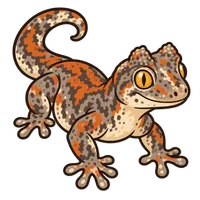
Gargoyle geckos are the crested gecko's slightly wilder-looking cousin — knobbly “horns” over the eyes, gorgeous patterns, and the same wonderfully low-effort care. They live at household room temperature, eat the same complete fruit-based powder, and are hardy and docile. Two nice bonuses over a crestie: they're a bit more insect-hungry, and — unlike a crested gecko — a dropped tail grows back.
Worried, or still setting up? Free tools
Or browse common Gargoyle Gecko questions →
Care at a glance
| Adult size | 4.5–5 in body (7–9 in with tail) |
|---|---|
| Lifespan | 15–20 years |
| Enclosure | Adult minimum 18×18×36 in, oriented vertically (they’re arboreal) and densely planted with climbing cover. Babies do better starting in a smaller enclosure so they can find food. |
| Basking / warm zone | No hot basking zone needed — a gentle low basking spot around 84°F (29°C) at most. Sustained temperatures above the mid-80s°F cause heat stress, so cool enough matters more than warm. |
| Cool side | Warm end ~77–84°F (25–29°C); cool end ~72–74°F (22–23°C). Never above 86°F (30°C) or below 65°F (18°C). |
| Night | Night can fall to room temperature (down to ~65–68°F / 18–20°C); no coloured night bulbs. |
| UVB & lighting | Low UVB is recommended (Ferguson Zone 1): UVI 1.0–2.0 at the basking branch (a low-percentage T5 bulb). They also get D3 from a complete diet, but gentle UVB is a healthy bonus. |
| Humidity | 50–70%, allowed to dry back between mistings — constant sogginess breeds mould and respiratory illness. Mist in the evening (and again in the morning if it dries out). |
| Substrate | Simple paper towel (great for beginners) or a bioactive tropical mix (topsoil/coconut fibre). Loose particulate can pose an impaction risk to very small geckos. |
| Diet | Omnivore, and more carnivorous than a crestie: a complete crested/gargoyle gecko diet (CGD) powder — e.g. Pangea or Repashy — mixed with water, PLUS insects. Hatchlings/juveniles: CGD daily + insects every other day; adults: CGD every other day + insects ~2×/week. |
| Supplements | Dust the insects with calcium; a complete CGD is otherwise balanced. |
🦎 Did you know? — Gargoyle Gecko fun facts
Little true delights about the gargoyle gecko — each one checked against a named source, no pet-shop myths.
- The gargoyle gecko lives only in southern New Caledonia, home to its close giant-gecko relatives. The Reptile Database
- Its name auriculatus is Latin for "ear," after the little earlobe-like lobes around its ear openings. The Reptile Database
- Unusually for a small gecko, the gargoyle gecko’s wild diet includes other lizards. The Reptile Database
What it's like to live with a Gargoyle Gecko
Gargoyle geckos are the crested gecko's slightly sturdier, bolder cousin, and they keep almost identically — nocturnal, arboreal, a complete powdered diet, and no hot lamp to fuss over. Many keepers find gargoyles a touch calmer in the hand than cresties, and they have one real advantage: a gargoyle can regrow a dropped tail, whereas a crested gecko cannot. By day they wedge in and rest; by night they climb, hunt, and explore their vertical world.
Your first month together
The settling-in period, in order — so you know what's normal and when not to worry.
- Let it settle for a week with light handling — hiding by day and roaming at night is exactly right.
- Mist in the evenings for humidity and drinking droplets, and offer complete gecko diet every other evening.
- Keep it cool (under about 82°F) — like cresties, overheating is the real risk, not cold.
- Watch for the first clean shed, helped along by that evening misting.
- Begin gentle "gecko-walking" handling low over a soft surface once it is settled and feeding.
Through the year, and as they grow
Gargoyles are fairly steady year-round but slow and eat a little less in the cooler months, as they naturally would. Hatchlings grow quickly on more frequent food, while adults settle into the every-other-day rhythm. Keep an eye on summer temperatures so the enclosure never overheats.
The pet store gets these wrong
Common myths, kindly corrected — no shame for having believed them.
- “Gargoyle care = crested care exactly” — mostly, but gargs are more insect-hungry, want a taller enclosure, and CAN regrow a dropped tail.
- They need a heat lamp — usually not; room temperature is ideal and overheating is the real danger.
- They only eat fruit/CGD — no; they genuinely want regular insects too.
Before you buy
- An 18×18×36 in vertical, planted enclosure.
- A way to keep it under ~86°F in summer (heat is the real risk, not cold).
- Commercial CGD powder, a mister, AND a supply of feeder insects.
- A 15–20 year commitment.
💷 The gargoyle gecko itself is usually the cheapest part — see the real cost of keeping one (upfront + ongoing, no sales pitch).
See a reptile vet if…
We can't diagnose from afar — but these are the signs to stop watching and get a professional:
- A wavy, rubbery jaw or a permanently kinked tail (signs pointing to metabolic bone disease / calcium deficiency).
- Gaping, lethargy, or collapse in heat — treat overheating as an emergency: cool it down and call a vet.
- Not eating with visible weight loss over weeks.
- Stuck shed on the toes (can cost toes) or eyes.
- A firm, swollen belly with no droppings (possible impaction).
Heading in? Print the free Gargoyle Gecko vet-prep sheet — what to bring, what to tell the vet, and the questions to ask.
Never
- Never let the enclosure exceed the mid-80s°F — heat kills New Caledonian geckos faster than cold.
- Never rely on fruit or baby food as the diet.
- Never keep it constantly soaking wet (mould and respiratory infection).
- Never house two together — gargoyle geckos are notably cannibalistic and will eat each other.
Common gargoyle gecko questions
How hard are Gargoyle Geckos to keep — are they good for beginners?
Beginner. As easy as the crested gecko — room temperature, a complete powdered diet, no blazing lights. A touch more carnivorous, and it can regrow its tail.
What do Gargoyle Geckos eat?
Omnivore, and more carnivorous than a crestie: a complete crested/gargoyle gecko diet (CGD) powder — e.g. Pangea or Repashy — mixed with water, PLUS insects. Hatchlings/juveniles: CGD daily + insects every other day; adults: CGD every other day + insects ~2×/week.
How big an enclosure do Gargoyle Geckos need?
Adult minimum 18×18×36 in, oriented vertically (they’re arboreal) and densely planted with climbing cover. Babies do better starting in a smaller enclosure so they can find food.
What basking temperature do Gargoyle Geckos need?
No hot basking zone needed — a gentle low basking spot around 84°F (29°C) at most. Sustained temperatures above the mid-80s°F cause heat stress, so cool enough matters more than warm.
What should the cool side be for Gargoyle Geckos?
Warm end ~77–84°F (25–29°C); cool end ~72–74°F (22–23°C). Never above 86°F (30°C) or below 65°F (18°C).
What night-time temperature do Gargoyle Geckos need?
Night can fall to room temperature (down to ~65–68°F / 18–20°C); no coloured night bulbs.
What UVB and lighting do Gargoyle Geckos need?
Low UVB is recommended (Ferguson Zone 1): UVI 1.0–2.0 at the basking branch (a low-percentage T5 bulb). They also get D3 from a complete diet, but gentle UVB is a healthy bonus.
What humidity do Gargoyle Geckos need?
50–70%, allowed to dry back between mistings — constant sogginess breeds mould and respiratory illness. Mist in the evening (and again in the morning if it dries out).
What substrate do Gargoyle Geckos need?
Simple paper towel (great for beginners) or a bioactive tropical mix (topsoil/coconut fibre). Loose particulate can pose an impaction risk to very small geckos.
What supplements do Gargoyle Geckos need?
Dust the insects with calcium; a complete CGD is otherwise balanced.
How big do Gargoyle Geckos get?
4.5–5 in body (7–9 in with tail)
How long do Gargoyle Geckos live?
15–20 years
What are the signs Gargoyle Geckos are sick or need a vet?
See a reptile or exotics vet if you notice: A wavy, rubbery jaw or a permanently kinked tail (signs pointing to metabolic bone disease / calcium deficiency).; Gaping, lethargy, or collapse in heat — treat overheating as an emergency: cool it down and call a vet.; Not eating with visible weight loss over weeks.; Stuck shed on the toes (can cost toes) or eyes.; A firm, swollen belly with no droppings (possible impaction)..
Your first two weeks · Taming & handling · Behaviours explained · Won't eat? · Stuck shed · When to see a vet

Get the free Gargoyle Gecko Starter Kit
A one-page setup criteria checklist and a first-30-days plan for your first gargoyle gecko — what to get, what makes each thing matter, and the honest bits the pet shop skips. Join the den and we’ll send it over.
Free reptile care cheat-sheet the moment you join. No spam — unsubscribe anytime. See how we handle your data in our privacy notice.Sources & further reading
This guide was written and fact-checked against these authorities. It's kind, general guidance — not a diagnosis or a substitute for an exotics vet:
- ReptiFiles — Gargoyle Gecko Care — Min 18×18×36 vertical, basking ~84°F / warm 77–84°F / cool 72–74°F, UVI 1.0–2.0 (Zone 1), humidity 50–70%, omnivore CGD + insects schedule, cannibalism.
- Association of Reptilian & Amphibian Veterinarians (ARAV) — Find-an-exotics-vet; MBD.
- Merck Veterinary Manual — reptiles — Metabolic bone disease, thermal stress, dysecdysis.
Written and fact-checked by The Baskden Team against veterinarian-authored sources — if your reptile shows a red-flag sign above, see an exotics vet promptly.