
Species · Tropical arboreal gecko
Leachianus Gecko
Rhacodactylus leachianus
The largest gecko in the world — a chunky, long-lived New Caledonian giant that can become surprisingly tame.
Difficulty: Intermediate Printable care sheet →
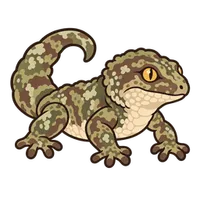
The leachie is the biggest gecko alive, a chunky, mossy, prehistoric-looking tree-dweller from New Caledonia that grunts, growls, and grips like a small dinosaur. The good news for keepers: they don't need a scorching desert setup, just a tall, humid, well-planted enclosure at moderate room-ish temps and a powdered gecko diet they'll happily lick up. The catch is space, patience, and respect for a jaw that can genuinely draw blood. Get those three right and you've got a striking, chatty animal that can share your home for decades.
Worried, or still setting up? Free tools
Or browse common Leachianus Gecko questions →
Care at a glance
| Adult size | Largest living gecko. The big Grande Terre form (R. l. leachianus) reaches roughly 14–17 in / 36–43 cm total length; the smaller Henkel's form (R. l. henkeli) is about 9–12 in / 23–30 cm. Heavy-bodied adults can weigh several hundred grams (up to ~500 g reported in the largest individuals). |
|---|---|
| Lifespan | Commonly 20–30 years in good care; some sources report 30 years and beyond (occasionally cited up to ~50). A true multi-decade pet. |
| Enclosure | Vertical space is the priority. For an adult Grande Terre leachie, a minimum of 48"L x 24"W x 48"H (120 x 60 x 120 cm); for the smaller Henkel's form, a minimum of 36"L x 18"W x 36"H (90 x 45 x 90 cm). Bigger is always better for these arboreal climbers, and taller matters more than long. |
| Basking / warm zone | A LOW, gentle basking/warm spot around 82–88°F (28–31°C). This is not a desert hotspot, just a modest warm zone at the top of the enclosure. (ReptiFiles cites 86–88°F/30–31°C; some sources use a cooler 82–85°F/28–29°C target.) |
| Cool side | Ambient/cool end around 72–78°F (22–26°C) through most of the enclosure. Leachies are comfortable at moderate room temperatures and can overheat easily, so a cool retreat is essential. |
| Night | A natural drop to about 66–72°F (19–22°C) at night is fine and even beneficial. No supplemental night heat is usually needed if the room stays in this range. |
| UVB & lighting | Low but genuinely beneficial. Leachies are nocturnal/crepuscular and only take small amounts of natural UV, so use a LOW-output tube: Arcadia ShadeDweller (2.4%) for smaller/shorter enclosures, or an Arcadia Forest 6% / Zoo Med T5 HO ReptiSun 5.0 for tall enclosures, aiming for a UVI of about 2.0–3.0 at the top basking branch (verify placement with a Solarmeter). Run ~11–13 hours/day. They can survive without UVB if D3 is supplemented in the diet, but low-level UVB is the more natural, robust option. |
| Humidity | High: aim for an average of 60–80% (measured with a digital probe hygrometer in the middle of the enclosure). It's healthy for humidity to swing lower in the day (~50%) and spike near 100% overnight after misting. Mist 1–2x daily; always allow good airflow so it dries between mistings. |
| Substrate | A moisture-holding bioactive-style mix: organic topsoil + coconut fiber (roughly 60/40), or ready-made options like Zoo Med ReptiSoil, Eco Earth, or Exo Terra Plantation Soil, at least ~2–3 in / 5–8 cm deep, topped with leaf litter. Add cork bark, dense branches, and live or sturdy fake plants for climbing and cover. A bioactive setup with a cleanup crew works very well. |
| Diet | Omnivorous. The staple is a complete powdered crested-gecko-style diet (Pangea, Repashy, Black Panther Zoological, Zoo Med, Lugarti), offered in a dish and simply mixed with water. Supplement with appropriately sized live insects (dubia/discoid roaches, crickets, locusts, hornworms). Rough schedule: juveniles get CGD daily plus insects a few times a week; adults get CGD every other day (roughly 2x/week) plus insects about 1–2x/week. Very occasional larger prey (a pinky) can be offered to big adults but is not necessary. |
| Supplements | Complete powdered gecko diets are already fortified, so most calcium/vitamins come from the food. Dust live feeder insects with a plain calcium (or low-D3 calcium) powder, e.g. Arcadia CalciumPro Mg, Miner-All, or Repashy SuperCal NoD. If you rely heavily on insects or run no UVB, use a calcium-with-D3 and a multivitamin more deliberately, and add extra calcium for breeding females. Don't over-supplement on top of a fortified diet. |
What it's like to live with a Leachianus Gecko
Keep them solo. Leachies are highly territorial, and even long-established pairs or groups can turn on each other suddenly and inflict serious bite wounds. Cohabitation is only for experienced breeders with backup enclosures, constant supervision, and a plan to separate. For a pet, one gecko per enclosure is the safe, standard answer.
Your first month together
The settling-in period, in order — so you know what's normal and when not to worry.
- Set up and fully cycle the enclosure BEFORE the gecko arrives: verify the warm zone (~82-88F/28-31C), cool end (72-78F/22-26C), and 60-80% humidity with real thermometers and a probe hygrometer.
- Give a full 2 weeks of hands-off settling time. Fresh food and water, light misting, and otherwise leave it alone.
- Offer prepared gecko diet in a dish every 1-2 days; don't panic if a stressed new gecko skips a few meals early on.
- Only after it's eating reliably, start very short handling sessions (about 5 minutes, every other day), scooping from below and supporting the whole body. Handle in the evening when they're naturally active.
- Watch and log weight, sheds, and stool. A steady or rising weight is your best early sign that things are going well.
Through the year, and as they grow
Leachies do well with gentle seasonal cycling. It's normal (and healthy) to let temperatures run a few degrees warmer in summer and cooler in winter, and to lengthen the photoperiod in summer (~13–14 hrs) and shorten it in winter (~10–11 hrs). Breeders use a cooler winter rest to trigger reproduction; pet keepers can simply follow mild room-season swings. Appetite may dip slightly in the cooler months.
The pet store gets these wrong
Common myths, kindly corrected — no shame for having believed them.
- "They only need room temperature." Mostly true that they hate heat, but the modern consensus is they still benefit from a LOW warm/basking zone (~82-88F) and a proper thermal gradient, not a flat room-temp box.
- "Nocturnal geckos don't need UVB." They can be kept without it if diet D3 is right, but low-level UVB is natural and beneficial. "No UVB" is outdated, not mandatory.
- "You can house them together like fish." No. Leachies are territorial and even bonded pairs can suddenly, violently fall out. Solo is the default.
- "They're a cuddly, hands-on pet." They tolerate short, gentle handling at best. They don't crave it, they can be defensive, and that big jaw can lacerate skin.
- "It's just a bigger crested gecko." Same food style, but leachies are far larger, longer-lived, more territorial, and stronger-jawed, a bigger commitment in every sense.
Before you buy
- Vertical space and a decades-long commitment: a 4-foot-tall enclosure and potentially 20-30+ years of care.
- A serious bite: leachies have powerful jaws that can break skin. Fine for a prepared adult, a real consideration around young kids.
- They must be housed alone unless you're an experienced breeder with separation plans.
- Ongoing running costs: quality prepared diet, insects, humidity/UVB gear, and a tall well-planted (ideally bioactive) setup.
- Buy captive-bred from a reputable breeder and know your locality/subspecies (Grande Terre vs Henkel's vs island forms) so you can size the enclosure correctly.
💷 The leachianus gecko itself is usually the cheapest part — see the real cost of keeping one (upfront + ongoing, no sales pitch).
See a reptile vet if…
We can't diagnose from afar — but these are the signs to stop watching and get a professional:
- Not eating for an extended period paired with visible weight loss or a sunken/thin body and tail base.
- Trouble walking or gripping, tremors, jaw softening, or a rubbery jaw/limbs, possible metabolic bone disease; see an exotics vet.
- Stuck shed, especially trapped skin around toes, tail tip, or eyes that could cut off circulation.
- Mouth held open, drooling, gaping, bubbling, or wheezing/clicking breathing, possible mouth or respiratory infection.
- Runny, bloody, or persistently foul stool, visible parasites, prolapse, unusual lumps, or a wound/bite that isn't healing.
- Any of these warrant a reptile-experienced (exotics) vet. This guide is triage, not a diagnosis.
Heading in? Print the free Leachianus Gecko vet-prep sheet — what to bring, what to tell the vet, and the questions to ask.
Never
- Never keep two leachies together as a casual pet setup, they can seriously injure or kill each other.
- Never expose them to sustained high heat (mid-80s F ambient and up); they overheat far more easily than desert reptiles.
- Never grab or restrain by the tail, it can drop and a leachie tail does not regenerate to the original look.
- Never rely on a hot, dry, desert-style setup, they need humidity and moderate temps, not a heat lamp bake.
- Never skip quarantine time and a probe hygrometer/thermometer, guessing on humidity and temperature is how new geckos get sick.
Common leachianus gecko questions
How hard are Leachianus Geckos to keep — are they good for beginners?
Intermediate. The husbandry itself is forgiving once dialed in (moderate temps, a powdered diet, no daily hotspot chasing), but leachies are a long-term, tall-enclosure commitment with a legendary bite and a temperament that ranges from mellow to genuinely feisty. Not a starter-in-your-hand gecko, but very doable for a patient keeper who does the reading first.
What do Leachianus Geckos eat?
Omnivorous. The staple is a complete powdered crested-gecko-style diet (Pangea, Repashy, Black Panther Zoological, Zoo Med, Lugarti), offered in a dish and simply mixed with water. Supplement with appropriately sized live insects (dubia/discoid roaches, crickets, locusts, hornworms). Rough schedule: juveniles get CGD daily plus insects a few times a week; adults get CGD every other day (roughly 2x/week) plus insects about 1–2x/week. Very occasional larger prey (a pinky) can be offered to big adults but is not necessary.
How big an enclosure do Leachianus Geckos need?
Vertical space is the priority. For an adult Grande Terre leachie, a minimum of 48"L x 24"W x 48"H (120 x 60 x 120 cm); for the smaller Henkel's form, a minimum of 36"L x 18"W x 36"H (90 x 45 x 90 cm). Bigger is always better for these arboreal climbers, and taller matters more than long.
What basking temperature do Leachianus Geckos need?
A LOW, gentle basking/warm spot around 82–88°F (28–31°C). This is not a desert hotspot, just a modest warm zone at the top of the enclosure. (ReptiFiles cites 86–88°F/30–31°C; some sources use a cooler 82–85°F/28–29°C target.)
What should the cool side be for Leachianus Geckos?
Ambient/cool end around 72–78°F (22–26°C) through most of the enclosure. Leachies are comfortable at moderate room temperatures and can overheat easily, so a cool retreat is essential.
What night-time temperature do Leachianus Geckos need?
A natural drop to about 66–72°F (19–22°C) at night is fine and even beneficial. No supplemental night heat is usually needed if the room stays in this range.
What UVB and lighting do Leachianus Geckos need?
Low but genuinely beneficial. Leachies are nocturnal/crepuscular and only take small amounts of natural UV, so use a LOW-output tube: Arcadia ShadeDweller (2.4%) for smaller/shorter enclosures, or an Arcadia Forest 6% / Zoo Med T5 HO ReptiSun 5.0 for tall enclosures, aiming for a UVI of about 2.0–3.0 at the top basking branch (verify placement with a Solarmeter). Run ~11–13 hours/day. They can survive without UVB if D3 is supplemented in the diet, but low-level UVB is the more natural, robust option.
What humidity do Leachianus Geckos need?
High: aim for an average of 60–80% (measured with a digital probe hygrometer in the middle of the enclosure). It's healthy for humidity to swing lower in the day (~50%) and spike near 100% overnight after misting. Mist 1–2x daily; always allow good airflow so it dries between mistings.
What substrate do Leachianus Geckos need?
A moisture-holding bioactive-style mix: organic topsoil + coconut fiber (roughly 60/40), or ready-made options like Zoo Med ReptiSoil, Eco Earth, or Exo Terra Plantation Soil, at least ~2–3 in / 5–8 cm deep, topped with leaf litter. Add cork bark, dense branches, and live or sturdy fake plants for climbing and cover. A bioactive setup with a cleanup crew works very well.
What supplements do Leachianus Geckos need?
Complete powdered gecko diets are already fortified, so most calcium/vitamins come from the food. Dust live feeder insects with a plain calcium (or low-D3 calcium) powder, e.g. Arcadia CalciumPro Mg, Miner-All, or Repashy SuperCal NoD. If you rely heavily on insects or run no UVB, use a calcium-with-D3 and a multivitamin more deliberately, and add extra calcium for breeding females. Don't over-supplement on top of a fortified diet.
How big do Leachianus Geckos get?
Largest living gecko. The big Grande Terre form (R. l. leachianus) reaches roughly 14–17 in / 36–43 cm total length; the smaller Henkel's form (R. l. henkeli) is about 9–12 in / 23–30 cm. Heavy-bodied adults can weigh several hundred grams (up to ~500 g reported in the largest individuals).
How long do Leachianus Geckos live?
Commonly 20–30 years in good care; some sources report 30 years and beyond (occasionally cited up to ~50). A true multi-decade pet.
What are the signs Leachianus Geckos are sick or need a vet?
See a reptile or exotics vet if you notice: Not eating for an extended period paired with visible weight loss or a sunken/thin body and tail base.; Trouble walking or gripping, tremors, jaw softening, or a rubbery jaw/limbs, possible metabolic bone disease; see an exotics vet.; Stuck shed, especially trapped skin around toes, tail tip, or eyes that could cut off circulation.; Mouth held open, drooling, gaping, bubbling, or wheezing/clicking breathing, possible mouth or respiratory infection.; Runny, bloody, or persistently foul stool, visible parasites, prolapse, unusual lumps, or a wound/bite that isn't healing.; Any of these warrant a reptile-experienced (exotics) vet. This guide is triage, not a diagnosis..
Your first two weeks · Taming & handling · Behaviours explained · Won't eat? · Stuck shed · When to see a vet

Get the free Leachianus Gecko Starter Kit
A one-page setup criteria checklist and a first-30-days plan for your first leachianus gecko — what to get, what makes each thing matter, and the honest bits the pet shop skips. Join the den and we’ll send it over.
Free reptile care cheat-sheet the moment you join. No spam — unsubscribe anytime. See how we handle your data in our privacy notice.Sources & further reading
This guide was written and fact-checked against these authorities. It's kind, general guidance — not a diagnosis or a substitute for an exotics vet:
- ReptiFiles — Leachie Gecko Care Sheet — Detailed modern care sheet: enclosure sizes per subspecies, basking 86-88F/ambient 72-78F/night 66-72F, UVI 2.0-3.0, 60-80% humidity, diet and supplement schedules, cohabitation warning.
- Reptiles Magazine — The Care and Breeding of Rhacodactylus leachianus — Size (up to ~20 in / ~500 g), lifespan 30-50, room-temp-around-74F husbandry, native temp range, powerful bite, and pair-compatibility risk.
- DubiaRoaches.com — How to Care for Your Leachianus Gecko — Cross-check on temps (basking 82-85F), 60-80% humidity, UVB bulb options (Arcadia ShadeDweller/Forest 6%, Zoo Med ReptiSun 5.0), diet frequency, and the 'room temperature only' myth debunk.
- Wikipedia — Rhacodactylus leachianus — Taxonomy (family Diplodactylidae), status as largest extant gecko / island gigantism, nocturnal omnivorous arboreal natural history and native range.
- The Bio Dude — Rhacodactylus leachianus Caresheet (bioactive) — Bioactive substrate/husbandry and low-UVB (ShadeDweller 2.4%) rationale corroboration.
Written and fact-checked by The Baskden Team against veterinarian-authored sources — if your reptile shows a red-flag sign above, see an exotics vet promptly.