
Species · Tropical arboreal gecko
Mourning Gecko
Lepidodactylus lugubris
The all-female gecko that clones itself — tiny, cheap, and unusually social, kept happily in colonies.
Difficulty: Beginner Printable care sheet →
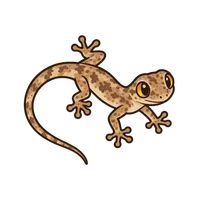
Mourning geckos are pocket-sized arboreal geckos with a genuinely wild trick: the entire species is female, and they reproduce by parthenogenesis — cloning themselves, no male required. That makes them one of the very few reptiles you keep as a little social colony, chirping and hunting together at dusk. They're tiny, cheap, and about as low-maintenance as a reptile gets, which is exactly why they're often dismissed as mere feeder animals. Give them a planted vertical tank, a gentle warm spot, UVB, and a good diet, though, and a mourning gecko colony is a charming, self-sustaining little ecosystem.
Worried, or still setting up? Free tools
Or browse common Mourning Gecko questions →
Care at a glance
| Adult size | Tiny — 3.5–4 in (8.5–10 cm) total length |
|---|---|
| Lifespan | 5–10 years (some keepers report up to 15) |
| Enclosure | Small and VERTICAL: 2–3 adults do well in a 12×12×18 in (30×30×45 cm) planted arboreal tank — roughly a 10-gallon on its end — adding about 5 gallons of space per extra 2 geckos. They are arboreal, so height and dense planting matter more than floor space. Seal every gap: they are minute escape artists that climb glass and hang upside-down from the mesh. |
| Basking / warm zone | A gentle warm spot of 80–85°F (26–29°C) at the top of the tank from a low-wattage bulb — NOT the "no heat, room temperature is fine" myth. Consistently above 85°F risks heat stroke. |
| Cool side | Cooler lower zone 70–75°F (21–24°C), giving a vertical gradient. Consistently at or below 72°F causes lethargy and poor appetite. |
| Night | Night 65–72°F (18–22°C) — a natural drop is fine. |
| UVB & lighting | UVB is beneficial even though they’re often kept without it — it noticeably helps healthy growth, especially in hatchlings. A low-output T5 HO bulb (Arcadia ShadeDweller 2.4%) giving UVI 1.0–3.0. Because they bask upside-down right against the top mesh, pick a bulb rated safe at that short distance. Replace yearly. |
| Humidity | Ambient 60–70%, spiking to 80–90% after misting, then allowed to dry back to 50–60% before you mist again (constant wetness grows mould). Mist 1–2× daily depending on ventilation. Live plants help hold humidity and give the colony cover. |
| Substrate | A moisture-holding bioactive-style mix (topsoil / coconut fibre) topped with leaf litter, planted with pothos and other sturdy climbers. For an arboreal micro-gecko the vertical cover matters more than the floor. |
| Diet | Easy: a complete powdered crested-gecko diet (CGD) as the base — keep a few flavours/brands on hand — plus small live insects (fruit flies, pinhead crickets, small roaches) a couple of times a week for enrichment and protein. They lap CGD from a ledge dish and hunt the insects at dusk. |
| Supplements | Lightly dust the feeder insects with calcium + D3 — this matters MORE than for most geckos, because a self-cloning colony lays eggs constantly and that drains calcium. A good CGD already carries much of the vitamin load, so don’t over-do the multivitamin. |
🦎 Did you know? — Mourning Gecko fun facts
Little true delights about the mourning gecko — each one checked against a named source, no pet-shop myths.
- Mourning geckos are all female and reproduce by parthenogenesis, so each hatchling is essentially a clone of its mother — the rare males are usually sterile. Wikipedia
- A female mourning gecko lays just one or two eggs at a time and glues them to a protected surface, adding a fresh clutch every few weeks. Wikipedia
What it's like to live with a Mourning Gecko
A mourning gecko colony is less "a pet" and more "a tiny living terrarium you tend". They are far too small and quick to handle, so the whole joy is observational: watch them wake at dusk, chirp to one another, stalk fruit flies, and lap CGD from a ledge. Because they clone themselves, a group quietly grows over time — which is charming, but means you should have a plan for the extras (many keepers trade or feed them off). They are genuinely one of the lowest-effort reptiles to keep well, and a brilliant planted-tank project.
Your first month together
The settling-in period, in order — so you know what's normal and when not to worry.
- Set up a planted, vertical, escape-proof tank with a gentle warm spot and UVB before they arrive — check every seam, because a hatchling can squeeze through a surprisingly small gap.
- Expect them to hide by day and come alive at dusk — chirping and hunting in the evening is normal, healthy colony behaviour.
- Offer fresh CGD every day or two and dust a small insect feed with calcium + D3 a couple of times a week from the start.
- Don’t try to handle them — they’re too fast and fragile, and can drop their tail. Interact by feeding and watching.
- Watch for steady feeding and activity, and don’t be surprised when little white eggs (and then hatchlings) start appearing — that’s a thriving colony.
Through the year, and as they grow
The defining fact of mourning gecko keeping is that they are parthenogenetic — an all-female species that clones itself, so a colony reproduces to fit whatever space you give it, year-round. Plan for a growing population (and for re-homing or feeding off the surplus), and keep the calcium up, because near-constant egg-laying is a real drain that leads to metabolic bone disease if the diet and UVB aren’t right.
The pet store gets these wrong
Common myths, kindly corrected — no shame for having believed them.
- They’re just feeders and need no real care — they’re easy, but still need proper temps, humidity, UVB, and calcium to thrive.
- Room temperature with no heat is fine — no; they want a gentle 80–85°F warm zone and suffer below ~72°F.
- You need a male to breed them / a single one is lonely — no; they’re all-female and self-clone, and a colony multiplies on its own.
- UVB is pointless for a small nocturnal gecko — outdated; UVB measurably helps growth, especially in hatchlings.
- A tiny tank is throwaway — a colony grows, so give vertical, planted space and plan for it.
Before you buy
- A planted, vertical, genuinely escape-proof 12×12×18 in (or larger) tank with live plants.
- A gentle warm spot, UVB, and a misting routine — "easy" is not "no equipment".
- A plan for a growing colony — they clone themselves, so numbers rise over time.
- Calcium + D3, a good CGD, and an exotics vet who sees small lizards.
💷 The mourning gecko itself is usually the cheapest part — see the real cost of keeping one (upfront + ongoing, no sales pitch).
See a reptile vet if…
We can't diagnose from afar — but these are the signs to stop watching and get a professional:
- A rubbery jaw, a kinked spine or tail, or wavy/soft limbs (metabolic bone disease — a real risk in constantly egg-laying females on too little calcium/UVB).
- A female straining, swollen, and off her food, or visibly egg-bound (dystocia).
- Sunken, wrinkled skin or stuck shed on the toes and tail (dehydration / bad shed).
- Gaping, lethargy, and hiding when the tank is too warm (heat stress above ~85°F).
- A firm, swollen belly with no droppings (impaction), or any tissue protruding from the vent (prolapse).
Heading in? Print the free Mourning Gecko vet-prep sheet — what to bring, what to tell the vet, and the questions to ask.
Never
- Never assume "no heat needed" — give a gentle warm gradient; they suffer below ~72°F.
- Never skip calcium + D3 (and ideally UVB) — constant egg-laying drains calcium and causes MBD.
- Never use a loose or gappy lid — they are tiny, glass-climbing escape artists.
- Never let it run consistently above 85°F — heat stroke follows.
- Never try to handle them like a bigger gecko — they’re too fragile and will drop their tail.
Common mourning gecko questions
How hard are Mourning Geckos to keep — are they good for beginners?
Beginner. One of the easiest and cheapest reptiles there is — tiny, hardy, and kept happily in a small colony. The catches: they are too small to handle, they SELF-CLONE and multiply to fill their space, and "easy" still means a gentle warm gradient, UVB, and enough calcium to support constant egg-laying. A superb first gecko for someone who wants to watch, not hold.
What do Mourning Geckos eat?
Easy: a complete powdered crested-gecko diet (CGD) as the base — keep a few flavours/brands on hand — plus small live insects (fruit flies, pinhead crickets, small roaches) a couple of times a week for enrichment and protein. They lap CGD from a ledge dish and hunt the insects at dusk.
How big an enclosure do Mourning Geckos need?
Small and VERTICAL: 2–3 adults do well in a 12×12×18 in (30×30×45 cm) planted arboreal tank — roughly a 10-gallon on its end — adding about 5 gallons of space per extra 2 geckos. They are arboreal, so height and dense planting matter more than floor space. Seal every gap: they are minute escape artists that climb glass and hang upside-down from the mesh.
What basking temperature do Mourning Geckos need?
A gentle warm spot of 80–85°F (26–29°C) at the top of the tank from a low-wattage bulb — NOT the "no heat, room temperature is fine" myth. Consistently above 85°F risks heat stroke.
What should the cool side be for Mourning Geckos?
Cooler lower zone 70–75°F (21–24°C), giving a vertical gradient. Consistently at or below 72°F causes lethargy and poor appetite.
What night-time temperature do Mourning Geckos need?
Night 65–72°F (18–22°C) — a natural drop is fine.
What UVB and lighting do Mourning Geckos need?
UVB is beneficial even though they’re often kept without it — it noticeably helps healthy growth, especially in hatchlings. A low-output T5 HO bulb (Arcadia ShadeDweller 2.4%) giving UVI 1.0–3.0. Because they bask upside-down right against the top mesh, pick a bulb rated safe at that short distance. Replace yearly.
What humidity do Mourning Geckos need?
Ambient 60–70%, spiking to 80–90% after misting, then allowed to dry back to 50–60% before you mist again (constant wetness grows mould). Mist 1–2× daily depending on ventilation. Live plants help hold humidity and give the colony cover.
What substrate do Mourning Geckos need?
A moisture-holding bioactive-style mix (topsoil / coconut fibre) topped with leaf litter, planted with pothos and other sturdy climbers. For an arboreal micro-gecko the vertical cover matters more than the floor.
What supplements do Mourning Geckos need?
Lightly dust the feeder insects with calcium + D3 — this matters MORE than for most geckos, because a self-cloning colony lays eggs constantly and that drains calcium. A good CGD already carries much of the vitamin load, so don’t over-do the multivitamin.
How big do Mourning Geckos get?
Tiny — 3.5–4 in (8.5–10 cm) total length
How long do Mourning Geckos live?
5–10 years (some keepers report up to 15)
What are the signs Mourning Geckos are sick or need a vet?
See a reptile or exotics vet if you notice: A rubbery jaw, a kinked spine or tail, or wavy/soft limbs (metabolic bone disease — a real risk in constantly egg-laying females on too little calcium/UVB).; A female straining, swollen, and off her food, or visibly egg-bound (dystocia).; Sunken, wrinkled skin or stuck shed on the toes and tail (dehydration / bad shed).; Gaping, lethargy, and hiding when the tank is too warm (heat stress above ~85°F).; A firm, swollen belly with no droppings (impaction), or any tissue protruding from the vent (prolapse)..
Your first two weeks · Taming & handling · Behaviours explained · Won't eat? · Stuck shed · When to see a vet

Get the free Mourning Gecko Starter Kit
A one-page setup criteria checklist and a first-30-days plan for your first mourning gecko — what to get, what makes each thing matter, and the honest bits the pet shop skips. Join the den and we’ll send it over.
Free reptile care cheat-sheet the moment you join. No spam — unsubscribe anytime. See how we handle your data in our privacy notice.Sources & further reading
This guide was written and fact-checked against these authorities. It's kind, general guidance — not a diagnosis or a substitute for an exotics vet:
- ReptiFiles — Mourning Gecko Care — 3.5–4 in, ~10 yr (claims to 15), parthenogenetic (all-female, clones); 2–3 adults in 12×12×18 in (+5 gal per extra 2); warm top 80–85°F / cool 70–75°F / night 65–72°F (>85°F heat stroke, ≤72°F lethargy); UVB beneficial UVI 1.0–3.0 (Arcadia ShadeDweller 2.4%); humidity 60–70% (spiking 80–90%, dry to 50–60%), mist 1–2×/day; CGD + small insects + calcium/D3; colony-social, cohabits with dart frogs.
- Baines et al. (2016), “How much UVB does my reptile need? The UV-Tool” — Low Ferguson Zone 1–2 target UVI 1.0–3.0 for a small crepuscular/shade-dwelling gecko.
- Association of Reptilian & Amphibian Veterinarians (ARAV) — Find-an-exotics-vet; MBD, dystocia (egg-binding), dehydration.
- Merck Veterinary Manual — reptiles — Metabolic bone disease, dystocia, dysecdysis, impaction.
Written and fact-checked by The Baskden Team against veterinarian-authored sources — if your reptile shows a red-flag sign above, see an exotics vet promptly.