
Species · Beginner snake
Rosy Boa
Lichanura trivirgata
One of the gentlest first snakes — a small desert boa that stays under 3 ft and lives for decades.
Difficulty: Beginner Printable care sheet →
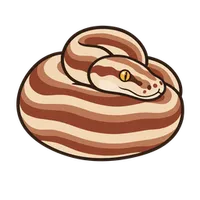
If you want a first snake that's genuinely gentle, stays under three feet, and lives for decades, the rosy boa is hard to beat. It's a chunky, slow desert boa from the American Southwest and Baja that would rather cuddle up in your hands than race away. Give it a warm-to-cool thermal gradient, a bone-dry setup with a snug hide at each end, and the occasional mouse, and this little boa will basically run itself.
Worried, or still setting up? Free tools
Or browse common Rosy Boa questions →
Care at a glance
| Adult size | Roughly 24–36 in (60–90 cm) for most, with some localities as small as 17 in and record animals near 44 in (~112 cm). A stocky, heavy-bodied snake for its length. |
|---|---|
| Lifespan | 30+ years in captivity is normal, with many living well past 25-30 years. This is a multi-decade commitment. |
| Enclosure | A single adult does well in a 36"L x 18"W x 18"H enclosure (front-opening). ReptiFiles' modern floor-space formula is length x half-length x half-length, so a big ~44" animal wants roughly 48"L x 24"W x 24"H. Older guides that suggest a 10-20 gallon tank are dated minimums, not targets. |
| Basking / warm zone | Warm hotspot of 85-90°F (29-32°C) on the surface where the snake rests. Some vet sources run the warm end up to ~90-92°F; keep it on a thermostat. |
| Cool side | Cool end around 75–80°F (24–27°C), per ReptiFiles/exotics-vet sources; brief dips toward ~70°F are tolerated. A true gradient across the enclosure lets the boa self-regulate. |
| Night | Safe to let the enclosure drop into the low-to-mid 60s°F at night; temperatures can fall to about 60°F (16°C) without harm. No night heat needed at normal room temperatures. |
| UVB & lighting | Low need. As a crepuscular/nocturnal desert boa, a rosy boa can be kept healthy without UVB, and many keepers skip it. Modern best practice still favors providing a low, shade-dweller UVB level for overall wellbeing (e.g. Arcadia ShadeDweller 7%, aiming for a basking UVI around 2.0-3.0). If you do add it, offer plenty of shade and hides so the snake can get out of the light. |
| Humidity | Keep it dry: ambient humidity below about 60% (some vets aim under 50%), measured with a digital probe hygrometer in the middle of the enclosure. Chronic dampness causes scale rot and respiratory infection in this desert species. For shedding, offer a small humid hide with lightly moistened sphagnum moss on the cool side rather than misting the whole tank. |
| Substrate | A dry, burrow-friendly substrate 3-4 in (7.5-10 cm) deep: aspen shavings or a sand/sandy-soil mix (e.g. reptile-safe desert sand) both work well and keep humidity low. Aspen needs spot-cleaning and periodic full changes. NEVER use pine or cedar - their oils are toxic to snakes. |
| Diet | Strictly carnivorous. Feed appropriately sized frozen-thawed rodents - a prey item no wider than about 1.5x the snake's thickest point, or roughly 10% of the snake's body weight. Hatchlings take pinky/fuzzy mice; adults take adult mice or small rats. Variety (mice, rats, gerbils, quail chicks) is fine. |
| Supplements | Whole rodent prey is nutritionally complete, so no routine calcium/vitamin dusting is needed for a rodent-fed snake. Always provide a shallow bowl of clean fresh water. |
What it's like to live with a Rosy Boa
Keep rosy boas singly. Snakes are not social, and cohousing risks stress, competition at feeding, and cannibalism. House one boa per enclosure and only introduce another animal briefly, deliberately, for supervised breeding.
Your first month together
The settling-in period, in order — so you know what's normal and when not to worry.
- Set up and stabilize the enclosure BEFORE the snake arrives: confirm the thermostat holds the warm hotspot around 85-90°F and the cool end 70-80°F, with a hide at each end.
- Verify humidity reads below ~60% on a digital probe hygrometer; if it's damp, add ventilation and dry aspen.
- Give the new boa 5-7 days of quiet to settle before the first feeding attempt - offer a properly thawed rodent, don't handle right after.
- Wait ~48 hours after any meal before handling to avoid regurgitation, and never offer water immediately after feeding.
- Start short, gentle handling sessions once it's eating reliably; support the whole body without gripping.
- Keep a simple log of feeds, sheds, and weight so you can spot problems early.
Through the year, and as they grow
Rosy boas naturally brumate. Many keepers cool them for several months in winter (down to roughly 55°F) after fasting the snake ~14 days to clear the gut - feeding stops during cooling. Brumation isn't mandatory for a pet, but a mild winter cool-down is normal and is generally required for breeding. Appetite typically dips in the cooler months.
The pet store gets these wrong
Common myths, kindly corrected — no shame for having believed them.
- "Rosy boas need a big tropical, humid setup." - The opposite. They're desert animals that need a DRY enclosure; too much moisture causes scale rot and respiratory infection.
- "Snakes only need a tank as long as they are." - Modern guidance gives more floor space (length x half-length x half-length) and a full thermal gradient, not a cramped shoebox.
- "Boas must be fed live prey." - Frozen-thawed is safer and readily accepted; live rodents can bite and seriously injure or kill your snake.
- "Feed it weekly like a growing snake forever." - Adults eat only every 10-14 days. Rosy boas overeat easily and obesity is a real, common problem.
- "No UVB, ever, because they're nocturnal." - You can keep them healthy without UVB, but a low shade-dweller UVB level is a reasonable modern upgrade, not a mistake.
Before you buy
- This is a 30-year animal - plan for a pet that may outlive several other hobbies.
- You'll feed frozen-thawed rodents; you need freezer space and to be comfortable handling dead prey.
- They need it DRY - this is not the snake for a humid house or a keeper who loves to mist.
- Buy captive-bred from a reputable breeder; healthy rosy boas are inexpensive and hardy, wild-caught ones are not.
- Get a front-opening enclosure and a reliable thermostat before the snake comes home.
💷 The rosy boa itself is usually the cheapest part — see the real cost of keeping one (upfront + ongoing, no sales pitch).
See a reptile vet if…
We can't diagnose from afar — but these are the signs to stop watching and get a professional:
- Open-mouth breathing, wheezing, bubbling from the nose/mouth, or excess mucus - possible respiratory infection, often from too much humidity; see an exotics vet.
- Discolored, blistered, or ulcerated belly scales (scale rot) - usually a too-wet or dirty enclosure; needs vet care and a husbandry fix.
- Repeated regurgitation of meals - stop feeding and see a vet; can point to illness or too-cool temperatures.
- Retained shed, especially stuck eye caps, or a raw rubbed snout (rostral abrasion) from rubbing the enclosure - check humidity/enclosure and consult a vet if it persists.
- Refusing food for many weeks outside of a normal winter cool-down, or noticeable weight loss - get an exotics vet check.
- Lethargy, limpness, stargazing, or any wound, swelling, or lump - see an exotics vet promptly.
Heading in? Print the free Rosy Boa vet-prep sheet — what to bring, what to tell the vet, and the questions to ask.
Never
- Never use pine or cedar substrate - the oils are toxic to snakes.
- Never keep them damp or heavily misted - chronic humidity causes scale rot and respiratory infection.
- Never feed live rodents that can bite and injure your snake - use frozen-thawed.
- Never use an unregulated heat mat or heat tape - always run heat through a thermostat to prevent burns and overheating.
- Never house two snakes together - it risks stress, food competition, and cannibalism.
- Never handle within ~48 hours of a meal, and never offer water right after feeding - both trigger regurgitation.
Common rosy boa questions
How hard are Rosy Boas to keep — are they good for beginners?
Beginner. One of the calmest, hardiest, slowest-moving snakes in the hobby. They stay small, eat readily, tolerate a dry desert setup, and rarely bite. The only real learning curves are keeping humidity LOW and resisting the urge to overfeed a snake that will happily get fat.
What do Rosy Boas eat?
Strictly carnivorous. Feed appropriately sized frozen-thawed rodents - a prey item no wider than about 1.5x the snake's thickest point, or roughly 10% of the snake's body weight. Hatchlings take pinky/fuzzy mice; adults take adult mice or small rats. Variety (mice, rats, gerbils, quail chicks) is fine.
How big an enclosure do Rosy Boas need?
A single adult does well in a 36"L x 18"W x 18"H enclosure (front-opening). ReptiFiles' modern floor-space formula is length x half-length x half-length, so a big ~44" animal wants roughly 48"L x 24"W x 24"H. Older guides that suggest a 10-20 gallon tank are dated minimums, not targets.
What basking temperature do Rosy Boas need?
Warm hotspot of 85-90°F (29-32°C) on the surface where the snake rests. Some vet sources run the warm end up to ~90-92°F; keep it on a thermostat.
What should the cool side be for Rosy Boas?
Cool end around 75–80°F (24–27°C), per ReptiFiles/exotics-vet sources; brief dips toward ~70°F are tolerated. A true gradient across the enclosure lets the boa self-regulate.
What night-time temperature do Rosy Boas need?
Safe to let the enclosure drop into the low-to-mid 60s°F at night; temperatures can fall to about 60°F (16°C) without harm. No night heat needed at normal room temperatures.
What UVB and lighting do Rosy Boas need?
Low need. As a crepuscular/nocturnal desert boa, a rosy boa can be kept healthy without UVB, and many keepers skip it. Modern best practice still favors providing a low, shade-dweller UVB level for overall wellbeing (e.g. Arcadia ShadeDweller 7%, aiming for a basking UVI around 2.0-3.0). If you do add it, offer plenty of shade and hides so the snake can get out of the light.
What humidity do Rosy Boas need?
Keep it dry: ambient humidity below about 60% (some vets aim under 50%), measured with a digital probe hygrometer in the middle of the enclosure. Chronic dampness causes scale rot and respiratory infection in this desert species. For shedding, offer a small humid hide with lightly moistened sphagnum moss on the cool side rather than misting the whole tank.
What substrate do Rosy Boas need?
A dry, burrow-friendly substrate 3-4 in (7.5-10 cm) deep: aspen shavings or a sand/sandy-soil mix (e.g. reptile-safe desert sand) both work well and keep humidity low. Aspen needs spot-cleaning and periodic full changes. NEVER use pine or cedar - their oils are toxic to snakes.
What supplements do Rosy Boas need?
Whole rodent prey is nutritionally complete, so no routine calcium/vitamin dusting is needed for a rodent-fed snake. Always provide a shallow bowl of clean fresh water.
How big do Rosy Boas get?
Roughly 24–36 in (60–90 cm) for most, with some localities as small as 17 in and record animals near 44 in (~112 cm). A stocky, heavy-bodied snake for its length.
How long do Rosy Boas live?
30+ years in captivity is normal, with many living well past 25-30 years. This is a multi-decade commitment.
What are the signs Rosy Boas are sick or need a vet?
See a reptile or exotics vet if you notice: Open-mouth breathing, wheezing, bubbling from the nose/mouth, or excess mucus - possible respiratory infection, often from too much humidity; see an exotics vet.; Discolored, blistered, or ulcerated belly scales (scale rot) - usually a too-wet or dirty enclosure; needs vet care and a husbandry fix.; Repeated regurgitation of meals - stop feeding and see a vet; can point to illness or too-cool temperatures.; Retained shed, especially stuck eye caps, or a raw rubbed snout (rostral abrasion) from rubbing the enclosure - check humidity/enclosure and consult a vet if it persists.; Refusing food for many weeks outside of a normal winter cool-down, or noticeable weight loss - get an exotics vet check.; Lethargy, limpness, stargazing, or any wound, swelling, or lump - see an exotics vet promptly..
Your first two weeks · Taming & handling · Behaviours explained · Won't eat? · Stuck shed · When to see a vet

Get the free Rosy Boa Starter Kit
A one-page setup criteria checklist and a first-30-days plan for your first rosy boa — what to get, what makes each thing matter, and the honest bits the pet shop skips. Join the den and we’ll send it over.
Free reptile care cheat-sheet the moment you join. No spam — unsubscribe anytime. See how we handle your data in our privacy notice.Sources & further reading
This guide was written and fact-checked against these authorities. It's kind, general guidance — not a diagnosis or a substitute for an exotics vet:
- ReptiFiles - Rosy Boa Care Sheet — Primary care authority: enclosure formula (~36x18x18 baseline), basking 85-90°F, cool 75-80°F, night to ~60°F, humidity <60%, substrate 3-4in, adult size 17-44in, 30+ yr lifespan, feeding intervals, low/optional shade-dweller UVB.
- Chicago Exotics Animal Hospital - Rosy Boa Care — Exotic-vet source: warm end 90-92°F, cool 77-80°F, humidity under 50%, aspen/no pine or cedar, frozen-thawed only, feeding every 10-14 days (adults) / 5-7 days (hatchlings), live-prey injury warning.
- Reptiles Magazine - Rosy Boa Care Sheet — Confirms 30+ yr lifespan, ~24-36in (record ~48in) size, warm 90°F / cool 65°F gradient, brumation ~55°F, docile temperament, common mistakes (rostral abrasion, regurgitation, overheating).
Written and fact-checked by The Baskden Team against veterinarian-authored sources — if your reptile shows a red-flag sign above, see an exotics vet promptly.