
Species · Arid basking lizard
Uromastyx
Uromastyx spp.
The sun-worshipping desert herbivore — brilliant colours, no live food, and a lifespan that can top 25 years.
Difficulty: Beginner–Intermediate Printable care sheet →
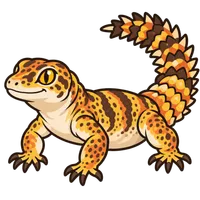
Uromastyx are chunky, spiky-tailed desert lizards that live for the sun — they'll bask happily through the hottest part of the day and come in astonishing blues, oranges, reds and yellows. They're a herbivore, so there's no live food to deal with, and they can outlive a dog several times over. The two things new keepers underestimate are just how hot and bright their basking zone must be, and that they need it genuinely dry — too much humidity makes a uromastyx ill.
Worried, or still setting up? Free tools
Or browse common Uromastyx questions →
Care at a glance
| Adult size | 9–30 in depending on species (many popular pet species ~10–16 in) |
|---|---|
| Lifespan | 25+ years — and possibly up to 60 |
| Enclosure | Plan for no smaller than 4×2×2 ft for one; larger species (like the Egyptian, U. aegyptia) need much more — at least 8×4×4 ft. Floor space and a tall basking platform matter. House one per enclosure — they prefer to live alone. |
| Basking / warm zone | A very hot basking SURFACE of 120–130°F (49–55°C) — hotter than a bearded dragon — from an overhead halogen flood, ideally over a stacked-rock “Retes stack” so it can pick its exact spot. Measure with a temp gun. |
| Cool side | Cool zone around 85°F (29°C), giving a strong gradient. |
| Night | Night can fall to room temperature; no coloured night bulbs. |
| UVB & lighting | Very strong UVB — these are among the most sun-loving lizards kept: a T5 HO bulb giving UVI 4.5–6.0 at the basking spot (Ferguson Zone 4, the highest of any species here). Replace every 12 months. |
| Humidity | Very LOW: ambient 20–30% (a few coastal species want ~30–50%). Consistently higher humidity makes a uromastyx sick. They do benefit from a humid burrow, though — keep the deeper substrate slightly damp while the top inch stays bone-dry. |
| Substrate | Fine sand or sandy soil, packed at least 4″ deep (deeper is better) so it can dig a burrow. Avoid dusty artificial calci-sand. |
| Diet | A strict HERBIVORE: roughly 90% leafy greens and flowers, ~5% harder vegetables/treats, and ~5% dry foods (a seed/lentil mix or a commercial herbivore diet). Wild, pesticide-free “weeds” are better than grocery greens. No insects or meat — animal protein causes gout and kidney disease in uromastyx. |
| Supplements | Lightly dust food with calcium and a multivitamin on a rotation; strong UVB does much of the vitamin-D work. |
🦎 Did you know? — Uromastyx fun facts
Little true delights about the uromastyx — each one checked against a named source, no pet-shop myths.
- The uromastyx’s stout tail bristles with protective spines that discourage most predators — the source of its other name, the spiny-tailed lizard. Encyclopaedia Britannica
- Some uromastyx defend themselves by backing partway into a burrow, then violently lashing their spiny exposed tail side to side at an enemy. Encyclopaedia Britannica
- Unusually among lizards, adult uromastyx are mostly herbivorous, grazing on desert plants across their range from North Africa to India. Encyclopaedia Britannica
The pet store gets these wrong
Common myths, kindly corrected — no shame for having believed them.
- Uromastyx need a water bowl and regular water — mostly no; they’re desert lizards that get moisture from food, and standing water plus humidity can make them ill.
- Feed them insects like a beardie — no; uromastyx are strict herbivores, and animal protein causes gout.
- A bearded dragon setup is fine as-is — close, but a uromastyx wants an even hotter basking spot (120–130°F), stronger UVB (UVI 4.5–6.0), and much lower humidity.
- Bright colour means it’s a special/rare type — colour varies a lot with species, sex, temperature, and mood.
Before you buy
- A 4×2×2 ft (or much larger, for big species) enclosure that can hit a 120–130°F basking surface.
- Very strong UVB (a UVI of 4.5–6.0 at the basking spot).
- A herbivore diet of greens, flowers and weeds — and the discipline to keep humidity low.
- A 25+ year (potentially far longer) commitment.
💷 The uromastyx itself is usually the cheapest part — see the real cost of keeping one (upfront + ongoing, no sales pitch).
See a reptile vet if…
We can't diagnose from afar — but these are the signs to stop watching and get a professional:
- Weak or bent limbs, tremors, or a soft/rubbery jaw (signs pointing to metabolic bone disease).
- Swollen, puffy joints or lethargy (possible gout — often from wrongly feeding animal protein).
- A runny nose, bubbling, or open-mouth breathing (possible respiratory infection — often from too-high humidity).
- A firm, swollen belly with no droppings (possible impaction).
- Any tissue protruding from the vent (prolapse).
Heading in? Print the free Uromastyx vet-prep sheet — what to bring, what to tell the vet, and the questions to ask.
Never
- Never feed insects or meat — animal protein causes gout in a uromastyx.
- Never keep it humid or damp — respiratory disease follows; they need dry, hot conditions.
- Never under-power the basking heat or UVB — they need extremes most lizards don’t.
- Never house two together.
- Never use dusty calci-sand — use natural sand or sandy soil.
Common uromastyx questions
How hard are Uromastyxs to keep — are they good for beginners?
Beginner–Intermediate. Hardy, no live food, and wonderfully long-lived — but it needs the two extremes right: a blisteringly hot basking spot with very strong UVB, and very LOW humidity. Get those and it’s a forgiving desert lizard.
What do Uromastyxs eat?
A strict HERBIVORE: roughly 90% leafy greens and flowers, ~5% harder vegetables/treats, and ~5% dry foods (a seed/lentil mix or a commercial herbivore diet). Wild, pesticide-free “weeds” are better than grocery greens. No insects or meat — animal protein causes gout and kidney disease in uromastyx.
How big an enclosure do Uromastyxs need?
Plan for no smaller than 4×2×2 ft for one; larger species (like the Egyptian, U. aegyptia) need much more — at least 8×4×4 ft. Floor space and a tall basking platform matter. House one per enclosure — they prefer to live alone.
What basking temperature do Uromastyxs need?
A very hot basking SURFACE of 120–130°F (49–55°C) — hotter than a bearded dragon — from an overhead halogen flood, ideally over a stacked-rock “Retes stack” so it can pick its exact spot. Measure with a temp gun.
What should the cool side be for Uromastyxs?
Cool zone around 85°F (29°C), giving a strong gradient.
What night-time temperature do Uromastyxs need?
Night can fall to room temperature; no coloured night bulbs.
What UVB and lighting do Uromastyxs need?
Very strong UVB — these are among the most sun-loving lizards kept: a T5 HO bulb giving UVI 4.5–6.0 at the basking spot (Ferguson Zone 4, the highest of any species here). Replace every 12 months.
What humidity do Uromastyxs need?
Very LOW: ambient 20–30% (a few coastal species want ~30–50%). Consistently higher humidity makes a uromastyx sick. They do benefit from a humid burrow, though — keep the deeper substrate slightly damp while the top inch stays bone-dry.
What substrate do Uromastyxs need?
Fine sand or sandy soil, packed at least 4″ deep (deeper is better) so it can dig a burrow. Avoid dusty artificial calci-sand.
What supplements do Uromastyxs need?
Lightly dust food with calcium and a multivitamin on a rotation; strong UVB does much of the vitamin-D work.
How big do Uromastyxs get?
9–30 in depending on species (many popular pet species ~10–16 in)
How long do Uromastyxs live?
25+ years — and possibly up to 60
What are the signs Uromastyxs are sick or need a vet?
See a reptile or exotics vet if you notice: Weak or bent limbs, tremors, or a soft/rubbery jaw (signs pointing to metabolic bone disease).; Swollen, puffy joints or lethargy (possible gout — often from wrongly feeding animal protein).; A runny nose, bubbling, or open-mouth breathing (possible respiratory infection — often from too-high humidity).; A firm, swollen belly with no droppings (possible impaction).; Any tissue protruding from the vent (prolapse)..
Your first two weeks · Taming & handling · Behaviours explained · Won't eat? · Stuck shed · When to see a vet

Get the free Uromastyx Starter Kit
A one-page setup criteria checklist and a first-30-days plan for your first uromastyx — what to get, what makes each thing matter, and the honest bits the pet shop skips. Join the den and we’ll send it over.
Free reptile care cheat-sheet the moment you join. No spam — unsubscribe anytime. See how we handle your data in our privacy notice.Sources & further reading
This guide was written and fact-checked against these authorities. It's kind, general guidance — not a diagnosis or a substitute for an exotics vet:
- ReptiFiles — Uromastyx Care Sheet — Enclosure min 4×2×2 ft (large species 8×4×4), basking surface 120–130°F / cool ~85°F, UVI 4.5–6.0 (Zone 4), humidity 20–30% + humid burrow, strict herbivore (~90% greens/flowers, ~5% veg, ~5% dry/seed), sandy substrate ≥4″, 9–30 in, 25–60 yr, house solo.
- Baines et al. (2016), “How much UVB does my reptile need? The UV-Tool” — Ferguson Zone 4 target UVI 4.5–6.0 for an extreme open-desert basker.
- Association of Reptilian & Amphibian Veterinarians (ARAV) — Find-an-exotics-vet; MBD, gout, respiratory infection.
- Merck Veterinary Manual — reptiles — Metabolic bone disease, gout, respiratory infection, impaction.
Written and fact-checked by The Baskden Team against veterinarian-authored sources — if your reptile shows a red-flag sign above, see an exotics vet promptly.