
Species · Tegu
Argentine Tegu
Salvator merianae
The famously dog-tame giant lizard — intelligent, interactive, and a room-sized commitment.
Difficulty: Intermediate Printable care sheet →
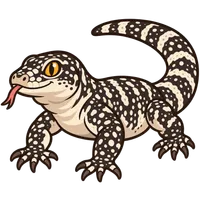
Argentine tegus are the gentle giants of the pet-lizard world — big, heavy-bodied, strikingly patterned, and genuinely intelligent. Well-socialised tegus are often described as "dog-like": they recognise their keeper, follow them around, and enjoy interaction. That charm comes with real commitment, though — a fully-grown tegu needs a room-sized enclosure, a hot basking zone, humid burrowing substrate, and a varied omnivore diet, and it will brumate (bury itself and stop eating) for months each winter.
Worried, or still setting up? Free tools
Or browse common Argentine Tegu questions →
Care at a glance
| Adult size | 3–4.5 ft (up to ~5 ft), 8–15 lb — a genuinely large lizard |
|---|---|
| Lifespan | 15–20 years |
| Enclosure | Adult minimum around 6×3×3 ft (per the Federation of British Herpetologists’ 2022 code) — realistically a custom, room-scale build, and bigger is better. House one per enclosure. |
| Basking / warm zone | A hot basking SURFACE of 125–135°F (52–57°C) from an overhead halogen flood (they take heat from above). Warm side 90–95°F (32–35°C). |
| Cool side | Cool side 75–85°F (24–29°C), giving a full gradient across a large enclosure. |
| Night | Night 68–74°F (20–23°C) — turn all heat and light off at night for a healthy drop. |
| UVB & lighting | Strong UVB (a diurnal basker): a T5 HO bulb giving UVI 3.0–4.0 at the basking surface (Ferguson Zone 3–4), spanning about half the enclosure, on for 12–14 hours. Replace every 12 months. |
| Humidity | High: ambient 70–80%, with a humid hide/burrow at 90–100% (damp sphagnum, refreshed to prevent mould). Deep moist substrate is how tegus stay hydrated and shed cleanly. |
| Substrate | A deep, moist, burrowable substrate — 12–24″ of a soil/coco mix (at least on one side) that holds a tunnel. Tegus are strong burrowers, and it’s where they brumate. |
| Diet | An OMNIVORE whose ratio shifts with age. In the first year they need a high-protein diet (~90% protein — insects, whole prey, lean meats, egg — and ~10% vegetables) to fuel fast growth; adults move toward a more balanced mix with more vegetables and some fruit. Feed variety, and feed adults to body condition (obesity is common). |
| Supplements | Dust appropriate meals with calcium, and a multivitamin on a rotation (especially for growing tegus). |
🦎 Did you know? — Argentine Tegu fun facts
Little true delights about the argentine tegu — each one checked against a named source, no pet-shop myths.
- The black-and-white tegu is the giant of its family, reaching about 1.3 metres (4 feet) long — the largest of the roughly seven tegu species. Encyclopaedia Britannica
- Like other teiids, the tegu "tastes" the air with its tongue and a Jacobson’s organ on the roof of its mouth to track prey and identify other lizards. Encyclopaedia Britannica
What it's like to live with a Argentine Tegu
The Argentine tegu is often called the closest thing to a "reptile dog," and a well-raised one earns the comparison — large, strikingly intelligent, and capable of real tameness, following its keeper around, recognising them, and taking food gently by hand. That intelligence comes with real demands: a very large enclosure, a powerful basking zone, deep substrate for burrowing, and a months-long winter shutdown. This is a decade-plus relationship with a big, smart animal — hugely rewarding for a dedicated keeper, and a serious commitment to take on with open eyes.
Your first month together
The settling-in period, in order — so you know what's normal and when not to worry.
- Give a young tegu plenty of space and deep substrate to burrow into, and expect shyness and hiding while it settles.
- Start hand-feeding early and consistently — tegu tameness is built on daily, patient, positive interaction, not forced handling.
- Feed a varied omnivore diet and dust appropriately, especially while it is growing fast.
- Be patient: trust with a tegu is measured in weeks and months, not days, and rushing it sets you back.
- Verify that basking heat is genuinely high — a tegu needs a hot spot to digest its large, protein-rich meals.
Through the year, and as they grow
Tegus have one of the most dramatic seasonal rhythms of any pet reptile: they brumate for months in winter, going largely dormant and off food, which is normal and expected in a healthy adult. In the active season they grow fast and eat a great deal, so budget for that appetite and the space a rapidly-growing tegu needs.
The pet store gets these wrong
Common myths, kindly corrected — no shame for having believed them.
- A tegu is basically a big bearded dragon — no; it’s an omnivore many times the size, needing a room-sized enclosure, high humidity, and a hot 125–135°F basking spot.
- You can keep a tegu in a 4×2×2 ft — far too small; an adult needs roughly 6×3×3 ft or more.
- Tegus are aggressive — actually they tame down famously; a well-handled Argentine tegu is often “dog-like”.
- “It stopped eating and buried itself for weeks — it’s dying” — usually brumation; Argentine tegus naturally brumate for months in winter.
Before you buy
- A LOT of space — a room-scale enclosure (min ~6×3×3 ft), not a tank.
- A hot basking spot, strong UVB, and the humidity (70–80%) a tegu needs.
- A varied omnivore diet — protein-heavy for a growing tegu, more veg for an adult.
- Acceptance of a months-long winter brumation, a 15–20 year commitment, and an exotics/reptile vet who sees big lizards.
💷 The argentine tegu itself is usually the cheapest part — see the real cost of keeping one (upfront + ongoing, no sales pitch).
See a reptile vet if…
We can't diagnose from afar — but these are the signs to stop watching and get a professional:
- Weak or bent limbs, tremors, or a rubbery jaw — especially in fast-growing juveniles (metabolic bone disease).
- Obvious obesity — a heavy, jowly body with fat rolls (very common; feed to condition).
- Open-mouth breathing, wheezing, or mucus (possible respiratory infection).
- Refusing food with real weight loss OUTSIDE the brumation season, or a firm swollen belly with no droppings (impaction).
- A female straining and restless (possible egg-binding), or any tissue protruding from the vent (prolapse).
Heading in? Print the free Argentine Tegu vet-prep sheet — what to bring, what to tell the vet, and the questions to ask.
Never
- Never keep a tegu in too small a space — it needs room to roam.
- Never feed an adult a protein-only diet — it’s an omnivore and needs vegetables too.
- Never repeatedly wake or force-feed a healthy brumating tegu.
- Never house two tegus together.
- Never skip the hot basking zone or strong UVB.
Common argentine tegu questions
How hard are Argentine Tegus to keep — are they good for beginners?
Intermediate. Famously tame and rewarding — but a large, high-input lizard. Expect a room-sized enclosure, a hot basking spot, high humidity, a big varied diet, and a months-long winter brumation. Not a starter lizard, but a brilliant one for a committed keeper.
What do Argentine Tegus eat?
An OMNIVORE whose ratio shifts with age. In the first year they need a high-protein diet (~90% protein — insects, whole prey, lean meats, egg — and ~10% vegetables) to fuel fast growth; adults move toward a more balanced mix with more vegetables and some fruit. Feed variety, and feed adults to body condition (obesity is common).
How big an enclosure do Argentine Tegus need?
Adult minimum around 6×3×3 ft (per the Federation of British Herpetologists’ 2022 code) — realistically a custom, room-scale build, and bigger is better. House one per enclosure.
What basking temperature do Argentine Tegus need?
A hot basking SURFACE of 125–135°F (52–57°C) from an overhead halogen flood (they take heat from above). Warm side 90–95°F (32–35°C).
What should the cool side be for Argentine Tegus?
Cool side 75–85°F (24–29°C), giving a full gradient across a large enclosure.
What night-time temperature do Argentine Tegus need?
Night 68–74°F (20–23°C) — turn all heat and light off at night for a healthy drop.
What UVB and lighting do Argentine Tegus need?
Strong UVB (a diurnal basker): a T5 HO bulb giving UVI 3.0–4.0 at the basking surface (Ferguson Zone 3–4), spanning about half the enclosure, on for 12–14 hours. Replace every 12 months.
What humidity do Argentine Tegus need?
High: ambient 70–80%, with a humid hide/burrow at 90–100% (damp sphagnum, refreshed to prevent mould). Deep moist substrate is how tegus stay hydrated and shed cleanly.
What substrate do Argentine Tegus need?
A deep, moist, burrowable substrate — 12–24″ of a soil/coco mix (at least on one side) that holds a tunnel. Tegus are strong burrowers, and it’s where they brumate.
What supplements do Argentine Tegus need?
Dust appropriate meals with calcium, and a multivitamin on a rotation (especially for growing tegus).
How big do Argentine Tegus get?
3–4.5 ft (up to ~5 ft), 8–15 lb — a genuinely large lizard
How long do Argentine Tegus live?
15–20 years
What are the signs Argentine Tegus are sick or need a vet?
See a reptile or exotics vet if you notice: Weak or bent limbs, tremors, or a rubbery jaw — especially in fast-growing juveniles (metabolic bone disease).; Obvious obesity — a heavy, jowly body with fat rolls (very common; feed to condition).; Open-mouth breathing, wheezing, or mucus (possible respiratory infection).; Refusing food with real weight loss OUTSIDE the brumation season, or a firm swollen belly with no droppings (impaction).; A female straining and restless (possible egg-binding), or any tissue protruding from the vent (prolapse)..
Your first two weeks · Taming & handling · Behaviours explained · Won't eat? · Stuck shed · When to see a vet

Get the free Argentine Tegu Starter Kit
A one-page setup criteria checklist and a first-30-days plan for your first argentine tegu — what to get, what makes each thing matter, and the honest bits the pet shop skips. Join the den and we’ll send it over.
Free reptile care cheat-sheet the moment you join. No spam — unsubscribe anytime. See how we handle your data in our privacy notice.Sources & further reading
This guide was written and fact-checked against these authorities. It's kind, general guidance — not a diagnosis or a substitute for an exotics vet:
- ReptiFiles — Colombian & Argentine Tegu Care Guide — Adult min ~6×3×3 ft, basking surface 125–135°F / warm 90–95°F / cool 75–85°F / night 68–74°F, UVI 3.0–4.0 (Zone 3–4), humidity 70–80% + humid hide 90–100%, deep moist substrate 12–24″, omnivore (first-year ~90% protein → adult more veg), 24–60 in / 8–15 lb, 15–20 yr, brumates.
- Baines et al. (2016), “How much UVB does my reptile need? The UV-Tool” — Ferguson Zone 3–4 target UVI 3.0–4.0 for a large diurnal basker.
- Association of Reptilian & Amphibian Veterinarians (ARAV) — Find-an-exotics-vet; MBD, obesity, respiratory infection.
- Merck Veterinary Manual — reptiles — Metabolic bone disease, obesity, respiratory infection, dystocia.
Written and fact-checked by The Baskden Team against veterinarian-authored sources — if your reptile shows a red-flag sign above, see an exotics vet promptly.