
Species · Arid ground gecko
African Fat-Tailed Gecko
Hemitheconyx caudicinctus
The leopard gecko's calm West African cousin — same easy care, but it likes a bit more humidity.
Difficulty: Beginner Printable care sheet →
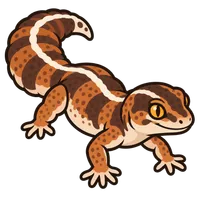
African fat-tailed geckos are the leopard gecko's calmer, plumper-tailed West African cousin — and, like the leo, a true eyelid gecko (it has eyelids and can't climb glass). They're gentle, ground-dwelling, and wonderfully tolerant of handling. Care is very close to a leopard gecko's, with one twist: fat-tails come from more humid habitats, so they want higher humidity, a seasonal wet/dry cycle, and a good humid hide. That plump tail is a fat store — a full tail means a healthy gecko.
Worried, or still setting up? Free tools
Or browse common African Fat-Tailed Gecko questions →
Care at a glance
| Adult size | 8–10 in (20–25 cm) |
|---|---|
| Lifespan | 15–20 years (longer is possible) |
| Enclosure | Adult minimum 36×18×18 in (a 3×1.5 ft floor); bigger is better. They’re terrestrial, so floor space beats height. Provide three hides — a warm hide, a cool hide, and a humid hide. |
| Basking / warm zone | A warm basking surface of 90–94°F (32–34°C) in the warm season, from overhead heat (with a warm hide under it) so the gut gets the heat it needs to digest — not a dangerous belly heat-rock. |
| Cool side | Cool side 72–77°F (22–25°C). |
| Night | Night can fall to ~72–77°F in the warm season. Keepers who run an optional cooler “dry season” drop the basking area to ~79°F and nights to ~63–64°F — but keep any gecko under 6 months in warm-season conditions. |
| UVB & lighting | Low-level UVB is recommended (they’re nocturnal — Ferguson Zone 1): UVI ~1.0–2.0 at the basking spot. They can survive on a high-D3 calcium supplement without UVB, but they do best with it. |
| Humidity | Higher than a leopard gecko, and ideally cycled: a rainy/warm season around 70–80% by day, and a drier season around 50% by day. Whatever the season, give a humid hide (moist substrate, kept ~70%+) on the cool end at all times so they shed cleanly — retained shed on the toes and tail tip is the classic fat-tail problem. |
| Substrate | A naturalistic, well-drained semi-arid mix packed ≥4″ deep for burrowing — e.g. ~40% topsoil / 40% play sand / 20% excavator clay. Use paper towel for quarantine and for geckos under ~6 months. Avoid dusty calci-sand. |
| Diet | Strict insectivore — no fruit, veg, or meat. A varied, gut-loaded insect menu (crickets, dubia roaches, etc.): juveniles daily; adults every other day, or every few days for one whose tail is nicely plump. Feeders no larger than the space between the eyes; don’t leave loose insects in overnight. |
| Supplements | Dust insects with calcium at nearly every feeding (with D3 if UVB is minimal) and a multivitamin on a rotation. A plump tail = healthy fat stores; a thin, shrinking tail is a warning sign. |
🦎 Did you know? — African Fat-Tailed Gecko fun facts
Little true delights about the african fat-tailed gecko — each one checked against a named source, no pet-shop myths.
- Unlike most "true" geckos, the fat-tailed gecko belongs to a group with real movable eyelids, so it can actually blink and close its eyes. Animal Diversity Web
- Its chunky tail is a living pantry, storing fat that lets the gecko go days without food when prey is scarce. Animal Diversity Web
- The fat tail is shaped like a second head to trick predators into grabbing the wrong end — and the gecko can drop and regrow it to escape. Animal Diversity Web
What it's like to live with a African Fat-Tailed Gecko
The African fat-tailed gecko is the leopard gecko's mellow, humidity-loving cousin, and many keepers find it even calmer and more docile to handle. It is nocturnal and ground-dwelling, potters about in the evenings, and tames into a gecko that will sit contentedly in a warm hand. The two things it wants that a leo does not are a bit more humidity and a reliably moist hide — get those right and it is just as forgiving a first gecko. As with a leo, that fat tail is both its charm and its fuel gauge.
Your first month together
The settling-in period, in order — so you know what's normal and when not to worry.
- Give it a quiet week to settle; expect it to hide through the day and emerge in the evening.
- Offer food after dark when it naturally wakes, and don't worry if a settling gecko eats lightly at first.
- Make sure the moist hide is always available — it is the key to clean sheds for this humidity-loving species.
- Check the first shed comes off cleanly, especially the toes and tail tip.
- Begin gentle handling once it is feeding steadily — and never grab or grip the tail, which it can drop when frightened.
Through the year, and as they grow
Fat-tailed geckos often slow down and eat less through the cooler months, a mild natural dip that is normal in a healthy adult. Hatchlings and juveniles eat daily, while adults do well every other day. Read the tail — a plump tail through any slowdown means all is well.
The pet store gets these wrong
Common myths, kindly corrected — no shame for having believed them.
- “A fat-tail is just a leopard gecko” — very close, but it wants MORE humidity, a seasonal cycle, and a good humid hide.
- “Fat-tails / leos don’t need UVB” — outdated; low-level UVB benefits them.
- “Keep it bone-dry like a desert gecko” — no; it needs higher ambient humidity than a leo and a proper humid hide.
- “Sand will always kill it” — oversimplified; dusty calci-sand and cold temps are the real risks, a proper naturalistic mix is fine.
Before you buy
- A 36×18×18 in (or larger) enclosure with three hides, including a humid hide.
- A way to hold higher humidity than a leo (misting / a moist substrate layer).
- A steady supply of varied feeder insects, plus calcium + multivitamin.
- A 15–20 year commitment.
💷 The african fat-tailed gecko itself is usually the cheapest part — see the real cost of keeping one (upfront + ongoing, no sales pitch).
See a reptile vet if…
We can't diagnose from afar — but these are the signs to stop watching and get a professional:
- Weak or bent limbs, tremors, or a soft/rubbery jaw (signs pointing to metabolic bone disease).
- A rapidly thinning tail with weight loss — fat-tails are notably prone to “stick tail” (often cryptosporidiosis): chronic runny stool and wasting despite eating warrant a vet.
- Stuck shed on the toes or tail tip (can cut off circulation) or over the eyes.
- A firm, swollen belly with no droppings (possible impaction).
- Any tissue protruding from the vent (prolapse).
Heading in? Print the free African Fat-Tailed Gecko vet-prep sheet — what to bring, what to tell the vet, and the questions to ask.
Never
- Never use a heat rock — they cause serious belly burns.
- Never feed a mono-diet of mealworms or waxworms.
- Never grab or dangle it by the tail — it can drop (and regrows lumpy).
- Never house two together — they can fight.
- Never let it run bone-dry with no humid hide — retained shed follows.
Common african fat-tailed gecko questions
How hard are African Fat-Tailed Geckos to keep — are they good for beginners?
Beginner. Just as beginner-friendly as a leopard gecko — small, hardy, and handleable. The one real difference is humidity: a fat-tail wants more of it (a wet/dry seasonal cycle and a proper humid hide).
What do African Fat-Tailed Geckos eat?
Strict insectivore — no fruit, veg, or meat. A varied, gut-loaded insect menu (crickets, dubia roaches, etc.): juveniles daily; adults every other day, or every few days for one whose tail is nicely plump. Feeders no larger than the space between the eyes; don’t leave loose insects in overnight.
How big an enclosure do African Fat-Tailed Geckos need?
Adult minimum 36×18×18 in (a 3×1.5 ft floor); bigger is better. They’re terrestrial, so floor space beats height. Provide three hides — a warm hide, a cool hide, and a humid hide.
What basking temperature do African Fat-Tailed Geckos need?
A warm basking surface of 90–94°F (32–34°C) in the warm season, from overhead heat (with a warm hide under it) so the gut gets the heat it needs to digest — not a dangerous belly heat-rock.
What should the cool side be for African Fat-Tailed Geckos?
Cool side 72–77°F (22–25°C).
What night-time temperature do African Fat-Tailed Geckos need?
Night can fall to ~72–77°F in the warm season. Keepers who run an optional cooler “dry season” drop the basking area to ~79°F and nights to ~63–64°F — but keep any gecko under 6 months in warm-season conditions.
What UVB and lighting do African Fat-Tailed Geckos need?
Low-level UVB is recommended (they’re nocturnal — Ferguson Zone 1): UVI ~1.0–2.0 at the basking spot. They can survive on a high-D3 calcium supplement without UVB, but they do best with it.
What humidity do African Fat-Tailed Geckos need?
Higher than a leopard gecko, and ideally cycled: a rainy/warm season around 70–80% by day, and a drier season around 50% by day. Whatever the season, give a humid hide (moist substrate, kept ~70%+) on the cool end at all times so they shed cleanly — retained shed on the toes and tail tip is the classic fat-tail problem.
What substrate do African Fat-Tailed Geckos need?
A naturalistic, well-drained semi-arid mix packed ≥4″ deep for burrowing — e.g. ~40% topsoil / 40% play sand / 20% excavator clay. Use paper towel for quarantine and for geckos under ~6 months. Avoid dusty calci-sand.
What supplements do African Fat-Tailed Geckos need?
Dust insects with calcium at nearly every feeding (with D3 if UVB is minimal) and a multivitamin on a rotation. A plump tail = healthy fat stores; a thin, shrinking tail is a warning sign.
How big do African Fat-Tailed Geckos get?
8–10 in (20–25 cm)
How long do African Fat-Tailed Geckos live?
15–20 years (longer is possible)
What are the signs African Fat-Tailed Geckos are sick or need a vet?
See a reptile or exotics vet if you notice: Weak or bent limbs, tremors, or a soft/rubbery jaw (signs pointing to metabolic bone disease).; A rapidly thinning tail with weight loss — fat-tails are notably prone to “stick tail” (often cryptosporidiosis): chronic runny stool and wasting despite eating warrant a vet.; Stuck shed on the toes or tail tip (can cut off circulation) or over the eyes.; A firm, swollen belly with no droppings (possible impaction).; Any tissue protruding from the vent (prolapse)..
Your first two weeks · Taming & handling · Behaviours explained · Won't eat? · Stuck shed · When to see a vet

Get the free African Fat-Tailed Gecko Starter Kit
A one-page setup criteria checklist and a first-30-days plan for your first african fat-tailed gecko — what to get, what makes each thing matter, and the honest bits the pet shop skips. Join the den and we’ll send it over.
Free reptile care cheat-sheet the moment you join. No spam — unsubscribe anytime. See how we handle your data in our privacy notice.Sources & further reading
This guide was written and fact-checked against these authorities. It's kind, general guidance — not a diagnosis or a substitute for an exotics vet:
- ReptiFiles — African Fat-Tailed Gecko Care Sheet — Enclosure min 36×18×18, warm-season basking 90–94°F / cool 72–77°F, UVI 1.0–2.0 (Zone 1), seasonal humidity (rainy 70–80% day / dry 50% day) + humid hide, insectivore schedule + supplements, semi-arid substrate ≥4″, 8–10 in, 15–20 yr.
- Baines et al. (2016), “How much UVB does my reptile need? The UV-Tool” — Ferguson Zone 1 target UVI 1.0–2.0 for a crepuscular/nocturnal gecko.
- Association of Reptilian & Amphibian Veterinarians (ARAV) — Find-an-exotics-vet; MBD, cryptosporidiosis (“stick tail”).
- Merck Veterinary Manual — reptiles — Metabolic bone disease, dysecdysis, impaction.
Written and fact-checked by The Baskden Team against veterinarian-authored sources — if your reptile shows a red-flag sign above, see an exotics vet promptly.