"Is my reptile overweight?" is one of the most-asked keeper questions — and one of the easiest to
misjudge by eye, because every body type carries weight differently. Pick your animal.
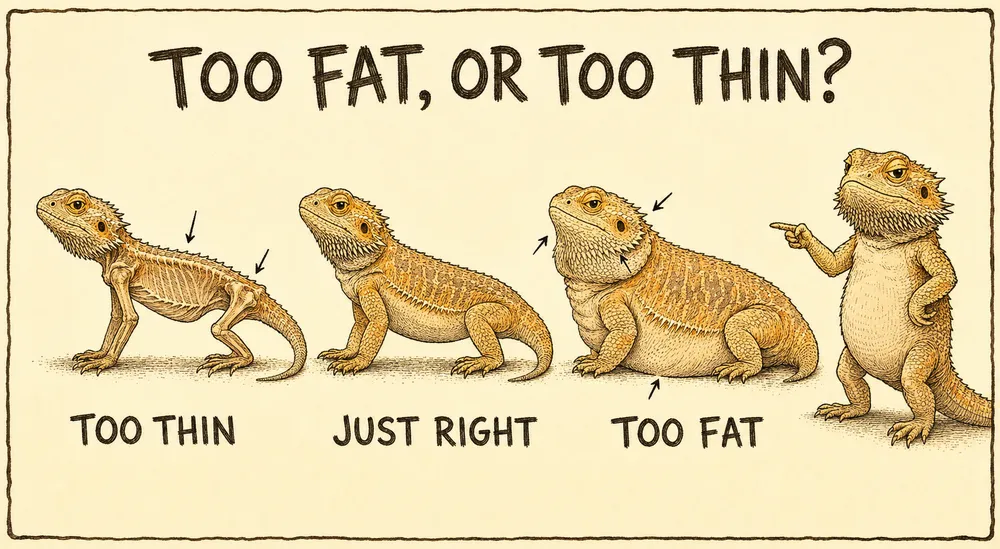
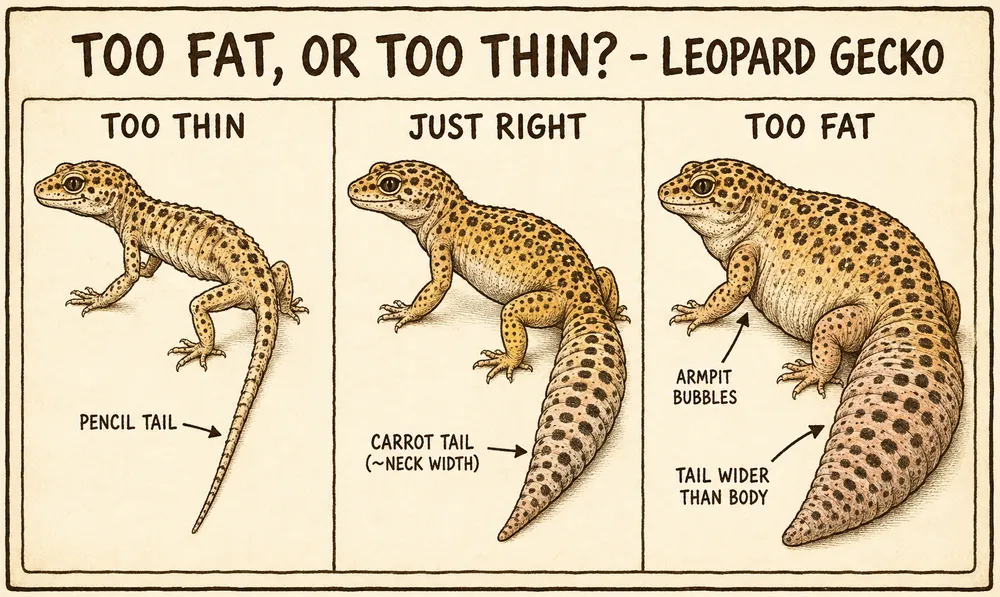
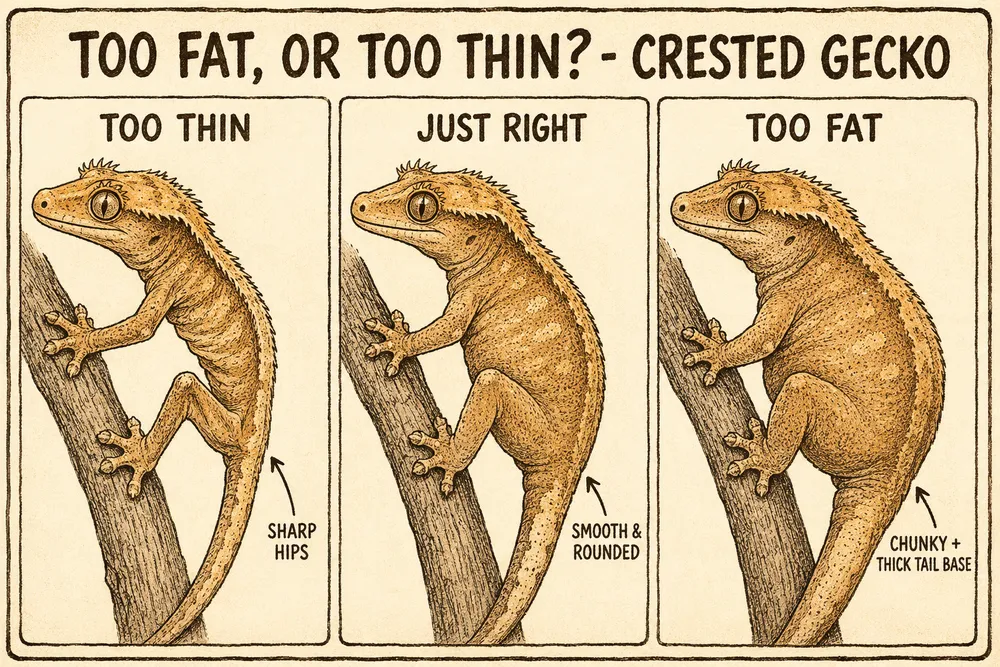
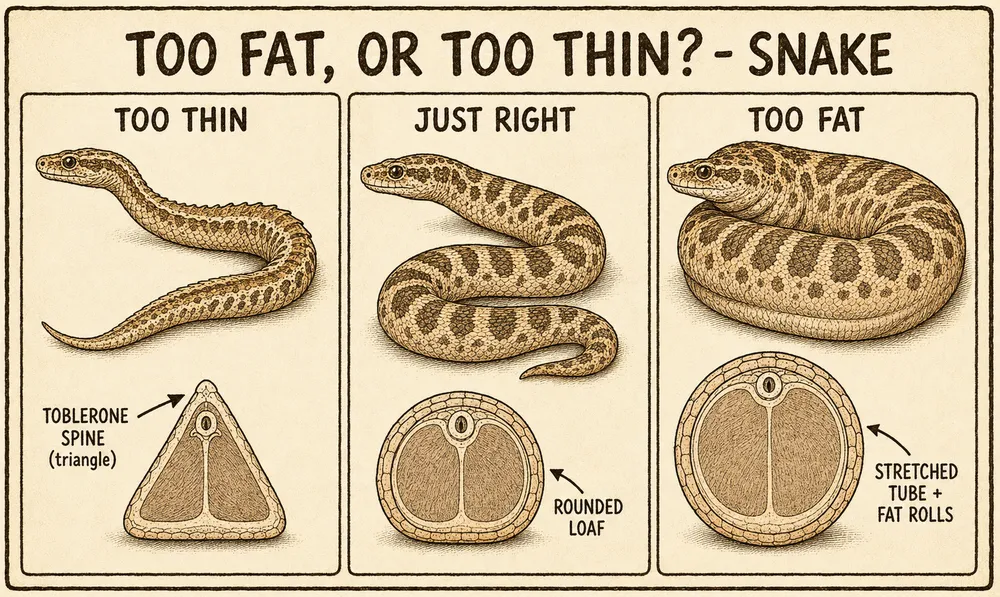
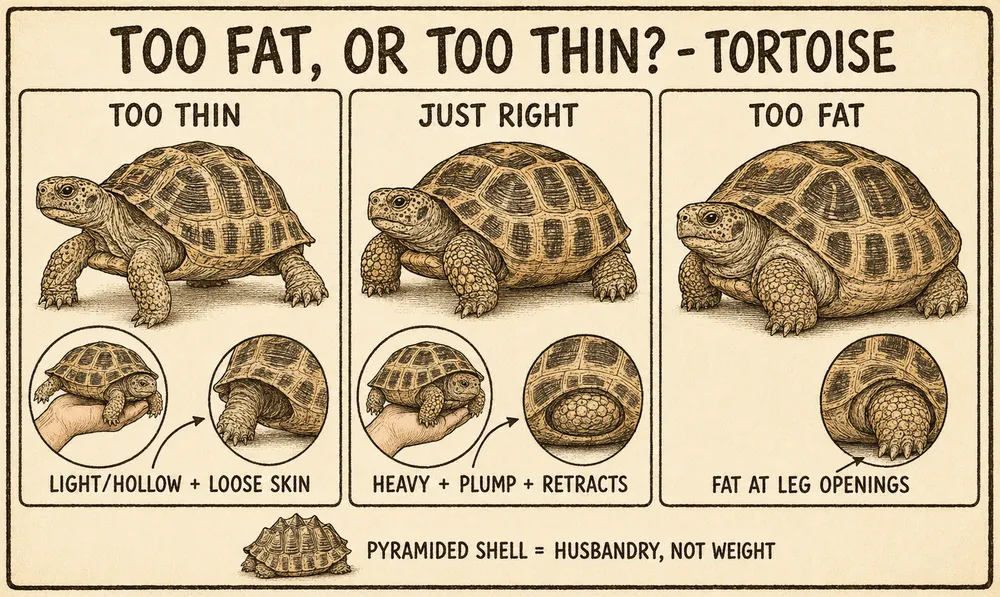
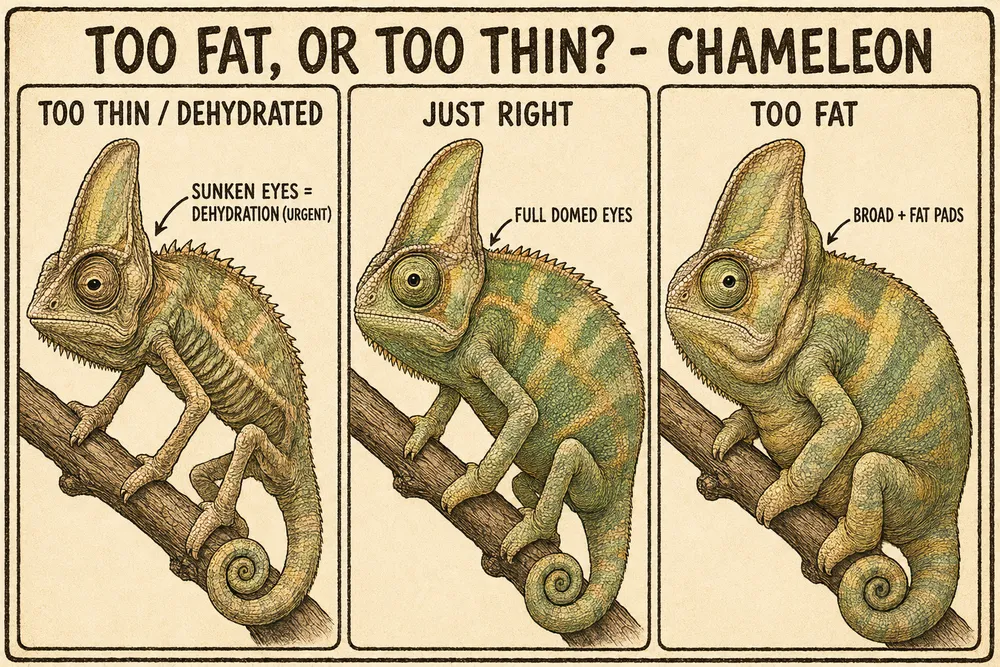
The three body types on a full-bodied basking lizard (shown on a bearded dragon) — the same tells apply to skinks, monitors and tegus. Pick your species below for its own signs.The three body types on a full-bodied basking lizard (shown on a bearded dragon) — the same tells apply to skinks, monitors and tegus. Pick your species below for its own signs.The three body types on a full-bodied basking lizard (shown on a bearded dragon) — the same tells apply to skinks, monitors and tegus. Pick your species below for its own signs.The three body types on a full-bodied basking lizard (shown on a bearded dragon) — the same tells apply to skinks, monitors and tegus. Pick your species below for its own signs.The tail is the fuel tank: a thin 'pencil' tail is too thin, a plump 'carrot' (about neck-width) is right, and a tail wider than the body with armpit 'bubbles' is too fat.Judge the hips and tail base: sharp hip bones are too thin, smooth and rounded is right, and a broad chunky body with a thick tail base is too fat.Judge the cross-section: a sharp triangular 'Toblerone' spine is too thin, a gently rounded loaf is right, and a stretched round tube with fat rolls is too fat.You can't see fat under the shell — judge weight-for-size and the leg openings: light/hollow with loose skin is too thin, heavy and plump is right, fat bulging at the leg openings is too fat. (A bumpy 'pyramided' shell is a husbandry issue, not weight.)Watch the flanks, spine and — most of all — the eyes: sunken eyes mean dehydration (urgent), full domed turret eyes are healthy, and a broad body with fat pads is overweight.
New to this? Read the companion guide —
Is my reptile overweight or underweight? —
for what healthy, fat and thin look like on every body type (and why pet-store verdicts often
mislead), then use this checker for your animal.
The tell: A healthy green iguana is a big, muscular lizard with well-filled limbs and full muscle either side of the spine — the spine and hip bones should be palpable but not standing up as a sharp ridge. Too thin shows as a razor spine with sunken muscle beside it and loose skin; overweight shows as fatty jowls/dewlap, a sagging belly and fat pads.
Look at your iguana's spine ridge, limbs and jowls:
Looks underweight. Under-conditioned — check basking heat, strong UVB and diet, and be alert for kidney disease (common in wrongly-fed iguanas).
What to do: Check the hot basking spot and strong UVB (a cold or MBD iguana can't thrive), feed a proper all-plant diet, and see a reptile vet — chronic thinness in an iguana often signals kidney disease.
Looks healthy. A well-conditioned iguana. Keep feeding to condition, not to begging.
Looks overweight. Over-conditioned — usually too much food or too much fruit/rich veg.
What to do: Cut portion size and any rich or fruity foods; feed a high-fibre leafy-greens diet and give it the big, warm, tall space it needs to climb and move.
The tell: On a water dragon or caiman lizard, condition shows in the limbs, the tail base and whether the spine and hip bones stand out. A healthy animal is firm and well-muscled with a full (not bony) tail base; too thin shows as a sharp spine, hollow flanks and a thin tail base; overweight shows as a bloated belly and fat pads.
Look at your lizard's spine, hips and tail base:
Looks underweight. Under-conditioned — check heat, UVB and that it's actually eating; rule out parasites (many are wild-caught).
What to do: Check basking heat and UVB, make sure it can reach clean warm water, offer varied prey, and get a vet fecal for parasites. (A water dragon rubbing its snout raw on the glass is a stress sign, not a weight one — add visual barriers and planting.) Persistent thinness → reptile vet.
Looks healthy. A well-conditioned semi-aquatic lizard. Keep feeding to condition, not to begging.
Looks overweight. Over-conditioned — usually too many fatty feeders.
What to do: Feed fewer, leaner feeders and give it the big enclosure and water area it needs to stay active.
All the signs, side by side
Healthy
Firm, well-muscled body
A full tail base, no bones jutting
Spine and hips felt but not seen
Alert and active
Overweight
Bloated belly and fat pads
No waist
Sluggish
Underweight
Sharp spine and hip bones
Thin tail base, hollow flanks
Lethargy (a wild-caught animal may carry parasites)
The tell: Like any snake, a green tree python's condition shows in its cross-section as it rests coiled on the branch: a healthy one is a rounded body with good muscle, a thin one shows a sharp backbone ridge with the sides drawn in, and an overweight one looks bloated with the coils losing their neat shape.
Look at your snake's body as it sits coiled on the perch:
Looks underweight. Under-conditioned — confirm it's eating and warm and humid enough to digest.
What to do: Confirm it's eating and that the perch temperature and humidity let it digest, rule out parasites, and see a reptile vet if it keeps dropping.
Looks healthy. Good body condition for a tree python. Keep feeding to condition, not to begging.
Looks overweight. Over-conditioned — easy from feeding too large or too often.
What to do: Right-size the prey and space meals out — don't power-feed; an arboreal python carries less bulk than a ground snake.
The tell: You can't see fat under the shell, so judge a box turtle by weight-for-size and its limbs and eyes: a healthy one feels satisfyingly heavy (not hollow), has firm limbs and bright, un-sunken eyes. Loose, empty limb skin and a light, hollow feel — often with sunken eyes — mean underweight or dehydrated; it's hard to over-fatten a box turtle, but fat can bulge at the leg openings.
Pick your box turtle up and look at the limbs and eyes:
Looks underweight. Under-conditioned or dehydrated — check warmth, diet and hydration (a warm shallow soak helps); sunken eyes need prompt attention.
What to do: Check basking heat and UVB, make sure it's warm and hydrated (a warm shallow soak helps), offer a varied omnivore diet, and get a fecal for parasites — many box turtles are wild-caught. A soft or deformed shell is a lighting/diet problem → reptile vet. Ongoing loss → vet.
Looks healthy. A well-conditioned box turtle. Keep feeding to condition, not to begging.
Looks overweight. Over-conditioned — uncommon; usually too much rich food.
What to do: Cut back quantity and rich foods; feed a varied, fibre-rich omnivore diet and give it a big humid space to forage.
The tell: On a water dragon or caiman lizard, condition shows in the limbs, the tail base and whether the spine and hip bones stand out. A healthy animal is firm and well-muscled with a full (not bony) tail base; too thin shows as a sharp spine, hollow flanks and a thin tail base; overweight shows as a bloated belly and fat pads.
Look at your lizard's spine, hips and tail base:
Looks underweight. Under-conditioned — check heat, UVB and that it's actually eating; rule out parasites (many are wild-caught).
What to do: Check basking heat and UVB, make sure it can reach clean warm water, offer varied prey, and get a vet fecal for parasites. (A water dragon rubbing its snout raw on the glass is a stress sign, not a weight one — add visual barriers and planting.) Persistent thinness → reptile vet.
Looks healthy. A well-conditioned semi-aquatic lizard. Keep feeding to condition, not to begging.
Looks overweight. Over-conditioned — usually too many fatty feeders.
What to do: Feed fewer, leaner feeders and give it the big enclosure and water area it needs to stay active.
All the signs, side by side
Healthy
Firm, well-muscled body
A full tail base, no bones jutting
Spine and hips felt but not seen
Alert and active
Overweight
Bloated belly and fat pads
No waist
Sluggish
Underweight
Sharp spine and hip bones
Thin tail base, hollow flanks
Lethargy (a wild-caught animal may carry parasites)
The tell: Look at the cross-section. A healthy snake is a rounded loaf — good muscle, with a spine you can feel but not see as a ridge. A sharp, visible spine ("Toblerone" triangle) with loose skin = underweight; a round, stretched tube with fat rolls when it bends = overweight.
Look at your snake's body shape:
Looks underweight. Under-conditioned — confirm it's eating and digesting.
What to do: Confirm it's eating and warm enough to digest, rule out parasites, and feed appropriately. Ongoing loss → reptile vet.
Looks healthy. Good body condition — that's the goal. Keep feeding to condition, not to begging.
Looks overweight. Over-conditioned — very common in overfed ball pythons.
What to do: Right-size the prey (~10–15% of body weight for a ball python) and space meals out — don't power-feed for growth.
The tell: Look at the cross-section. A healthy snake is a rounded loaf — good muscle, with a spine you can feel but not see as a ridge. A sharp, visible spine ("Toblerone" triangle) with loose skin = underweight; a round, stretched tube with fat rolls when it bends = overweight.
Look at your snake's body shape:
Looks underweight. Under-conditioned — confirm it's eating and digesting.
What to do: Confirm it's eating and warm enough to digest, rule out parasites, and feed appropriately. Ongoing loss → reptile vet.
Looks healthy. Good body condition — that's the goal. Keep feeding to condition, not to begging.
Looks overweight. Over-conditioned — very common in overfed ball pythons.
What to do: Right-size the prey (~10–15% of body weight for a ball python) and space meals out — don't power-feed for growth.
The tell: Look at the cross-section. A healthy snake is a rounded loaf — good muscle, with a spine you can feel but not see as a ridge. A sharp, visible spine ("Toblerone" triangle) with loose skin = underweight; a round, stretched tube with fat rolls when it bends = overweight.
Look at your snake's body shape:
Looks underweight. Under-conditioned — confirm it's eating and digesting.
What to do: Confirm it's eating and warm enough to digest, rule out parasites, and feed appropriately. Ongoing loss → reptile vet.
Looks healthy. Good body condition — that's the goal. Keep feeding to condition, not to begging.
Looks overweight. Over-conditioned — very common in overfed ball pythons.
What to do: Right-size the prey (~10–15% of body weight for a ball python) and space meals out — don't power-feed for growth.
The tell: Look at the cross-section. A healthy snake is a rounded loaf — good muscle, with a spine you can feel but not see as a ridge. A sharp, visible spine ("Toblerone" triangle) with loose skin = underweight; a round, stretched tube with fat rolls when it bends = overweight.
Look at your snake's body shape:
Looks underweight. Under-conditioned — confirm it's eating and digesting.
What to do: Confirm it's eating and warm enough to digest, rule out parasites, and feed appropriately. Ongoing loss → reptile vet.
Looks healthy. Good body condition — that's the goal. Keep feeding to condition, not to begging.
Looks overweight. Over-conditioned — very common in overfed ball pythons.
What to do: Right-size the prey (~10–15% of body weight for a ball python) and space meals out — don't power-feed for growth.
The tell: Look at the cross-section. A healthy snake is a rounded loaf — good muscle, with a spine you can feel but not see as a ridge. A sharp, visible spine ("Toblerone" triangle) with loose skin = underweight; a round, stretched tube with fat rolls when it bends = overweight.
Look at your snake's body shape:
Looks underweight. Under-conditioned — confirm it's eating and digesting.
What to do: Confirm it's eating and warm enough to digest, rule out parasites, and feed appropriately. Ongoing loss → reptile vet.
Looks healthy. Good body condition — that's the goal. Keep feeding to condition, not to begging.
Looks overweight. Over-conditioned — very common in overfed ball pythons.
What to do: Right-size the prey (~10–15% of body weight for a ball python) and space meals out — don't power-feed for growth.
The tell: Look at the cross-section. A healthy snake is a rounded loaf — good muscle, with a spine you can feel but not see as a ridge. A sharp, visible spine ("Toblerone" triangle) with loose skin = underweight; a round, stretched tube with fat rolls when it bends = overweight.
Look at your snake's body shape:
Looks underweight. Under-conditioned — confirm it's eating and digesting.
What to do: Confirm it's eating and warm enough to digest, rule out parasites, and feed appropriately. Ongoing loss → reptile vet.
Looks healthy. Good body condition — that's the goal. Keep feeding to condition, not to begging.
Looks overweight. Over-conditioned — very common in overfed ball pythons.
What to do: Right-size the prey (~10–15% of body weight for a ball python) and space meals out — don't power-feed for growth.
The tell: Look at the cross-section. A healthy snake is a rounded loaf — good muscle, with a spine you can feel but not see as a ridge. A sharp, visible spine ("Toblerone" triangle) with loose skin = underweight; a round, stretched tube with fat rolls when it bends = overweight.
Look at your snake's body shape:
Looks underweight. Under-conditioned — confirm it's eating and digesting.
What to do: Confirm it's eating and warm enough to digest, rule out parasites, and feed appropriately. Ongoing loss → reptile vet.
Looks healthy. Good body condition — that's the goal. Keep feeding to condition, not to begging.
Looks overweight. Over-conditioned — very common in overfed ball pythons.
What to do: Right-size the prey (~10–15% of body weight for a ball python) and space meals out — don't power-feed for growth.
The tell: Look at the cross-section. A healthy snake is a rounded loaf — good muscle, with a spine you can feel but not see as a ridge. A sharp, visible spine ("Toblerone" triangle) with loose skin = underweight; a round, stretched tube with fat rolls when it bends = overweight.
Look at your snake's body shape:
Looks underweight. Under-conditioned — confirm it's eating and digesting.
What to do: Confirm it's eating and warm enough to digest, rule out parasites, and feed appropriately. Ongoing loss → reptile vet.
Looks healthy. Good body condition — that's the goal. Keep feeding to condition, not to begging.
Looks overweight. Over-conditioned — very common in overfed ball pythons.
What to do: Right-size the prey (~10–15% of body weight for a ball python) and space meals out — don't power-feed for growth.
The tell: Look at the hips and tail base. A healthy crested gecko is smooth with no jutting hip bones; overweight shows as a chunky, broad body with a thick tail base, and underweight as sharp hip bones.
The tell: Look at the hips and tail base. A healthy crested gecko is smooth with no jutting hip bones; overweight shows as a chunky, broad body with a thick tail base, and underweight as sharp hip bones.
The tell: Look at the hips and tail base. A healthy crested gecko is smooth with no jutting hip bones; overweight shows as a chunky, broad body with a thick tail base, and underweight as sharp hip bones.
The tell: Look at the hips and tail base. A healthy crested gecko is smooth with no jutting hip bones; overweight shows as a chunky, broad body with a thick tail base, and underweight as sharp hip bones.
The tell: The tail is the fuel tank. A healthy leopard gecko's tail is plump and about as wide as its neck (a fat "carrot"). A thin "pencil" tail means it's running low; a tail wider than the body — plus a sagging belly and fatty "bubbles" in the armpits — means overweight.
Compare your leo's tail to its neck:
Looks underweight. Low reserves — and a rapidly thinning tail with not eating is urgent.
What to do: Check the warm side (they need belly-warmth to digest), feed more, and get a vet fecal — a fast-thinning "stick tail" can mean parasites (crypto) and is urgent.
Looks healthy. Ideal — that's a well-fed, healthy leo. Keep feeding to condition, not to begging.
Looks overweight. Over-fed, often on fatty worms.
What to do: Drop the waxworms/superworms and feed leaner staples (dubia, crickets) a bit less often.
All the signs, side by side
Healthy
Plump "carrot" tail, roughly neck-width
No hip bones or spine showing
Alert and mobile
Overweight
Tail wider than the body
Sagging belly
Fatty "bubbles" near the front legs
Sluggish
Underweight
Thin "pencil" or "stick" tail
Visible hip bones and spine
Loose skin — a serious sign, especially with not eating
The tell: You can't see fat under the shell, so judge a tortoise by weight-for-size and its limbs: a healthy Russian tortoise feels satisfyingly heavy (not hollow), has plump limbs, and can pull fully into its shell. Fat bulging at the leg openings so it can't retract = over; loose skin and a light, hollow feel = under. (A bumpy "pyramided" shell is a husbandry issue, not a weight one.)
Pick your tortoise up and look at the leg openings:
Looks underweight. Under-conditioned or dehydrated — check diet, warmth, and hydration.
What to do: Check basking temps and UVB (a cold tortoise won't eat or digest), make sure it's hydrated (a warm soak helps), and get a fecal test for parasites. Ongoing weight loss → reptile vet.
Looks healthy. That's a good, well-conditioned tortoise. Keep feeding to condition, not to begging.
Looks overweight. Over-conditioned — usually too much food, or too-rich food.
What to do: Cut back the quantity and any too-rich foods; feed a high-fibre weed-and-green diet and give it much more room to walk and graze.
The tell: You can't see fat under the shell, so judge a tortoise by weight-for-size and its limbs: a healthy Russian tortoise feels satisfyingly heavy (not hollow), has plump limbs, and can pull fully into its shell. Fat bulging at the leg openings so it can't retract = over; loose skin and a light, hollow feel = under. (A bumpy "pyramided" shell is a husbandry issue, not a weight one.)
Pick your tortoise up and look at the leg openings:
Looks underweight. Under-conditioned or dehydrated — check diet, warmth, and hydration.
What to do: Check basking temps and UVB (a cold tortoise won't eat or digest), make sure it's hydrated (a warm soak helps), and get a fecal test for parasites. Ongoing weight loss → reptile vet.
Looks healthy. That's a good, well-conditioned tortoise. Keep feeding to condition, not to begging.
Looks overweight. Over-conditioned — usually too much food, or too-rich food.
What to do: Cut back the quantity and any too-rich foods; feed a high-fibre weed-and-green diet and give it much more room to walk and graze.
The tell: You can't see fat under the shell, so judge a tortoise by weight-for-size and its limbs: a healthy Russian tortoise feels satisfyingly heavy (not hollow), has plump limbs, and can pull fully into its shell. Fat bulging at the leg openings so it can't retract = over; loose skin and a light, hollow feel = under. (A bumpy "pyramided" shell is a husbandry issue, not a weight one.)
Pick your tortoise up and look at the leg openings:
Looks underweight. Under-conditioned or dehydrated — check diet, warmth, and hydration.
What to do: Check basking temps and UVB (a cold tortoise won't eat or digest), make sure it's hydrated (a warm soak helps), and get a fecal test for parasites. Ongoing weight loss → reptile vet.
Looks healthy. That's a good, well-conditioned tortoise. Keep feeding to condition, not to begging.
Looks overweight. Over-conditioned — usually too much food, or too-rich food.
What to do: Cut back the quantity and any too-rich foods; feed a high-fibre weed-and-green diet and give it much more room to walk and graze.
The tell: You can't see fat under the shell, so judge a tortoise by weight-for-size and its limbs: a healthy Russian tortoise feels satisfyingly heavy (not hollow), has plump limbs, and can pull fully into its shell. Fat bulging at the leg openings so it can't retract = over; loose skin and a light, hollow feel = under. (A bumpy "pyramided" shell is a husbandry issue, not a weight one.)
Pick your tortoise up and look at the leg openings:
Looks underweight. Under-conditioned or dehydrated — check diet, warmth, and hydration.
What to do: Check basking temps and UVB (a cold tortoise won't eat or digest), make sure it's hydrated (a warm soak helps), and get a fecal test for parasites. Ongoing weight loss → reptile vet.
Looks healthy. That's a good, well-conditioned tortoise. Keep feeding to condition, not to begging.
Looks overweight. Over-conditioned — usually too much food, or too-rich food.
What to do: Cut back the quantity and any too-rich foods; feed a high-fibre weed-and-green diet and give it much more room to walk and graze.
The tell: You can't see fat under the shell, so judge a tortoise by weight-for-size and its limbs: a healthy Russian tortoise feels satisfyingly heavy (not hollow), has plump limbs, and can pull fully into its shell. Fat bulging at the leg openings so it can't retract = over; loose skin and a light, hollow feel = under. (A bumpy "pyramided" shell is a husbandry issue, not a weight one.)
Pick your tortoise up and look at the leg openings:
Looks underweight. Under-conditioned or dehydrated — check diet, warmth, and hydration.
What to do: Check basking temps and UVB (a cold tortoise won't eat or digest), make sure it's hydrated (a warm soak helps), and get a fecal test for parasites. Ongoing weight loss → reptile vet.
Looks healthy. That's a good, well-conditioned tortoise. Keep feeding to condition, not to begging.
Looks overweight. Over-conditioned — usually too much food, or too-rich food.
What to do: Cut back the quantity and any too-rich foods; feed a high-fibre weed-and-green diet and give it much more room to walk and graze.
The tell: A healthy beardie has a full-but-not-bloated belly it can lift off the ground, visible limb muscle, and no hip bones or spine ridge showing — but it also shouldn't drag a sagging belly.
Look at your dragon from above and the side — which fits best?
Looks underweight. It's carrying too little. Check temps/UVB and rule out parasites.
What to do: Check basking temps and UVB first (a cold dragon can't digest), get a fecal test for parasites, and feed appropriately for its age. Persistent thinness → reptile vet.
Looks healthy. That's a good bearded dragon. Keep it up. Keep feeding to condition, not to begging.
Looks overweight. Carrying too much — very common from overfeeding insects.
What to do: Feed insects less often and cut fatty feeders; adults are mostly greens. Make sure it has the space and heat to move and thermoregulate.
The tell: A healthy beardie has a full-but-not-bloated belly it can lift off the ground, visible limb muscle, and no hip bones or spine ridge showing — but it also shouldn't drag a sagging belly.
Look at your dragon from above and the side — which fits best?
Looks underweight. It's carrying too little. Check temps/UVB and rule out parasites.
What to do: Check basking temps and UVB first (a cold dragon can't digest), get a fecal test for parasites, and feed appropriately for its age. Persistent thinness → reptile vet.
Looks healthy. That's a good bearded dragon. Keep it up. Keep feeding to condition, not to begging.
Looks overweight. Carrying too much — very common from overfeeding insects.
What to do: Feed insects less often and cut fatty feeders; adults are mostly greens. Make sure it has the space and heat to move and thermoregulate.
The tell: A healthy beardie has a full-but-not-bloated belly it can lift off the ground, visible limb muscle, and no hip bones or spine ridge showing — but it also shouldn't drag a sagging belly.
Look at your dragon from above and the side — which fits best?
Looks underweight. It's carrying too little. Check temps/UVB and rule out parasites.
What to do: Check basking temps and UVB first (a cold dragon can't digest), get a fecal test for parasites, and feed appropriately for its age. Persistent thinness → reptile vet.
Looks healthy. That's a good bearded dragon. Keep it up. Keep feeding to condition, not to begging.
Looks overweight. Carrying too much — very common from overfeeding insects.
What to do: Feed insects less often and cut fatty feeders; adults are mostly greens. Make sure it has the space and heat to move and thermoregulate.
The tell: These are small, secretive skinks, so condition is easiest to read on the belly, tail base and hips — and because they hide so much, weighing regularly is the reliable way to catch a change early.
Look at your croc skink's belly, tail base and hips:
Looks underweight. Under-conditioned — check humidity and temperatures and that it's actually eating (they feed shyly).
What to do: Check that humidity and temperatures are right (a too-dry or stressed croc skink hides and eats poorly), offer varied insects, and get a vet fecal for parasites — many are wild-caught. Persistent thinness → reptile vet.
Looks healthy. A healthy croc skink. Keep feeding to condition, not to begging.
Looks overweight. Over-conditioned — easy from too many fatty insects.
What to do: Offer appropriately-sized insects a little less often and cut the fattiest feeders.
The tell: A healthy blue tongue skink is a solid, full-bodied lizard with a smooth belly it can lift off the ground and a tail base that tapers — no hip bones or spine ridge showing, but also no fat rolls or a dragging belly. Obesity is very common in skinks.
Look at your skink from above and the side — which fits best?
Looks underweight. Under-conditioned — check temps and rule out parasites.
What to do: Check the basking temperature (a cold skink can't digest), feed an appropriate varied omnivore diet, and get a fecal test for parasites. Persistent thinness → reptile vet.
Looks healthy. That's a good, healthy skink. Keep feeding to condition, not to begging.
Looks overweight. Overweight — very common, usually from too much fatty protein.
What to do: Cut back on fatty protein (and any processed pet food) and feed a leaner, more vegetable-heavy omnivore diet; make sure it has the space and heat to stay active. Skink obesity is very common.
All the signs, side by side
Healthy
Solid, full body with a smooth belly held off the ground
Tail base thick but tapering — no fat rolls
No hip bones or spine ridge showing
Bright, active, and mobile
Overweight
Rolls of fat along the sides or when it turns
Belly sags and drags
Fat pads bulging at the tail base or behind the legs
The tell: A healthy blue tongue skink is a solid, full-bodied lizard with a smooth belly it can lift off the ground and a tail base that tapers — no hip bones or spine ridge showing, but also no fat rolls or a dragging belly. Obesity is very common in skinks.
Look at your skink from above and the side — which fits best?
Looks underweight. Under-conditioned — check temps and rule out parasites.
What to do: Check the basking temperature (a cold skink can't digest), feed an appropriate varied omnivore diet, and get a fecal test for parasites. Persistent thinness → reptile vet.
Looks healthy. That's a good, healthy skink. Keep feeding to condition, not to begging.
Looks overweight. Overweight — very common, usually from too much fatty protein.
What to do: Cut back on fatty protein (and any processed pet food) and feed a leaner, more vegetable-heavy omnivore diet; make sure it has the space and heat to stay active. Skink obesity is very common.
All the signs, side by side
Healthy
Solid, full body with a smooth belly held off the ground
Tail base thick but tapering — no fat rolls
No hip bones or spine ridge showing
Bright, active, and mobile
Overweight
Rolls of fat along the sides or when it turns
Belly sags and drags
Fat pads bulging at the tail base or behind the legs
The tell: On a small anole, condition shows on the belly and tail base and whether the hip bones or ribs stand out — and because they're tiny and fast, weighing is more reliable than eyeballing.
Look at your anole's belly, tail base and hips:
Looks underweight. Under-conditioned — check it's feeding and that temps, UVB and misting are right (a stressed anole eats poorly).
What to do: Check temperatures, UVB and misting (a cold, dehydrated or stressed anole won't feed), offer varied small insects, and get a vet fecal for parasites — many are wild-caught. Persistent thinness → reptile vet.
Looks healthy. A healthy anole. Keep feeding to condition, not to begging.
Looks overweight. Over-conditioned — uncommon, usually from too many fatty feeders.
What to do: Feed appropriately-sized insects a little less often and vary the feeders.
The tell: Look at the flanks, the ridge of the spine and hips, and — most important — the eyes. A healthy chameleon has gently rounded sides and full, domed turret eyes. Sharp hips and a razor spine mean too thin; SUNKEN eyes mean dehydration (the biggest chameleon danger), which needs attention fast.
Look at your chameleon's body and eyes:
Looks underweight. Thin and/or dehydrated — sunken eyes and dry, stringy orange urate mean dehydration, which is urgent.
What to do: Fix hydration FIRST — mist more and check the dripper/fogger; sunken eyes need prompt attention. Then check UVB and feeding, and see a reptile vet if the eyes stay sunken or it's weak.
Looks healthy. A well-conditioned, hydrated chameleon. Keep feeding to condition, not to begging.
Looks overweight. Less common — usually over-feeding fatty insects.
What to do: Feed fewer, leaner insects (ease off the waxworms/hornworms) and make sure it has room to climb and move.
All the signs, side by side
Healthy
Gently rounded flanks
Full, plump domed turret eyes
A strong grip; alert and climbing
Overweight
A broad, heavy body
Visible fat pads (e.g. around the casque or limbs)
The tell: A healthy beardie has a full-but-not-bloated belly it can lift off the ground, visible limb muscle, and no hip bones or spine ridge showing — but it also shouldn't drag a sagging belly.
Look at your dragon from above and the side — which fits best?
Looks underweight. It's carrying too little. Check temps/UVB and rule out parasites.
What to do: Check basking temps and UVB first (a cold dragon can't digest), get a fecal test for parasites, and feed appropriately for its age. Persistent thinness → reptile vet.
Looks healthy. That's a good bearded dragon. Keep it up. Keep feeding to condition, not to begging.
Looks overweight. Carrying too much — very common from overfeeding insects.
What to do: Feed insects less often and cut fatty feeders; adults are mostly greens. Make sure it has the space and heat to move and thermoregulate.
The tell: The tail is the fuel tank. A healthy leopard gecko's tail is plump and about as wide as its neck (a fat "carrot"). A thin "pencil" tail means it's running low; a tail wider than the body — plus a sagging belly and fatty "bubbles" in the armpits — means overweight.
Compare your leo's tail to its neck:
Looks underweight. Low reserves — and a rapidly thinning tail with not eating is urgent.
What to do: Check the warm side (they need belly-warmth to digest), feed more, and get a vet fecal — a fast-thinning "stick tail" can mean parasites (crypto) and is urgent.
Looks healthy. Ideal — that's a well-fed, healthy leo. Keep feeding to condition, not to begging.
Looks overweight. Over-fed, often on fatty worms.
What to do: Drop the waxworms/superworms and feed leaner staples (dubia, crickets) a bit less often.
All the signs, side by side
Healthy
Plump "carrot" tail, roughly neck-width
No hip bones or spine showing
Alert and mobile
Overweight
Tail wider than the body
Sagging belly
Fatty "bubbles" near the front legs
Sluggish
Underweight
Thin "pencil" or "stick" tail
Visible hip bones and spine
Loose skin — a serious sign, especially with not eating
The tell: Look at the cross-section. A healthy snake is a rounded loaf — good muscle, with a spine you can feel but not see as a ridge. A sharp, visible spine ("Toblerone" triangle) with loose skin = underweight; a round, stretched tube with fat rolls when it bends = overweight.
Look at your snake's body shape:
Looks underweight. Under-conditioned — confirm it's eating and digesting.
What to do: Confirm it's eating and warm enough to digest, rule out parasites, and feed appropriately. Ongoing loss → reptile vet.
Looks healthy. Good body condition — that's the goal. Keep feeding to condition, not to begging.
Looks overweight. Over-conditioned — very common in overfed ball pythons.
What to do: Right-size the prey (~10–15% of body weight for a ball python) and space meals out — don't power-feed for growth.
The tell: Look at the hips and tail base. A healthy crested gecko is smooth with no jutting hip bones; overweight shows as a chunky, broad body with a thick tail base, and underweight as sharp hip bones.
The tell: Look at the cross-section. A healthy snake is a rounded loaf — good muscle, with a spine you can feel but not see as a ridge. A sharp, visible spine ("Toblerone" triangle) with loose skin = underweight; a round, stretched tube with fat rolls when it bends = overweight.
Look at your snake's body shape:
Looks underweight. Under-conditioned — confirm it's eating and digesting.
What to do: Confirm it's eating and warm enough to digest, rule out parasites, and feed appropriately. Ongoing loss → reptile vet.
Looks healthy. Good body condition — that's the goal. Keep feeding to condition, not to begging.
Looks overweight. Over-conditioned — very common in overfed ball pythons.
What to do: Right-size the prey (~10–15% of body weight for a ball python) and space meals out — don't power-feed for growth.
The tell: Look at the hips and tail base. A healthy crested gecko is smooth with no jutting hip bones; overweight shows as a chunky, broad body with a thick tail base, and underweight as sharp hip bones.
The tell: Look at the cross-section. A healthy snake is a rounded loaf — good muscle, with a spine you can feel but not see as a ridge. A sharp, visible spine ("Toblerone" triangle) with loose skin = underweight; a round, stretched tube with fat rolls when it bends = overweight.
Look at your snake's body shape:
Looks underweight. Under-conditioned — confirm it's eating and digesting.
What to do: Confirm it's eating and warm enough to digest, rule out parasites, and feed appropriately. Ongoing loss → reptile vet.
Looks healthy. Good body condition — that's the goal. Keep feeding to condition, not to begging.
Looks overweight. Over-conditioned — very common in overfed ball pythons.
What to do: Right-size the prey (~10–15% of body weight for a ball python) and space meals out — don't power-feed for growth.
The tell: A healthy blue tongue skink is a solid, full-bodied lizard with a smooth belly it can lift off the ground and a tail base that tapers — no hip bones or spine ridge showing, but also no fat rolls or a dragging belly. Obesity is very common in skinks.
Look at your skink from above and the side — which fits best?
Looks underweight. Under-conditioned — check temps and rule out parasites.
What to do: Check the basking temperature (a cold skink can't digest), feed an appropriate varied omnivore diet, and get a fecal test for parasites. Persistent thinness → reptile vet.
Looks healthy. That's a good, healthy skink. Keep feeding to condition, not to begging.
Looks overweight. Overweight — very common, usually from too much fatty protein.
What to do: Cut back on fatty protein (and any processed pet food) and feed a leaner, more vegetable-heavy omnivore diet; make sure it has the space and heat to stay active. Skink obesity is very common.
All the signs, side by side
Healthy
Solid, full body with a smooth belly held off the ground
Tail base thick but tapering — no fat rolls
No hip bones or spine ridge showing
Bright, active, and mobile
Overweight
Rolls of fat along the sides or when it turns
Belly sags and drags
Fat pads bulging at the tail base or behind the legs
The tell: Look at the cross-section. A healthy snake is a rounded loaf — good muscle, with a spine you can feel but not see as a ridge. A sharp, visible spine ("Toblerone" triangle) with loose skin = underweight; a round, stretched tube with fat rolls when it bends = overweight.
Look at your snake's body shape:
Looks underweight. Under-conditioned — confirm it's eating and digesting.
What to do: Confirm it's eating and warm enough to digest, rule out parasites, and feed appropriately. Ongoing loss → reptile vet.
Looks healthy. Good body condition — that's the goal. Keep feeding to condition, not to begging.
Looks overweight. Over-conditioned — very common in overfed ball pythons.
What to do: Right-size the prey (~10–15% of body weight for a ball python) and space meals out — don't power-feed for growth.
The tell: Look at the cross-section. A healthy snake is a rounded loaf — good muscle, with a spine you can feel but not see as a ridge. A sharp, visible spine ("Toblerone" triangle) with loose skin = underweight; a round, stretched tube with fat rolls when it bends = overweight.
Look at your snake's body shape:
Looks underweight. Under-conditioned — confirm it's eating and digesting.
What to do: Confirm it's eating and warm enough to digest, rule out parasites, and feed appropriately. Ongoing loss → reptile vet.
Looks healthy. Good body condition — that's the goal. Keep feeding to condition, not to begging.
Looks overweight. Over-conditioned — very common in overfed ball pythons.
What to do: Right-size the prey (~10–15% of body weight for a ball python) and space meals out — don't power-feed for growth.
The tell: The tail is the fuel tank. A healthy leopard gecko's tail is plump and about as wide as its neck (a fat "carrot"). A thin "pencil" tail means it's running low; a tail wider than the body — plus a sagging belly and fatty "bubbles" in the armpits — means overweight.
Compare your leo's tail to its neck:
Looks underweight. Low reserves — and a rapidly thinning tail with not eating is urgent.
What to do: Check the warm side (they need belly-warmth to digest), feed more, and get a vet fecal — a fast-thinning "stick tail" can mean parasites (crypto) and is urgent.
Looks healthy. Ideal — that's a well-fed, healthy leo. Keep feeding to condition, not to begging.
Looks overweight. Over-fed, often on fatty worms.
What to do: Drop the waxworms/superworms and feed leaner staples (dubia, crickets) a bit less often.
All the signs, side by side
Healthy
Plump "carrot" tail, roughly neck-width
No hip bones or spine showing
Alert and mobile
Overweight
Tail wider than the body
Sagging belly
Fatty "bubbles" near the front legs
Sluggish
Underweight
Thin "pencil" or "stick" tail
Visible hip bones and spine
Loose skin — a serious sign, especially with not eating
The tell: You can't see fat under the shell, so judge a tortoise by weight-for-size and its limbs: a healthy Russian tortoise feels satisfyingly heavy (not hollow), has plump limbs, and can pull fully into its shell. Fat bulging at the leg openings so it can't retract = over; loose skin and a light, hollow feel = under. (A bumpy "pyramided" shell is a husbandry issue, not a weight one.)
Pick your tortoise up and look at the leg openings:
Looks underweight. Under-conditioned or dehydrated — check diet, warmth, and hydration.
What to do: Check basking temps and UVB (a cold tortoise won't eat or digest), make sure it's hydrated (a warm soak helps), and get a fecal test for parasites. Ongoing weight loss → reptile vet.
Looks healthy. That's a good, well-conditioned tortoise. Keep feeding to condition, not to begging.
Looks overweight. Over-conditioned — usually too much food, or too-rich food.
What to do: Cut back the quantity and any too-rich foods; feed a high-fibre weed-and-green diet and give it much more room to walk and graze.
The tell: Look at the flanks, the ridge of the spine and hips, and — most important — the eyes. A healthy chameleon has gently rounded sides and full, domed turret eyes. Sharp hips and a razor spine mean too thin; SUNKEN eyes mean dehydration (the biggest chameleon danger), which needs attention fast.
Look at your chameleon's body and eyes:
Looks underweight. Thin and/or dehydrated — sunken eyes and dry, stringy orange urate mean dehydration, which is urgent.
What to do: Fix hydration FIRST — mist more and check the dripper/fogger; sunken eyes need prompt attention. Then check UVB and feeding, and see a reptile vet if the eyes stay sunken or it's weak.
Looks healthy. A well-conditioned, hydrated chameleon. Keep feeding to condition, not to begging.
Looks overweight. Less common — usually over-feeding fatty insects.
What to do: Feed fewer, leaner insects (ease off the waxworms/hornworms) and make sure it has room to climb and move.
All the signs, side by side
Healthy
Gently rounded flanks
Full, plump domed turret eyes
A strong grip; alert and climbing
Overweight
A broad, heavy body
Visible fat pads (e.g. around the casque or limbs)
The tell: A healthy ackie monitor is firm and muscular with just a little fat at the tail base — you should be able to feel the hips and spine but not see them jutting. A sharp, bony look with loose skin is under; fat rolls, a bulging tail base, and hips you can't feel is over (obesity is very common in monitors).
Look at your monitor's tail base, hips, and overall shape:
Looks underweight. Under-conditioned — check the basking heat, feeding, and rule out parasites.
What to do: Check the very hot basking surface a monitor needs to digest, feed appropriately, and get a fecal test for parasites. Ongoing loss → reptile vet.
Looks healthy. A well-conditioned, athletic monitor. Keep feeding to condition, not to begging.
Looks overweight. Obese — very common from overfeeding, especially rodents.
What to do: Base the diet on insects rather than rodents, cut fatty prey, and feed to condition not appetite — with the heat and space to stay active.
The tell: A healthy beardie has a full-but-not-bloated belly it can lift off the ground, visible limb muscle, and no hip bones or spine ridge showing — but it also shouldn't drag a sagging belly.
Look at your dragon from above and the side — which fits best?
Looks underweight. It's carrying too little. Check temps/UVB and rule out parasites.
What to do: Check basking temps and UVB first (a cold dragon can't digest), get a fecal test for parasites, and feed appropriately for its age. Persistent thinness → reptile vet.
Looks healthy. That's a good bearded dragon. Keep it up. Keep feeding to condition, not to begging.
Looks overweight. Carrying too much — very common from overfeeding insects.
What to do: Feed insects less often and cut fatty feeders; adults are mostly greens. Make sure it has the space and heat to move and thermoregulate.
The tell: A healthy tegu is a big, solid, muscular lizard with a full-but-not-dragging belly and a thick tail base — you should be able to feel the hips and spine but not see them jutting. Obesity is very common: fatty jowls, a belly that drags, and fat rolls at the tail base mean over; a sharp spine and hips with loose skin mean under.
Look at your tegu's jowls, belly, and tail base:
Looks underweight. Under-conditioned — check the basking heat and feeding, and rule out parasites (or an ending brumation).
What to do: Check the hot basking surface a tegu needs to digest, feed an appropriate omnivore diet, and rule out parasites — but note a tegu naturally loses a little during its months-long brumation. Ongoing loss → reptile vet.
Looks healthy. A well-conditioned tegu. Keep feeding to condition, not to begging.
Looks overweight. Obese — very common in pet tegus from overfeeding.
What to do: Cut the quantity and fatty proteins (for an adult, shift toward more vegetables), and give it the space and heat to stay active. Tegu obesity is very common.
The tell: A healthy ackie monitor is firm and muscular with just a little fat at the tail base — you should be able to feel the hips and spine but not see them jutting. A sharp, bony look with loose skin is under; fat rolls, a bulging tail base, and hips you can't feel is over (obesity is very common in monitors).
Look at your monitor's tail base, hips, and overall shape:
Looks underweight. Under-conditioned — check the basking heat, feeding, and rule out parasites.
What to do: Check the very hot basking surface a monitor needs to digest, feed appropriately, and get a fecal test for parasites. Ongoing loss → reptile vet.
Looks healthy. A well-conditioned, athletic monitor. Keep feeding to condition, not to begging.
Looks overweight. Obese — very common from overfeeding, especially rodents.
What to do: Base the diet on insects rather than rodents, cut fatty prey, and feed to condition not appetite — with the heat and space to stay active.
The tell: You can't see fat under the shell, so judge a tortoise by weight-for-size and its limbs: a healthy Russian tortoise feels satisfyingly heavy (not hollow), has plump limbs, and can pull fully into its shell. Fat bulging at the leg openings so it can't retract = over; loose skin and a light, hollow feel = under. (A bumpy "pyramided" shell is a husbandry issue, not a weight one.)
Pick your tortoise up and look at the leg openings:
Looks underweight. Under-conditioned or dehydrated — check diet, warmth, and hydration.
What to do: Check basking temps and UVB (a cold tortoise won't eat or digest), make sure it's hydrated (a warm soak helps), and get a fecal test for parasites. Ongoing weight loss → reptile vet.
Looks healthy. That's a good, well-conditioned tortoise. Keep feeding to condition, not to begging.
Looks overweight. Over-conditioned — usually too much food, or too-rich food.
What to do: Cut back the quantity and any too-rich foods; feed a high-fibre weed-and-green diet and give it much more room to walk and graze.
The tell: You can't see fat under the shell, so judge a tortoise by weight-for-size and its limbs: a healthy Russian tortoise feels satisfyingly heavy (not hollow), has plump limbs, and can pull fully into its shell. Fat bulging at the leg openings so it can't retract = over; loose skin and a light, hollow feel = under. (A bumpy "pyramided" shell is a husbandry issue, not a weight one.)
Pick your tortoise up and look at the leg openings:
Looks underweight. Under-conditioned or dehydrated — check diet, warmth, and hydration.
What to do: Check basking temps and UVB (a cold tortoise won't eat or digest), make sure it's hydrated (a warm soak helps), and get a fecal test for parasites. Ongoing weight loss → reptile vet.
Looks healthy. That's a good, well-conditioned tortoise. Keep feeding to condition, not to begging.
Looks overweight. Over-conditioned — usually too much food, or too-rich food.
What to do: Cut back the quantity and any too-rich foods; feed a high-fibre weed-and-green diet and give it much more room to walk and graze.
The tell: Look at the flanks, the ridge of the spine and hips, and — most important — the eyes. A healthy chameleon has gently rounded sides and full, domed turret eyes. Sharp hips and a razor spine mean too thin; SUNKEN eyes mean dehydration (the biggest chameleon danger), which needs attention fast.
Look at your chameleon's body and eyes:
Looks underweight. Thin and/or dehydrated — sunken eyes and dry, stringy orange urate mean dehydration, which is urgent.
What to do: Fix hydration FIRST — mist more and check the dripper/fogger; sunken eyes need prompt attention. Then check UVB and feeding, and see a reptile vet if the eyes stay sunken or it's weak.
Looks healthy. A well-conditioned, hydrated chameleon. Keep feeding to condition, not to begging.
Looks overweight. Less common — usually over-feeding fatty insects.
What to do: Feed fewer, leaner insects (ease off the waxworms/hornworms) and make sure it has room to climb and move.
All the signs, side by side
Healthy
Gently rounded flanks
Full, plump domed turret eyes
A strong grip; alert and climbing
Overweight
A broad, heavy body
Visible fat pads (e.g. around the casque or limbs)
The tell: Look at the flanks, the ridge of the spine and hips, and — most important — the eyes. A healthy chameleon has gently rounded sides and full, domed turret eyes. Sharp hips and a razor spine mean too thin; SUNKEN eyes mean dehydration (the biggest chameleon danger), which needs attention fast.
Look at your chameleon's body and eyes:
Looks underweight. Thin and/or dehydrated — sunken eyes and dry, stringy orange urate mean dehydration, which is urgent.
What to do: Fix hydration FIRST — mist more and check the dripper/fogger; sunken eyes need prompt attention. Then check UVB and feeding, and see a reptile vet if the eyes stay sunken or it's weak.
Looks healthy. A well-conditioned, hydrated chameleon. Keep feeding to condition, not to begging.
Looks overweight. Less common — usually over-feeding fatty insects.
What to do: Feed fewer, leaner insects (ease off the waxworms/hornworms) and make sure it has room to climb and move.
All the signs, side by side
Healthy
Gently rounded flanks
Full, plump domed turret eyes
A strong grip; alert and climbing
Overweight
A broad, heavy body
Visible fat pads (e.g. around the casque or limbs)
The tell: Look at the hips and tail base. A healthy crested gecko is smooth with no jutting hip bones; overweight shows as a chunky, broad body with a thick tail base, and underweight as sharp hip bones.
The tell: Look at the cross-section. A healthy snake is a rounded loaf — good muscle, with a spine you can feel but not see as a ridge. A sharp, visible spine ("Toblerone" triangle) with loose skin = underweight; a round, stretched tube with fat rolls when it bends = overweight.
Look at your snake's body shape:
Looks underweight. Under-conditioned — confirm it's eating and digesting.
What to do: Confirm it's eating and warm enough to digest, rule out parasites, and feed appropriately. Ongoing loss → reptile vet.
Looks healthy. Good body condition — that's the goal. Keep feeding to condition, not to begging.
Looks overweight. Over-conditioned — very common in overfed ball pythons.
What to do: Right-size the prey (~10–15% of body weight for a ball python) and space meals out — don't power-feed for growth.
The tell: Look at the cross-section. A healthy snake is a rounded loaf — good muscle, with a spine you can feel but not see as a ridge. A sharp, visible spine ("Toblerone" triangle) with loose skin = underweight; a round, stretched tube with fat rolls when it bends = overweight.
Look at your snake's body shape:
Looks underweight. Under-conditioned — confirm it's eating and digesting.
What to do: Confirm it's eating and warm enough to digest, rule out parasites, and feed appropriately. Ongoing loss → reptile vet.
Looks healthy. Good body condition — that's the goal. Keep feeding to condition, not to begging.
Looks overweight. Over-conditioned — very common in overfed ball pythons.
What to do: Right-size the prey (~10–15% of body weight for a ball python) and space meals out — don't power-feed for growth.
The tell: These are small, secretive skinks, so condition is easiest to read on the belly, tail base and hips — and because they hide so much, weighing regularly is the reliable way to catch a change early.
Look at your croc skink's belly, tail base and hips:
Looks underweight. Under-conditioned — check humidity and temperatures and that it's actually eating (they feed shyly).
What to do: Check that humidity and temperatures are right (a too-dry or stressed croc skink hides and eats poorly), offer varied insects, and get a vet fecal for parasites — many are wild-caught. Persistent thinness → reptile vet.
Looks healthy. A healthy croc skink. Keep feeding to condition, not to begging.
Looks overweight. Over-conditioned — easy from too many fatty insects.
What to do: Offer appropriately-sized insects a little less often and cut the fattiest feeders.
The tell: On a turtle, condition shows around the limb pockets and neck as it withdraws: a healthy turtle pulls its legs and head in with little bulging, an overweight one has fat rolls that stop it retracting fully, and a thin one looks sunken and hollow around the neck and shoulders.
Watch your turtle withdraw and look at the leg pockets:
Looks underweight. Under-conditioned — check it's eating and that the water is warm enough to digest.
What to do: Check the water temperature and basking heat (a cold turtle won't eat or digest), offer appropriate food, and see a reptile vet if it stays thin or stops eating. A soft or deformed shell is a lighting/diet problem → vet.
Looks healthy. A healthy turtle. Keep feeding to condition, not to begging.
Looks overweight. Over-conditioned — very common from too much protein/pellets.
What to do: Cut back protein/pellets and offer more leafy greens (adults are largely herbivorous), and make sure it has room to swim and the right basking heat.
The tell: On a turtle, condition shows around the limb pockets and neck as it withdraws: a healthy turtle pulls its legs and head in with little bulging, an overweight one has fat rolls that stop it retracting fully, and a thin one looks sunken and hollow around the neck and shoulders.
Watch your turtle withdraw and look at the leg pockets:
Looks underweight. Under-conditioned — check it's eating and that the water is warm enough to digest.
What to do: Check the water temperature and basking heat (a cold turtle won't eat or digest), offer appropriate food, and see a reptile vet if it stays thin or stops eating. A soft or deformed shell is a lighting/diet problem → vet.
Looks healthy. A healthy turtle. Keep feeding to condition, not to begging.
Looks overweight. Over-conditioned — very common from too much protein/pellets.
What to do: Cut back protein/pellets and offer more leafy greens (adults are largely herbivorous), and make sure it has room to swim and the right basking heat.
The tell: On a turtle, condition shows around the limb pockets and neck as it withdraws: a healthy turtle pulls its legs and head in with little bulging, an overweight one has fat rolls that stop it retracting fully, and a thin one looks sunken and hollow around the neck and shoulders.
Watch your turtle withdraw and look at the leg pockets:
Looks underweight. Under-conditioned — check it's eating and that the water is warm enough to digest.
What to do: Check the water temperature and basking heat (a cold turtle won't eat or digest), offer appropriate food, and see a reptile vet if it stays thin or stops eating. A soft or deformed shell is a lighting/diet problem → vet.
Looks healthy. A healthy turtle. Keep feeding to condition, not to begging.
Looks overweight. Over-conditioned — very common from too much protein/pellets.
What to do: Cut back protein/pellets and offer more leafy greens (adults are largely herbivorous), and make sure it has room to swim and the right basking heat.
The tell: On a turtle, condition shows around the limb pockets and neck as it withdraws: a healthy turtle pulls its legs and head in with little bulging, an overweight one has fat rolls that stop it retracting fully, and a thin one looks sunken and hollow around the neck and shoulders.
Watch your turtle withdraw and look at the leg pockets:
Looks underweight. Under-conditioned — check it's eating and that the water is warm enough to digest.
What to do: Check the water temperature and basking heat (a cold turtle won't eat or digest), offer appropriate food, and see a reptile vet if it stays thin or stops eating. A soft or deformed shell is a lighting/diet problem → vet.
Looks healthy. A healthy turtle. Keep feeding to condition, not to begging.
Looks overweight. Over-conditioned — very common from too much protein/pellets.
What to do: Cut back protein/pellets and offer more leafy greens (adults are largely herbivorous), and make sure it has room to swim and the right basking heat.
The tell: On a turtle, condition shows around the limb pockets and neck as it withdraws: a healthy turtle pulls its legs and head in with little bulging, an overweight one has fat rolls that stop it retracting fully, and a thin one looks sunken and hollow around the neck and shoulders.
Watch your turtle withdraw and look at the leg pockets:
Looks underweight. Under-conditioned — check it's eating and that the water is warm enough to digest.
What to do: Check the water temperature and basking heat (a cold turtle won't eat or digest), offer appropriate food, and see a reptile vet if it stays thin or stops eating. A soft or deformed shell is a lighting/diet problem → vet.
Looks healthy. A healthy turtle. Keep feeding to condition, not to begging.
Looks overweight. Over-conditioned — very common from too much protein/pellets.
What to do: Cut back protein/pellets and offer more leafy greens (adults are largely herbivorous), and make sure it has room to swim and the right basking heat.
The tell: On a turtle, condition shows around the limb pockets and neck as it withdraws: a healthy turtle pulls its legs and head in with little bulging, an overweight one has fat rolls that stop it retracting fully, and a thin one looks sunken and hollow around the neck and shoulders.
Watch your turtle withdraw and look at the leg pockets:
Looks underweight. Under-conditioned — check it's eating and that the water is warm enough to digest.
What to do: Check the water temperature and basking heat (a cold turtle won't eat or digest), offer appropriate food, and see a reptile vet if it stays thin or stops eating. A soft or deformed shell is a lighting/diet problem → vet.
Looks healthy. A healthy turtle. Keep feeding to condition, not to begging.
Looks overweight. Over-conditioned — very common from too much protein/pellets.
What to do: Cut back protein/pellets and offer more leafy greens (adults are largely herbivorous), and make sure it has room to swim and the right basking heat.
The tell: On a turtle, condition shows around the limb pockets and neck as it withdraws: a healthy turtle pulls its legs and head in with little bulging, an overweight one has fat rolls that stop it retracting fully, and a thin one looks sunken and hollow around the neck and shoulders.
Watch your turtle withdraw and look at the leg pockets:
Looks underweight. Under-conditioned — check it's eating and that the water is warm enough to digest.
What to do: Check the water temperature and basking heat (a cold turtle won't eat or digest), offer appropriate food, and see a reptile vet if it stays thin or stops eating. A soft or deformed shell is a lighting/diet problem → vet.
Looks healthy. A healthy turtle. Keep feeding to condition, not to begging.
Looks overweight. Over-conditioned — very common from too much protein/pellets.
What to do: Cut back protein/pellets and offer more leafy greens (adults are largely herbivorous), and make sure it has room to swim and the right basking heat.
The tell: On a turtle, condition shows around the limb pockets and neck as it withdraws: a healthy turtle pulls its legs and head in with little bulging, an overweight one has fat rolls that stop it retracting fully, and a thin one looks sunken and hollow around the neck and shoulders.
Watch your turtle withdraw and look at the leg pockets:
Looks underweight. Under-conditioned — check it's eating and that the water is warm enough to digest.
What to do: Check the water temperature and basking heat (a cold turtle won't eat or digest), offer appropriate food, and see a reptile vet if it stays thin or stops eating. A soft or deformed shell is a lighting/diet problem → vet.
Looks healthy. A healthy turtle. Keep feeding to condition, not to begging.
Looks overweight. Over-conditioned — very common from too much protein/pellets.
What to do: Cut back protein/pellets and offer more leafy greens (adults are largely herbivorous), and make sure it has room to swim and the right basking heat.
The tell: On a small anole, condition shows on the belly and tail base and whether the hip bones or ribs stand out — and because they're tiny and fast, weighing is more reliable than eyeballing.
Look at your anole's belly, tail base and hips:
Looks underweight. Under-conditioned — check it's feeding and that temps, UVB and misting are right (a stressed anole eats poorly).
What to do: Check temperatures, UVB and misting (a cold, dehydrated or stressed anole won't feed), offer varied small insects, and get a vet fecal for parasites — many are wild-caught. Persistent thinness → reptile vet.
Looks healthy. A healthy anole. Keep feeding to condition, not to begging.
Looks overweight. Over-conditioned — uncommon, usually from too many fatty feeders.
What to do: Feed appropriately-sized insects a little less often and vary the feeders.
The tell: Like other snakes, a garter's condition shows in its cross-section: a healthy one is rounded, a thin one looks triangular with the backbone ridging up, and an overweight one looks bloated with gaps between the scales when it bends.
Look at your garter snake's body shape along its length:
Looks underweight. Under-conditioned — check it's eating a varied diet and is warm enough to digest.
What to do: Check it's warm enough to digest and eating a varied diet (fish + worms), and get a vet fecal for parasites (common in wild-caught garters). Persistent thinness → reptile vet.
Looks healthy. A healthy garter snake. Keep feeding to condition, not to begging.
Looks overweight. Over-conditioned — easy from feeding fatty fish too often.
What to do: Feed a little less often and cut the fattiest fish; make sure it has room to be active.
How do I tell if my reptile is overweight or underweight?
Judge it by body type, not by eye alone — every reptile carries weight differently. Pick your species above and the tool shows the tell that matters for it: a leopard gecko’s tail should be a plump “carrot”, a snake’s cross-section a rounded loaf (not a sharp “Toblerone” spine), a tortoise is judged by weight-for-size and its leg openings, and a chameleon by its flanks and eyes. Answer one question and you’ll get a verdict plus how to fix it.
What’s the best way to track my reptile’s weight?
Weigh it on a digital kitchen scale weekly and track the trend over time — that trend line tells you far more than any single number or a glance. A steady, unexplained drop is an early warning; healthy growth or a stable adult weight is reassuring. It’s the single best husbandry habit for spotting problems early.
My leopard gecko’s tail looks thin — is that bad?
The tail is a fat store and a great health gauge. A healthy leopard gecko (or fat-tailed gecko) has a plump tail roughly as wide as its neck; a thin “pencil” tail means it isn’t eating enough or may be unwell, and a tail wider than the body with armpit “bubbles” is overweight. A persistently thin or shrinking tail with weight loss warrants a reptile vet.
Should I put my reptile on a diet if it’s overweight?
Adjust gradually, never crash-diet — pick your species above for its specific fix, which usually means right-sizing feeder portions and frequency and improving activity, not starving it. Feed to body condition, not to begging. If weight loss is rapid or unexplained rather than something you’re managing, that’s a vet visit, not a diet.
The single best habit: weigh your reptile on a kitchen scale weekly and track the trend. Kind,
general guidance from The Baskden Team — not a diagnosis. Rapid, unexplained weight loss → reptile vet.

 Free tool · assess, don't guess