
The Most Common Reptile-Keeping Mistakes, Ranked
Most “beginner mistakes” lists are guesswork. So we did it differently: we read what reptile keepers actually ask — 3,100+ posts and comments, filtered to 388 real care questions — and ranked the mistakes by how often the problem behind them comes up. Here’s the honest list, most-common first, each with the fix and the free tool to catch it.
The 30-second version: the mistakes aren’t exotic. They’re feeding, heat & UVB, enclosure size, and misreading sick-vs-normal — the everyday basics, in that order. Almost every one comes from a keeper who cares and is anxious about getting it wrong, not from carelessness. No shame here — just the fix.
→ Full method and data: What Reptile Keepers Actually Ask (388 care questions, ranked).
1. Feeding it wrong — the #1 topic (~32% of questions)
The single biggest source of questions, and the most common mistake. It shows up as overfeeding (adult bearded dragons and leopard geckos are routinely kept overweight), wrong feeder size (insects should be no bigger than the space between the eyes), the wrong diet ratio for the age (baby beardies eat mostly insects; adults flip to mostly greens), and panic over a normal fast (a healthy snake or gecko can skip meals for weeks).
The fix: feed by body condition and age, not a rigid schedule. → Why won’t my reptile eat? · check the weight with the body-condition tool.
2. Getting heat & UVB wrong — the defining reptile challenge (~10%)
Fewer questions than feeding, but the damage is bigger because it’s slow and invisible. The classic mistakes: no UVB (or a weak coil bulb) for a species that needs it → metabolic bone disease; no thermostat on the heat source; guessing temperatures with a stick-on dial instead of measuring the basking surface; and one temperature everywhere instead of a warm-to-cool gradient.
The fix: a digital probe or temp gun, a thermostat on every heat source, and the right UVB bulb at the right distance. → Does my reptile need UVB & a heat lamp? · Ferguson zones & UVI by species · run the setup checker.
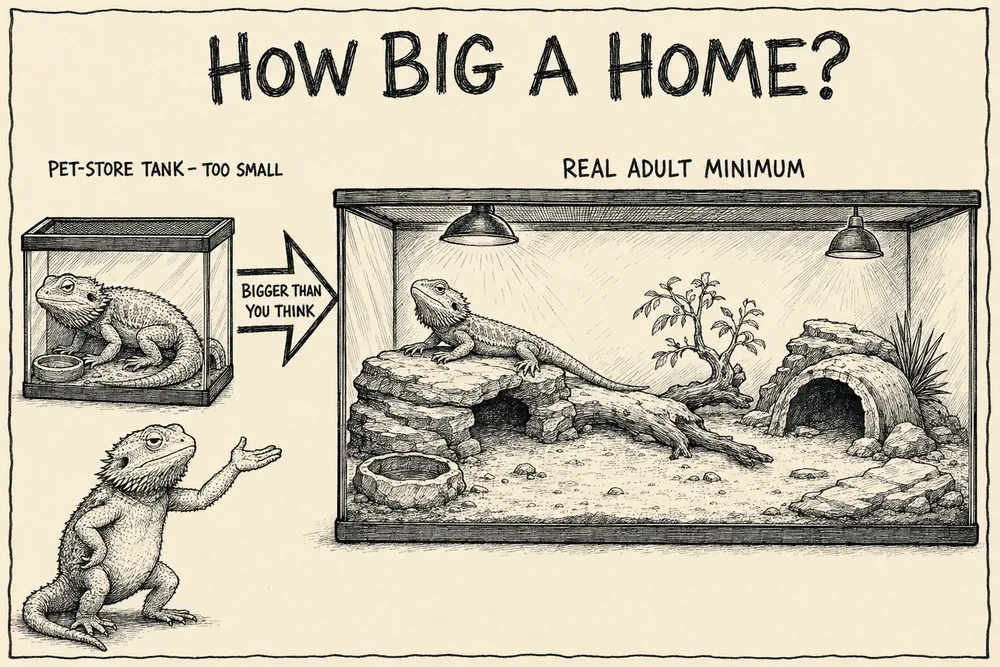
3. Buying a too-small enclosure — the “setup second” trap (~13% setup questions)
The most damaging sequence mistake: buying the animal first and the habitat second, then discovering the “starter kit” tank is far too small at adult size. A cramped enclosure can’t hold a proper thermal gradient, which quietly undoes everything else. The evidence-based care resource ReptiFiles is blunt about the version of this myth that clings to ball pythons:
“There is a common misconception about ball pythons that large enclosures stress them out … THIS IS A MYTH — and this approach to ball python care often leads to severely overweight snakes with poor muscle tone and no sources of mental stimulation or enrichment.”
The fix: buy the enclosure at adult size, dialled in, before the animal. → the complete buying guide · setup checker.
4. Misreading sick-vs-normal — panic or complacency (~26%, health + behaviour)
Health (“is my reptile sick?”) and behaviour (“is this normal?”) together are over a quarter of all questions — a huge cluster split between two opposite errors: panicking over normal behaviour (basking, brumation, a fast, glass-surfing), and missing genuine red flags until it’s late.
The fix: learn the real red flags — open-mouth breathing, stargazing, a rubbery jaw, sudden weight loss, retained shed on toes/eyes — and treat everything else as watch, don’t panic. → Is my reptile sick? · what is my reptile doing? · the is-this-normal tool.
5. Humidity & shedding mistakes (~4%)
Small in question-count but a constant low-grade problem: too-dry conditions causing stuck shed (retained eye caps and toe rings are genuinely dangerous), or too-wet ones causing scale rot and respiratory infection.
The fix: hit the species’ humidity band and add a humid hide where needed; never peel a stuck shed dry. → Why is my reptile’s shed stuck?.
6. Believing the substrate myth (~5%)
The stubborn one: the pet-store belief that all loose substrate causes impaction, leading keepers to strip out a naturalistic setup — or, worse, to use genuinely risky substrates (dusty calci-sand, big wood chips) thinking they’re the exception.
The fix: impaction is a symptom of husbandry (dehydration, cold basking, low UVB), not the substrate itself; a healthy reptile in correct husbandry can dig and burrow. → Will loose substrate cause impaction?.
7. Buying on impulse — pet-store advice & wild-caught animals
The mistake that causes several of the above: impulse-buying from a big-box store on outdated care advice, or unknowingly buying a stressed wild-caught animal.
The fix: buy captive-bred from someone who can answer care questions, and get the setup right first. → wild-caught vs captive-bred · buying guide.
The pattern underneath all of them
Notice what’s not on this list: nothing exotic. The most common mistakes are the everyday basics — feeding, heat, space, reading the animal — and nearly every question behind them comes from someone who cares and is worried about getting it wrong. That’s the opposite of carelessness, and it’s exactly who honest, judgment-free care information is for.
🦎 Made one of these? So has almost every good keeper. The measure of a keeper isn’t never making a mistake — it’s fixing it once you know. If your question isn’t answered here, ask us.
🧨 Species-specific myths, busted: many of these mistakes start as a myth. See leopard gecko myths that can hurt your gecko.
Source
- ReptiFiles — Ball Python Terrarium Size & Lighting — the quoted line on the “large enclosures stress ball pythons” myth is reproduced verbatim.
Written by The Baskden Team. This is a demand-ranked guide built from real keeper questions — the mistakes and fixes are checked against our fact-checked care sheets. For a reptile showing a red-flag sign above, see an exotics vet.
Common questions
What is the most common reptile-keeping mistake?
Feeding errors — by a wide margin. In our analysis of 388 real care questions, feeding was the single biggest topic (about 32%): overfeeding (especially adult bearded dragons and leopard geckos), wrong feeder size, the wrong insect-to-greens ratio for the age, and panicking over a normal fast. The fix is to feed by body condition and age, not by a fixed schedule.
What do most beginners get wrong about heat and UVB?
Heat and UVB is the defining reptile challenge and about 10% of questions — but the mistakes are outsized because getting it wrong harms the animal slowly. The big ones: no UVB at all (or a weak coil bulb) for a species that needs it, no thermostat on the heat source, guessing temperatures instead of measuring the basking surface, and providing one temperature instead of a warm-to-cool gradient. A digital probe or temp gun and a thermostat fix most of it.
How do I know if my reptile is actually sick?
Learning normal-vs-red-flag is itself the fix — health ('is my reptile sick?') and behaviour ('is this normal?') together are over a quarter of all questions, split between needless panic and dangerous complacency. Learn the genuine red flags (open-mouth breathing, stargazing, a rubbery jaw, sudden weight loss, retained shed on toes/eyes) and treat the rest as things to watch, not emergencies.
Is the reptile or the setup the bigger beginner mistake?
Under-buying the setup. The most damaging pattern is buying the animal first and the habitat second — ending up with a starter-kit tank that's too small, weak lighting, and no gradient. Build the correct enclosure at adult size, with the right heat and UVB, before the animal comes home.
Are these mistakes ranked by how serious they are?
No — they're ranked by how often the underlying topic appears in real keeper questions (our mined demand data), which is a good proxy for how commonly beginners hit them. A rarer mistake can still be more dangerous, so read the red-flag notes too. The point is: these are the things keepers genuinely struggle with, in order.
📚 Keep reading
- Are Heat Rocks Safe for Reptiles? Fact-Checked
- Do Reptiles Grow to the Size of Their Tank? Fact-Checked
- How Big an Enclosure Does My Reptile Need? (And When to Upgrade)
- Is It Safe for My Reptile? The Keeper's Safety Checklist
- Scale Rot in Reptiles: Signs, Causes, and What to Do
- What Reptile Keepers Actually Ask: 866 Real Questions, Analysed